Archives for category: Fall

This is what my fruit bowl looked like yesterday – a mélange of fall fruits, ripe and ready for the taking. If you live in or near New York City you know that yesterday was the first cold, fall day. It was also raining. The perfect Sunday to get in the kitchen and crank up my oven.

While making something savory is, in my opinion, more practical than making something sweet, I couldn’t help staring down those fruits and imagining them baking in a pastry crust. I turned to my trusty source for all things dessert, David Lebovitz, for some general guidance. Wouldn’t you know one of his last posts was on a harvest tart, much like the one I had in mind.

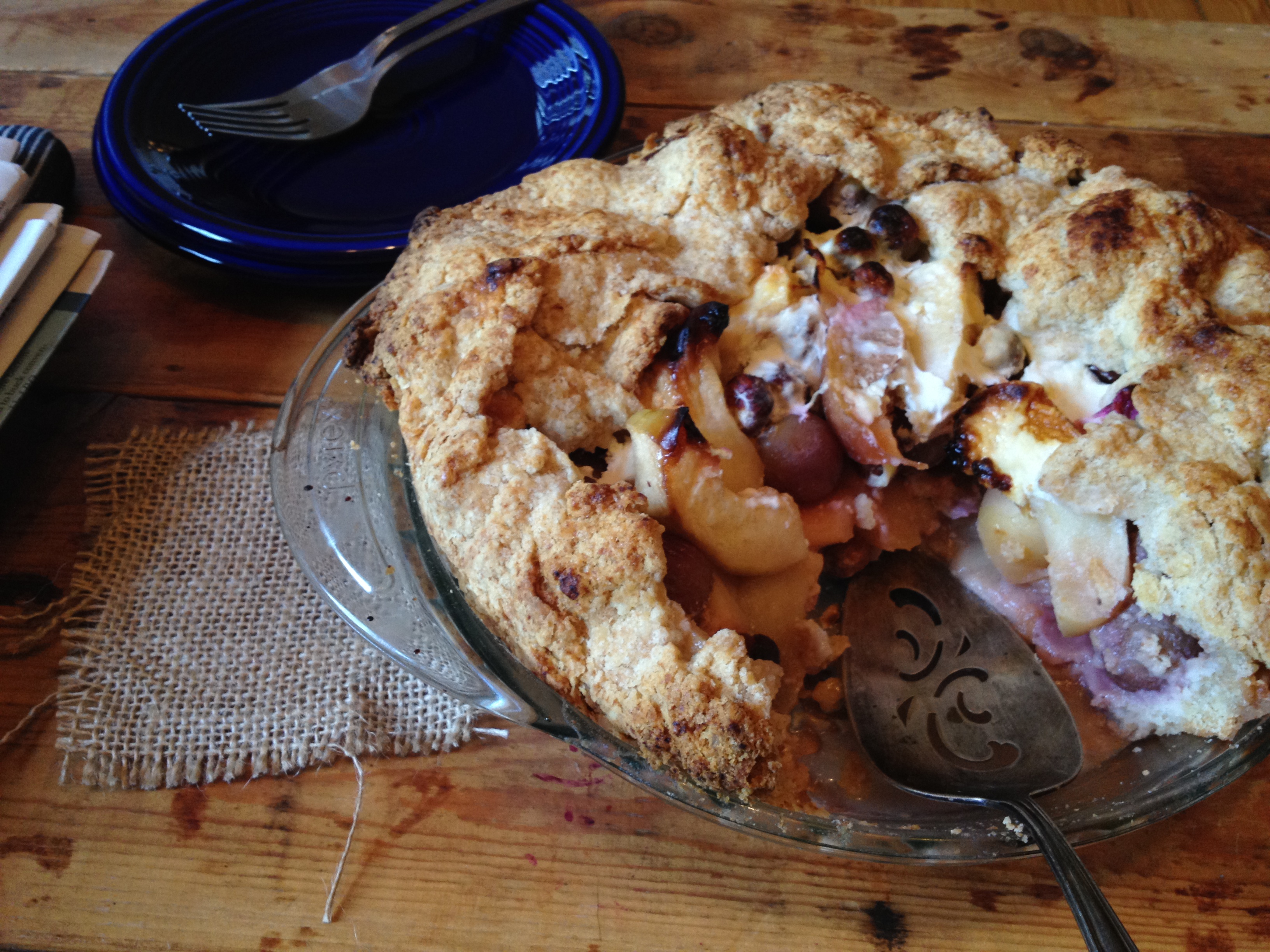
I call this a rustic tart because it’s not fussy and not meant to look perfect, like those fruit tarts you see in a bakery case. You quickly whip up the tart dough with nothing more than good cold butter, flour, water, and a pinch of salt. And fill it with whatever fruits you have on hand. I filled mine with Honeycrisp apples, grapes, and two different varieties of plums. (There was no room left for the pears!) I added a handful of hazelnuts, and drizzled a custard-like filling of egg and thick, whole-milk yogurt. (Lebovitz’s recipe called for crème fraîche, which I didn’t have on hand and couldn’t find within a few block radius in my neighborhood.) You roll out the dough larger than the circumference of your pie dish so that the edges can then be folded over the fruit filling just enough to leave some of the center exposed.

Maybe I can get used to this cold weather again.

Rustic Fall Tart
adapted from Kate Hill of Kitchen at Camont (via David Lebovitz)

For the dough
2 c all purpose flour
3/4 whole wheat pastry flour
pinch of salt
9 ounces unsalted butter, cold
2 large eggs
3-4 tbsp water

For the filling
2 lb apples, peeled and cored (approx. 4 large apples)
4 plums, any variety
1 small bunch grapes, stemmed
1/4 c sugar, plus additional for sprinkling
Handful of hazelnuts
1 tbsp brandy or 1 tsp vanilla extract
1 c crème fraîche or thick, plain yogurt
1 large egg

1. Make the dough: in a large mixing bowl stir together the flour, sugar, and salt. Cut the butter into small cubes and mixing with your hands or a pastry blender, combine with the four mixture until it’s in small pieces.

2. Add an egg and the water and mix until the dough holds together. Roll the dough out on a lightly floured surface until it’s about 18 inches in diameter. Transfer to a deep pie dish; the edges should hang over the sides quite a bit.

3. Beat the remaining egg in a small bowl then brush the insides of the dough with the egg.

4. Prepare the filling: slice the apples into eighths and the plums into quarters. Mix them together with the grapes, sugar, brandy or vanilla, and transfer the filling to the tart dough. Scatter the hazelnuts on top of the fruit.

5. In a small bowl, mix the crème fraîche or yogurt with the egg and pour it over the fruit and nuts. Line the edges of the dough and cover the fruit. Brush the top of the dough with a mixture of egg wash and butter then sprinkle with a little sugar.

6. Put the tart on a baking sheet and bake at 425 F for one hour, until the top of the dough is browned and the fruit is thoroughly cooked. You can test by placing a knife in the fruit and making sure it goes right through. If, before the hour is up, the crust starts to turn dark brown you can tent with foil about halfway through.

7. Remove the tart from the oven and let cool before serving. Serve on its own, with crème fraîche, vanilla ice cream, or homemade whipped cream.
I came home from Vermont on Labor Day with a weighty bag of small plum-like tomatoes from my stepmother’s garden. I was housesitting for her and my father and part of my laborious duties included picking the ripe fruits from their vines. While the Sun Golds burst with the flavors of sun and summer, these more Roma-like tomatoes seemed better suited to gazpacho or a sauce.

The bag sat on my counter in Brooklyn for most of last week until it occurred to me to roast them, concentrating their flavors for a sweeter, more flavorful punch. I like raw tomatoes, I do. They’re one of August and September’s exquisite pleasures: slicing the juicy fruit, whether beefsteak or heirloom, seeds spilling over the edge of the cutting board. Layered with good buffalo mozzarella and basil, or just biting into one like a peach. But I find, after a while, I want my tomatoes cooked. I want the tastes condensed, the flavors warm. Maybe it’s just summer turning into fall.

So I decided I needed more tomatoes. I swung by my local farmer’s market Saturday after the tornado/tornahdo left Brooklyn and the sun came out blazing. A stand had a $1/lb bin of bruised tomatoes that needed a home – I was more than happy to adopt these forsaken ones. I lugged six pounds home for six bucks.

Once home I sliced all the tomatoes and arranged on a baking sheet, drizzling olive oil and salt on top. I roasted them in a 225 degree oven for one hour, a little more, turning once, until they were shriveled and syrupy. These are great to eat just like this – tossed with pasta, or on toast, in a salad, or mixed with rice. But I thought marinated in olive oil with the basil and garlic I brought home from Vermont would be even better. So quite unintentionally I found myself stuffing the roasted tomatoes into glass Ball jars and sealing their lids in baths of boiling water.

A friend came by and said, “you’re canning!” And so I was. Sort of. But I think of it more like cheating – preserving the rich flavors of summer without spending days on a factory line in my kitchen. It took all of a couple of hours to fill four Ball jars this weekend. I know that won’t get me through the winter, let alone fall. September? Maybe.

Roasted, marinated tomatoes, for fall

Tomatoes, any variety, the cheaper/uglier the better
Olive oil
Garlic
Salt
Chili peppers, optional
Basil, optional

1. Slice the tomatoes into wedges (unless very small in which case halve them). Arrange on a baking sheet and drizzle with olive oil and salt. Bake at 225 F for at least one hour, and up to one and a half hours.

2. Cool completely before transferring to a Ball or Mason jar with a sealing lid. Add a few cloves of crushed garlic to each jar, also adding basil and small dried peppers if you’d like. I add a dash more of Maldon salt. Pour olive oil in the jar until the tomatoes are coated and marinating in the oil.

3. Bring a large pot of water to boil. Turn down the heat to a vigorous simmer and add your jars with the lids on tight. Let sit in the simmering water for at least five minutes, or until the jars are sealed and the lid doesn’t pop when you push on the center.

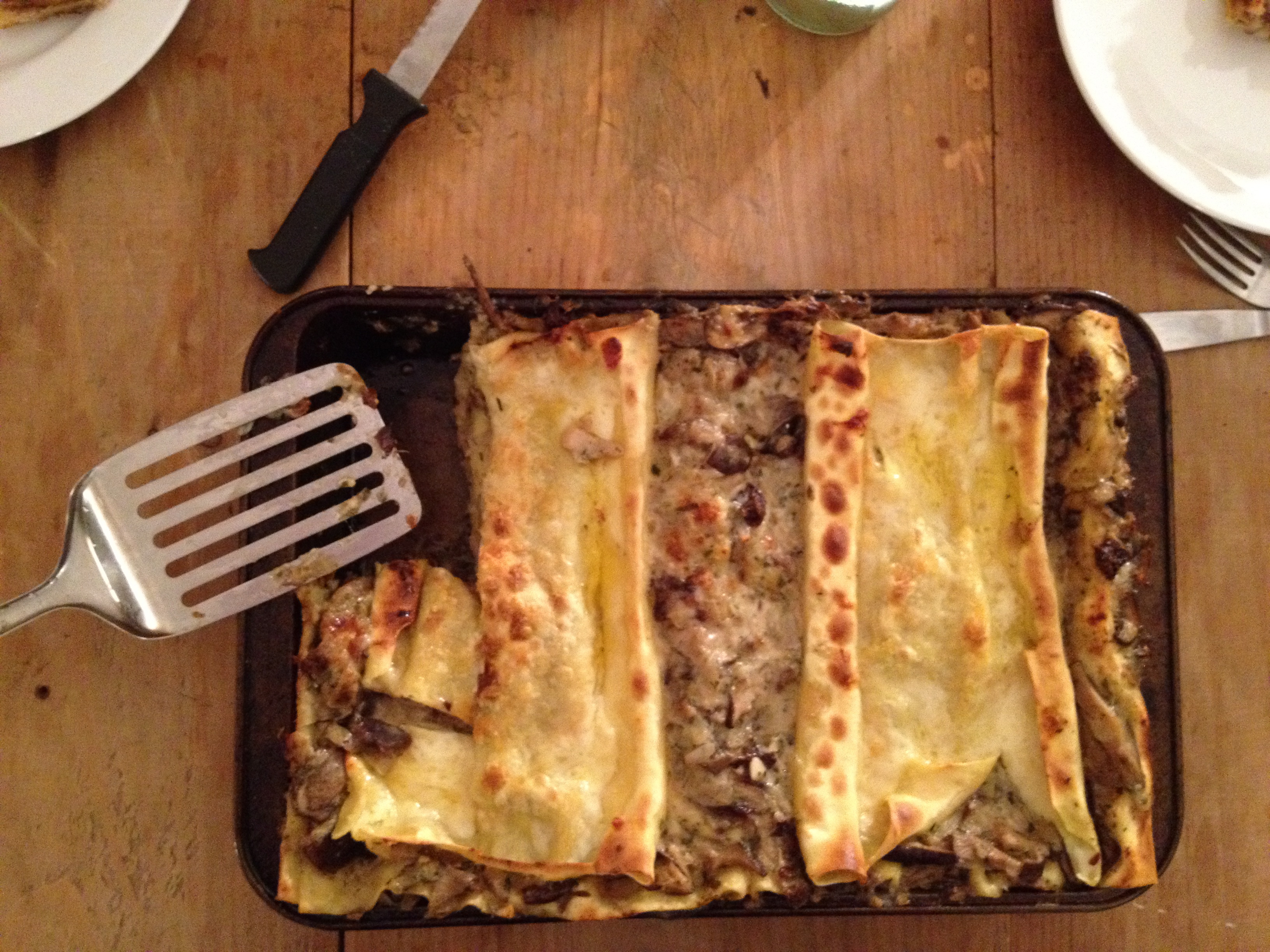
When I saw Sam Sifton’s gooey wild-mushroom lasagna in last weekend’s Times magazine I 1) held the magazine up to my nose and tried to inhale the aromas and 2) logged onto Fresh Direct’s website and ordered all the ingredients in the recipe. And thus began this weekend’s cooking adventure.

I’m into mushrooms. I have a friend who puts them in the category of “things that are slimy like sushi and therefore gross,” but I couldn’t disagree more. They are a vegetarian’s best friend, a meat-lover’s confidant, an umami-laden, savory, rich, earthy delight that adds depth and complexity to any dish.

This was not a thirty-minute meal. I started cooking last night at 6:30 and didn’t get the dish on the table until 10 pm. And I worked relatively quickly, or so I thought, but did not have a sous chef to help me cut all the shallots or grate the cheese or assemble the herb oil. But it was so worth it.

Let’s start with the herb oil. As Sifton writes, Monica Byrne and her partner Leisah Swenson run a tiny restaurant in Red Hook, Brooklyn, called Home/Made, and this herb oil infuses many of their dishes. It’s essentially good olive oil marinated with sage, rosemary, thyme, salt, and garlic. It’s an oily pesto that you use to roast the radicchio and cook the shallots and even make the bechamel in this recipe. I made extra so plan to use it to marinate sandwiches for lunch this week or even use as a pistou in soups.

I used three different kind of mushrooms for this lasagna: cremini, shiitake, and oyster; and four different kinds of cheese: Gruyère, Fontina, Parmesan, and smoked mozzarella. This is not a cheap dish to make, but it does yield about ten servings so in actuality it’s not too bad. Plus the results taste like something you’d pay good money for at a restaurant, with layers and layers of taste. It’s the perfect cold-weather dish to savor warm, rich flavors, and if you’re into wine, would go well with a dry, crisp white to cut the richness of the cheese.

I didn’t, however, use the optional truffle oil. Personally I don’t use the stuff. I find the smell slightly nauseating and besides, it’s not made with real truffles so what’s the point? But the herb oil should not be optional—it’s worth the extra effort.

If you’re hosting a dinner party this would be a great dish to make to serve lots of folks, including vegetarians, and could even be made in advance and just popped in the oven an hour before serving. I only wished I’d had a nice crunchy green salad to serve on the side, but made do with some crisp sliced carrots and sour green beans I had pickled over the summer. I would even try serving this to my anti-mushroom friend in the hopes that she could make nice with the fungus once and for all.

Gooey Wild-Mushroom Lasagna
Sam Sifton, adapted from Monica Byrne, Home/Made, Brooklyn

1/2 c extra-virgin olive oil or herb oil
6 large shallots, peeled and minced
1 1/2 pounds mushrooms, wild or best available (oyster, shiitake, cremini), trimmed and sliced
1 c dry white wine
1 softball-sized head of radicchio, halved, cored, and cut into small pieces
Kosher salt and freshly ground black pepper
4 tbsp unsalted better, or herb oil
3 large cloves garlic, peeled and minced
4 tbsp flour
3 c whole milk
1/2 tsp grated nutmeg
1 c Gruyère cheese, grated
1 c Fontina cheese, grated
2 tbsp best-quality truffle oil (optional)
2 9-oz boxes no-boil lasagna sheets
1 baseball-size ball of smoked mozzarella, sliced
1 c fresh Parmesan, grated

1. Preheat oven to 350 F. Place a large sauté pan over medium-high heat and add 1/4 c of the herb oil. When it’s hot, add half of the shallots and cook until translucent. Add the mushrooms, toss to coat, and cook for approx. 12 to 15 minutes, until they start to turn color but remain plump. Add the white wine to deglaze pan and allow to cook down into a syrup, approx. 5 to 7 minutes. Put the mushrooms into a large bowl and reserve.

2. In another bowl, toss the radicchio with 1/4 c herb oil and season with salt and pepper. Spread the strips onto a baking sheet and place in the oven approx. 15 minutes, until the strips are lightly browned. Combine with the mushrooms and reserve.

3. Make the béchamel. Place a saucepan over medium heat and melt the butter. When it foams add the rest of the shallots and cook until they’re translucent. Add the garlic, stir to combine, and cook until the garlic has started to soften. Stir in the flour and cook gently until the mixture turns light brown and gives off a nutty scent, approximately 10 minutes. Add the milk to the mixture, whisking, until the sauce is thick and creamy. Add the nutmeg and 1/2 c of the Gruyère and 1/4 c Fontina, and stir to combine. Season to taste with salt and pepper.

4. Reserve a cup of béchamel and pour the rest over the mushroom-radicchio mixture and stir to combine. Add the truffle oil, if using.

5. Assemble lasagna. Spread all of the plain béchamel across the bottom of a 9- by 13-inch baking dish. Place a layer of lasagna sheets across the sauce, and do not overlap the sheets. Spread a generous layer of mushroom mixture on top of the pasta, and follow with some grated Fontina and Gruyère. Put another layer of pasta above the cheese, and top with smoked mozzarella. Repeat until the pasta is gone and the pan is full. Top with remaining cheeses and grated Parmesan. Cover with a buttered sheet of aluminum foil and place in the oven for 45 minutes. Remove the foil and cook (or broil) until the top is golden and crispy. Pat yourself on the back for making such an awesome dish.