Archives for category: Co-op

I’ve been having a ball in my home-away-from-home state of Vermont. I drove up last Friday with my sister Emily and her dog, Julius. I’ve swam almost every day in Lake Champlain or Goshen Dam, avoided stepping on zebra mussels, eaten sweet and drippy peaches, visited the Middlebury food co-op (3x), walked around the Middlebury College campus with Arianna and Rafa, read and napped in a hammock, eaten maple cremees, accompanied friends on a blueberry-wine tasting, and tonight might go to the drive-in. I love summer!


I’m usually in Vermont this week every year, and in this post and this post from last July 4th I blogged about living the good life in Vermont too. In fact, I think I’ll make that cashew spread again. Why am I returning to Brooklyn tomorrow?

Before arriving last week I told my stepmom Bonnie that I wanted to make a French potato and green bean salad, like the one David Tanis wrote about recently in the New York Times. Think of it like an improved upon summer potato salad, with a mustardy vinaigrette instead of mayo, tossed with green beans, olives, and lots of fresh herbs. I made it Vermont-style, meaning, whatever Bonnie had in the garden and local eggs. From the garden I picked chives, purple and green basil, thyme, and flat-leaf parsley. I wish I’d remembered to toss in the remaining scapes we had, but used garlic instead. This salad can be prepared ahead and served room temp or cold, perfect for a summer picnic or barbecue.

Vermont Potato and Green Bean Salad

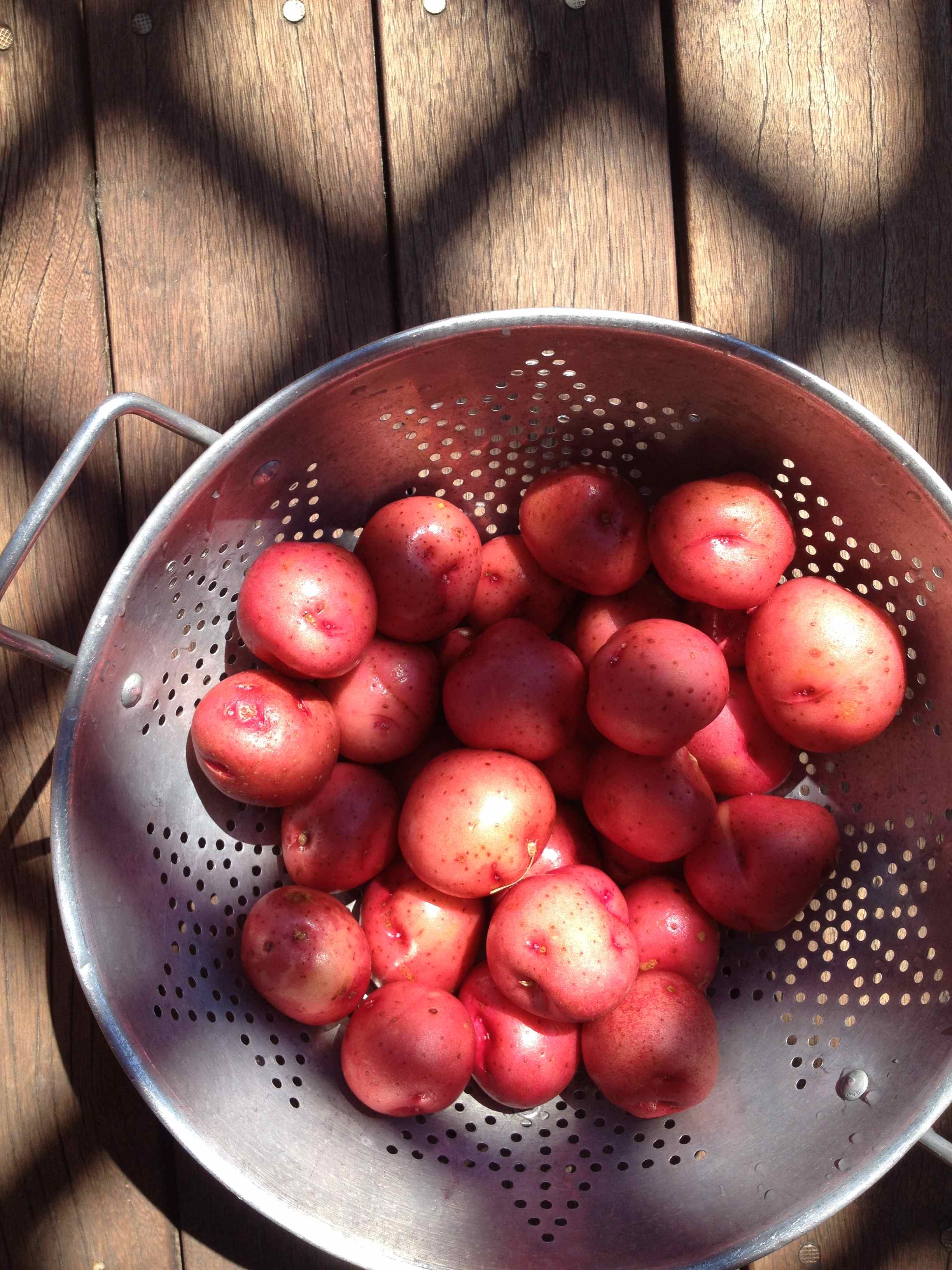
1 3/4 lb small red potatoes
Salt and pepper
1 bay leaf
1 large thyme sprig
1-3 garlic cloves, mashed to a paste, to taste
1 tbsp anchovy paste
1 tbsp chopped capers
2 tsp Dijon mustard
4 tbsp white wine vinegar
1/3 cup extra virgin olive oil
1 pound small French beans, or green beans
4 large eggs
Handful of chopped herbs: chives, parsley, basil
1/4 cup pitted, cured black olives

1. Bring a large pot of salted water to boil. Add the potatoes, a bay leaf, and the thyme. Simmer for about 20 minutes until the potatoes are still firm but can be pierced easily with a fork. Remove from the water with a slotted spoon and cool. Don’t drain the water because you can use this later for the green beans.

2. Make the vinaigrette: In a bowl combine the garlic, anchovy paste, capers, mustard, and vinegar. Whisk in the olive oil, and season with salt and pepper.

3. When the potatoes are cool, cut into thick slices. Season with salt and pepper, and cover with half the vinaigrette. Set aside.

4. Trim the ends of the beans and simmer in salted water for 3-4 minutes. Drain and cool under running water.

5. Cook the eggs: bring a pot of water to boil. Add the eggs gently and cook for about 8 minutes, 9 for a firmer yolk. Crack and peel immediately to cool. Cut each egg in half and season with salt and pepper.

6. When ready to serve, coat the green beans with the remaining dressing, and add to the potatoes. Arrange the eggs and olives on top. Garnish with the fresh herbs and serve.

Below are shots of the purple basil in the garden; ice cream from Middlebury; and I just had to have a picture with this teal green bug in town. There was a summer in California I drove around in a bright yellow one, I’ll see if I can find a photo of that. Happy 4th people.

Step away from the matzo. That’s what I keep telling myself during Passover when matzos appear everywhere from Jacques Torres to each seder table in town—whether that’s your feminist seder on the Upper West Side, queer seder in Park Slope, conceptual non-seder in Bushwick, or Bubbe’s in Brighton Beach. When you walk into the coop you’re bombarded by towers of them. I used to eat matzo with my grandmother (still do), buttered and sprinkled with salt, and we decided recently our favorite is Yehuda, for its black char, like good brick-oven pizza. But never had I made matzo ball soup before yesterday.

Passover is bittersweet—it commemorates the story of Exodus, marking the Jews’ freedom from slavery in Egypt. They fled through the desert, leaving no time for bread to rise, and thus the tradition of avoiding leavened bread for the eight days. In order to avenge the Jews’ enslavement, ten plagues are said to have been put upon the Egyptians, including the murder of their first-born sons. As a kid, and to this day really, it was hard to get past the imagery of lamb’s blood and children dying, but that’s actually part of the commemoration—the acknowledgement of suffering as well as the joy of freedom.

I was raised Catholic, but my siblings and I are actually part Jewish, although I’m just about the only person in my family to identify that way. My mother’s father was Jewish (his mom’s last name was Levy), but I’m named after my father’s family, Catholics from the Normandy coast in France. It’s not difficult to understand why my grandparents and great-grandparents wanted to disavow their Jewish heritage during World War II—even in Flatbush, Brooklyn—but it does kind of break my heart that that part of our identity got lost.

I wasn’t able to attend a seder for Passover this year but was eager to eat matzo ball soup (and brisket, but that’s another post), and therefore took it upon myself to forge ahead and DIM (do it myself).

So one day last week I put on some Prince and started looking up recipes. In good Jewish fashion there’s lots of arguing and kvetching about what to do and not to do, whether to make your matzos light as air or heavy as lead, whether to use seltzer or not. I combined a few recipes to create my own version and prepared to make this vegetarian take on Jewish dumpling soup while at my grandmother’s yesterday.

On an unrelated note, I find it sort of depressing listening to the song “1999” now. When it was written twenty years ago the millennium sounded so cool and futuristic and now it’s ancient history. “I Wanna Be Your Lover,” on the other hand, timeless. I mean, c’mon “I wanna be your lover, and your mother and your sister, too…”

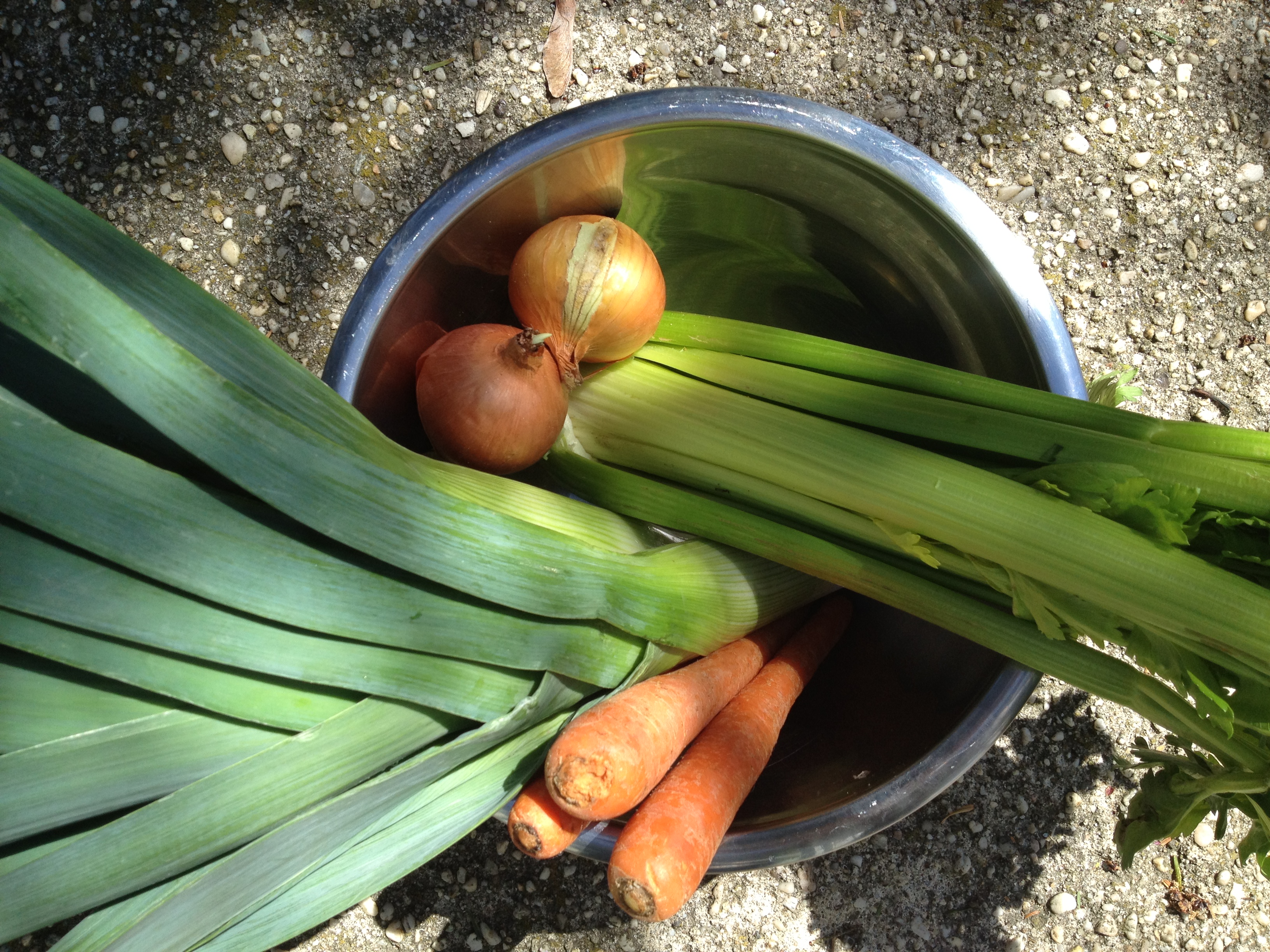
Anyway, you start with the stock. It goes without saying that traditionally matzo soup is made with kosher chicken stock. But I didn’t feel like schlepping a four-pound bird back to my apartment only to boil the crap out of it for broth, and besides I didn’t know who might be eating my soup. Also, yes, been eating less meat. But still, other than the matzo balls there’s really just broth so it’s important to attend to this aspect of this dish. I bought leeks, carrots, onions, garlic, and celery and sauteed these in butter and olive oil in my stock pot. To that I added two quarts of water and a spice sack I rigged out of a tea bag because I forgot my little cloth spice sack—tea emptied, and bag filled with black peppercorns, juniper berries, mustard seeds, coriander seeds, and fennel seeds, then tied in a knot. I was cooking in my grandmother’s tiny kitchen that hasn’t changed since 1955 (we’re gonna party like it’s…) and I know the drill: I bring all my own knives, cutting boards, cheese graters, salt, pepper, olive oil, pots and skillets when I cook out there. She just laughs when I barge through the door like I’ve just robbed a Williams Sonoma.

While your stock is simmering you can quickly put together the matzo dough. Then let it chill in the fridge for at least an hour while you go play tennis and maybe pick up a dessert.
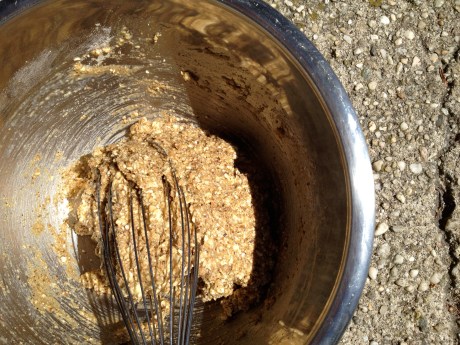
My matzo dough came out a little darker and chunkier than I expected, but I think that’s because a) see point above about the char on Yehuda matzos and b) I didn’t quite grind the matzos into as fine a breadcrumb as perhaps I should’ve. No matter, these were still really flavorful, light, and buoyant. And the stock practically tasted like I had in fact boiled a whole chicken in there—it was light and rich at the same time, well seasoned and a nice accompaniment to the matzos, which I served two to a bowl with sprigs of fresh dill for some springtime green.

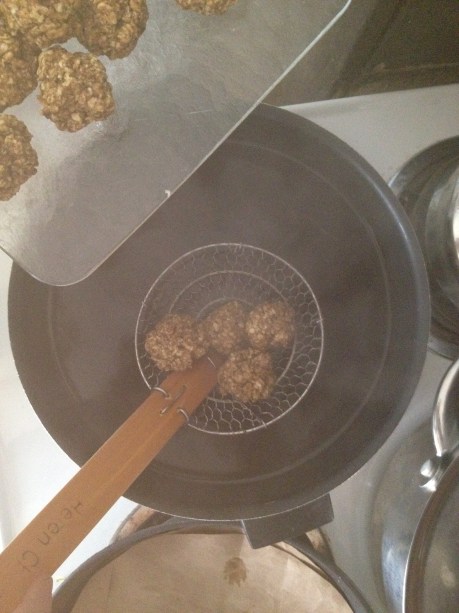
It got a little steamy here…
Matzo Ball Soup [for heathens and devotees]

For the matzo balls:
6 matzos, pulsed in food processor to a fine crumb
1/4 tsp baking soda
1 tsp salt
4 eggs
2 tbsp melted butter
1/3 c seltzer water

For the stock:
2 tbsp butter
1 tbsp olive oil
1 large onion, diced
2 carrots, sliced in thin rounds
2 celery ribs, sliced
2 leeks, green tops discarded, whites cleaned thoroughly and chopped
3 cloves of garlic, chopped
spice sack: some combination of black peppercorns, juniper berries, coriander seeds, mustard seeds, etc.
1-2 bay leaves
salt
Fresh dill for garnish

Get the matzo balls going: in a medium bowl combine the dry ingredients. In a separate bowl, mix the wet ingredients, then add to the dry mixture, combining but not over mixing. Chill in the fridge for at least one hour (more is fine).

While the matzo balls are hanging out in the fridge, start your stock: add the butter and oil to your stock pot and heat on medium. Add the diced onion, carrots, celery, leeks, and garlic, and wilt for about ten minutes. Then add about 2 quarts of water (you can also use vegetarian stock but I didn’t) and bring to a boil. Toss in your spice sack, bay leaf, and salt to taste. Simmer the stock on medium heat with a lid slightly ajar for about one hour.

Bring a separate pot of salted water to boil. After the matzo has chilled, wet your hands a little bit to make handling easier. Roll the dough into small rounds about the size of golf balls (they expand when you cook so don’t make too big!). Turn the stove down a little so water is gently, rather than rapidly, boiling, and carefully add matzo balls to the pot. Cover with a lid and don’t lift the lid for 25 minutes or a curse will be placed on your first-born child. After 25 mins. check to make sure they’re done and if so turn off the water and remove with a slotted spoon and add to the veggie stock and let them get hot in there for about 15 minutes so they absorb the flavorful stock. Serve with fresh dill.

I roasted this asparagus as well, finished off with lemon juice, parmesan, and slices of garlic that I cooked in a separate skillet in a little bit of olive oil. Mm hm.

So I was at my happy place yesterday afternoon (the PSFC, which you should know by now is the Park Slope Food Cult), slicing a wheel of Humboldt Fog, bantering with my fellow workers about topics ranging from: if the quality of red meat continues to improve with grass-fed beef and small farmers, will overall meat consumption rise? How to make french toast with tofu instead of bread (tell ya later). And using Tuesday’s general meeting on the Israeli boycott as a venue for one’s performance art. In other words, we were a parody of ourselves, what Samantha Bee called “a diverse group of NPR listeners.” (If you haven’t seen the Daily Show clip on the co-op, click here.)

My little crew of Week-A Friday food processing workers is a delightful bunch of folks including the NYC Bikram Yoga champion; a journalist exposing a cover-up at Fukushima; an event planner organizing a 1,500-person NYC Easter egg hunt next weekend; a midwife; writing professor; and metal-worker jewelry designer. We come together once every four weeks to wrap cheese, package dried mango, and debate things like the Pfizer birth control recall and the best new burger joint in the Slope, for precisely 2 hours and 45 minutes.

We started talking about almond milk and one woman mentioned making her own. I’ve been wanting to try this since I go through about a quart a week and, well, generally prefer making to buying. She told me her method, I committed it to memory, and after our shift I bought about one pound of raw, unsalted almonds, the only ingredient you really need. This is the easiest thing I’ve made for this blog yet (except maybe for one of my first posts, last April, on Vermont Iced Coffee.)

The benefits of homemade almond milk are more about flavor than cost effectiveness. In fact it may even cost more to make it yourself, even when buying from the co-op’s bulk bins, but not much. The price I paid was $4.21 per pound (for organic), and you need about 1 pound of almonds to yield one quart of almond milk, whereas buying a pre-made quart is usually $2 to $3. But the flavor is incomparable. This homemade stuff is rich, creamy, not watery, with a very distinct almond flavor. Buy your almonds from a place with high turnover. Nuts go rancid rather quickly; they should be as fresh as possible, I wouldn’t really bother with stale almonds. The resulting flavor is so good, and texture so smooth, I will definitely finish this quart before next week.

One more thing, in order to do this, you need a powerful blender, preferably one with at least 1,000 watts of power. A VitaMix is ideal, although expensive I know (but such a good investment); I use the Ninja blender I got a few months ago, which makes amazing green smoothies and blends everything from ice to vegetables in seconds.

You can adjust the amount of water in the recipe below depending on how thick you’d like the results. These proportions will give you a creamy-ish milk but not all that thick. Get blending!

Homemade Almond Milk

1 pound (about 3 cups) raw, unsalted almonds
3 cups water (for soaking) plus 2 more cups
a few drops of vanilla extract
tiny pinch of salt (optional)

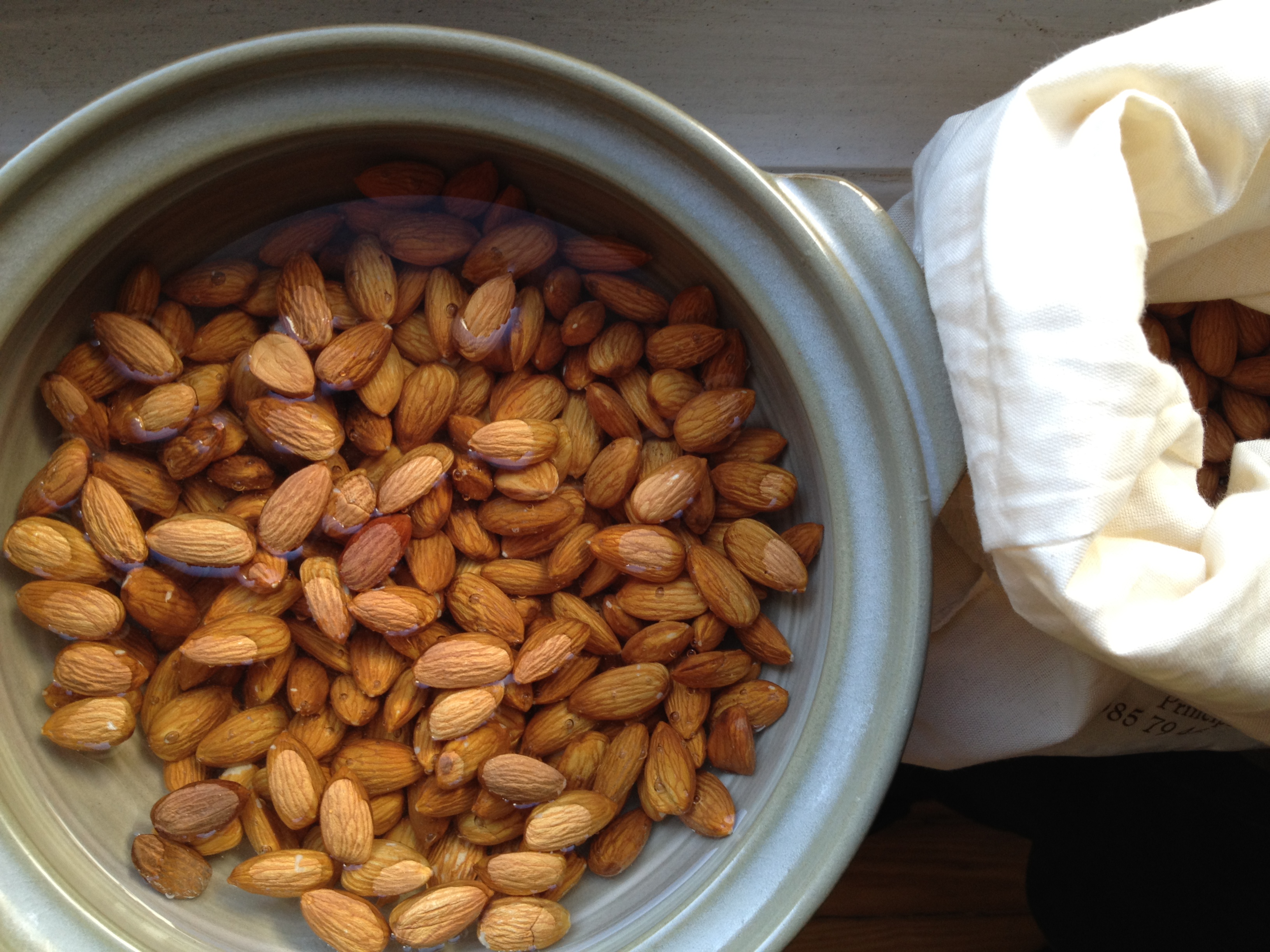
Place the almonds in a bowl or pot and add the 3 cups of water. Cover with a lid, and let soak for at least 12 hours.

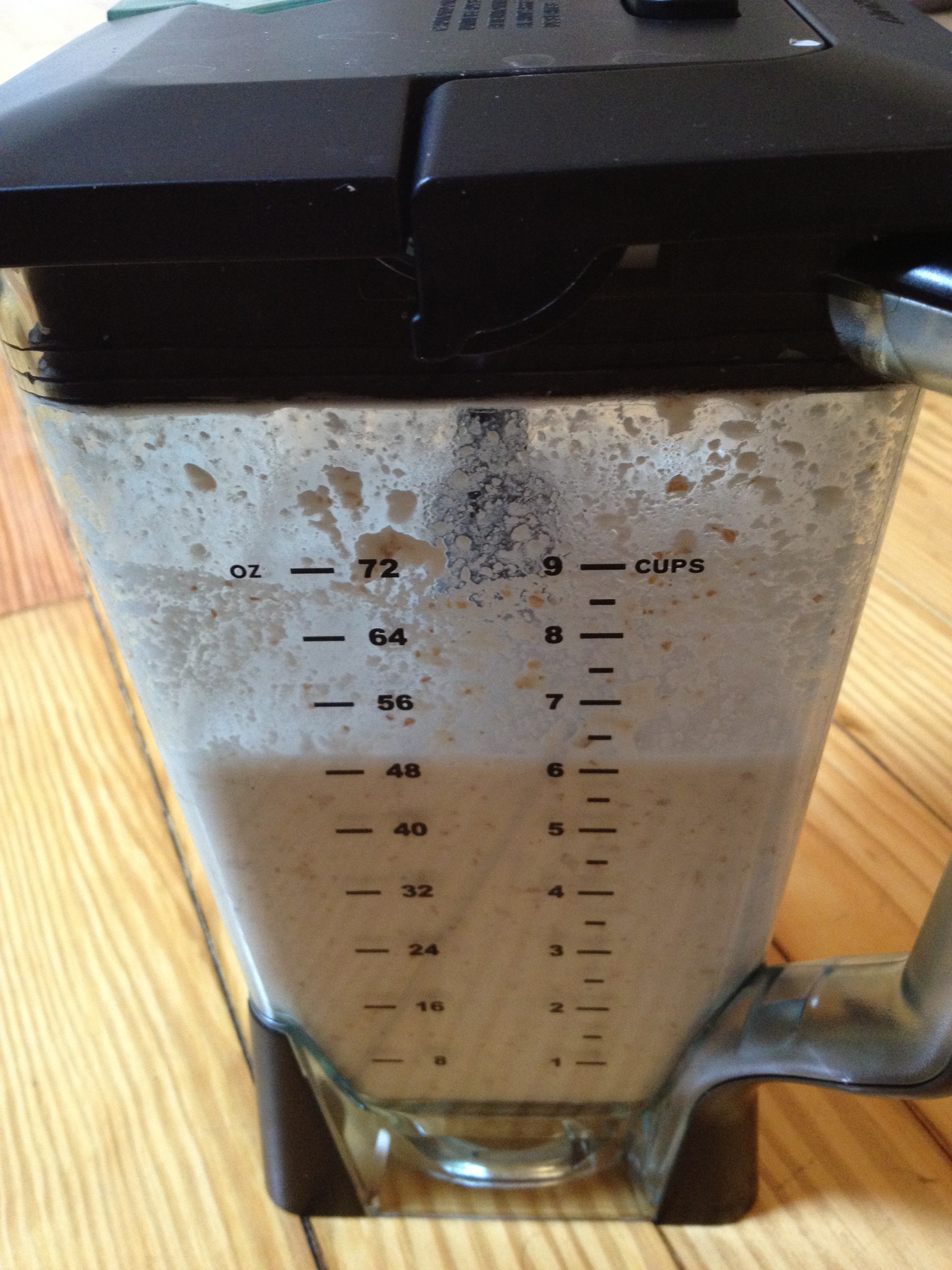
Place the almonds and their soaking liquid in a blender and blend until creamy. Halfway through blending, add the vanilla and about 2 more cups of water, gradually. This will take anywhere between, say, one and two minutes depending on your blender.

Line a large bowl with cheesecloth (or, I used a reusable cloth produce bag) and place the contents of the blender (liquid, almond pulp, and all) into the cheesecloth or bag, over the bowl. Strain the mixture into the bowl, squeezing all the liquid out. You’ll be left with quite a bit of almond pulp – I’m taking suggestions on what to do with this since it seems like a shame to just throw out.

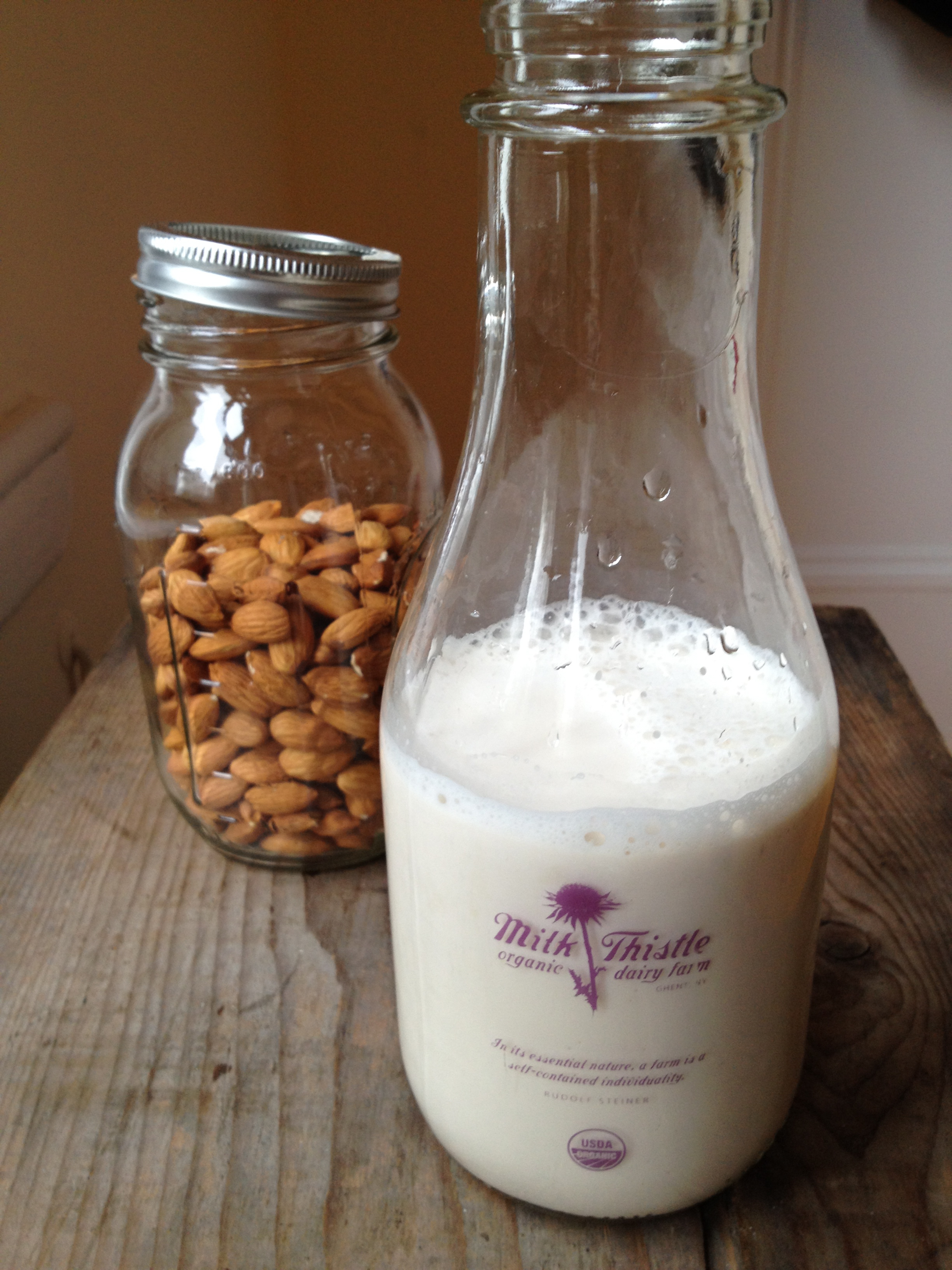
Ode to Milk Thistle Farm – paying tribute by using their old glass bottle to store my almond milk. (I mention here how they sadly went out of business recently.)