IMG_4113

It’s not every day you find yourself in Turkey with a group of women enthusiastically willing to teach you how to make börek from scratch. These women—my boyfriend’s sisters—have been making börek for years and roll pastry dough quicker than my eyes can follow. It’s all made by look and feel, muscle memory. Recipe? Measuring implements? Superfluous.

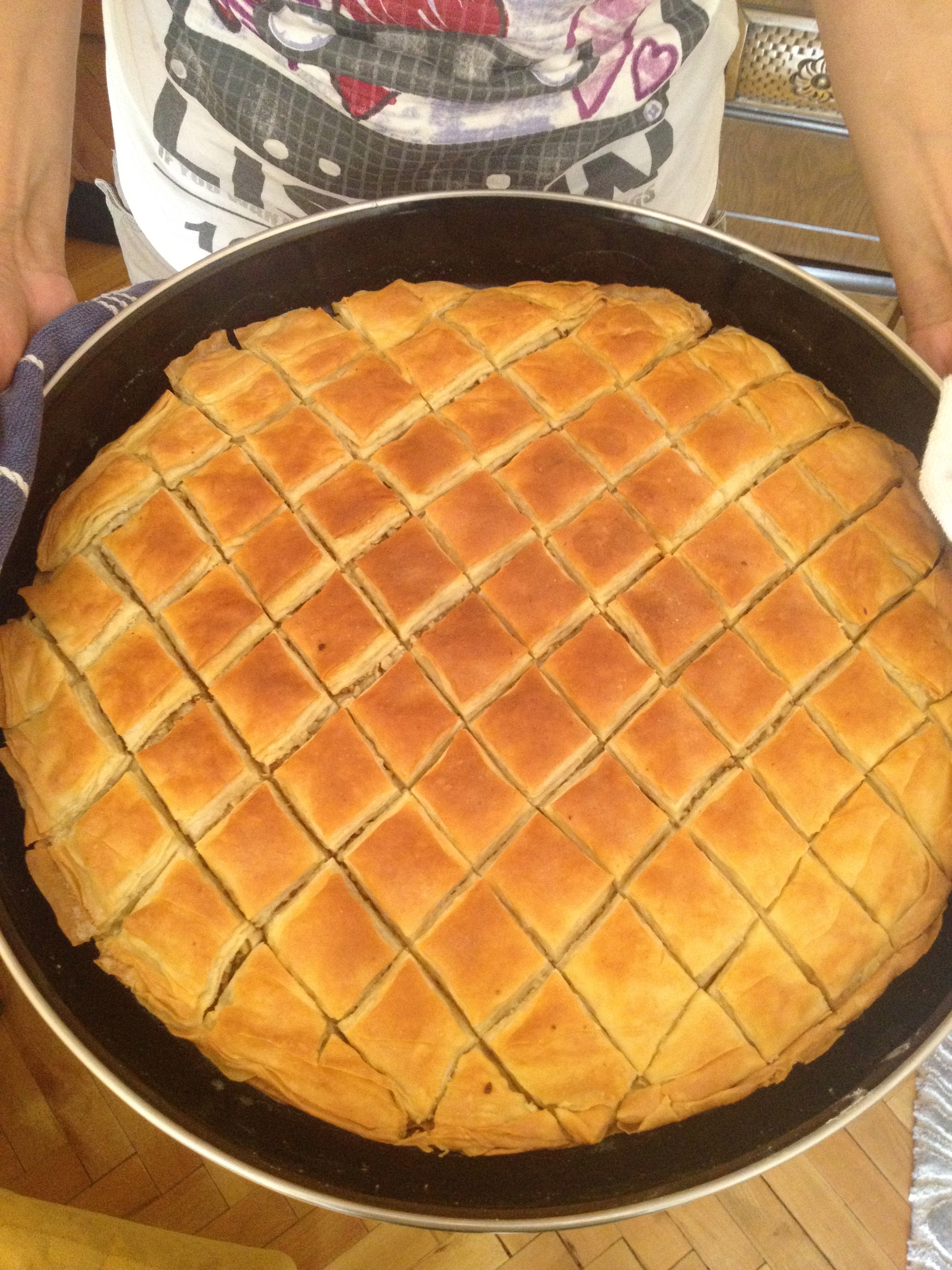
So on the last day of my two-week stay in Turkey, Bülent’s sisters patiently showed us the art of a thirty-one-layer walnut pastry (or, cevizli börek) that their family has made for years. I was told this isn’t a pastry you can buy in shops but more of a family recipe. Sweet and savory börek can be found everywhere in Turkey but this particular kind—imagine baklava but with walnuts not pistachios and no gooey honey, so it’s drier—I never once saw in a bakery.

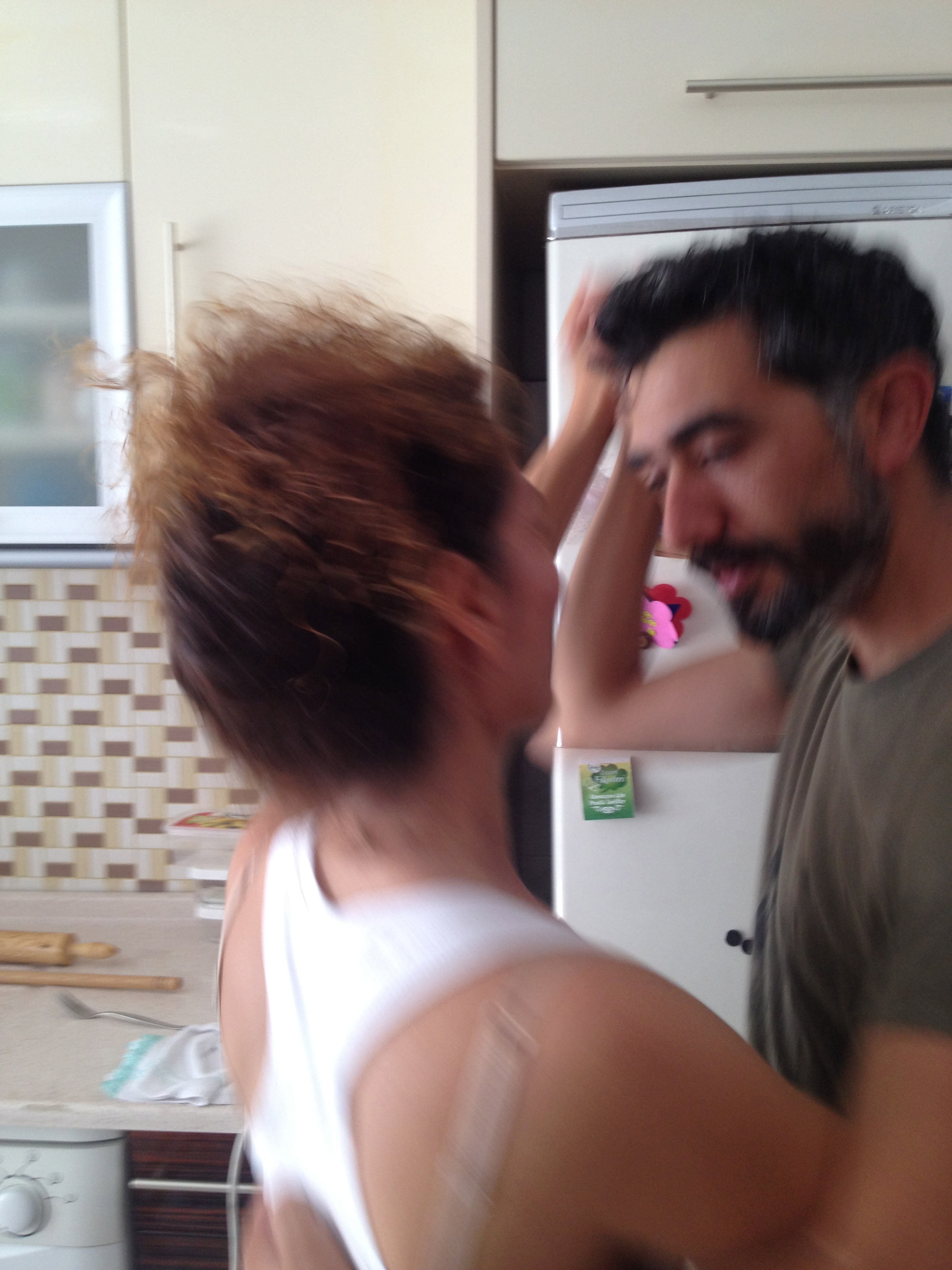
This is a delicious not-too-sweet pastry but takes a good three hours to make. Like all good pastry, it requires patience and practice to master. I wondered aloud about the possibility of making a vegan version and was met with disapproving and skeptical glances, but I’d like to try it the next time I have the occasion to make this fairly labor-intensive dish. (See photo below, dancing after the pastry finally goes in the oven!)
IMG_4098

Cevizli Börek (Walnut Pastry)

2 eggs
1 c whole milk
1 c vegetable oil
1 tbsp baking powder
4 1/2 – 5 c all-purpose flour plus 1/2 cup for rolling out the dough
Pinch of salt
2/3 cup wheat starch (can substitute corn starch or potato starch)
1/2 cup (1 stick) melted butter
white sugar, for sprinkling (about 1/2 cup)
1 c walnuts, chopped very fine

Equipment
1 normal-sized pie rolling pin
1 thin, long rolling pin (sometimes called a pasta or French rolling pin)

1. Combine the eggs, milk, oil, baking powder, 4 cups of flour, and salt in a bowl. Whisk the ingredients together until they form a dough then, using your hands, knead like bread dough, flipping and turning for about three minutes. Continue adding small amounts of flour until it achieves the desired consistency of a dry, smooth dough that does not stick to your hands. “Until it’s soft like an earlobe,” I was told. Let sit, covered, 10 minutes.

2. Next you want to form small round dumplings from the mound of dough. First, combine the 2/3 cup wheat starch and 1/2 cup flour into a small bowl and set aside; you will use this starch mixture on your hands and on the dough when rolling it out. One by one, pinch off a small amount of dough (about the size of a golf ball) and knead, using the starch mixture, with your fingers to get any lumps or creases out. You should be left with a smooth round ball of dough. Continue making these small round balls until there is no dough left; you need 31 for the recipe, but may end up with more like 35-40.

3. Using the normal thicker rolling pin, roll out each one of the 31 balls into a thin, flat, round layer (like a small pizza), each approx. 7 inches in diameter. Continue to use the starch mixture while rolling out the dough to prevent sticking. When you finish rolling out one layer, sprinkle some of the starch mixture on top. You want to end up with six stacks of this rolled out dough; five stacks consisting of 5 layers and one stack consisting of 6 layers. (= 31)

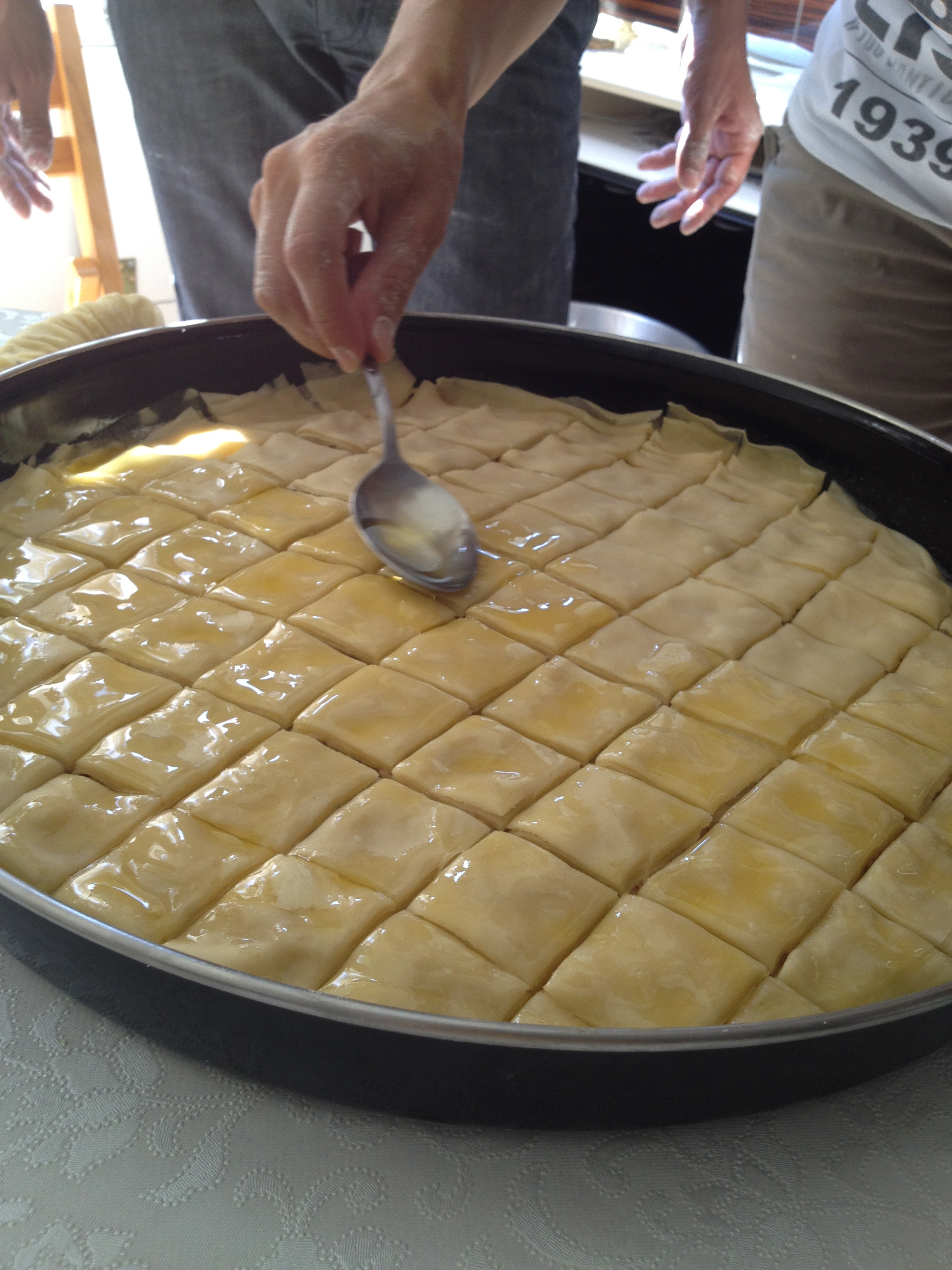
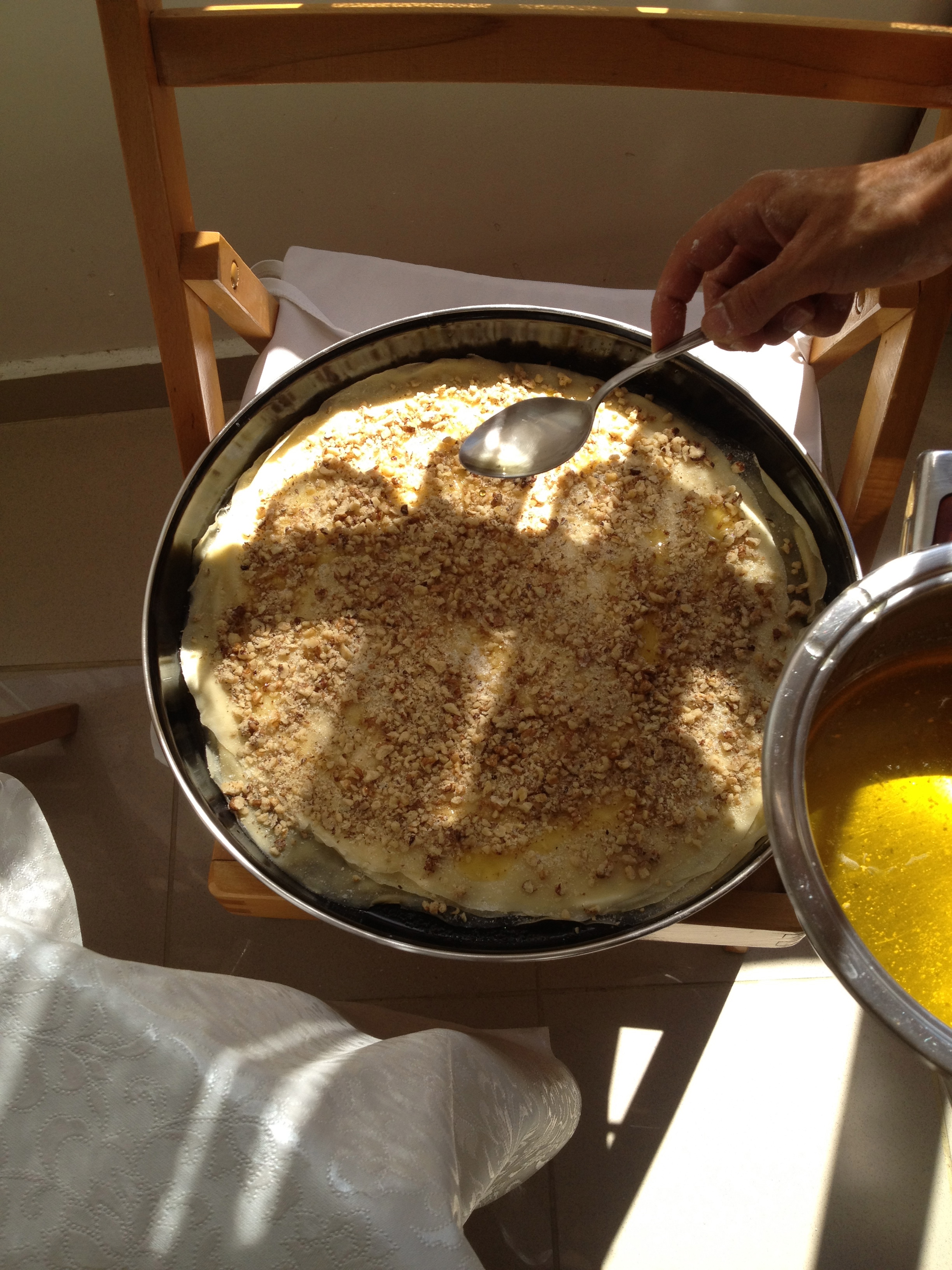
4. Once you have your six layered stacks you will now roll each of these into a bigger, thinner layer, the size of a pizza pie, using the longer, thinner rolling pin. You do this by applying very gentle but consistent pressure. (See second photo below). First roll out the six-layer round; this will be the bottom layer of the börek. Transfer to the bottom of a buttered round or rectangular baking dish. Then sprinkle melted butter (about 2 tbsp) and a small amount of sugar (2-3 tbsp) on top; continue with the layers like this (always adding the melted butter and sugar in between each layer), so that the six-layer version forms the base, followed by the rest of the stacks of five. In the middle (after three layers) you will add the layer of crushed walnuts in addition to the butter and sugar. There is only this one layer of walnuts.

5. After the final layer, cut the dough into small squares (about 2 x 2 inches), then drizzle the remaining butter on top; place in a preheated 350-degree F oven. It takes about 40 minutes to cook until the top is a golden bronze and the pastry just begins to get crackly or crispy, but not brown. Remove from the oven, let cool a bit before removing from pan. Can be served warm or room temperature. Will keep for days; store like bread (in plastic, or covered with cloth), but do not refrigerate.

IMG_4086

IMG_4093

IMG_4094

IMG_4102

IMG_4103

IMG_4110

IMG_4109

IMG_4111

IMG_4129

The last time I blogged was a month ago. It was about tomatoes. As was the blog before that (sort of). Well I’m at it again: tomatoes. This time stuffing them into jars to be eaten once the last leaves have fallen from the trees in Fort Greene Park and my wool coat has reclaimed its place by the front door.

I recently returned from a 15-day trip around Turkey with a few new recipes under my belt, ones that have been passed down through generations in my boyfriend’s family. His sisters do the cooking, and do everything by hand, and do not own a single measuring cup or spoon. One thing they do each year is turn late-summer tomatoes into a sauce to be eaten year round. It’s quite simple: tomatoes, peppers, salt, and a bit of oil. They primarily use the sauce to make Turkish menemen (and egg-and-tomato dish like shakshouka).

When we left for Turkey the weather was hot, sticky, classic late August; when we returned last week early fall had descended on New York, with its warmish days but brisk mornings and chilly nights. Luckily we got back into town just to catch the tail end of tomato season. We bought these organic ones from Hepworth Farms at the Park Slope Food Coop for $1.26 a pound! If you can get bruised ones for cheap at your local farmers market that’s good too.

This recipe is not quite the rustic preserved tomatoes I made last year or the ones written about earlier this week in the New York Times. But it’s not far off either. In addition to menemen I’d love to eat this with pasta or polenta or in a vegetarian lasagna. And honestly, I can’t imagine I’ll wait til winter to try!

IMG_4132

IMG_4145

Preserved tomatoes, Turkish style

8 pounds tomatoes, preferably Roma
2 pounds long sweet peppers
1/2 cup oil
1 heaping tbsp salt

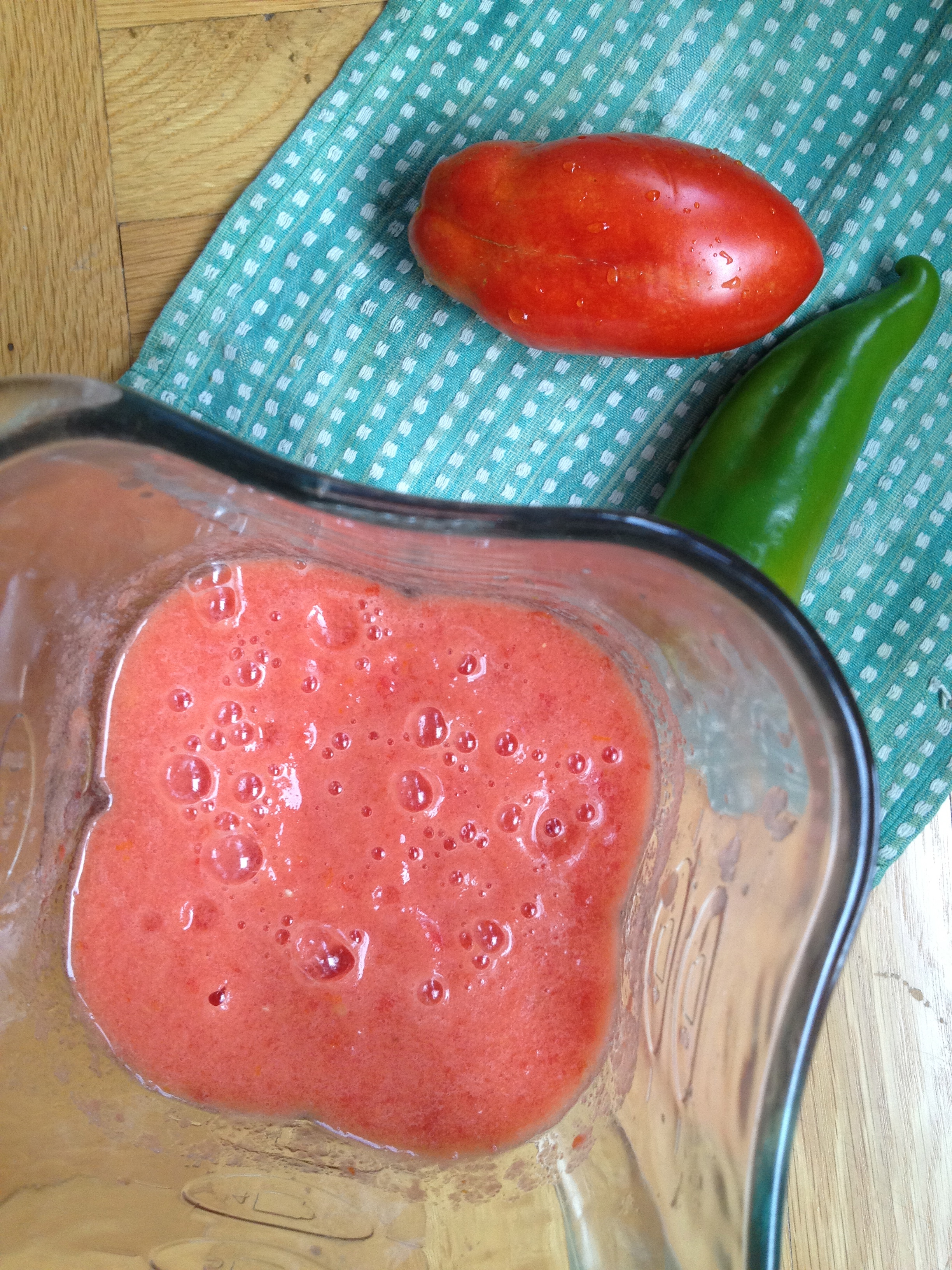
1. Quarter the tomatoes lengthwise and puree in batches in a blender until smooth. Transfer the pureed tomatoes to a large stockpot on the stove. Bring the tomatoes to a boil.

2. Halve the peppers lengthwise and chop in a food processor until fine, but not pureed. (A food processor works much better for this than a blender which tends to just pulverize.) Without a food processor you can do this by hand it just takes a while—chop as finely as possible.

3. When the tomatoes are boiling add the peppers, oil, and salt and reduce to a simmer but keep the liquid bubbling. You want to reduce some of the liquid and create a sauce. So simmer for about 45 minutes to one hour until you reach the desired consistency of sauce.

4. Have your Ball jars or recycled glass peanut butter jars (what we used!) clean and sterilized (we boiled the clean jars in water for ten minutes and removed with tongs and air dried). Don’t let the sauce cool too much. Using a funnel, spoon the tomato sauce into the jars, filling almost to the top, leaving just the tiniest bit of room.

5. While still hot, put the lids on and flip the jars upside down. Leave for two days to ensure a proper seal. (This is the method my boyfriend’s family uses; you can also look on the internet for other methods to seal, namely submerging the jars in boiling water.)

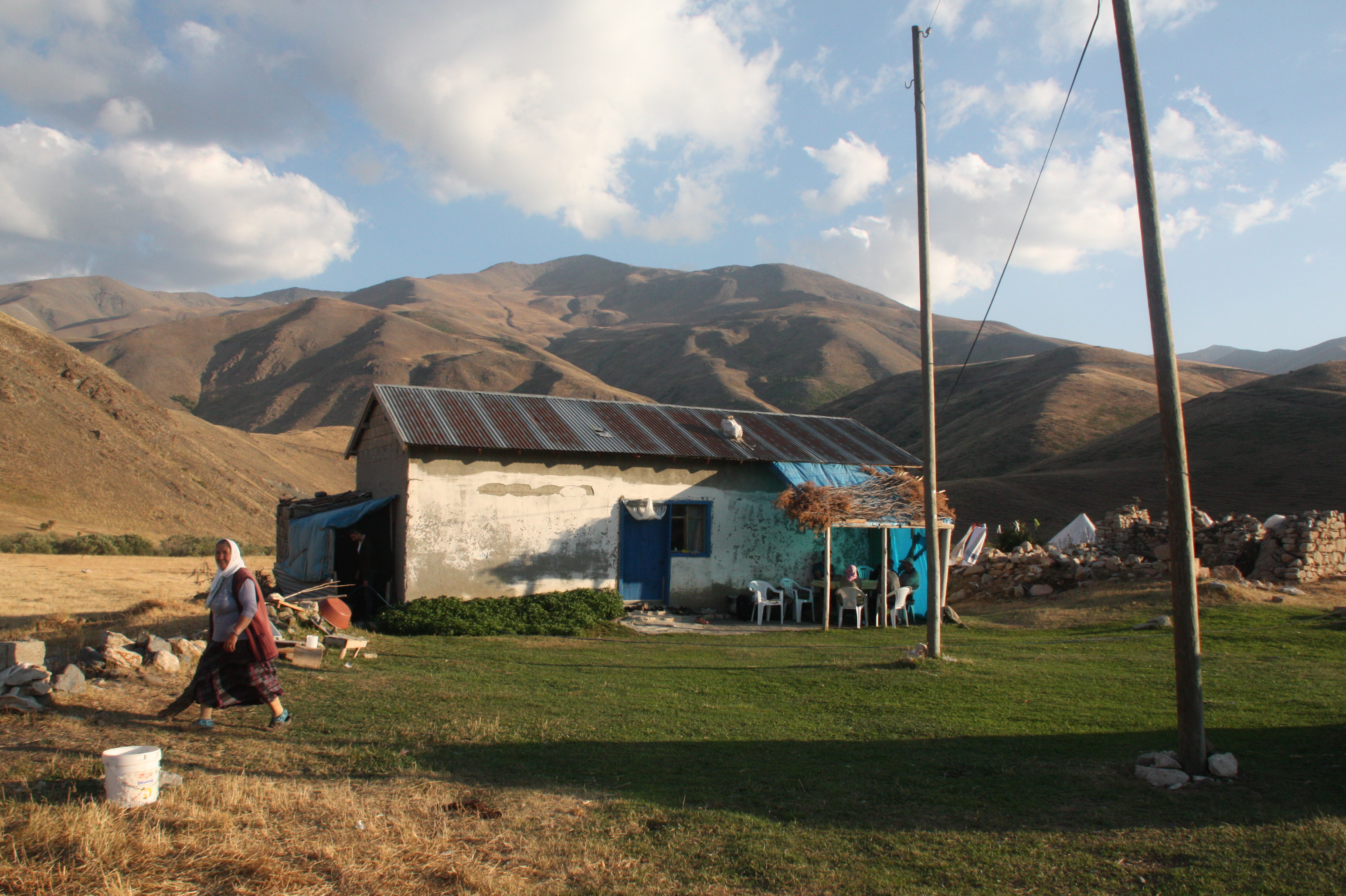
Below is a photo of the beautiful village where we stayed for five days in the mountains of eastern Turkey, where my boyfriend grew up and his family still spends the summers. Bottom is me picking apricots in a neighboring village. I also saw pomegranate, lime, and fig trees during those two weeks. I’d definitely never seen a pomegranate tree before!

IMG_6872

IMG_6987

IMG_3859

Do you know what a tarte tatin is? You may have eaten one without realizing what it was. It’s essentially fruit that’s caramelized in butter and sugar, baked with pastry on top, and then flipped over and served upside down with the fruit showing.

I was up in Woodstock this week and came upon this slide show in the Times for tomato recipes—garlicky tomato gazpacho, Sicilian stuffed tomatoes, and so on—but the one that really caught my eye was the tarte tatin, made with a variety of cherry tomatoes, chopped olives, and thyme. I vowed to make it as soon as I returned to the city this weekend. And so I did.

This being high tomato season and all, I can’t help myself when I’m at the coop or the farmer’s market and I walk by those little green pint baskets filled with Sun Golds or Elettros, Brown Berries, and Red Pear Heirlooms. They are, after all, only good this time of year—one month, maybe two if I’m lucky, so I get them while the getting’s good.

The Times recipe was pretty good but I added red chile pepper flakes for some heat (which I add to almost everything—ice cream?), and halved the cherry tomatoes because some of mine were quite large. Do not make this mistake—don’t halve your cherry tomatoes! They end up leaking a lot of their liquid into the tart and the pastry became a little soggy. Live and learn. It still tastes scrumptious.

IMG_3854

Caramelized Tomato Tart Tatin
Yields 4 to 6 servings

1 14-ounce package of puff pastry
2 tbsp unsalted butter
3 red onions, thinly sliced
1/4 cup plus a pinch of sugar
1/2 teaspoon sherry or white vinegar
1/4 cup chopped pitted Kalamata olives
1 1/2 pints (about 1 pound) cherry or grape tomatoes
1 tbsp chopped fresh thyme
Salt and pepper, to taste

1. If frozen, slightly thaw your puff pastry, about 20 minutes before you will handle it. The colder it is the easier it is to work with but it shouldn’t be frozen. Gently unfold the pastry and cut into an approx. 10-inch circle. Set aside in the refrigerator. Preheat the oven to 425 F.

2. Melt butter in a large skillet over medium heat. Add the onions and a pinch of sugar and cook, stirring, until onions are golden and caramelized, about 15 to 20 minutes. Add 2 tbsp water to deglaze the pan, scraping brown bits from the bottom of the pan. Turn off the heat and set aside.

3. In a separate, ovenproof 9-inch skillet (I used a cast-iron), combine 1/4 cup sugar and 3 tbsp water. Cook over medium heat, swirling the pan gently (don’t stir) until the sugar melts and turns amber, 5 to 10 minutes. Add the vinegar and swirl gently.

4. Sprinkle olives over caramel. Scatter tomatoes over olives, then the onions. Season with the thyme, salt, and pepper. Top with the puff pastry round, tucking the edges into the sides of the skillet. Cut several long vents into the top of the pastry.

5. Bake tart until crust is puffed and golden, 25 to 30 minutes. Let stand for 5 minutes, then loosen the edges with a butter knife. Carefully flip the tart out onto a serving dish. Cut into wedges and serve.

IMG_3863