Archives for category: Spring

So I was at my happy place yesterday afternoon (the PSFC, which you should know by now is the Park Slope Food Cult), slicing a wheel of Humboldt Fog, bantering with my fellow workers about topics ranging from: if the quality of red meat continues to improve with grass-fed beef and small farmers, will overall meat consumption rise? How to make french toast with tofu instead of bread (tell ya later). And using Tuesday’s general meeting on the Israeli boycott as a venue for one’s performance art. In other words, we were a parody of ourselves, what Samantha Bee called “a diverse group of NPR listeners.” (If you haven’t seen the Daily Show clip on the co-op, click here.)

My little crew of Week-A Friday food processing workers is a delightful bunch of folks including the NYC Bikram Yoga champion; a journalist exposing a cover-up at Fukushima; an event planner organizing a 1,500-person NYC Easter egg hunt next weekend; a midwife; writing professor; and metal-worker jewelry designer. We come together once every four weeks to wrap cheese, package dried mango, and debate things like the Pfizer birth control recall and the best new burger joint in the Slope, for precisely 2 hours and 45 minutes.

We started talking about almond milk and one woman mentioned making her own. I’ve been wanting to try this since I go through about a quart a week and, well, generally prefer making to buying. She told me her method, I committed it to memory, and after our shift I bought about one pound of raw, unsalted almonds, the only ingredient you really need. This is the easiest thing I’ve made for this blog yet (except maybe for one of my first posts, last April, on Vermont Iced Coffee.)
The benefits of homemade almond milk are more about flavor than cost effectiveness. In fact it may even cost more to make it yourself, even when buying from the co-op’s bulk bins, but not much. The price I paid was $4.21 per pound (for organic), and you need about 1 pound of almonds to yield one quart of almond milk, whereas buying a pre-made quart is usually $2 to $3. But the flavor is incomparable. This homemade stuff is rich, creamy, not watery, with a very distinct almond flavor. Buy your almonds from a place with high turnover. Nuts go rancid rather quickly; they should be as fresh as possible, I wouldn’t really bother with stale almonds. The resulting flavor is so good, and texture so smooth, I will definitely finish this quart before next week.

One more thing, in order to do this, you need a powerful blender, preferably one with at least 1,000 watts of power. A VitaMix is ideal, although expensive I know (but such a good investment); I use the Ninja blender I got a few months ago, which makes amazing green smoothies and blends everything from ice to vegetables in seconds.

You can adjust the amount of water in the recipe below depending on how thick you’d like the results. These proportions will give you a creamy-ish milk but not all that thick. Get blending!

Homemade Almond Milk

1 pound (about 3 cups) raw, unsalted almonds
3 cups water (for soaking) plus 2 more cups
a few drops of vanilla extract
tiny pinch of salt (optional)

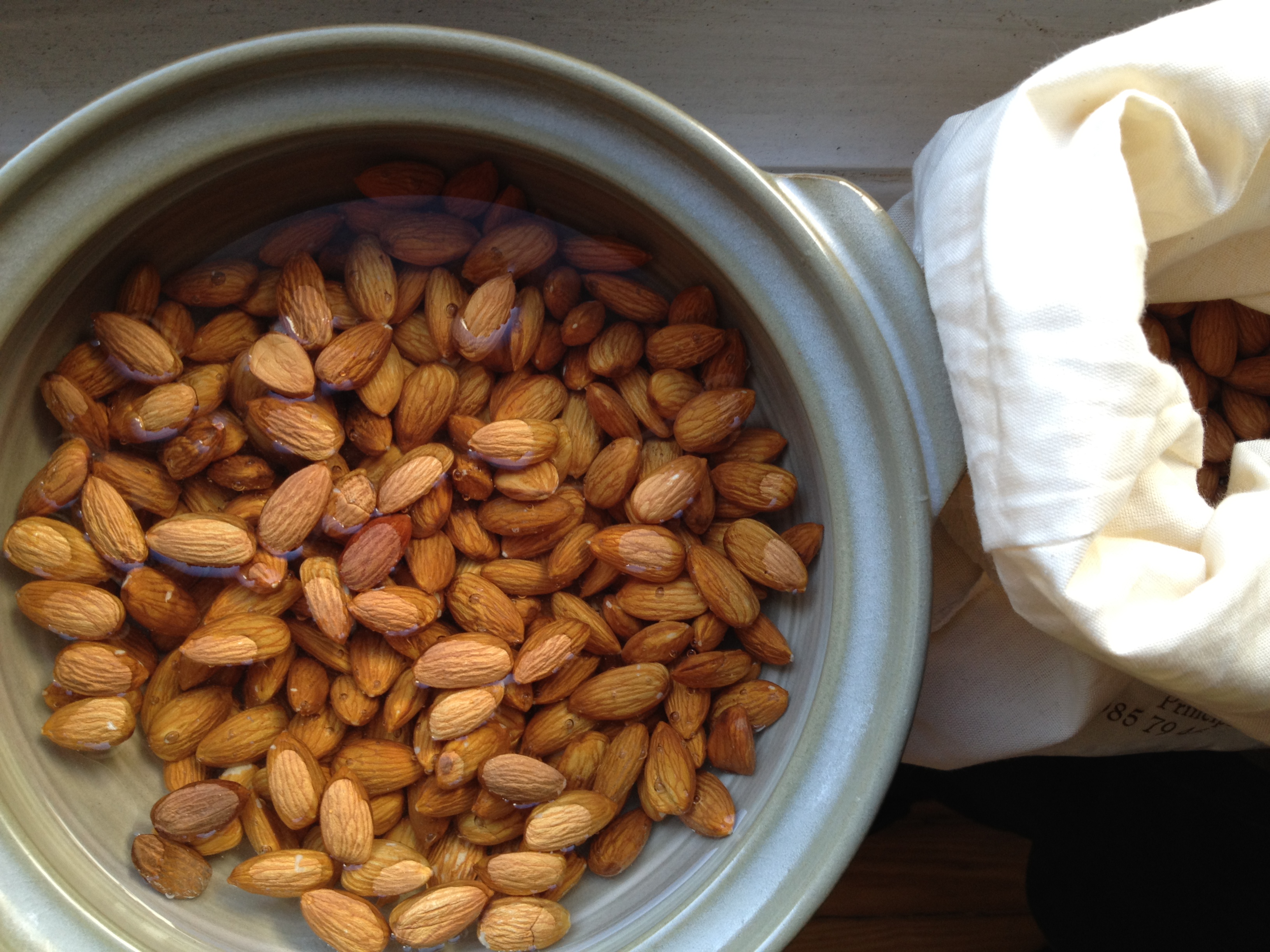
Place the almonds in a bowl or pot and add the 3 cups of water. Cover with a lid, and let soak for at least 12 hours.

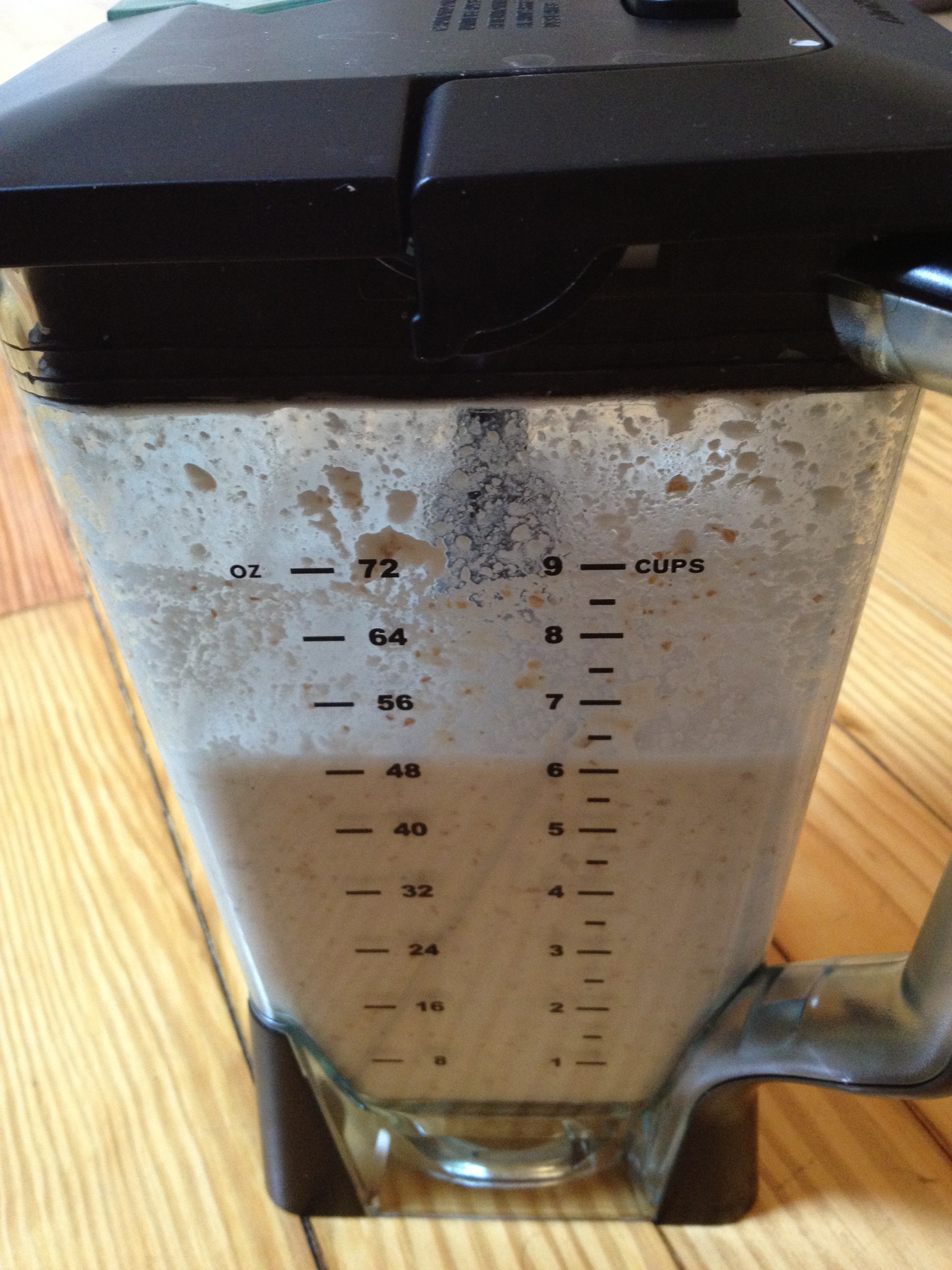
Place the almonds and their soaking liquid in a blender and blend until creamy. Halfway through blending, add the vanilla and about 2 more cups of water, gradually. This will take anywhere between, say, one and two minutes depending on your blender.

Line a large bowl with cheesecloth (or, I used a reusable cloth produce bag) and place the contents of the blender (liquid, almond pulp, and all) into the cheesecloth or bag, over the bowl. Strain the mixture into the bowl, squeezing all the liquid out. You’ll be left with quite a bit of almond pulp – I’m taking suggestions on what to do with this since it seems like a shame to just throw out.

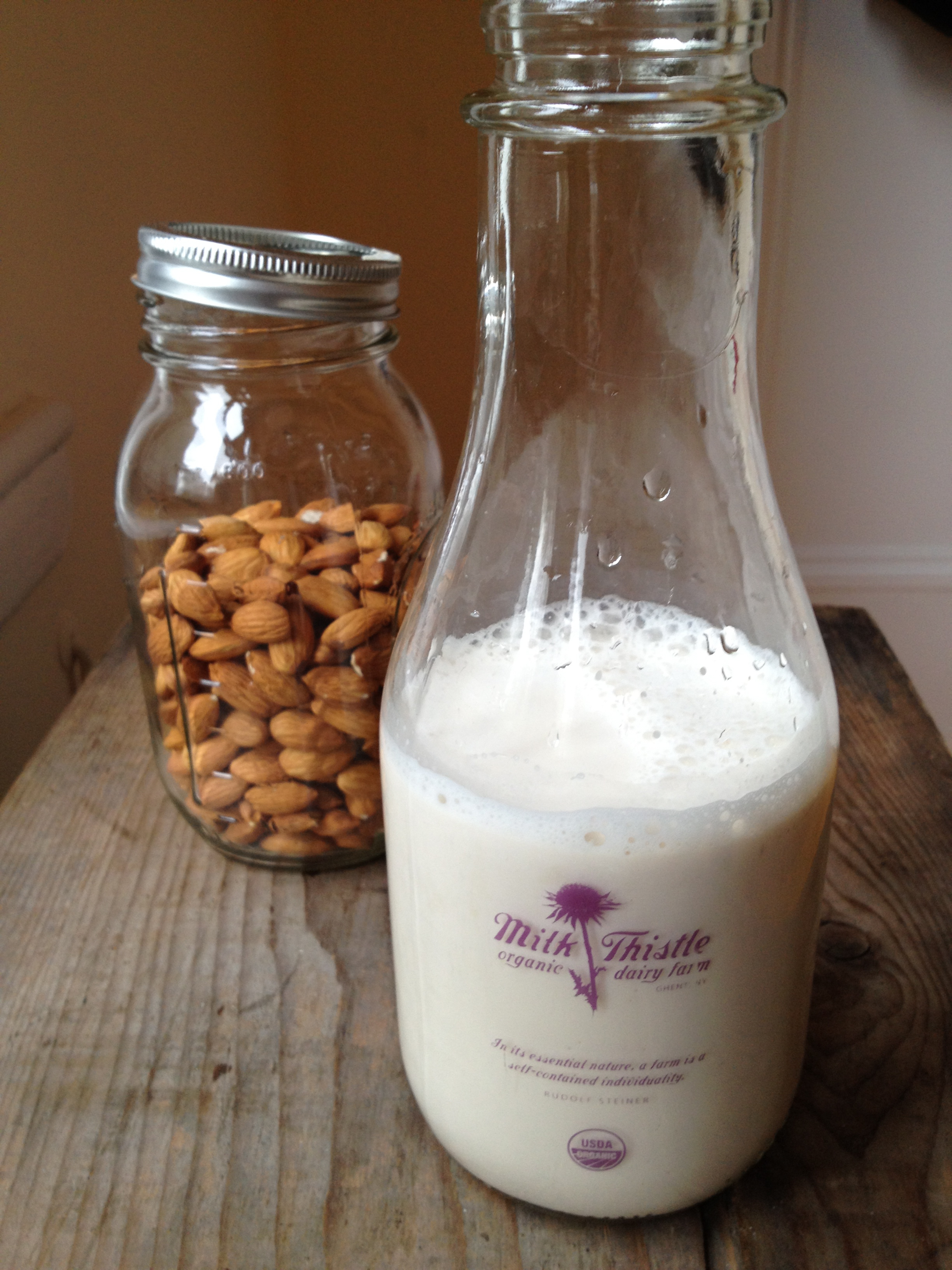
Ode to Milk Thistle Farm – paying tribute by using their old glass bottle to store my almond milk. (I mention here how they sadly went out of business recently.)
Did you hear that winter’s over…Last year’s miracles will soon be forgotten. New creatures whirl in from non-existence, galaxies scattered around their feet. Have you met them? -Rumi

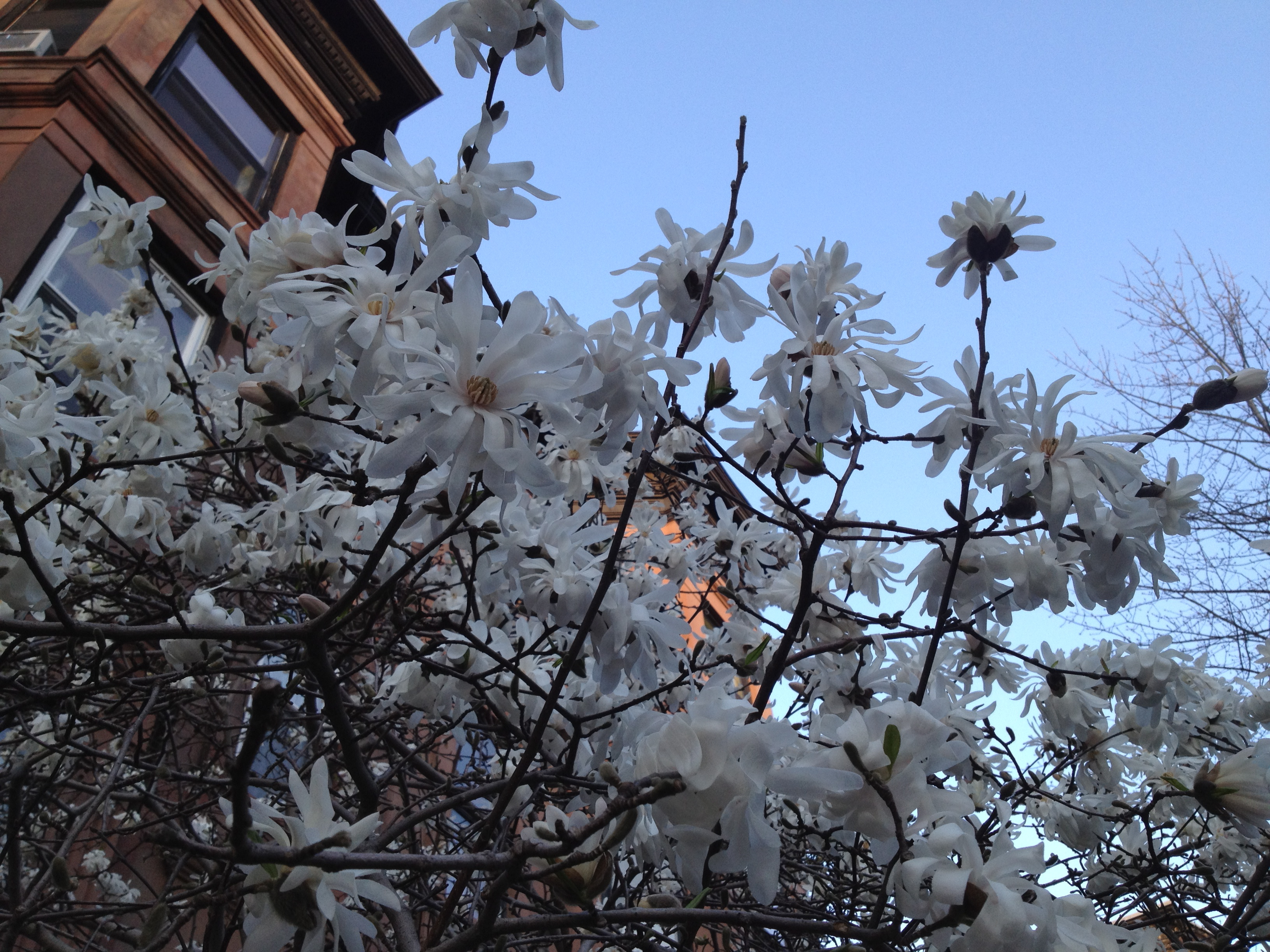
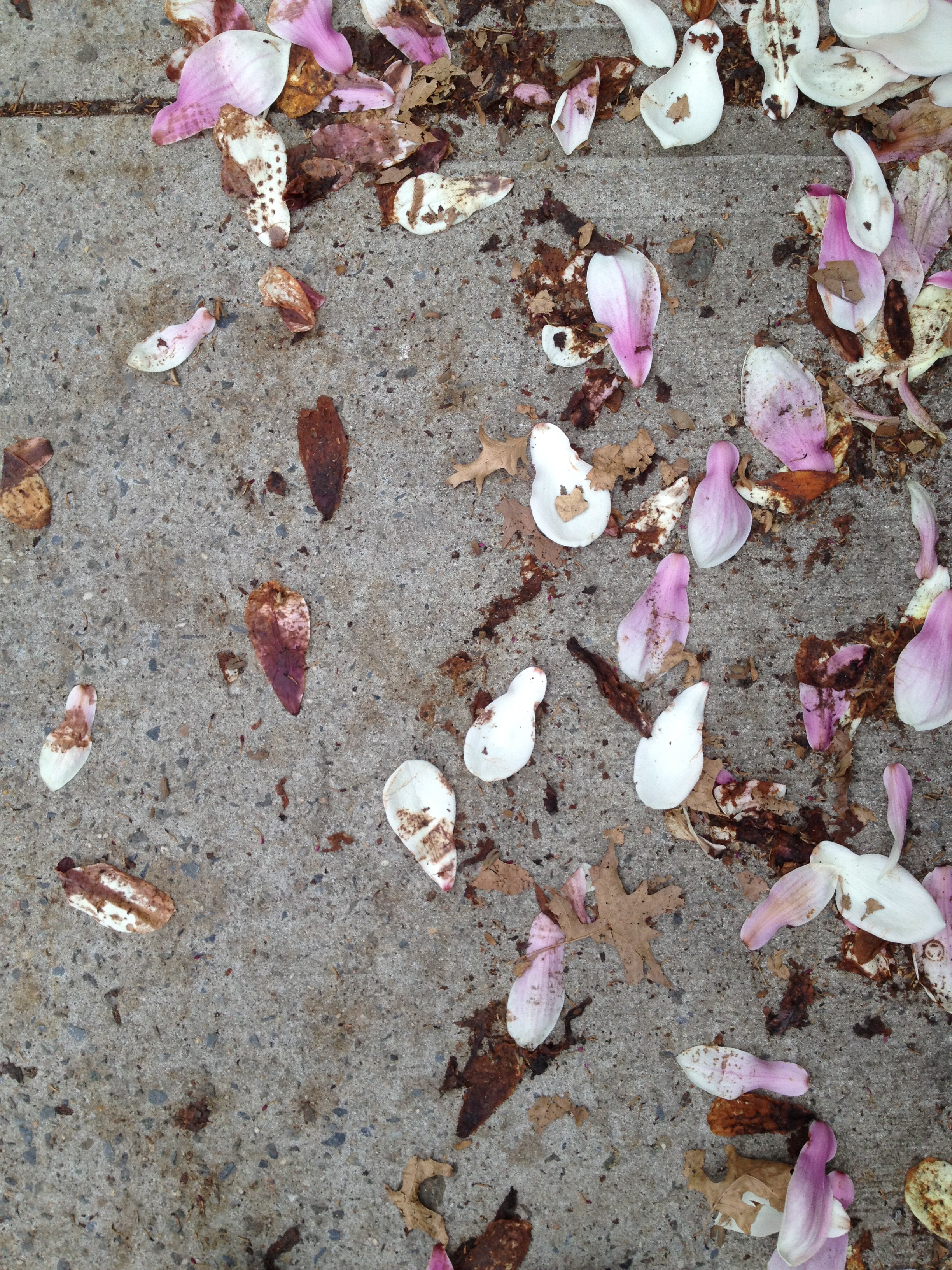
One day this week—I think it was Thursday—I stepped outside of my apartment and noticed that each and every tree on my block had blossomed overnight. I was in Manhattan later that same day and sure enough, the trees there too were exploding with color, especially the pink magnolia blossoms, and white Callery pear flowers. There’s something about spring that takes the edge off of New York. Everything softens: the light, the colors, the clothing, the people. Suddenly there’s pink on the concrete, bare feet in sandals, and rainbow sprinkles dripping down ice cream cones.

Once again I was in the mood for the kind of spring dish that strikes the right balance for March: in like a lion, out like a lamb. Nothing too heavy, but nothing too summery crisp either. Something with color, but also a little bit of warmth. Warm salads tend to do the trick. I was flipping through my cookbooks for inspiration and this here is a riff on another Ottolenghi dish. A combination of chickpeas, sautéed carrots, caraway seeds, chard, mint, and cilantro, served with greek yogurt, olive oil, and pickled shallots.

And because tonight’s the season 5 Mad Men premiere, I leave you with one of my favorite Joan quotes: “But that’s life. One minute you’re on top of the world, the next minute some secretary’s running you over with a lawnmower.”

Chickpea Sauté with greek yogurt and pickled shallots
Serves 4

1 shallot, cut in slivers
4 tbsp rice wine vinegar
2 tbsp water
1/8 tsp salt
1 tsp sugar
1 bunch of Swiss chard (300 g), stems and leaves separated
1 tbsp olive oil, plus more for serving
4 carrots, peeled and diced
1 tsp caraway seeds
1 c (250 g) cooked chickpeas
1 garlic clove, minced
2 tbsp chopped fresh herbs: mint and cilantro work well, or chervil, chives, flat-leaf parsley
1 tbsp fresh lemon juice
salt and black pepper

6 oz (100 g) greek yogurt
1 tbsp olive oil

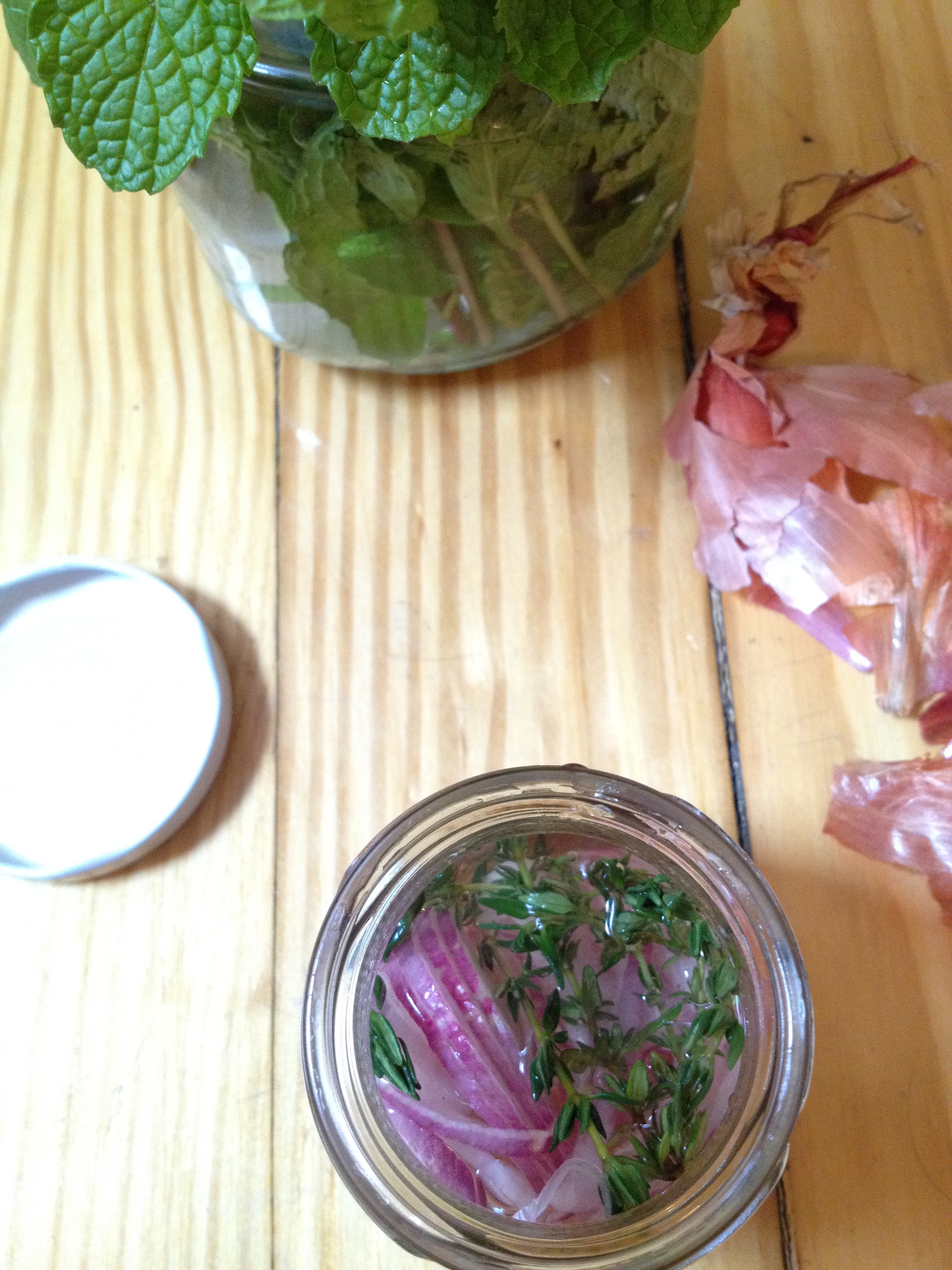
You want to do a quick pickle of your shallot: place the shallot slivers in a small jar and cover with the vinegar and water, and add the salt and sugar. (I also threw in some fresh thyme I had lying around.) Let sit at least 30 minutes.

Bring a big pot of salted water to boil and add the chard stems, cook for 2 minutes, then add the leaves, cooking everything for an additional 3 minutes. Drain the water and rinse the chard (stems and leaves) in very cold water. Squeeze dry and do a rough chop.

Heat the olive oil in a large, heavy saucepan. Add the carrots and caraway seeds and sauté for 5 minutes, then add the chard and chickpeas and continue cooking for an additional 6 minutes. Then add the garlic, herbs, lemon juice, salt, and pepper. Remove from heat, adjust the seasoning.

To serve, combine the greek yogurt and olive oil with a bit of salt and pepper. Pile the vegetables onto serving dishes and spoon the yogurt mixture on top, drizzling with additional olive oil and scattering some pickled shallots on top.

Here are some photos of spring, from my neck of the woods…including: Long Island beach; Occupy Wall Street @ Union Square; @ Jay St.-MetroTech subway station; a friend’s little one, born on my birthday; more beauty on my block.

“Good-bye to…food and coffee. And new ironed dresses and hot baths…and sleeping and waking up. Oh, earth, you’re too wonderful for anybody to realize you…Do human beings ever realize life while they live it? — Every, every minute?”

Oh Thorton Wilder. I know you’re relegated to the dustbin of high school English classes but this quote from Our Town gets me every time. I haven’t read Wilder in years but this weekend, in between working a new job, visiting the Whitney Biennial and the Francesca Woodman show at the Gugg*, and generally avoiding people in green, I read multiple applications for the Board I’m on, students eager to get into an academic summer program.

Someone’s application made a reference to Our Town and my mind wandered to this passage. Food and coffee and freshly ironed dresses, hot baths, sleeping, and waking up…In the words of Rodgers and Hammerstein, these are a few of my favorite things.

Wilder in mind, I set out for this weekend’s simple cooking pleasure. With the weather warming up, but the farmer’s markets not yet stocked with the first produce of the season, an in-between, intermediary meal was in order. Something to welcome the spring and sun and longer days, and gently bid farewell to the unfriendliest of seasons (although kind of friendly this past year).

My hand reached for Plenty on the shelf. That’s the cookbook by Yotam Ottolenghi I wrote about here two weeks ago. It would have to be the caramelized garlic tart. The perfect early spring food: the lusciousness of cream, the lightness of pastry, the fragrance of rosemary and thyme. It’s letting go of winter and greeting spring simultaneously. It’s warm and cool, light and dark, sweet and savory, like March itself.

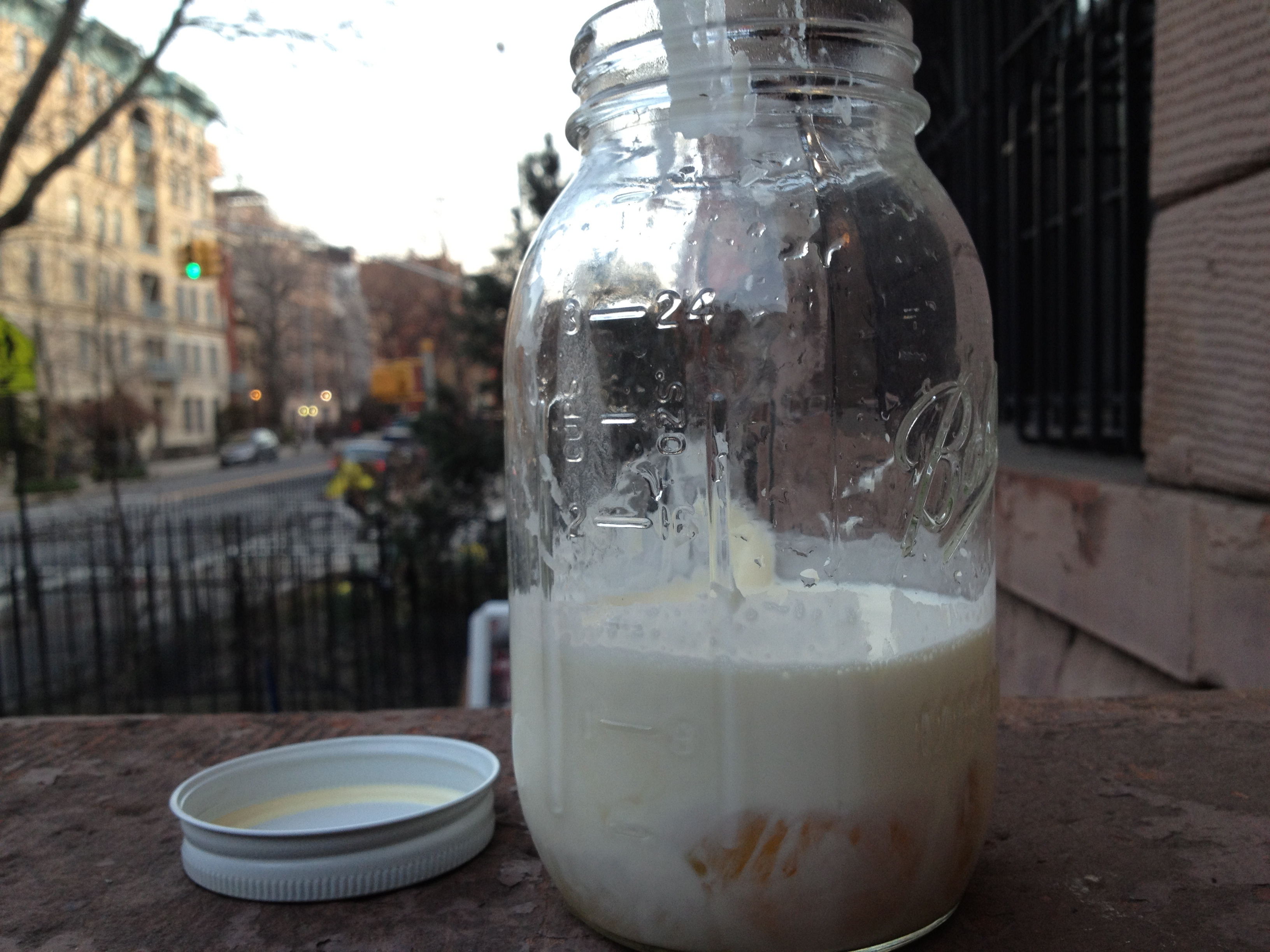
The Ball jar above is filled with cream, crème fraîche, eggs, salt, and pepper. Its final destination: the all-butter puff pastry, to be filled with caramelized garlic, two types of goat cheeses, rosemary and thyme. In the words of a friend, “I do.”

Caramelized Garlic Tart
From Plenty by Yotam Ottolenghi

Serves 8

1 sheet all-butter puff pastry (approx. 375 g)
3 medium heads of garlic, cloves peeled and separated
1 tbsp olive oil
1 tsp balsamic vinegar
scant 1 c water (220 ml)
3/4 tbsp sugar
1 tsp chopped rosemary
1 tsp chopped thyme, plus a few twigs to finish
1/4 lb (120 g) soft, creamy goat’s cheese (I used Caprichio from Spain)
1/4 lb (120 g) hard, mature goat’s cheese (I used smoked goat cheddar from Redwood Hill, CA)
2 eggs
1/3 c (100 ml) heavy cream
1/3 c (100 ml) crème fraîche
salt and black pepper

Have ready a shallow, loose-bottomed, 9-in. (28 cm) fluted tart tin. Thaw the puff pastry if frozen for at least 40 minutes before handling, then line the bottom and sides of the tin. Place a large circle of wax paper on the bottom and fill with dried beans. Let rest in the fridge for 20 minutes.

Preheat the oven to 350 F (180 C). Place the tart in the oven and bake for 20 minutes, with the beans. Remove the beans and wax paper, then bake for another 5-10 minutes, until the pastry is golden. Set aside, leave the oven on.

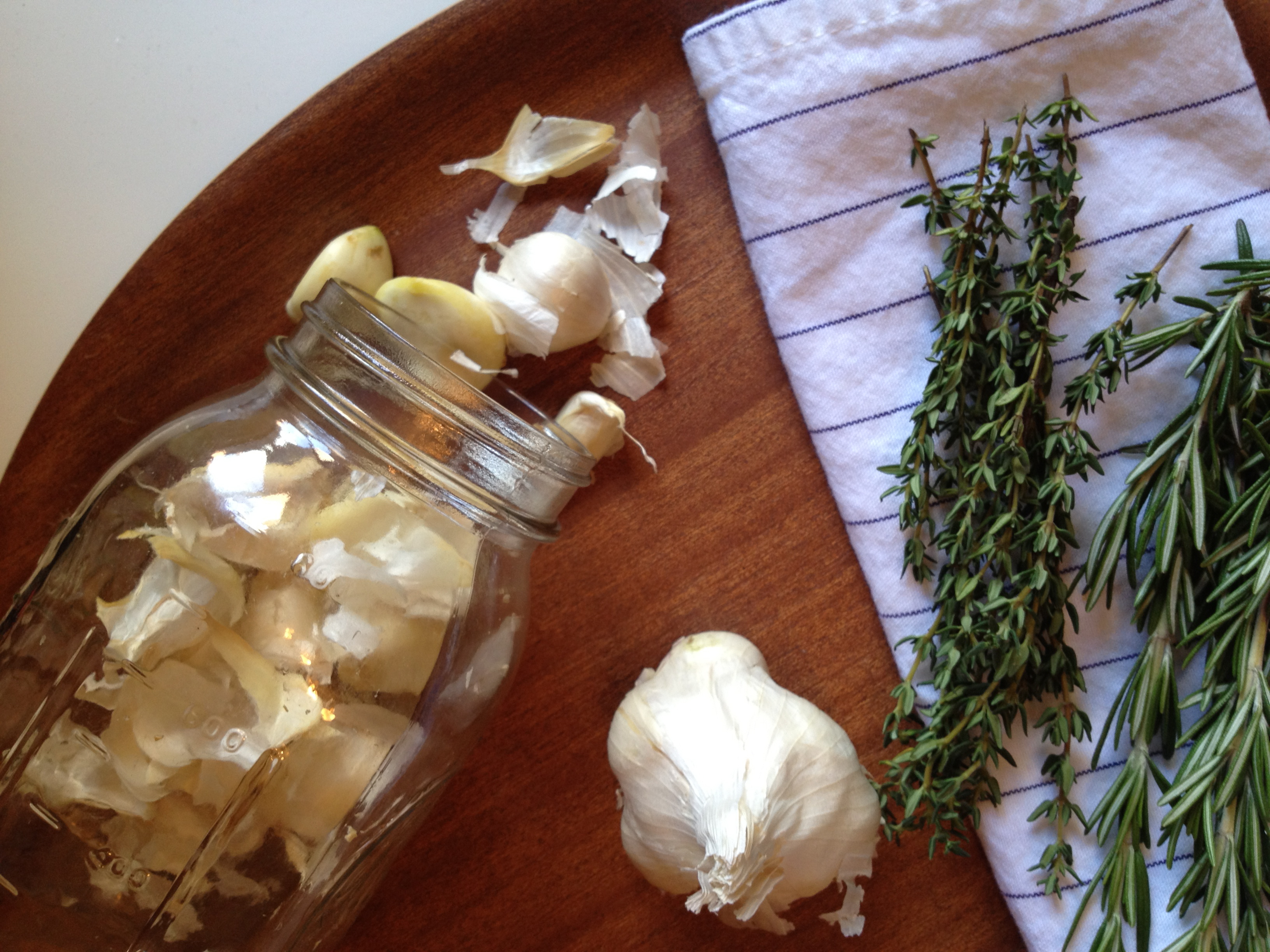
While the tart is baking fend off vampires by preparing the garlic. (A trick by the way to peeling all that garlic is putting the cloves in a jar, like a Mason or Ball jar, and shaking hard for about one minute. At least half the skins will fall off that way.) Place the cloves in a small saucepan and cover with plenty of water. Bring to a simmer and blanch for 3 minutes, then drain well. Dry the saucepan, return the cloves to it, and add the olive oil. Fry the garlic cloves on high heat for 2 minutes. Add the balsamic and water and bring to a boil, then simmer gently for 10 minutes. Add the sugar, rosemary, chopped thyme, and 1/4 tsp salt. Continue simmering on medium for 10 minutes, or until most of the liquid has evaporated and the garlic cloves are coated in a dark caramel syrup. Breath in deep. Set aside.

To assemble the tart, break up both types of goat’s cheeses into pieces and scatter in the pastry. Spoon the garlic cloves and syrup evenly over the cheese. In a jug or bowl whisk together the eggs, creams, 1/2 tsp salt and freshly ground black pepper. Pour this over the tart filling to fill the gaps, but make sure you can still see the garlic over the surface.

Reduce the oven temp to 325 F (160 C) and place the tart inside. Bake for 35-45 minutes or until the tart filling has set and the top is golden brown. Remove from the oven and let cool a little. Remove from tin, lay a few sprigs of thyme on top and serve warm with a crisp green salad.

——

*If you live in NYC I highly encourage you to visit the Whitney Biennale, up until May 27th. Head straight to the second floor for Latoya Ruby Frazier’s black and white photographs—these are worth the visit alone; then check out Werner Herzog’s film, an ode to c17 Dutch painter Hercules Segers set to the music of Ernst Reijseger, also on the second floor. And then check out the little room toward the back of the second floor gallery with the Forrest Bess (by Robert Gober) installation: chilling. Then head up to the fourth floor rehearsal space of Michael Clark, British dancer and choreographer, who, with the dancers in his company, have taken over the entire floor. You get to stand around and watch them rehearse through April 8th.

Finally…worth a trip to the Guggenheim to see Francesca Woodman through June 13th. Woodman was a prolific photographer with a very short career, basically 1975 to 1981. I loved the Providence photos in particular.