Archives for category: Farmer’s Market

farro-2

Happy Monday! I’m very pleased to introduce Lauren Salkeld, guest blogger for this week’s post. As a senior editor at Epicurious.com, Lauren develops, tests, and edits recipes, and writes about various cooking techniques, from making homemade marshmallows to deep-frying a turkey. You can follow her on Instagram (laurensalkeld79) and Twitter (@laurensalkeld). I’m thrilled she’s contributed this delicious yet easy-to-make recipe, combining some of my favorite ingredients. 

This farro and kale salad came about when I was creating a menu for a friend’s baby shower. I love grain salads because they can be made in advance—some even taste better on the second day—and can be served at room temperature, which are two really important things when you’re the only person cooking for a party, which for me is often the case.

Grain salads are also really flexible, so you can add in whatever ingredients you picked up at the farmers’ market, or the ones you happen to be really into at the moment. I’ve developed a bit of formula for mine, which goes something like this: grain + green + veggie or fruit + cheese + nut or seed. And I typically add some kind of homemade pesto or a shallot, olive oil, and lemon juice dressing like the one used here. This version is great as leftovers, and I bring it to work for lunch all the time, but you may want to leave the crispy shallots and walnuts on the side until you’re ready to eat, because otherwise they can get a little soggy.
farro-11

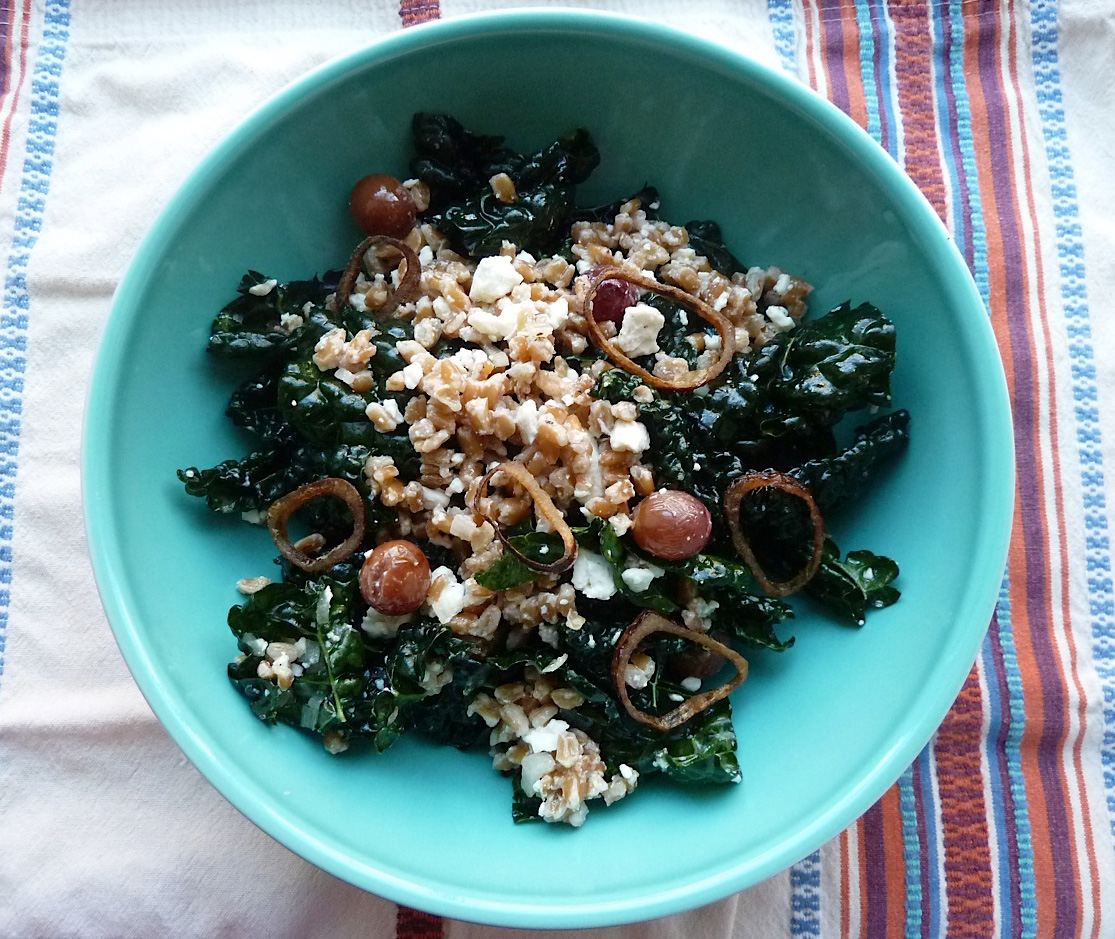
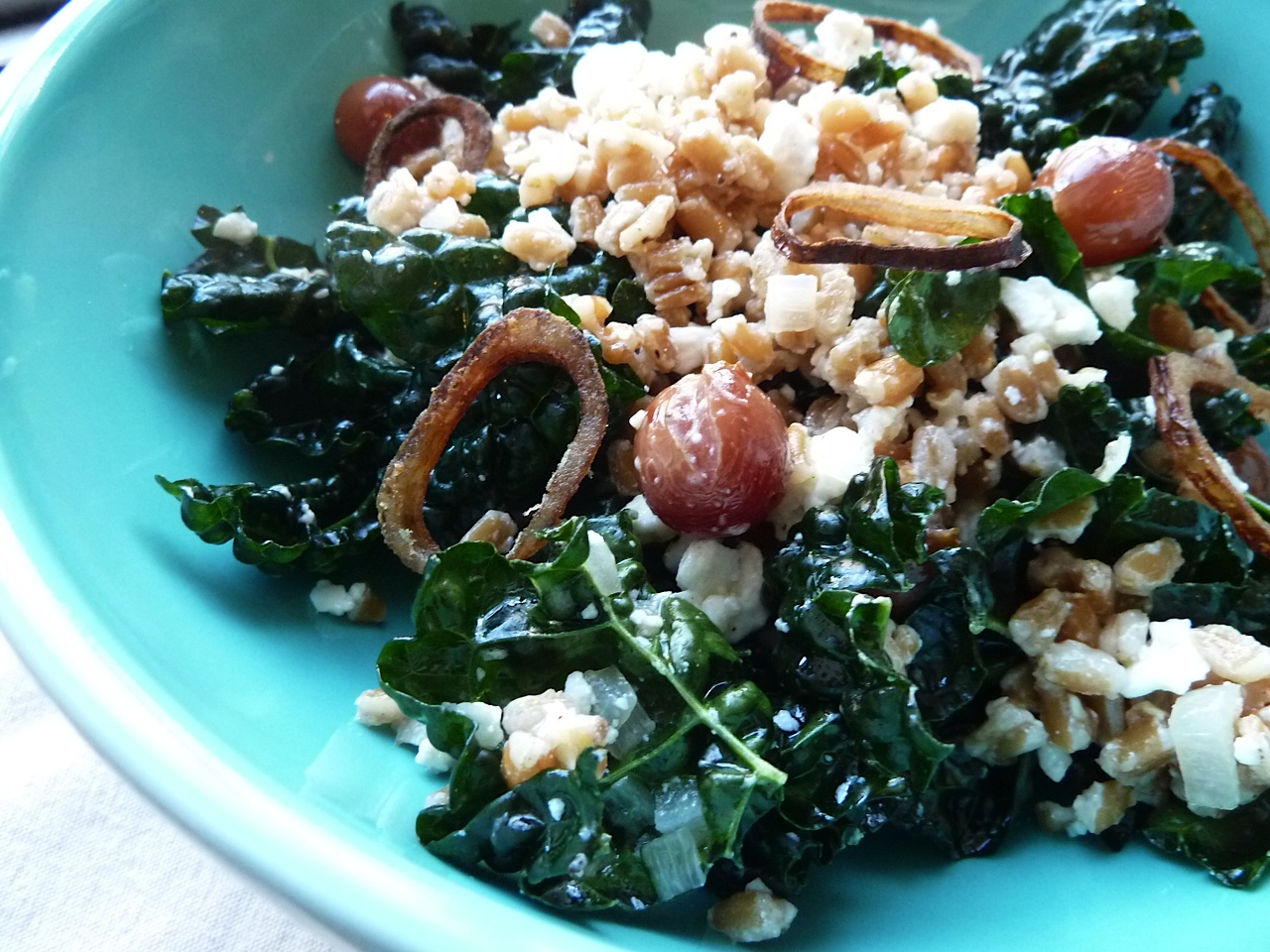
Farro and Kale Salad with Roasted Grapes, Crispy Shallots, and Ricotta Salata

Makes 4 servings

1 ½ cups red seedless grapes
6 tablespoons olive oil
Fine sea salt and freshly ground black pepper
1 extra-large shallot
Juice of 1 lemon
1 bunch Lacinato kale, ribs removed and cut into bite sized pieces
1/4 cup all-purpose flour
2 cups cooked farro, at room temperature
About 5 ounces crumbled ricotta salata or feta
½ cup walnuts, toasted (optional)
Preheat the oven to 250°F.

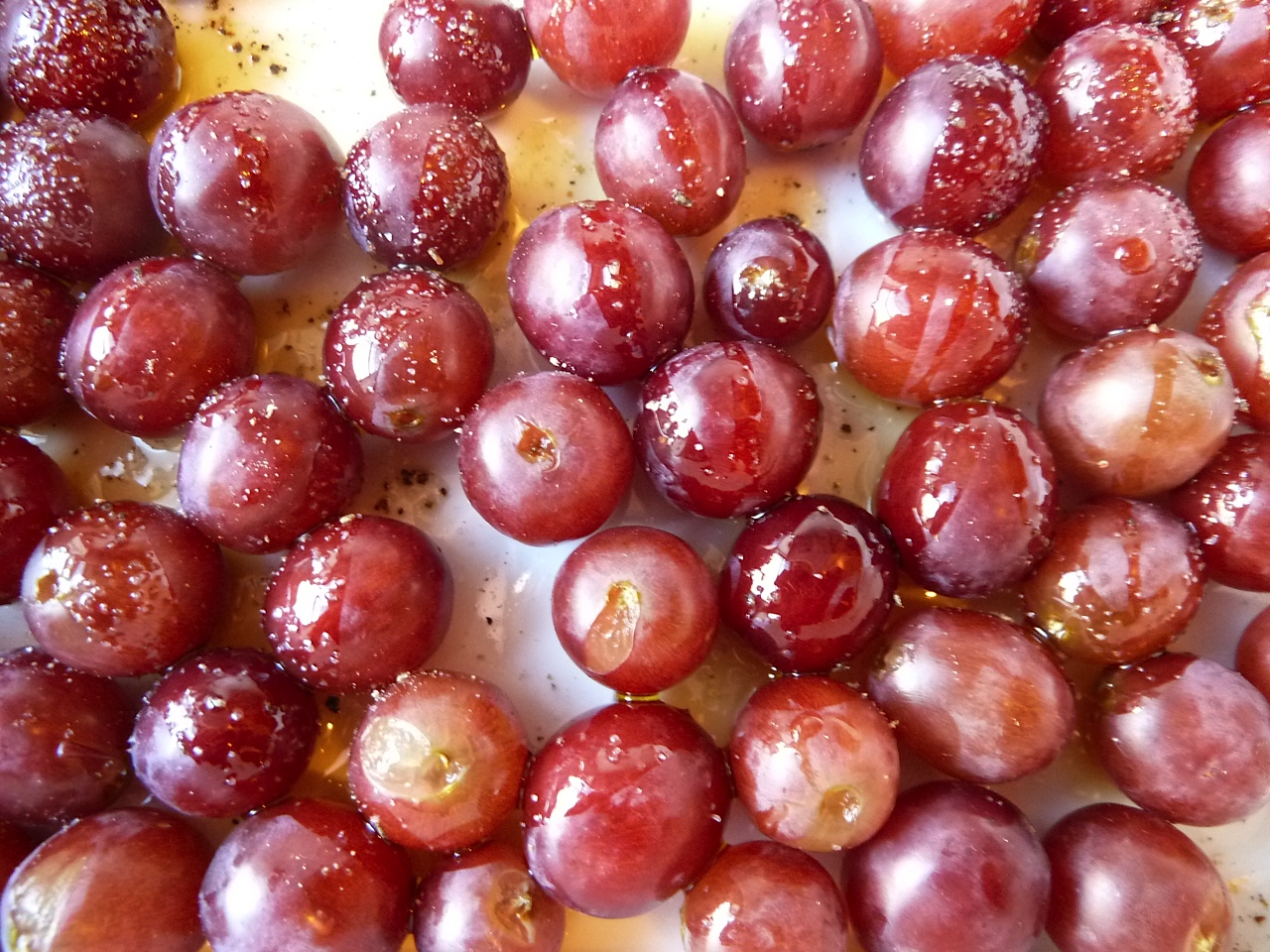
In a baking dish, combine the grapes with 1 tablespoon olive oil and season with salt and pepper. Roast until slightly shriveled, about 1 hour. Let cool.

Peel the shallot and slice it crosswise into rounds. Remove the first 2 or 3 large outer rings of each round and set them aside. Mince the rest of the shallot (the smaller inner rings).

In a small sauté pan over medium heat, warm 3 tablespoons olive oil. Add the minced shallot and sauté until softened, about 2 minutes. Transfer to a small bowl and let cool. Once cool, add the lemon juice and whisk to combine.

Place the kale in a large serving bowl, add the lemon juice-shallot-olive oil mixture and use your hands to massage it into the kale.

Place the flour in a small bowl. Add the reserved shallot rings and toss to coat the shallot rings in flour. In a small sauté pan over medium heat, warm the remaining 2 tablespoons olive oil. Working in batches, shake any excess flour off the shallot rings then fry them in the hot oil, flipping once, until just crispy, 30 seconds to 1 minute. Transfer as fried to a paper towel-lined plate to drain.

Fluff the farro with a fork then add it, along with the grapes and ricotta salata or feta, to the kale and toss to combine. Season to taste with salt and pepper. Top the salad with the crispy shallots and toasted walnuts, if using, and serve.
farro-3

IMG_4249

Fall and baking go together like birthdays and cupcakes; Brooklyn and BAM; your right and left shoe. Or, turns out, pears and polenta.

As soon as the weather turns crisp I want to be in my kitchen on a Saturday with the oven on, music playing (well, really, NPR Saturday programming), and time on my hands to knead, stir, blend, bake. There’s something comforting and satisfying about making pies, cakes, and muffins using the last of the year’s good local produce.

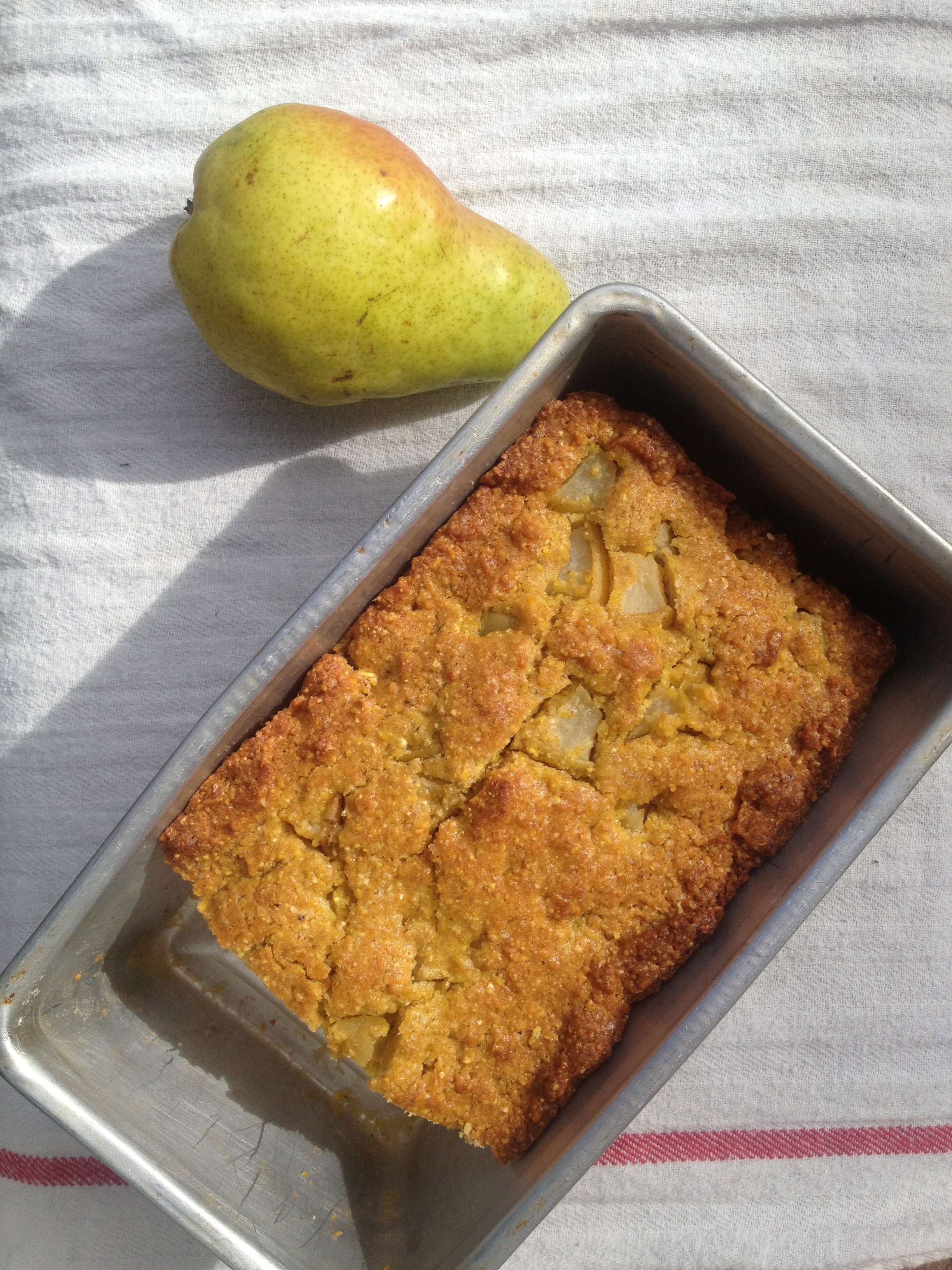
A few weeks ago I was at a dinner party and my lovely friend served this easy-to-make polenta-pear-olive oil cake. She couldn’t have known, but those are three of my favorite ingredients and the combination was a revelation. I’ve had olive oil cake before, and maybe even cornmeal olive oil cake, but never with the addition of pear. The olive oil produces a crispy crust-like top that provides a satisfying crunch.

The recipe is from Lucy Waverman—”the Melissa Clark of Canada” is how my friends, the dinner party hosts who are from Montreal, described her. She writes a regular column for The Globe and Mail newspaper and I’m happy to have discovered her simple and seasonal recipes!

This is a snap to make and you’re sure to love it. It’s not too sweet to begin with but you could even reduce the sugar a little bit like I did. Would also make great muffins, just reduce the cooking time. Oh and if you don’t want to poach your own pears you can use canned pears and just reduce the canned pear syrup.

IMG_4255

Polenta, Pear & Olive Oil Cake
From Lucy Waverman, The Globe & Mail

For the poached pears

1 cup water
½ cup sugar
¼ cup honey
1 star anise, broken up, optional
1 1-inch piece cinnamon stick
2 pears, peeled, quartered and cored

For the cake

1¼ cup polenta or cornmeal
¾ cup all-purpose flour [I used half whole-wheat flour and half white]
1 teaspoon baking powder
½ teaspoon salt
½ cup butter, softened
¼ cup honey
1/3 cup sugar [I used 1/4 cup sugar]
½ teaspoon vanilla
2 whole eggs plus 1 egg yolk
3 tablespoons olive oil

For the poached pears:

Combine water, sugar, honey, star anise and cinnamon stick in a small pot and bring to boil. Add pears. Simmer gently for 15 to 20 minutes or until tender and a knife slides in easily. Remove from heat and let cool in poaching liquid. Remove from pot, reserving ½ cup poaching liquid. Chop pears and pat dry with a paper towel.

Preheat oven to 325 F.

For the cake:

Butter and flour a loaf pan and line the base with parchment paper.

Combine polenta, flour, baking powder and salt in a bowl. Reserve.

Cream together butter, honey and sugar until light and fluffy. Add vanilla. Add eggs and yolk one at a time, beating well between each addition. Add reserved flour mixture and mix together until just combined. Stir in olive oil and fold in chopped poached pears.

Pour batter into prepared loaf pan and bake for 50 to 55 minutes or until a toothpick comes out clean. Cool on a wire rack for 10 minutes and remove from pan.

While cake is cooling, reduce reserved pear poaching liquid over medium heat for 5 minutes or until thick and syrupy.

Prick holes in warm cake and brush liberally with syrup.

This time last year I made these: Pumpkin Cinnamon Rolls and Rustic Harvest Tart.

IMG_4129

The last time I blogged was a month ago. It was about tomatoes. As was the blog before that (sort of). Well I’m at it again: tomatoes. This time stuffing them into jars to be eaten once the last leaves have fallen from the trees in Fort Greene Park and my wool coat has reclaimed its place by the front door.

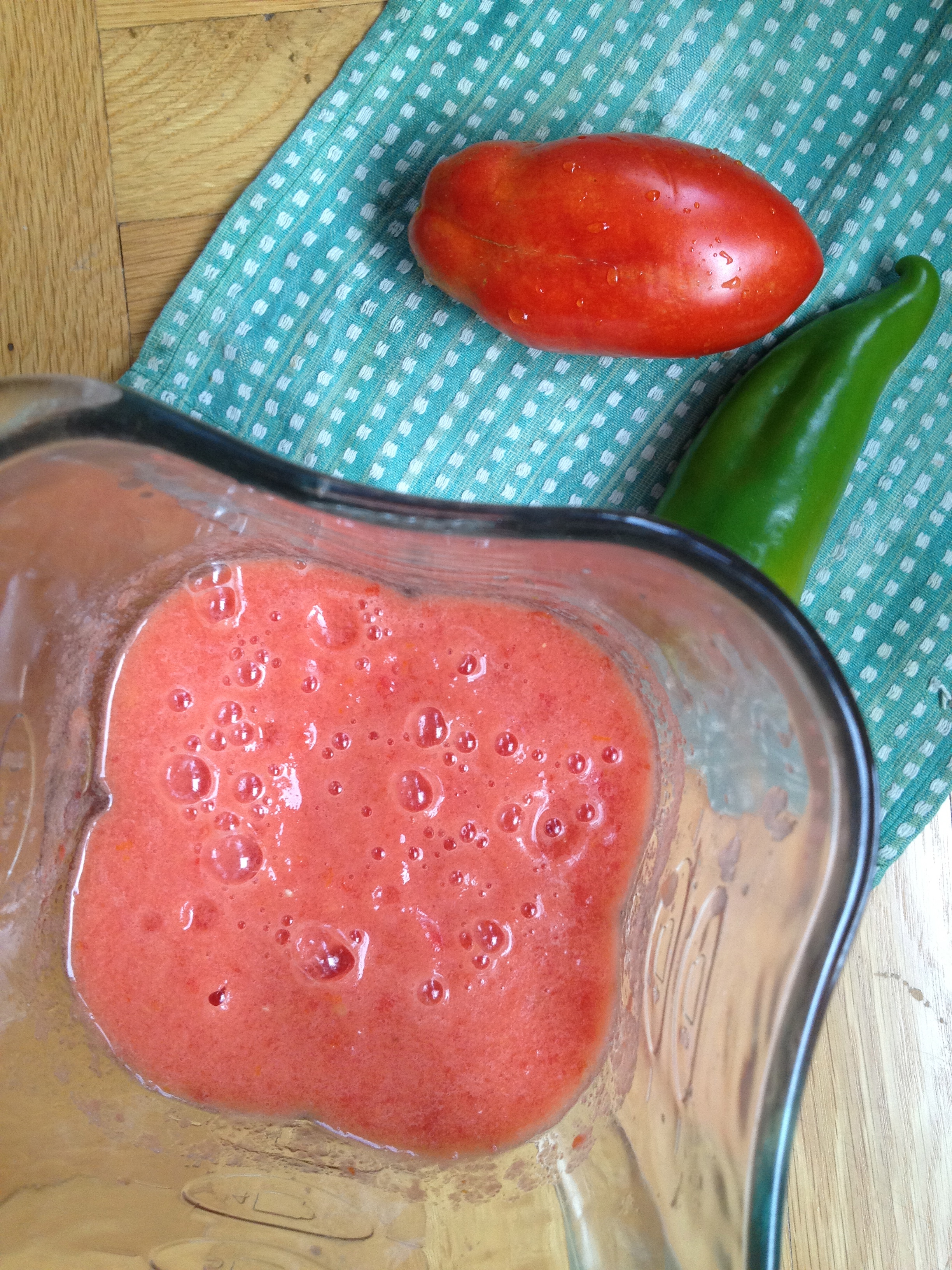
I recently returned from a 15-day trip around Turkey with a few new recipes under my belt, ones that have been passed down through generations in my boyfriend’s family. His sisters do the cooking, and do everything by hand, and do not own a single measuring cup or spoon. One thing they do each year is turn late-summer tomatoes into a sauce to be eaten year round. It’s quite simple: tomatoes, peppers, salt, and a bit of oil. They primarily use the sauce to make Turkish menemen (and egg-and-tomato dish like shakshouka).

When we left for Turkey the weather was hot, sticky, classic late August; when we returned last week early fall had descended on New York, with its warmish days but brisk mornings and chilly nights. Luckily we got back into town just to catch the tail end of tomato season. We bought these organic ones from Hepworth Farms at the Park Slope Food Coop for $1.26 a pound! If you can get bruised ones for cheap at your local farmers market that’s good too.

This recipe is not quite the rustic preserved tomatoes I made last year or the ones written about earlier this week in the New York Times. But it’s not far off either. In addition to menemen I’d love to eat this with pasta or polenta or in a vegetarian lasagna. And honestly, I can’t imagine I’ll wait til winter to try!

IMG_4132

IMG_4145

Preserved tomatoes, Turkish style

8 pounds tomatoes, preferably Roma
2 pounds long sweet peppers
1/2 cup oil
1 heaping tbsp salt

1. Quarter the tomatoes lengthwise and puree in batches in a blender until smooth. Transfer the pureed tomatoes to a large stockpot on the stove. Bring the tomatoes to a boil.

2. Halve the peppers lengthwise and chop in a food processor until fine, but not pureed. (A food processor works much better for this than a blender which tends to just pulverize.) Without a food processor you can do this by hand it just takes a while—chop as finely as possible.

3. When the tomatoes are boiling add the peppers, oil, and salt and reduce to a simmer but keep the liquid bubbling. You want to reduce some of the liquid and create a sauce. So simmer for about 45 minutes to one hour until you reach the desired consistency of sauce.

4. Have your Ball jars or recycled glass peanut butter jars (what we used!) clean and sterilized (we boiled the clean jars in water for ten minutes and removed with tongs and air dried). Don’t let the sauce cool too much. Using a funnel, spoon the tomato sauce into the jars, filling almost to the top, leaving just the tiniest bit of room.

5. While still hot, put the lids on and flip the jars upside down. Leave for two days to ensure a proper seal. (This is the method my boyfriend’s family uses; you can also look on the internet for other methods to seal, namely submerging the jars in boiling water.)

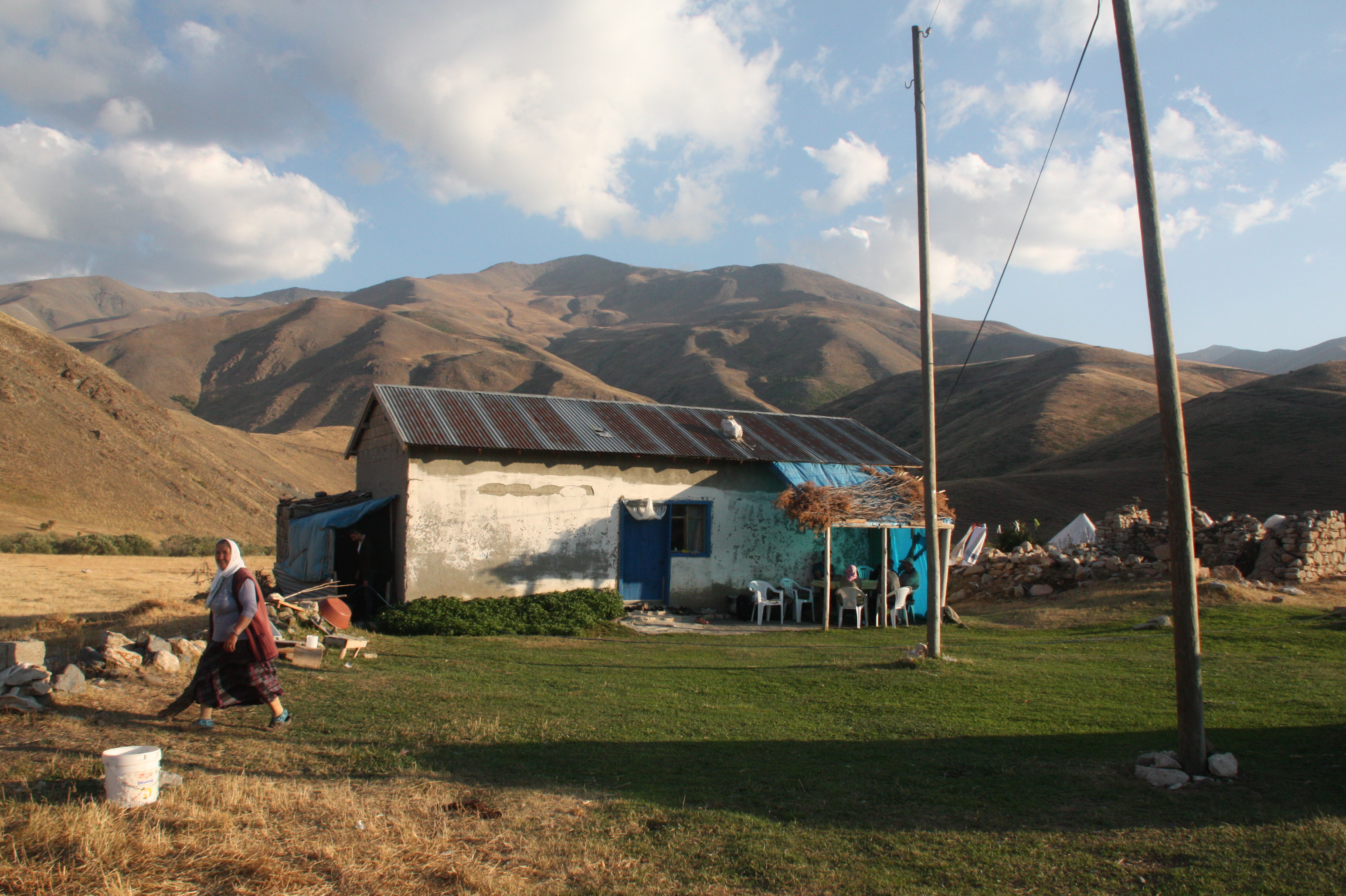
Below is a photo of the beautiful village where we stayed for five days in the mountains of eastern Turkey, where my boyfriend grew up and his family still spends the summers. Bottom is me picking apricots in a neighboring village. I also saw pomegranate, lime, and fig trees during those two weeks. I’d definitely never seen a pomegranate tree before!

IMG_6872

IMG_6987