Archives for category: Farmer’s Market

I have a big culinary crush on Yotam Ottolenghi.

I’ve never met the Israeli-born, London-based chef, restauranteur, cookbook author, and Guardian columnist, but I’m seriously considering a weekend trip to London this summer with a friend just to try his outposts in London. Notting Hill, Islington, Kensington, Belgravia, here I come!

How do I love thee? Allow me to count the ways:

He writes a weekly column called The New Vegetarian but is not a vegetarian.
His love and respect for vegetables are palpable.
He makes things like roasted aubergine with turmeric yogurt, crispy onion, basil, rocket, and pomegranate seeds.
He adores, cherishes, reveres eggplants (aubergines).
His inspiration is Israeli, Palestinian, Turkish, Mediterranean, and above all seasonal.
His “ideal solace for a gloomy winter night” is mushroom ragout with a poached duck egg.
The food he cooks is both familiar and not; simple in preparation yet complex in flavor; traditional and innovative.
And those glasses!

I mean, what is not to like?

To be fair, Ottolenghi has a secret weapon helping him out: partner and head chef, Sami Tamimi, who worked his way up through Israeli kitchens until moving to London in 1997. (You can’t, or shouldn’t, wax poetic about Ottolenghi without at least a shout out to Tamimi.)

In 2010, Ottolenghi published his second cookbook in the UK, Plenty, a book devoted solely to vegetable dishes. Granted, many of the dishes include rich cheeses, runny eggs, good quality oils, but make no mistake, it is an ode to food that comes from the soil.

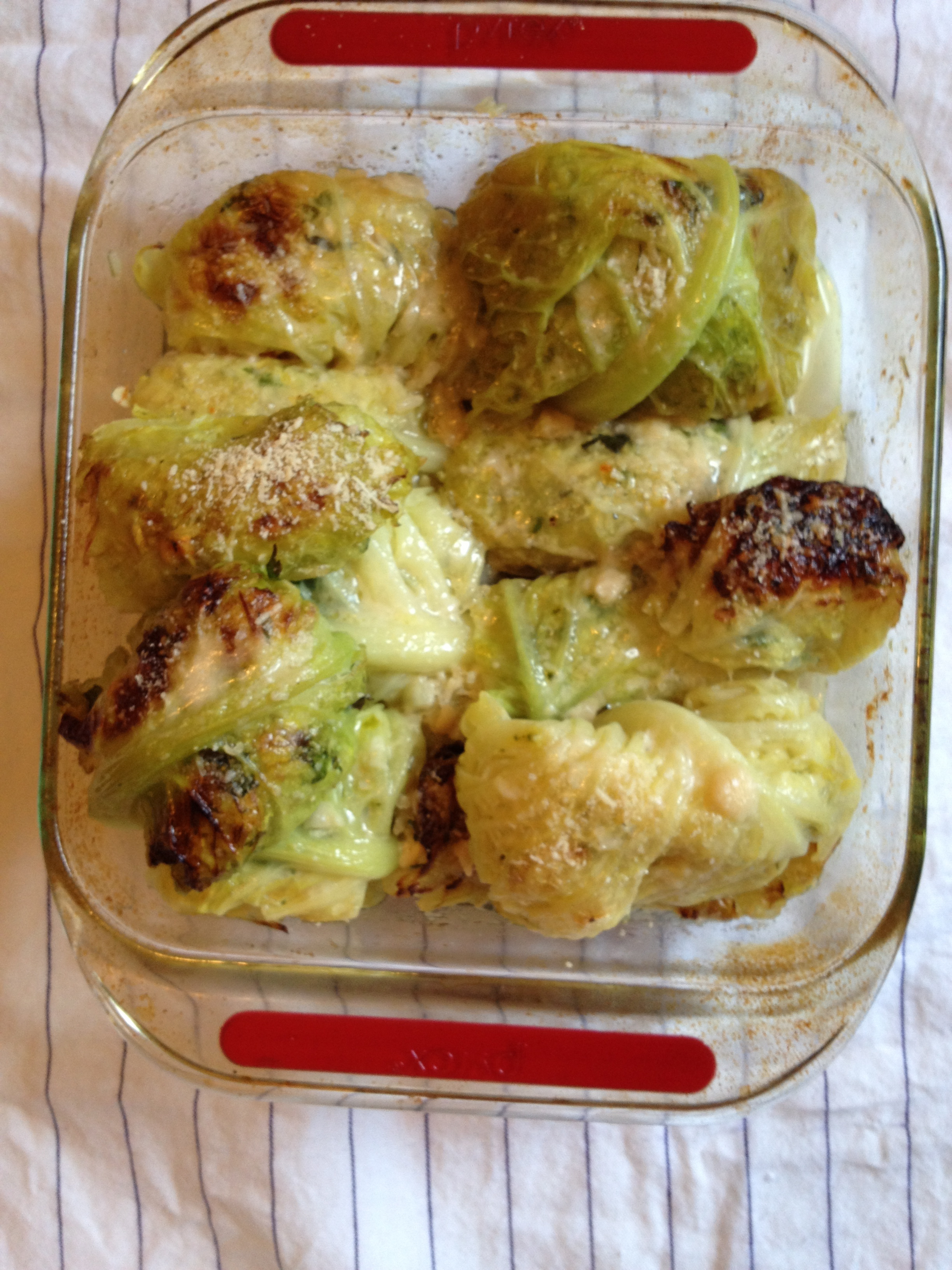
Yesterday I wanted to both cook something out of Plenty and prepare something I could bring to my lovely, yet increasingly picky grandmother (although she would never admit to being fussy). I thumbed through the beautiful pages and settled on stuffed cabbage. Too many unknown ingredients in a dish can turn my grandmother off before she’s even tried it, so better to stick to more of a known quantity. (Avocados, chic peas, crème fraîche, stinky cheese, chili peppers, black pepper, almost every kind of meat, chocolate even, render a dish dubious at best.)

In this recipe, the cooked cabbage leaves are stuffed with a mixture of rice, vermicelli noodles, ricotta, toasted pine nuts, garlic, mint, and parsley, ingredients that say spring is right around the corner. (I’ve missed fresh herbs!) Before baking you pour a combination of dry white wine, olive oil, and vegetable stock over the parcels, which makes the dish smell wonderfully enticing from the oven. You’ll want to tear right into the mismatched bundles, which is exactly what my grandmother did when I arrived, the dish still hot from the oven an hour later.

Stuffed Cabbage with Rice, Ricotta, and Mint
From Plenty by Yotam Ottolenghi

Serves 4

2 tbsp (30 g) unsalted butter
1.5 oz (45 g) vermicelli noodles (not the rice kind)
scant 1 cup (150 g) basmati rice
10 oz (300 ml) water
1 medium white cabbage or Savoy cabbage
2 oz (60 g) pine nuts, toasted and coarseley chopped
5 oz (150 g) ricotta (my post on homemade here)
1 oz (20 g) Parmesan, grated
3 tbsp chopped mint
4 tbsp chopped parsley, plus extra for serving
3 garlic cloves, chopped
6.5 oz (200 ml) dry white wine
3.5 oz (100 ml) vegetable stock
1 1/2 tbsp sugar
4 tbsp olive oil
salt and black pepper

Melt the butter in a small saucepan over medium heat. Break the vermicelli by hand into small pieces and add them to the butter, stirring for 1 or 2 minutes, careful not to let them burn. When the noodles start turning golden add the rice and give it a good stir. Then add the water and a pinch of salt and bring to a boil. Turn the heat down to a minimum, cover and cook for 20 minutes. Remove from heat and let sit for 10 minutes before removing the lid and letting cool.

While the rice is cooking, cut the cabbage vertically in half. Peel off the leaves and blanch in boiling water for 6-8 minutes, or until semi-soft. (You can do this in batches, depending on the size of your pot.) Refresh the leaves under cold running water, drain, and pat dry.

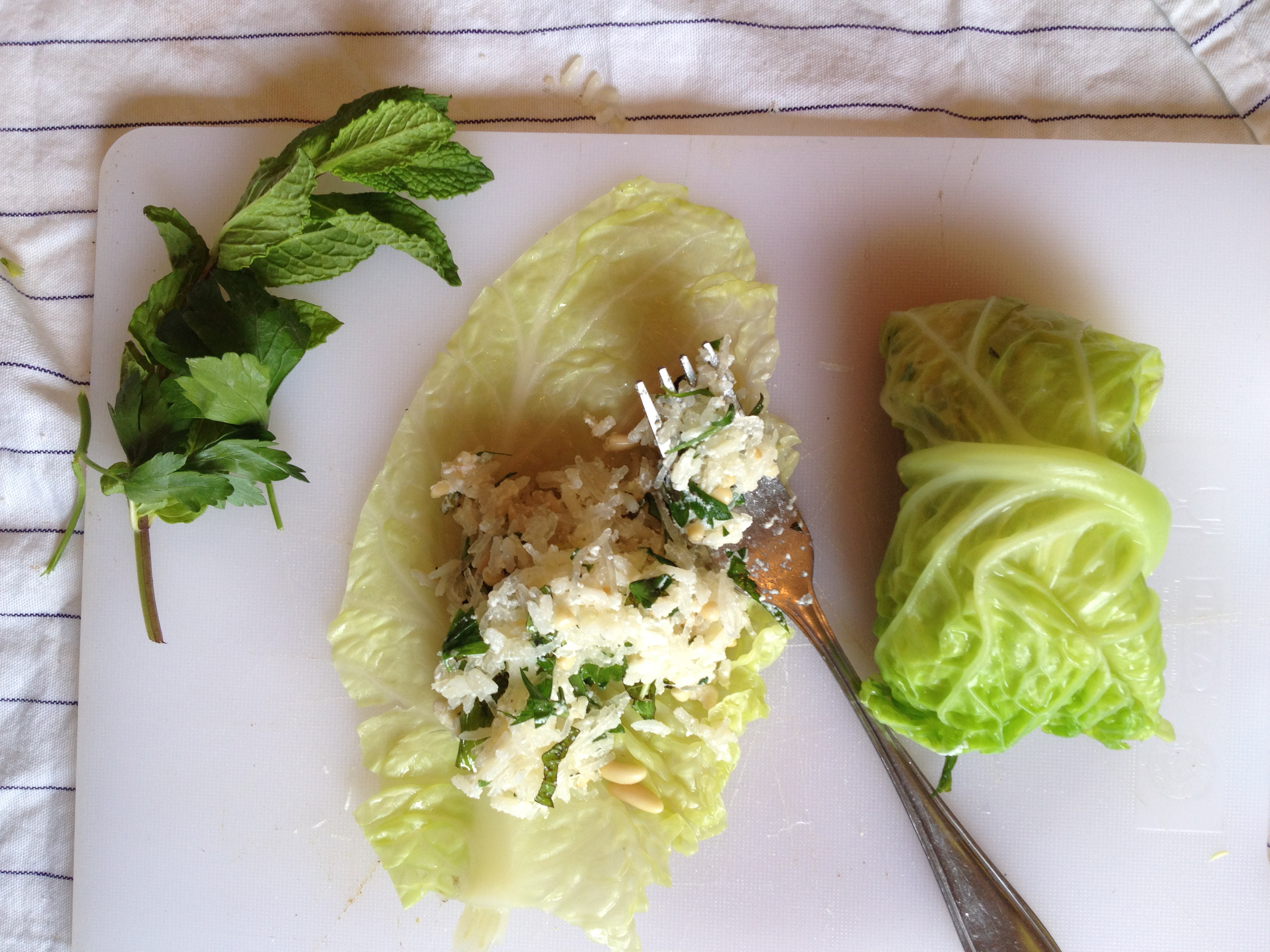
Preheat the oven to 350 F. Add the pine nuts, ricotta, half the Parmesan, the herbs, garlic, salt and pepper, to the cooked rice. Mix well with a fork. Use the cooked cabbage leaves to make parcels of whatever size you’d like, filling each one with a generous amount of the rice filling.

Arrange the stuffed cabbage leaves in an ovenproof dish (use cabbage trimming to fill in any gaps). Whisk together the wine, stock, sugar, olive oil and plenty of salt and pepper. Pour this over the cabbage and put the dish in the oven, baking for about 40 minutes or until almost all the liquid is evaporated. Sprinkle with the remaining Parmesan, return to oven and bake for another 10 minutes, so the cheese melts and turns golden. Remove from the oven and let rest for 5 minutes before serving.

Note: Next time I might be adventurous and try adding sauteed shiitake mushrooms to the filling mixture, or about 1 tbsp fresh lemon zest, or when it’s springtime, fresh peas—even though my grandmother said, “Don’t mess with it!”
Beans (like Molly Ringwald) can be a thing of beauty. And I don’t think that’s just because I like Joni Mitchell, spent formative years in Vermont, or went to college a lentil’s throw from the Moosewood Restaurant. I’ve written here about chili, here about black beans, here about enchiladas, and here about my all-time favorite white beans from Union Square Cafe. My love for the legume, is, I feel, well documented.

I had some red kidney beans from Cayuga Pure Organics kicking around my cupboard and felt like taking them out for a spin. So I soaked them overnight without having a particular plan in mind, but knowing you can’t go wrong with having soaked beans around. They’re just too versatile. Today, after they’d bathed for close to twenty-four hours, I drained their soaking liquid, filled the pot with fresh water, threw in half an onion, three big cloves of garlic, and cranked up the heat. I cooked them for one hour until the beans were soft enough to squish in between my fingers.

I still didn’t quite know what I was going to do when my Ninja blender caught my attention on the other end of the counter. When in doubt: puree. I decided I’d make a bean dip. I let the beans cool a little, then mostly drained them, threw them in the Ninja with the cooked onion and garlic, and poked around for what else could smooth out the dip. I settled on homemade sesame tahini that was already made, and lots of salt and pepper. But it needed a little something for body. I had leftover cooked rice so I threw in 1/4 cup of that. One ninja minute later, I had a very pretty, pink dip. In the spring or summertime I would definitely add some fresh herbs to the mix.

I can’t really think of a type of bean this recipe wouldn’t work well for, so if you have black, pinto, navy, or other kinds of beans in the larder, give it a whirl. And I mean that literally.

Pretty in Pink Bean Dip

1 c dried red kidney beans (or your favorite type of bean)
1 onion
3 cloves garlic
1/4 c tahini
1/4 c cooked rice (white or brown, short or long)
salt
pepper

Soak your beans overnight, covered by 3 inches of water. The next day, when you’re ready to roll, drain the soaking liquid, and refill the pot with water, covering the beans by about 2 inches of water. Throw in the onion, halved, and garlic cloves. Bring the water to a boil, then turn down to a simmer. Cook on low-medium heat with a slightly ajar lid until the beans are thoroughly cooked through, approximately 45 minutes to 1 hour.

Turn the heat off and let the beans come to room temperature. Now you can drain the cooking liquid completely or preserve to use later (I made extra beans—2 c dried—and preserved the liquid to make a soup with the other half of cooked beans tomorrow). Remove any skins that may have been left on the onions and garlic and discard. Transfer the beans to a blender or food processor with about 1/2 of the cooked onion and all of the garlic cloves. Add the tahini, rice, and a good pinch of salt and freshly ground black pepper. Puree until smooth.

Delicious served with your favorite cracker (I love Late July classic saltines), spread on bread, or served with raw veggies. I also admit to eating it by itself, by the spoonful. Think of it as hummus 2.0.

Postscript for my sister Hope – the onion and garlic will kill you, but try this with cooked leeks, celery, and carrots instead, and/or add 1/2 veggie bouillon.

How gorgeous is this tahini? Looks like raw honey.

I had a craving this week brought on by subliminal messaging. Wednesday morning I was reading the Times‘s Dining section and recall seeing more than one recipe involving cornmeal. I suppose it’s that time of year—for cornbread stuffing, creamy polenta, cornmeal cookies. By 4 pm I was at the greenmarket in Union Square with a serious hankering. I swung by the Cayuga Pure Organics stand and bought a bag of fine cornmeal (not its coarser cousin, polenta—no offense polenta).

My plan was to make jalapeño spoonbread using Martha Rose Shulman’s recipe from her Recipes for Health column. Spoonbread is an airy, soufflé-like cornbread that turns golden brown and rises during baking. I find it’s moister than cornbread, and the leftovers make for one mean breakfast the next morning.

In the end I couldn’t find a jalapeño or an ear of corn (or frozen corn for that matter) so I made some adjustments. I substituted cayenne for the jalapeño, and did away with the corn kernels all together.

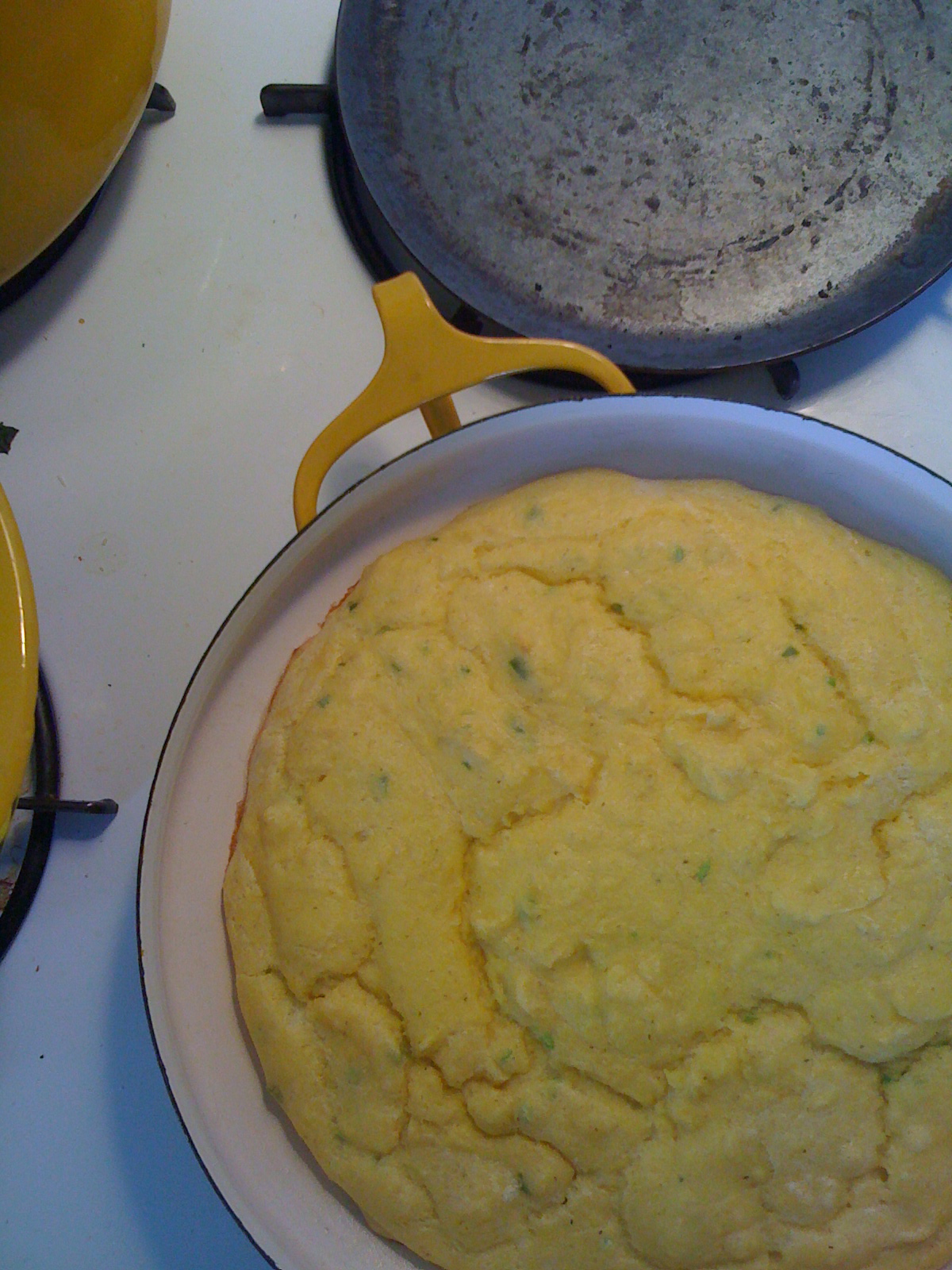
By the time I got baking it was nearing 10 pm, and since I decided to beat the egg whites by hand, it was close to midnight when I finally pulled the puffy, fragrant cornmeal soufflé from the oven. No matter, still airy and warm I cut into the spoonbread and helped myself to a midnight snack.

The next morning, I reheated a slice in a skillet with a little butter and served it drizzled with maple syrup for a scrumptious breakfast.

The story doesn’t end there. I tried the recipe again yesterday with my friend Amy while on a lunch break (the perks of being a freelancer and working from home). But the two spoonbreads couldn’t have been more different. Whereas the first night the cornbread browned and puffed up just like it was supposed to, yesterday is remained yellow without browning and never quite reached soufflé heights, and I know why.

You know how when beating egg whites you’re supposed to make sure there’s nothing else in the bowl? No trace of anything that could prevent the whites from reaching their stiff peaks? I goofed and left about 1 tsp of milk in the bowl ergo the egg whites never full aerated. Nonetheless, yesterday’s batch was spoonable and yummy, just with less of the french-toast-like consistency of the first batch. More like regular cornbread, less dense though.

You can probably tell which photo of the finished product is from which experiment.

Jalapeño Spoonbread
Adapted from Martha Rose Shulman, The New York Times

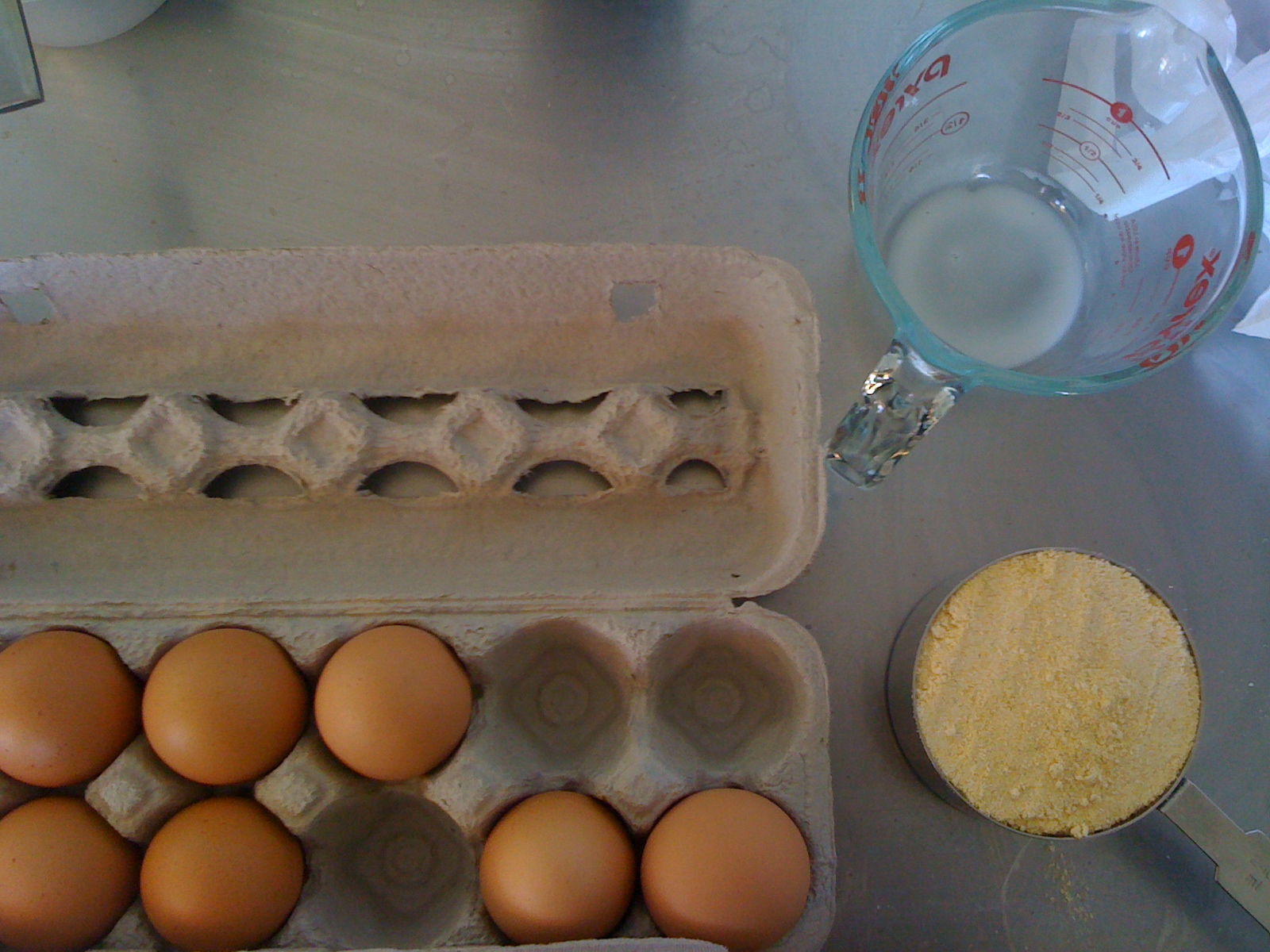
1 c water
2 c milk (whole or 2%)
3/4 tsp salt
1 c (130 g) cornmeal
2 tbsp unsalted butter
3 eggs, whites and yolks separated
Kernels from 1 ear of corn of 3/4 c frozen corn (optional)
2 jalapeños, seeded and minced
1/2 c (2 oz) Gruyère cheese, grated (optional)

1. Preheat the oven to 350 F and butter a 9- or 10-inch cast iron skillet or baking dish.

2. Combine the water, milk, and salt in a saucepan and slowly bring to a boil over medium heat. Slowly add the cornmeal in a stream while whisking constantly. Turn the heat to low and continue to whisk for 8 to 10 minutes, until the mixture is thick. Remove from heat and stir in the butter.

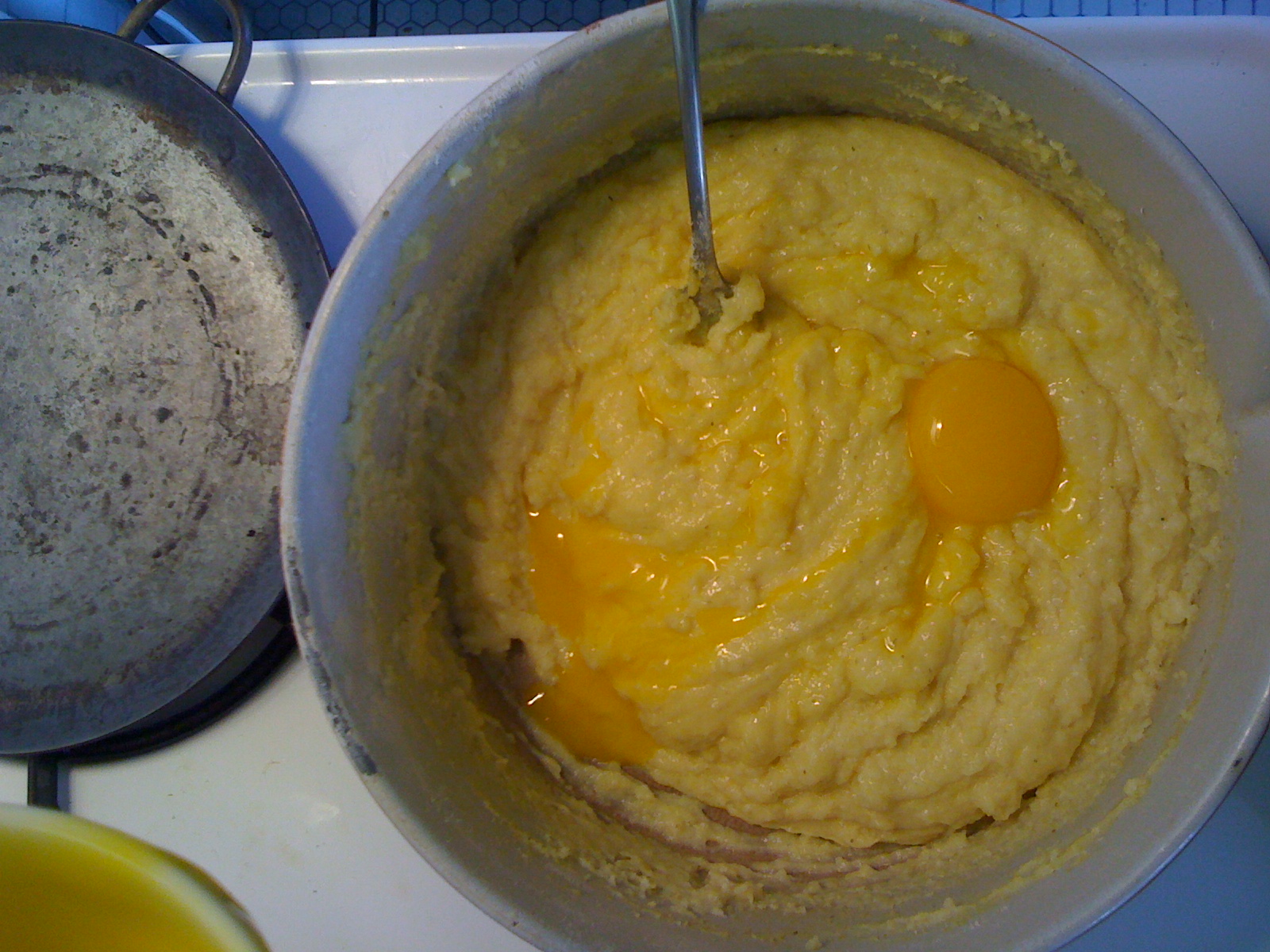
3. One at a time, stir in the egg yolks, then add the cheese and corn kernels, if using, and the jalapeños.

4. In a separate bowl beat the egg whites until they form stiff peaks. Stir in 1/4 of the egg whites into the cornmeal mixture, then gently fold in the remaining 3/4. Transfer the mixture to the baking dish and place in the oven. Bake for thirty minutes until the spoonbread puffs and begins to brown. Serve at once.

Should you achieve soufflé greatness it is a satisfying but fleeting accomplishment. Dig into the spoonbread while still warm and puffy, because it will deflate before you can reach for seconds. Chill leftovers and serve the next day reheated in a skillet with a bit of butter (and maple syrup if you’re so inclined).