If you’re like me, when you get a whiff of warm weather—even if today, it’s only the faintest whiff—your mind turns to summer and the sweet memories of summers past. Six years ago I had the pleasure of cooking for a gaggle of campers in the Sonoma redwoods about ninety miles north of San Francisco. Plantation Farm Camp is located in Cazadero, CA, just a few miles from the Pacific and off the Highway 1.

The campers live outside all summer and help run this working farm — feeding animals and gardening, with plenty of time for swimming and tie-dying t-shirts. The staff also live outside, in tents, and on more than one occasion I tucked into my sleeping bag to find a lizard squatting in there. I loved living and working here. The natural beauty of the environs inspired introspection, and the bounty of the farm inspired dishes like lamb scented with fresh-picked lavender.

This dish here, while not exactly inspired by the local or seasonal bounty of Sonoma County, became a staple dessert that summer. Many of the campers could not eat dairy and we devised this dairy-free, egg-free chocolate cake that is so moist and luscious, you do not miss what’s missing. Elise, our kitchen manager, said the secret was in the unlikely ingredient of white vinegar.

Plantation Farm Camp Chocolate Cake

2 1/2 c flour
2 c sugar
1 tsp baking soda
1 tsp salt
2/3 c good quality cocoa powder (Scharffen Berger, Ghiradelli, since we’re on the west coast)
2 tsp white vinegar
2 tsp good quality vanilla
2 c cold water

Preheat oven to 350 degrees. Sift together the flour, sugar, baking soda, salt, and cocoa. (Don’t skip the sifting step.)

In a separate bowl, mix the wet ingredients, then add to the dry mixture, mixing as little as possible while still removing the lumps.

Pour the batter into a greased pan, such as two 8″ round cake pans, a bundt pan, or rectangular pan. Baking times will vary depending on the type of dish you use. About 30 minutes for the 8″, a little more for a bundt.

For a variation, you could try adding spices like chili powder, cinnamon, nutmeg, or ground clove. For a mocha cake use strong-brewed coffee in place of some of the water.

Chocolate Frosting (no dairy)

1 c margarine
2 c powdered sugar
1 tbsp vanilla
4 tbsp soy or rice milk
1/2 c cocoa powder

Blend the room-temperature margarine with a spoon until soft, then add the dry ingredients, followed by the wet. For variation you could add mashed banana, cream cheese, or coffee to the frosting.

Plantation Farm Camp
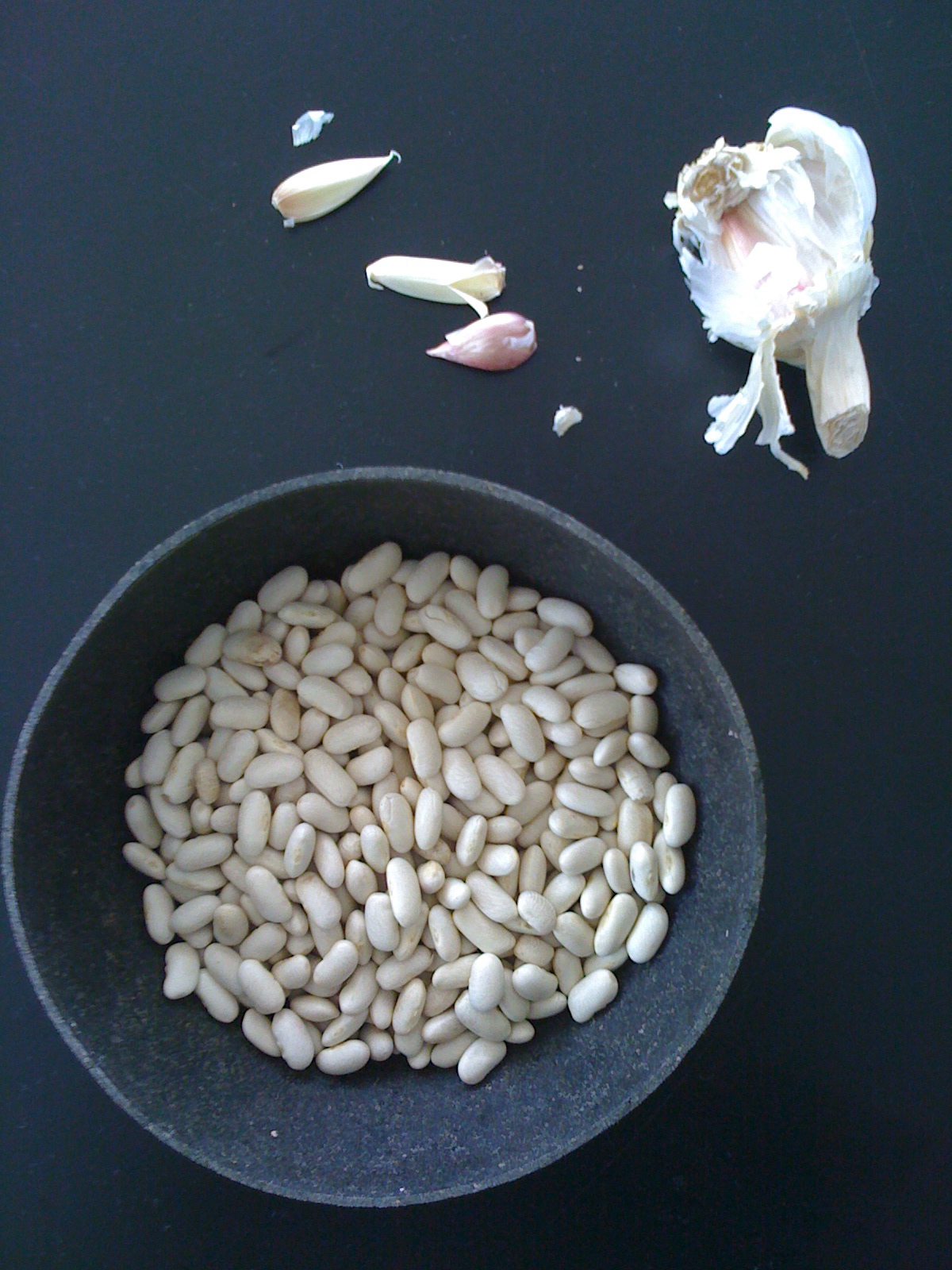
I don’t want to crowd this blog with bean posts, but a friend did make a special request for this recipe. And no one should be denied this gem of a dish, it has become one of my favorites. It was a hit at a recent dinner party, and thus the recipe request.

More of a fall or winter meal, truth be told, I still enjoy it year round, usually just changing the protein according to the season.

The first time I made these Cannellini beans was for my birthday a few years ago and I’ve been making them and tweaking the dish ever since. The recipe is adapted from Danny Meyer and Michael Romano’s 1994 Union Square Cafe Cookbook, a book I stole from my sister, or she was getting rid of it, I can’t remember. Thanks Hope! It’s my go-to book for simple, inspired Italian cooking (along with the Silver Spoon).

1 c dried Cannellini beans from Cayuga Pure Organics if possible
Homemade chicken or vegetable stock, approx. 2-4 c
kosher salt
1 celery rib
1 carrot, scrubbed and cut in half lengthwise
1 onion, cut in half and stuck with 2 cloves
3-4 juniper berries (or 1 bay leaf)
about 1/3 c good olive oil
1 tbsp garlic, minced
1 tsp each minced rosemary, sage, and thyme
1/2 c Pecorino or Parmigiano, grated
freshly ground black pepper

Soak the beans for approx. 3 hours, covered, in cold water. (Soaking time will be longer if the beans aren’t as fresh.)

Drain the beans and place in a large saucepan on the stove, covered by the stock or water or a combination of both, to cover by about 3 inches. Add the salt, celery, carrot, onion, and juniper berries and bring to a boil. Turn down to a simmer, cover, and continue to simmer for about one hour, or until the beans are thoroughly cooked and tender. Discard the vegetables, but be sure to reserve 1 1/2 c of the cooking liquid.

In a large skillet, heat the olive and garlic over medium heat, being careful not to burn the garlic. Add the beans to the skillet with 1 1/2 c of the cooking liquid, bring to a boil, then add the herbs and three quarters of the cheese. Continue to boil until the liquid reduces to the consistency of a sauce, about 10 minutes. Don’t worry if some of the beans begin to disintegrate into the sauce. Add additional salt and pepper to taste.

Transfer the beans to a serving dish, adding the remaining cheese and some additional olive oil if you’d like.

I like to serve these with sauteed broccoli rabe, and either a white meaty fish (cod, hake, arctic char), or a braised meat, pork tenderloin, or sausages. If there are leftovers (I recommend doubling the recipe) they make for a great lunch on their own the next day.

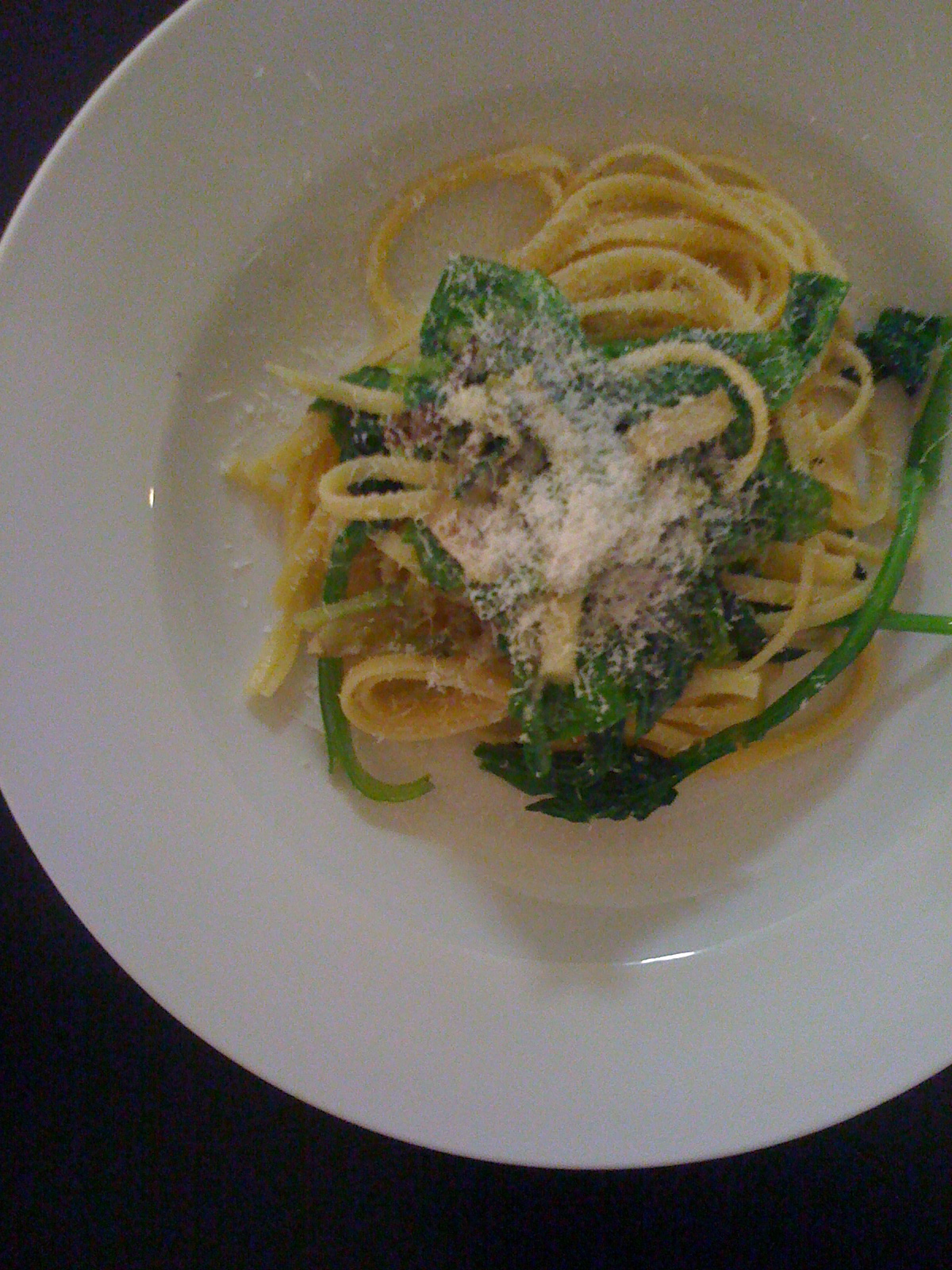
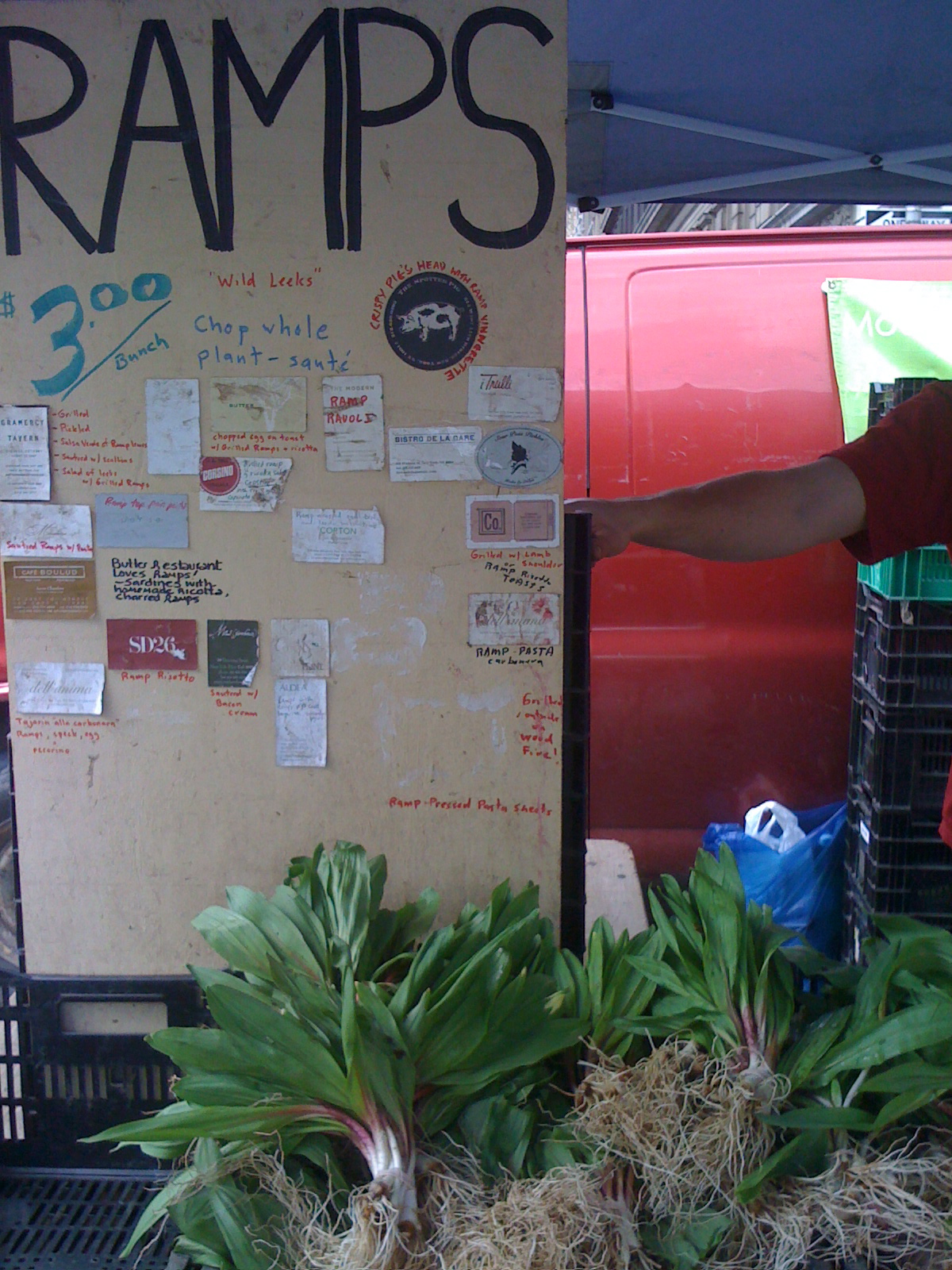
Yesterday, for the first time, I saw ramps at the greenmarket in Union Square. Hello spring! Ramps, also known as spring onions or wild leeks, have become somewhat fashionable in the foodie world these last years. They taste earthy, garlicky, strong or mellow depending on the preparation, and always tasty.

Ramps can be used in a similar way you would cook with scallions or leeks: raw, grilled, in soups, sauces, pesto, and my favorite: pastas. I wasn’t able to cook these beauties last night but looked forward to coming home all day today. They didn’t disappoint.

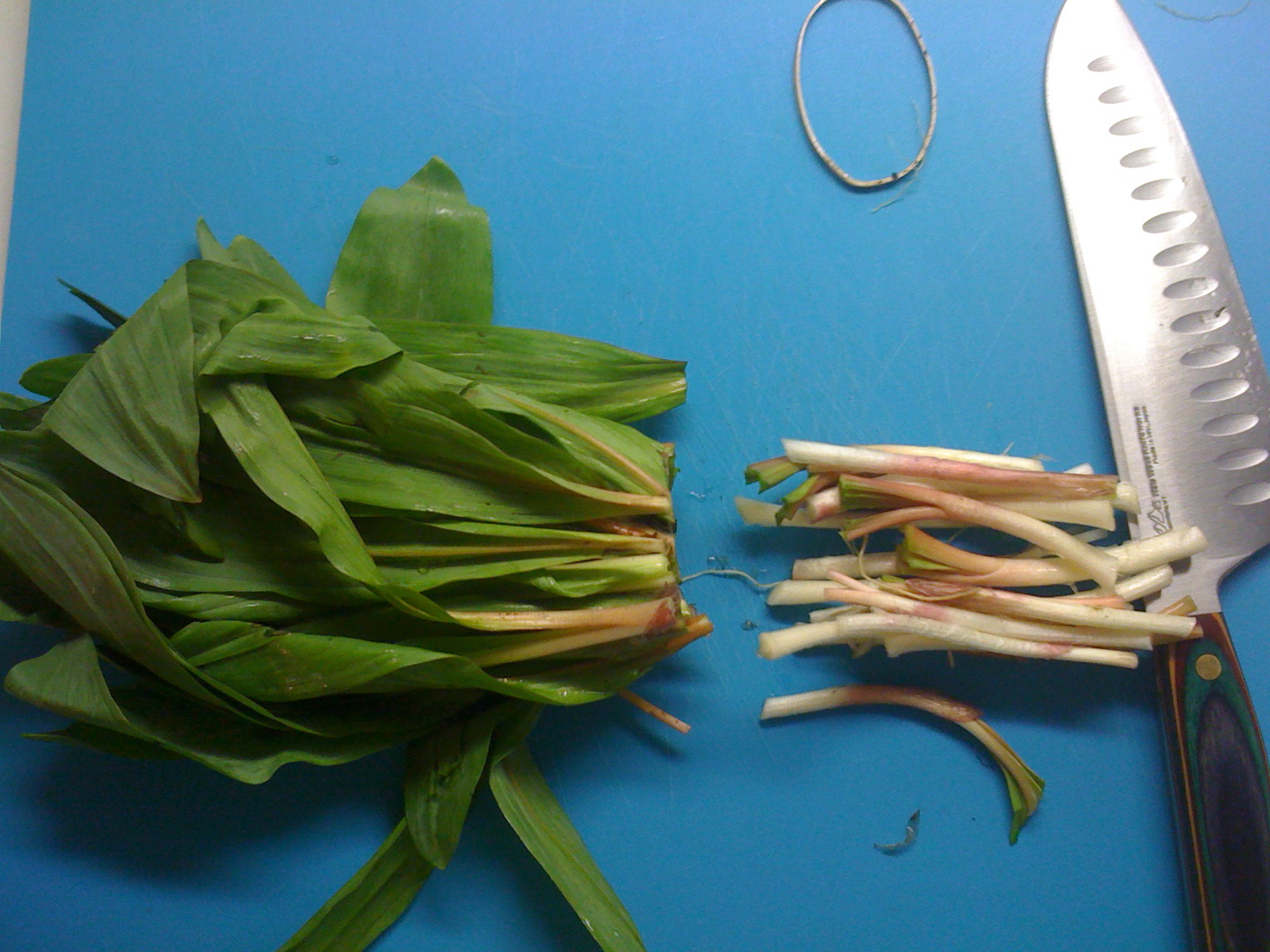
It’s important you wash ramps thoroughly. To do this I cut the bulb and stems from the leaves and soak them in a big bowl of cold water. I change the water at least three times to get all the dirt out. After washing, peel the skin off the stems. Dry the ramps thoroughly with a towel.

Bring a pot of salted water to boil and add your pasta — tonight it was linguine but any shape will do.

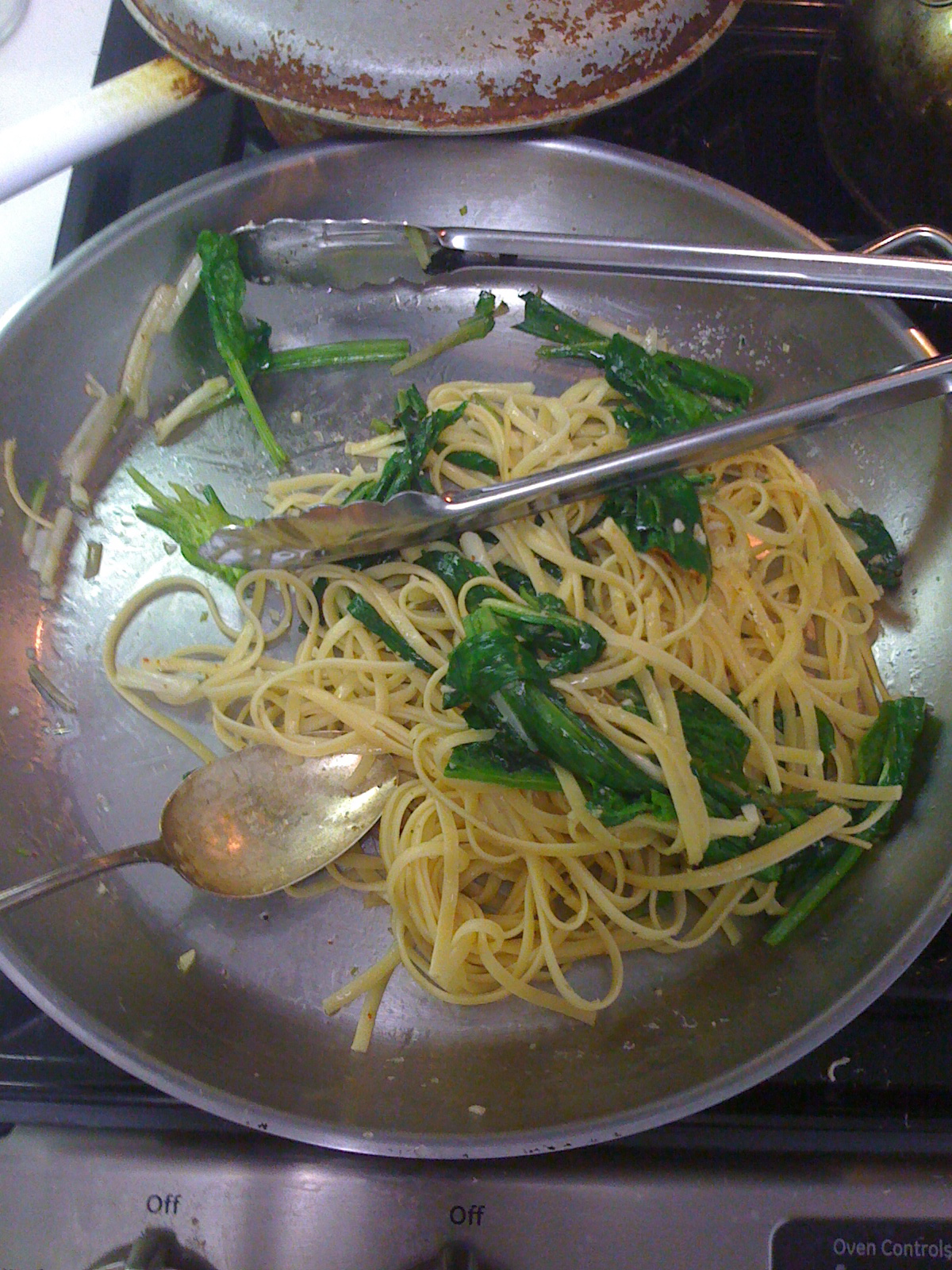
Heat 2 or 3 tbsp of olive oil in a large skillet, and when warm, add the white stems. Cook over medium heat for about ten minutes which mellows out the flavor and infuses the oil with an oniony aroma. Meanwhile cut the leaves in halves or thirds, crosswise. When the stems have been cooking for about five minutes, add a couple cloves of chopped garlic and crushed red pepper.

Drain the pasta when it’s al dente, reserving a few tbsp of the salty cooking liquid, and set aside.

Turn the heat down on your skillet and add the ramp leaves, fresh lemon juice or lemon zest, salt and pepper. Just wilt the leaves, about one minute. Turn off the heat and add the pasta and the reserved cooking liquid. Grate a hard, salty cheese like Pecorino Romano or Parmigiano over the top. Serve with some crusty bread or a green salad. Exquisite (if I do say so myself).

And because I’m greedy when it comes to greens, I also added some spinach leaves to the mix at the same time I added the ramp leaves. A gal needs her greens.