Laura eating a "pickle dog"

Home to millions of bacteria

This post here is by my dear friend Laura in Madison, infirm just hours before boarding a plane for a long journey to the southern hemisphere. Here she shares a favorite kimchi recipe, a ballast during the winter months in this cold Wisconsin college town. Laura – rest up, drink lots of water before flying, and keep eating fermented cabbage.

Kimchi helped me survive my first winter in Wisconsin, and today we’re at the end of the batch. Shortly after we moved into our new place, a five-liter Harsch ceramic crock arrived in the mail, a wedding gift from California. I could hardly lift the box. And it actually went to the neighbor’s house because I had misremembered our new address in Madison.

Fermentation is a magical process. Pressing colorful vegetables into a dark ceramic hole and days later hearing bubbling and popping noises coming from the kitchen is both exciting and disconcerting. The formation of some rotten mutant poison vegetable might be happening in my kitchen. But this bacteria is the good kind.

I followed an online video by Maangchi for easy Kimchi. The definitive moment is when Maangchi says that two cups of crushed red pepper is “spicy”. And was it ever. This kimchi was so red hot that everyone who devoured it had tears, either of joy, tolerance, or anguish. Next time, I might try Sandor Katz’s book Wild Fermentation, and use half as much red pepper.

I didn’t follow the recipe very well. I left out the squid and the fish sauce and didn’t really measure most of the ingredients. Instead of eating it fresh, I let it ferment in the crock for an entire week. Fermentation might be magical, but it’s also forgiving. You don’t even need the ceramic crock; a glass jar will do the trick if you are brave enough to occasionally remove bacterial surface scum.

This red, warming, spicy concoction helped on days that were icy and gray. We gave much of it away to friends and family, but the batch has lasted for months. I usually get nervous about aging groceries, tupperware at the back of the fridge and unwelcome chemical reactions transpiring in my kitchen, but there is something so mysteriously comforting when good bacteria does its magic.

The last few bites


At lunch yesterday, Manuel and Satomi told me about a dish that Manuel’s grandmother used to make for him back in Puebla, Mexico: tapado de pollo, which literally means “covered chicken.” The chicken is cooked slowly over low heat in a covered skillet, or you could even make this in a dutch oven or Le Creuset pan.

Spiced with cinnamon and crushed cloves, the chicken stews in roma tomatoes with plump raisins and sliced almonds. Savory and a little bit sweet, this is a quick and easy dinner to whip up with ingredients you might already have on hand. Manuel – don’t tell your grandmother but I did make a few adjustments.

As soon as I brought the chicken thighs home I washed and patted them dry with paper towels, then generously salted them on both sides and put them in the fridge for a few hours until I was ready to cook. This is an old trick I learned from one of Alice Waters’s cookbooks – she’s a firm believer in salting chicken for as long as possible before cooking, whether that’s just an hour or two, or day or two. It improves the flavor immensely and, some say, keeps the meat moist.

As for my variations on the recipe, I used shallots instead of onions; increased the garlic; added cumin, nutmeg, and ichimi (crushed Japanese red pepper) for more depth and kick; added a little bit of red wine to the cooking liquid; and somewhat re-ordered the steps.

Tapado de pollo

2 chopped shallots
5 chopped cloves of garlic
6-7 chicken thighs, organic if possible, bone on, skin off
6 chopped roma tomatoes
1/4 c red wine
1/3 c raisins
1/3 tsp cinnamon
1/3 tsp crushed cloves
1/3 tsp nutmeg
1 tsp cumin
1/2 tsp ichimi or crushed red pepper
1/3 c sliced almonds, toasted in a skillet for about 5 minutes to bring out the flavor
salt and pepper, to taste
olive oil

Heat approx. 2 tbsp olive oil in a large skillet over medium heat. Add the shallots and garlic, sauté until softened but not brown, about 2 minutes. Add the chicken and sauté on each side for 2-3 minutes. Add the tomatoes – juice, seeds, and all – along with about 1/4 c red wine. Cover with a lid and cook for about 10 minutes, turning the chicken once.

At this point the chicken will be about halfway cooked; there should be a lot of liquid in the pan, and the tomatoes will start breaking down. Add the raisins, cinnamon, cloves, nutmeg, cumin, and ichimi. Stir, then cover and cook for another, say, 10 minutes, before adding the almonds (you don’t want the almonds to get too soft). Add salt and pepper, to taste, and continue cooking over low heat until the chicken is cooked through and the aromas start traveling down the hallway to your neighbor’s apartment.

I served this with Japanese short-grain rice and sautéed chard.

This was so easy and oishii I think I’ll include this dish in my regular rotation. Thank you Manuel and Satomi!


Our friends Chie and Dean invited us to have lunch today at their place on 83rd and 1st. Should you have the good fortune to know them and ever be invited over, say yes.

Chie is one of these accomplished, self-taught home cooks that can dazzle and impress and make it all look effortless. I like to think I can impress on occasion, but make it look effortless? Not so much. Chie is an architect that moved to New York from Japan about six years ago. We met in the bathroom of the office building our companies shared. True story.

Her meals are more like feasts really, multi-course spreads that unfold from Japanese appetizers to clever interpretations of American classics. I didn’t know what to expect this afternoon but knew enough to come hungry.

Our co-companions lucky enough to share in the fun were Manuel, Satomi, and Dean’s cousin Leah. (Leah – I’m going to email you for that quinoa recipe; Manuel and Satomi: where is that chicken recipe?) At Chie’s, you dine around the living room table, on the floor, kneeling on pillows, in the Japanese style. The table clutters quickly with a cheese board, drink glasses, salad bowls, plates. It’s homey and festive and not fussy, which I love.

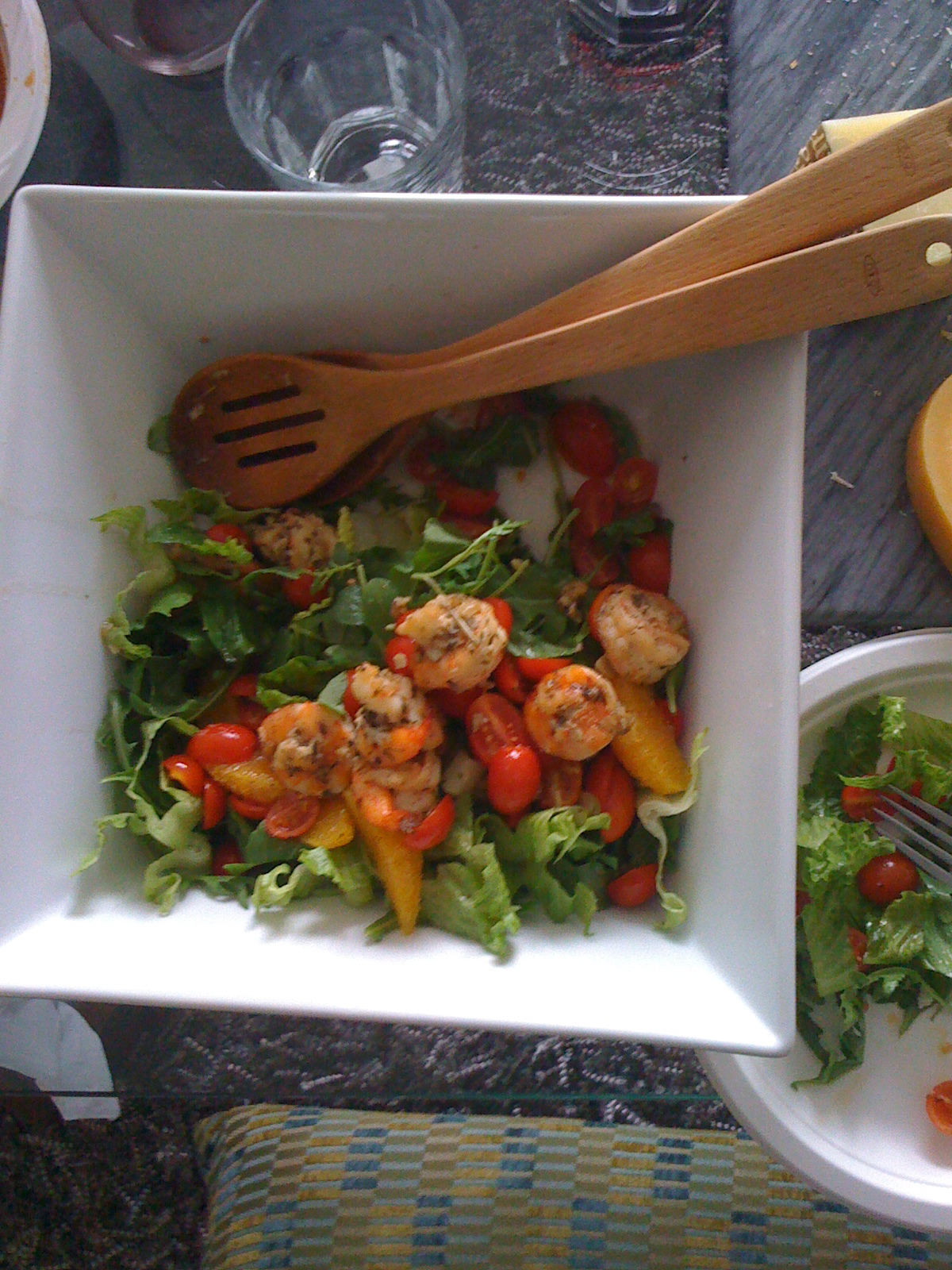
For our first course, we were served a beautiful salad of greens, cherry tomatoes, orange segments and shrimp. Before I could sop up the dressing at the bottom of the bowl, Dean swept in with bowls of steaming tomato fish chowder. It was the perfect afternoon for such a bowl of warm comfort – a gray, chilly spring day in Manhattan that called for something savory and nourishing. Garlicky, salty, packed with vegetables, this fish soup had flecks of creamy cod strewn throughout. I stopped listening to the conversation completely and focused on figuring out what all the ingredients were.

But before I could, Chie was making room on the table. I love this part. It means lunch isn’t over and there’s more deliciousness to come. Just when you think, OK, maybe Chie went easy on us this time, maybe we’re actually going to have a light lunch, or dinner. Then you realize you just finished your appetizers. Cue: stomach growl.

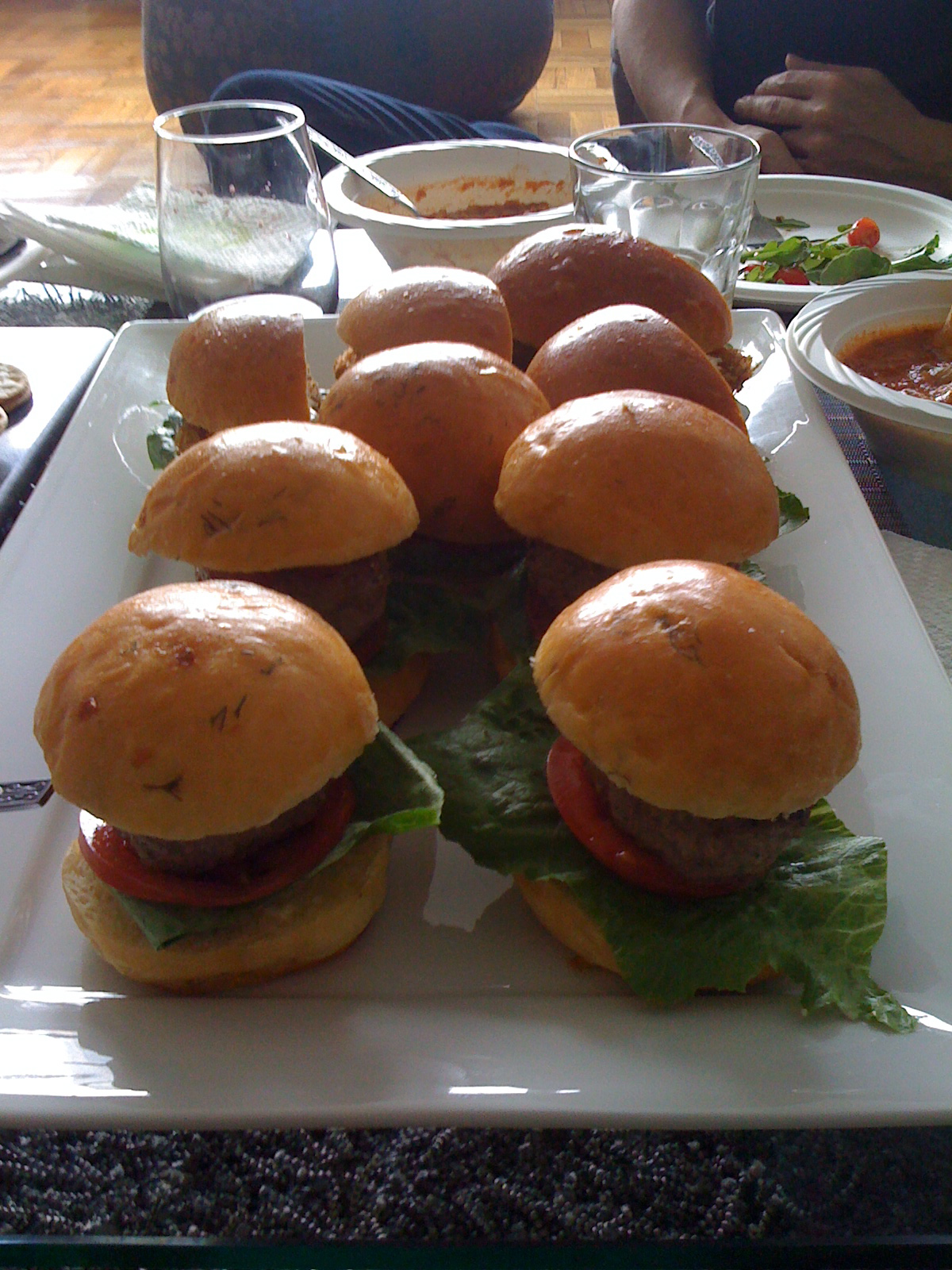
Out came a platter of mini beef burgers and fried cod burgers with pesto, served with a side of caramelized onions, on tiny brioche buns. The cod burger, which I had, was lightly battered with panko and pesto then fried in about 1/2 inch of oil. As I was licking my fingers, feeling satiated and starting to wind down the meal, more table clearing. I should’ve known. We’re being fed by Chie. Out comes Japanese pumpkin quarters with sweet potato piped on top. We made room on the table, I made room in my belly, and dug in. For dessert: classic Marino’s Italian ices from the corner deli. Phew – ice was about all I had room for.

Chie’s Fish Chowder

In a large stock pot, heat 2 tbsp olive oil, then add 1 chopped onion, 2 chopped carrots, 1 chopped celery rib, 1 chopped fennel bulb, and 5 cloves minced garlic. Add 1 cup white wine, put the lid on, and let that steam for about 10 minutes.

When the vegetables soften, add either 4 c diced fresh tomatoes, or if no good fresh tomatoes around, 1 32-oz. can diced San Marzano tomatoes. Add fish stock (or chicken/veg. stock), about 2 c, red pepper flakes, salt, and pepper. Bring to a boil then turn down and let simmer for about a half hour. Shortly before serving add any type of white fish (cod works well) and once it starts cooking break it up with your spoon or a fork so it falls apart into the soup.

Once the fish is cooked, remove from heat and serve. Could also add fresh herbs if you have on hand. Basil would be good, chervil, tarragon, or chives. Serve with sliced crusty bread.