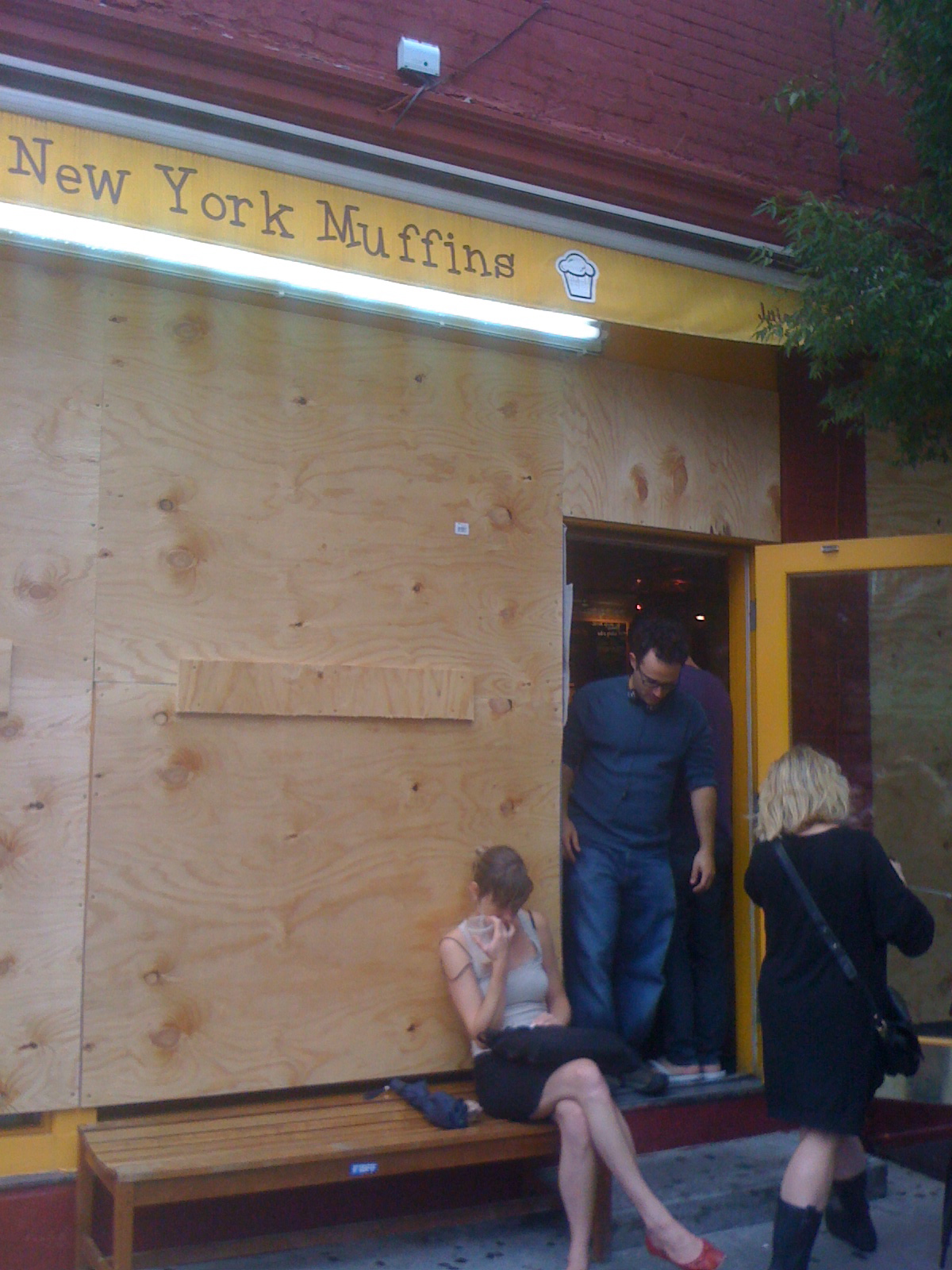
This was the Bedford Cheese Shop today around 1 pm, on the corner of Bedford Ave. and N. 4th St, in Williamsburg. Stores were boarded up, including New York Muffin, with just a doorway open for customers to enter and exit. I was surprised, however, at how many restaurants, shops, and cafes were open for business, including: Rabbit Hole, Oslo, Midori, Blackbird, Tai Thai, Dumont Burger, and all the 24-hour delis along Bedford.


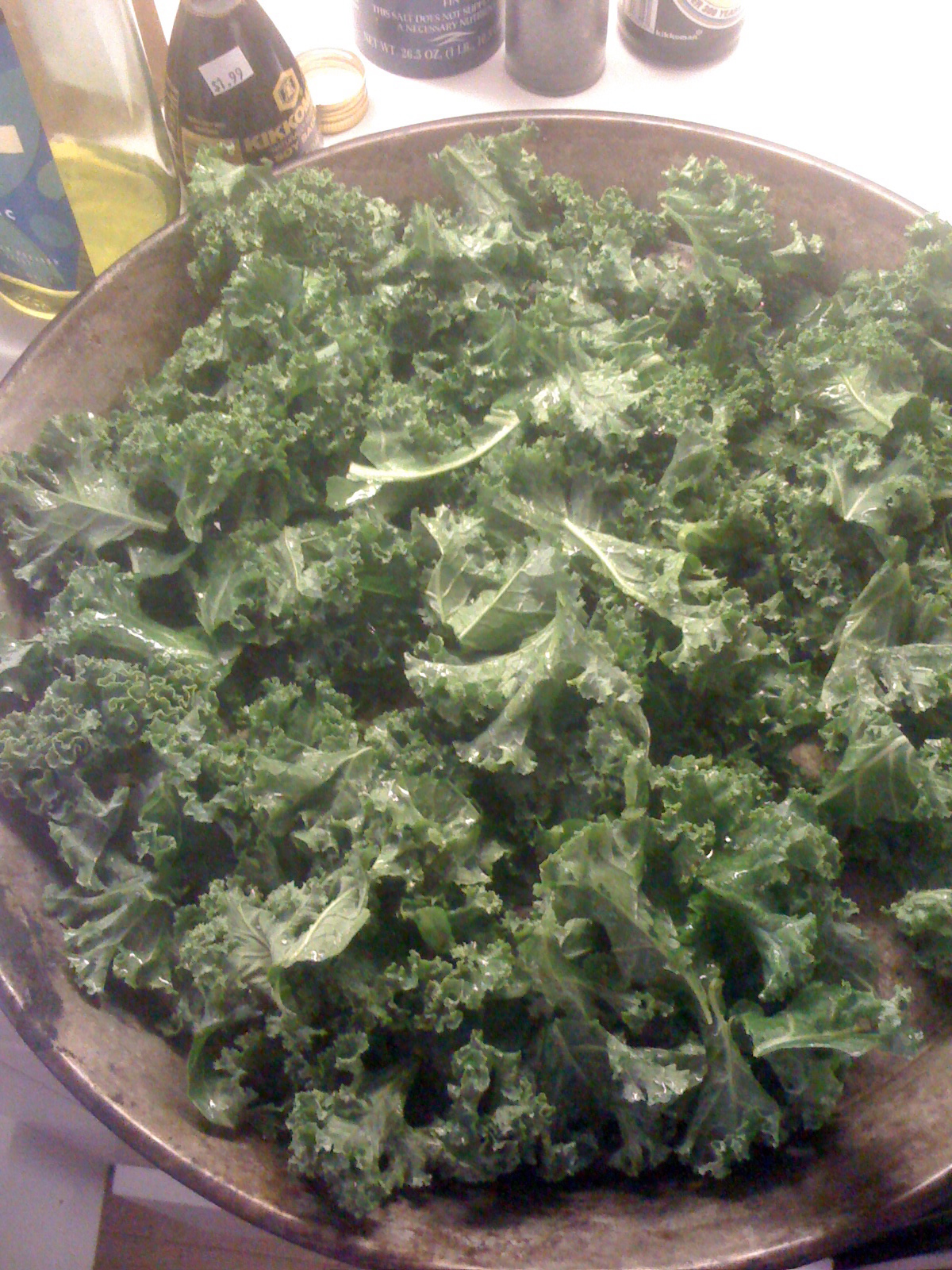
So what do you snack on while you’re homebound for 36 hours watching movies and CNN? Popcorn would be a good option. Or Japanese shrimp crackers. But I had a ton of Kale I hoarded from Millennium Mart yesterday so thought I’d make one of my favorites: kale chips.

Sold in markets around the city for $8 for a few ounces, kale chips are a seriously easy and cheap snack to make yourself instead. You wash and dry a bunch of kale (drying is key to a crispy chip), cut into small pieces, arrange on a baking sheet (I used the paella pan), drizzle on olive oil and salt, and bake for 20 minutes at 375 degrees. I also sprinkled on leftover garam masala I had from the spicy coconut curry.

I can eat the whole bunch of kale by myself this way: crunchy, salty, relatively healthy, they’re highly addictive.

Other good eats this weekend: figs and prosciutto. Sardines, crackers, and Japanese mayo. Aged gouda on raisin-walnut toast. Hey, when Bloomberg said to stock up, I didn’t mess around! Bye-bye Irene.
I admit it was perhaps a little foolish to plan a dinner party the night before Hurricane Irene was due to arrive in these parts. Not because people wouldn’t show up, but because it meant I had to buy groceries somewhere. And once the mayor announced a state of emergency and encouraged stocking up on canned goods and water, New Yorkers went into a hoarding frenzy. Nowhere was this more apparent than in the Park Slope Food Co-op circa 3 pm yesterday.

My friend Amy and I made plans for a co-op run earlier in the week. She’d never been and I wanted to show her why I like it so much—cheap spices in bulk, cheeses for a bargain, Kombucha for under $3, breads from the best bakeries in the city. I suspected it might be crowded with folks stocking up for the weekend but was not prepared for the one-and-a-half-hour wait in the check-out line. A friendly member reminded me you can skip the line and go straight to the check-out if you have three items or less.

Amy and I consulted our long shopping list, which included the items needed for the paella we planned to make, and picked the three most important items (saffron, pimentón, peas), and got out of there fast.

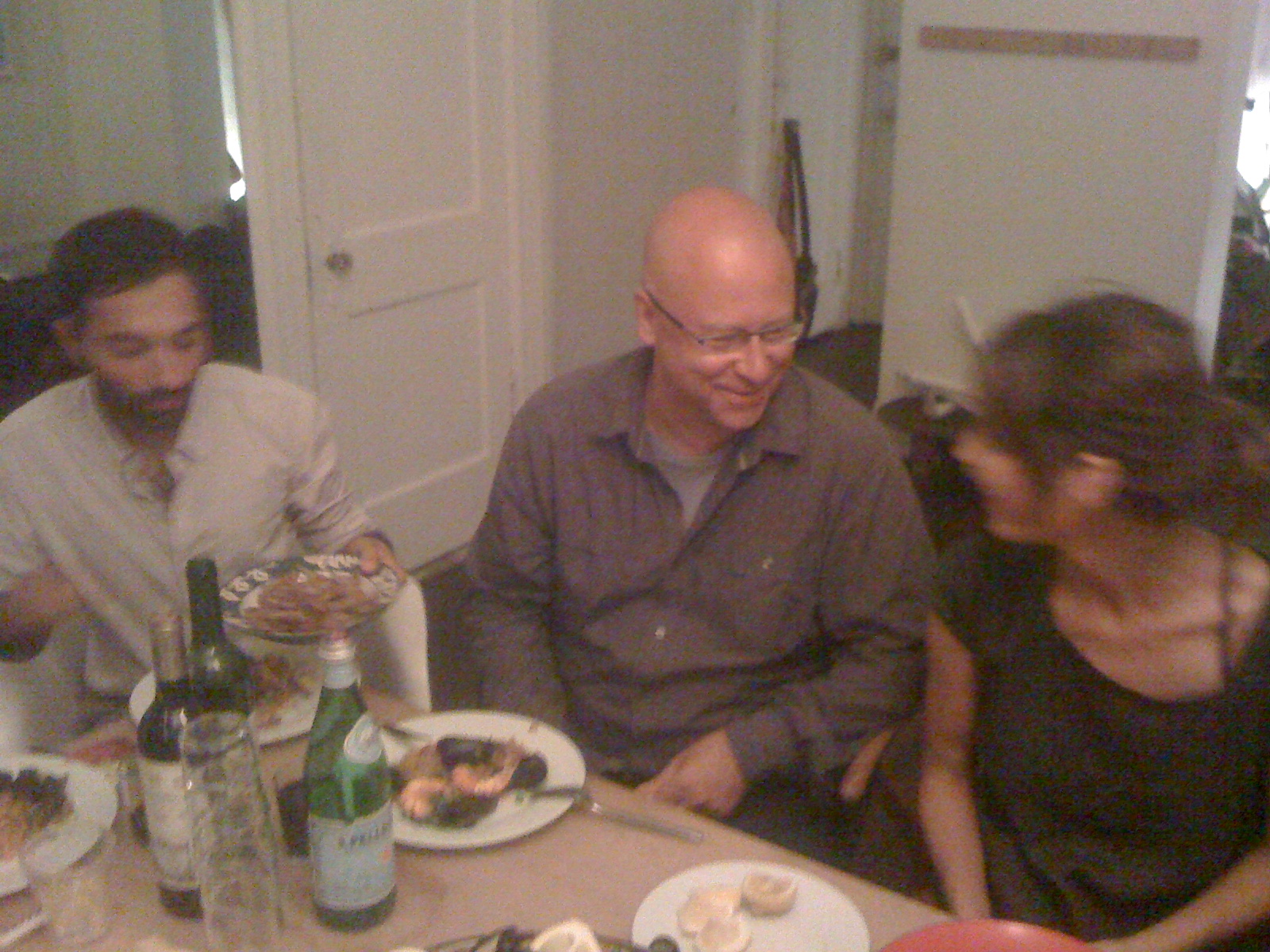
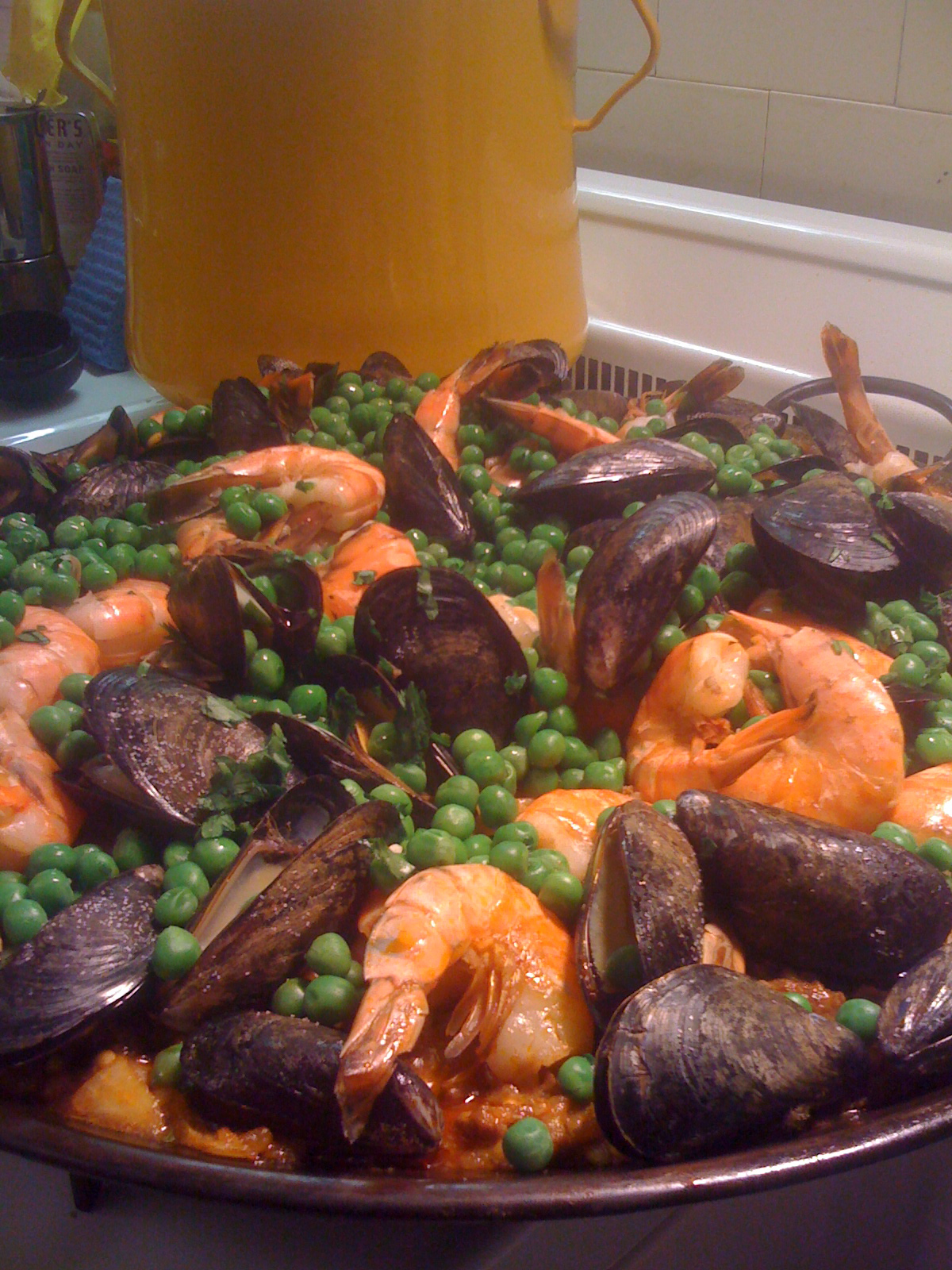
A couple of hours later we were back in Williamsburg, having driven up to Costco in Long Island City, and ready to begin cooking. We had eleven adults and two toddlers coming over for dinner around 7:30 so we got to work. It was a collaborative effort: Sumathi had a bag of short-grain paella rice we picked up earlier in the day from her doorman; Yuji lent us his 18-inch paella pan that his friend bequeathed him when she moved back to Spain; and Amy and I cobbled together the remaining ingredients.

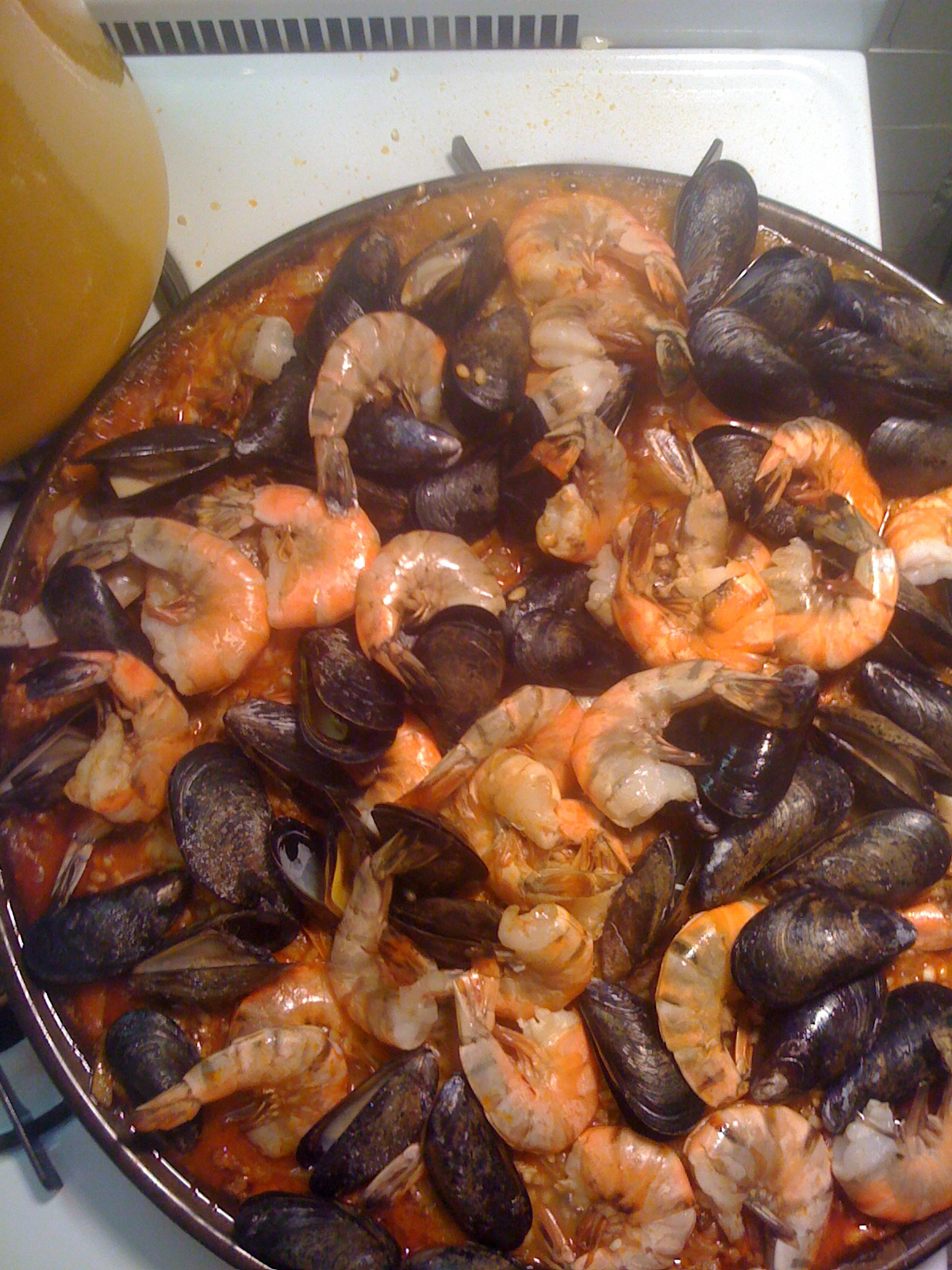
It was my first time making this Spanish rice-and-seafood dish and I think it came out well. I expected it to be a bit crustier on the bottom but the rice was thoroughly cooked through and the chorizo, pimentón, and saffron added a good kick of spice. We loosely followed a recipe for Grilled Lobster Paella from last month’s issue of Bon Appétit but took some liberties, including the substitution of mussels and shrimp for lobster and cooking the dish across two stovetop burners rather than in coals. This dish will easily serve 12 adults.

Paella Irene

3/4 c olive oil
1 yellow onion
4 cloves garlic
1 1/4 lb chorizo, sliced into 1/2″ thick rounds (chorizo can have casing but doesn’t need to)
1 1/2 tbsp pimentón (smoked paprika)
3 3/4 c short-grain rice (like Valencia or bomba)
1/2 tsp saffron threads
7-10 c hot seafood or chicken stock
Kosher salt
3-4 pounds of seafood (can be any combination of shrimp-squid-mussels-scallops-lobster)
1 bag (about 3 c) frozen peas
3/4 c chopped parsley, for garnish
lemon wedges, for garnish

1. Set your paella pan on your stove across two burners. Turn the heat on both burners to medium and heat the olive oil. Add the onion and cook for about 10 minutes until the onions are translucent, then add the garlic. After a minute add the chorizo and cook 3-4 minutes. If the chorizo is in its casing it will be neater and stay relatively intact; if not it will tend to fall apart and incorporate more into the dish, which is also good.

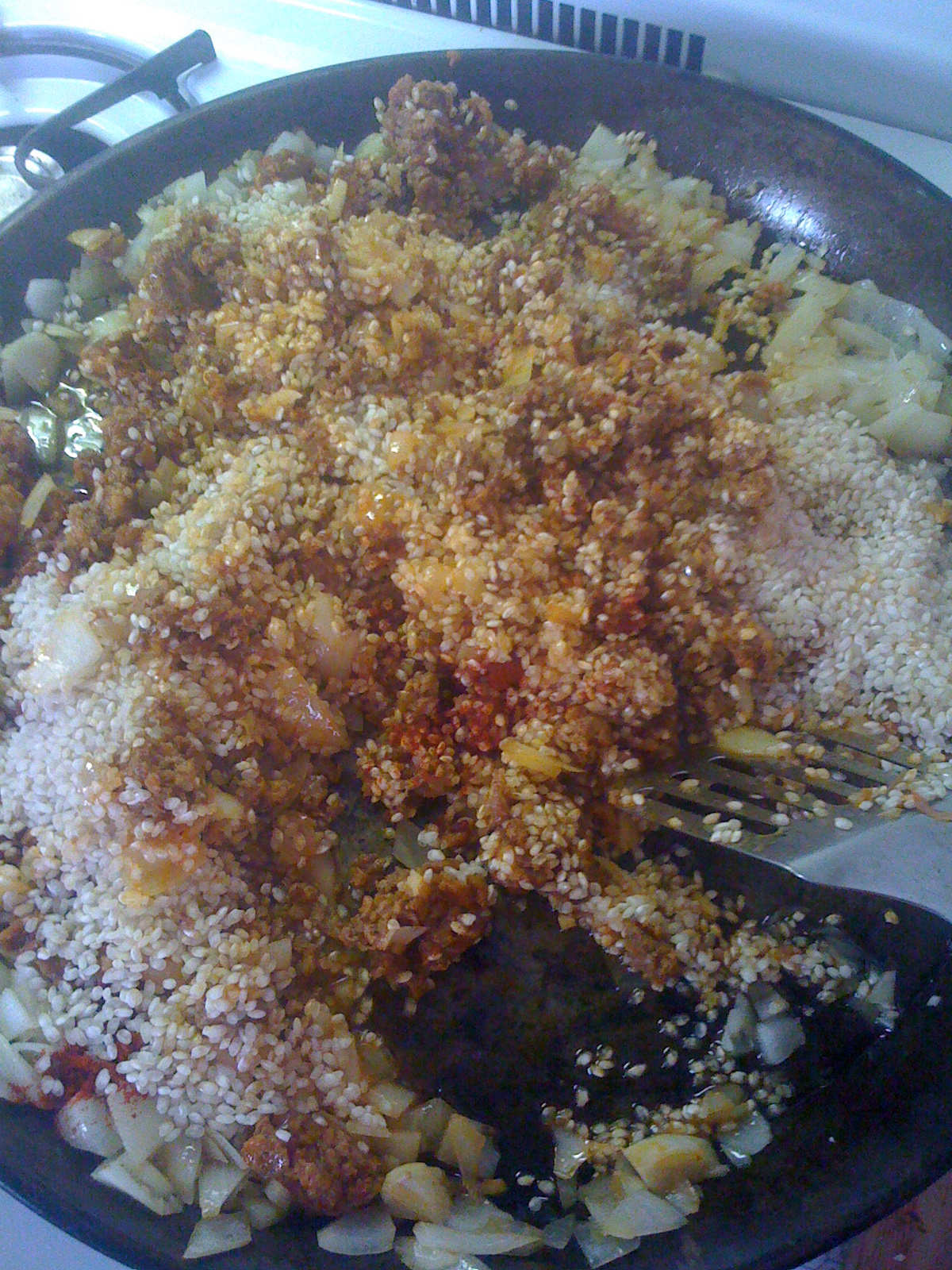
2. Add the pimentón and rice to the paella pan; cook, stirring, until the rice is coated, about 2 minutes. Add saffron threads to the hot stock, add the stock to the pan and season with salt; stir to distribute the ingredients. Let cook, without disturbing, until the stock simmers and rice begins to absorb liquid, about 20 minutes. Rotate the pan on the burners every 2-3 minutes to cook evenly.

3. Arrange the seafood over the rice and continue cooking and rotating the pan. The rice will swell as it absorbs the liquid. Add more stock if the liquid evaporates before the rice is tender. Continue to cook until the seafood is cooked through and the rice is tender.

4. Scatter the peas on top. Continue to cook without stirring, allowing the rice to absorb all the liquid and a crust (the socarrat) forms along the edges. Total cooking time is about one hour. Turn off the heat and cover with a tin-foil tent or a clean dish towel and let rest for 5 minutes. Serve with lemon wedges and garnish with parsley.

We served the paella with a large green salad, fried anchovies, and bitter melon cooked with chile pepper.


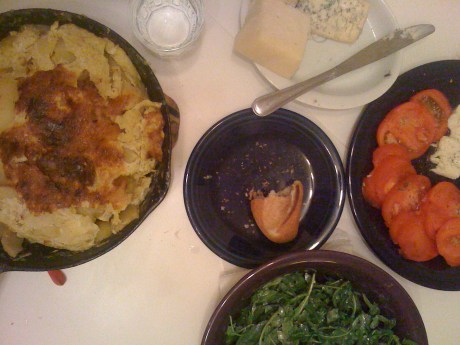
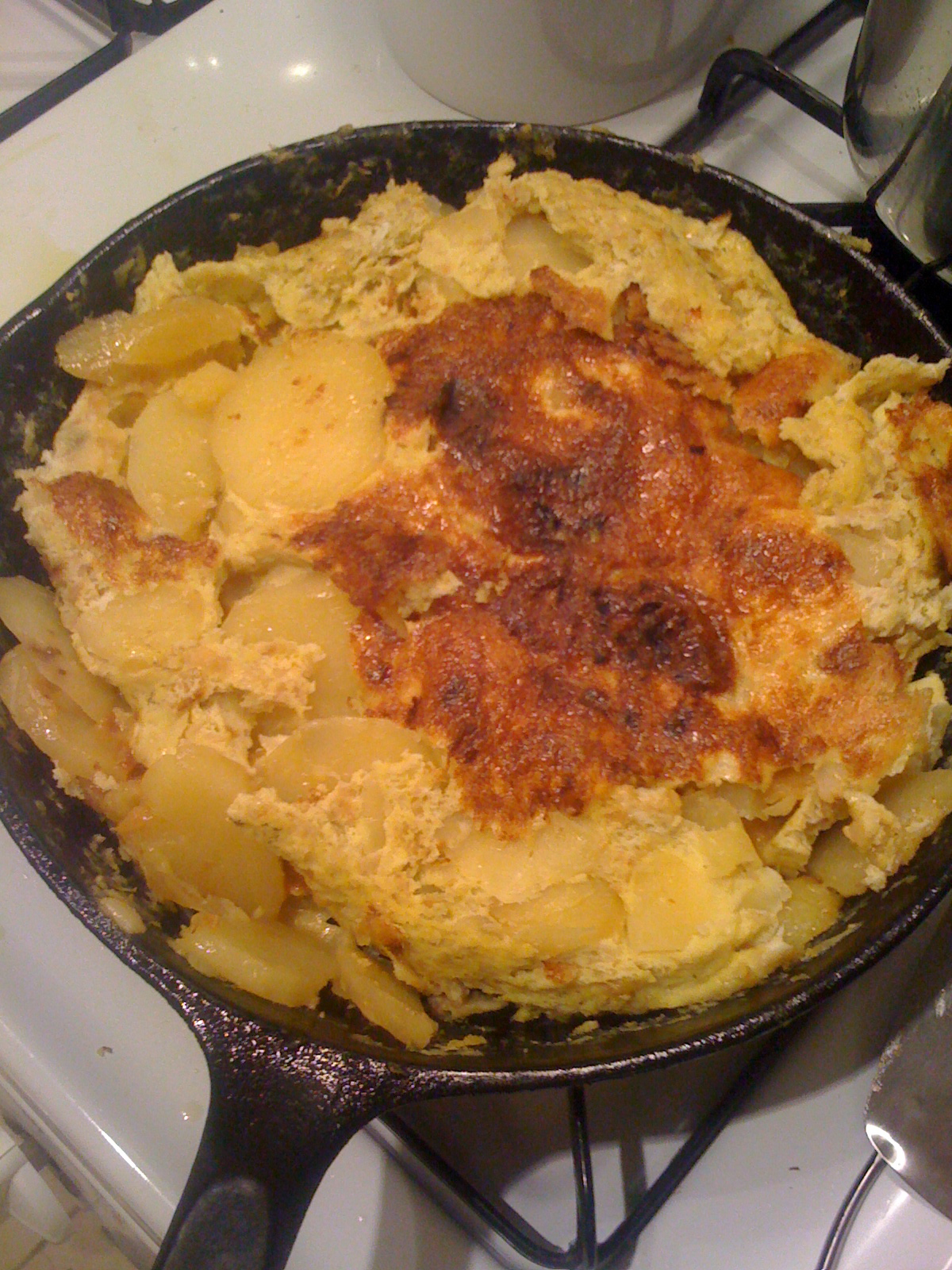
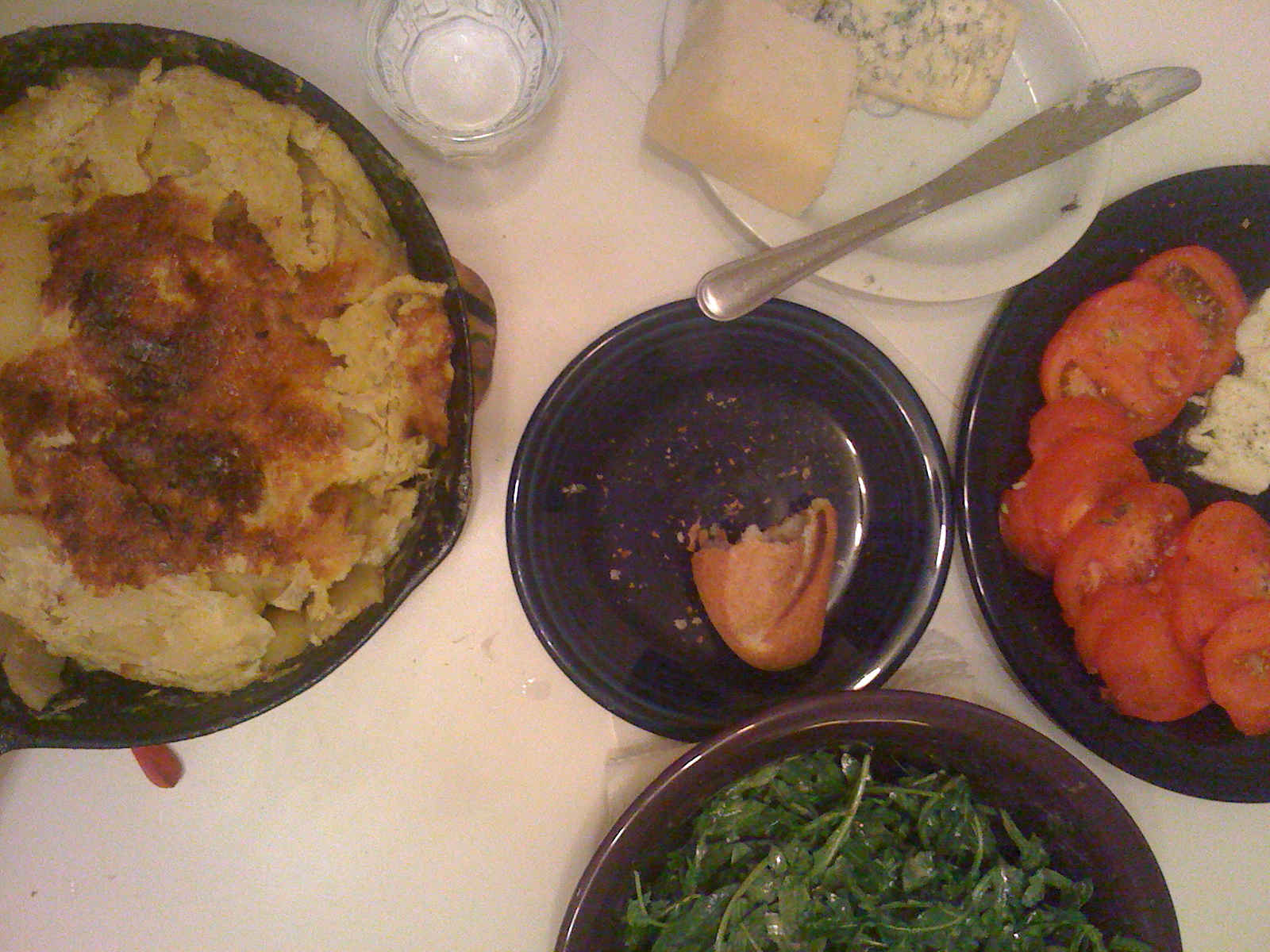
Making a tortilla Española, or Spanish omelette, is not as easy as it looks. Or rather, not on the first try, but maybe the second or third. My friends and I made one Tuesday night for dinner and the results were certainly tasty, but didn’t necessarily come out tidy or resembling a dish you’d serve at a tapas bar in Salamanca.

We followed a recipe by Seamus Mullen, whom you might know from the Food Network’s Next Iron Chef, or as the founder of Manhattan’s two Boqueria restaurants. This month Mullen opened a new spot, Tertulia, in the West Village, serving northern Spanish fare like tosta setas and ham croquettes, from morning to night.  I like him for his food, but also his heritage: Mullen grew up on an organic farm in Vermont.

So first, the ingredients. There are only five: eggs, olive oil, onion, garlic, potatoes. Oh and salt. Traditionally, I think, no black pepper, green herbs, tomatoes, cayenne, peppers, nada. Keep it simple. Of course the entire time I was making it I was also making mental notes of substitutions and additions—chives, more garlic, slightly thinner potato slices, roasted tomatoes…

You’ll notice this recipe calls for a lot of olive oil. This doesn’t actually all end up in the dish, it is drained and reserved for future tortilla making.

I recommend, in Step 6, repeating the flipping process one or two times to make sure your tortilla really sets and turns out with well-rounded edges. We skipped that and thus our dish came out looking, well, rustic.

Here’s the recipe we more or less followed:

Tortilla Española

Recipe adapted from Seamus Mullen, New York City
Yields one 10-inch tortilla, serves 4-5

Ingredients

8 eggs
Salt
2 cups extra virgin olive oil
1 sweet onion, thinly sliced
1 clove garlic, crushed slightly
3 large Yukon Gold potatoes, peeled and sliced into 1/4-inch rounds/slices

1. Lightly beat the eggs and season generously with salt, set aside.

2. In a 10-inch nonstick skillet (I used cast-iron), heat the olive oil over medium-low heat until it’s warm. Add the onion and garlic and gently cook until the onion is translucent, 10-15 minutes. Add the potatoes, cook for 20 minutes until the potatoes are falling apart but not browning.

3. Remove the pan from heat and strain the mixture through a colander, reserving the olive oil for the next time you make a tortilla. After straining the potato-onion mixture, season it with salt and add the eggs, mixing until combined.

4. Heat the same skillet over medium-low heat, adding one tbsp of olive oil from the reserves. Pour the potato-onion mixture into the pan and let it cook for 2 minutes without touching the pan, until the bottom begins to set. Gently shake the pan to release the eggs from the bottom; using a rubber spatula, gently pull the mixture away from the edge to make sure it isn’t sticking at all. Cook until the bottom is set but the top is still very wet, about 5 minutes.

5. Place a large, flat plate on top of the skillet, hold it tightly, and using one quick motion, flip the tortilla onto the plate. I recommend watching this video first. We also had two people doing this step.

6. Wipe the pan with a paper towel, turn the heat back on, add another tbsp of the reserved olive oil and carefully slip the tortilla back into the pan, under-cooked side down, cooking for another 3 minutes. You can repeat this flipping process one or two more times until the tortilla is nice and set, rounded, and golden on the outside.

Serve with little sides, like a green salad, a bowl of olives, or sardines on crackers.