Last month, my roommate hosted a party in our apartment celebrating his grandmother’s 90th birthday. I was in Milwaukee, but enjoyed the leftovers when I returned to New York. One of my favorite dishes Mark made with his mother was this Israeli couscous salad with dried cherries, arugula, and walnuts. We had so much of it left in our fridge I brought some out to my grandmother, knowing she’d probably never had couscous (which she now calls “frou-frou”) but might like it nonetheless.

Did she ever. I was sorry I’d only brought a pint-size container full. She wanted more and has asked for it ever since. So Labor Day weekend, before driving out to Long Island, I whipped up a batch to take over. I had most of the ingredients on hand; the day before, at the co-op, I only had to pick up some more couscous in bulk (Israeli couscous, also known as pearl couscous, is made from baked wheat and is bigger and rounder than North African couscous, which is finer and made from semolina). Instead of orange juice, like the recipe called for, I used grapefruit juice since that’s what I had in my fridge.

Of course, this recipe is just asking for substitutions. I bet fresh squeezed lemon juice, cooked eggplant, feta, and mint would work nicely. Or chickpeas, turmeric, a dried red chile pepper, and cilantro.

This salad makes for a great lunch during the week, and doesn’t require heating up. Leftovers last a few days at least, although the arugula will begin to wilt once dressed. Give it a try, and hey, offer it to someone who thinks couscous is called “frou-frou” because I think they just might like it.

Couscous salad with dried cherries, walnuts, and arugula

For the couscous:
1 c water
2/3 c orange or grapefruit juice
1 1/3 c (1/2 lb) Israeli (pearl) couscous

For the salad:
1/4 c orange or grapefruit juice
2 tbsp olive oil
1 tbsp red wine vinegar
2/3 c dried cherries
2 stalks celery, finely diced
3 oz (a couple handfuls) arugula
1/2 c walnuts, lightly toasted
1 shallot, peeled and minced
Sea salt and freshly ground black pepper

Put the water and the juice in a medium saucepan and bring to a boil. Stir in the couscous, cover the pan, and turn the heat down to a simmer. Cook for 20 minutes. Prepare a large baking sheet by covering it with parchment paper. When the couscous has absorbed all the liquid spread it out on the baking sheet to cool.

Whisk together the juice, olive oil, and red wine vinegar in a glass measuring cup or bowl. Add the dried cherries and microwave for 2 minutes on high. (Alternatively, you can bring the mixture to a simmer in a small saucepan on the stove, then stir in the cherries and turn off the heat.) Let the cherries stand in the liquid for at least 5 minutes, until they are glossy and plump. Drain off the liquid into another cup and reserve.

When the couscous has cooled to lukewarm, slide the couscous into a large mixing bowl. Take the reserved liquid drained from the cherries and whisk vigorously until thoroughly combined. Stir this into the couscous. Stir in the steeped cherries, celery, arugula, walnuts, and shallot. Season to taste with salt and pepper. Serve warm or at room temperature.

Serves 4–6.

Some said it was like being in a Chekhov play: two days on an island in a big red barn with fourteen people, some of us strangers to one another, some old friends and lovers, in town to attend the wedding of two dear friends. The weather was warm and sunny during the day, foggy and damp at night; there was a big lawn for playing croquet; old German cars were strewn about; characters paced and smoked alone in the yard; a big kitchen provided opportunity to bump into people early in the morning, late at night. Main characters included architects, a writer, an actor, mathematician, photographer, doctor.

Secondary in the cast of characters were an irate local property manager, a David Lynch-esque grumpy cashier, a housekeeper whose scratchy voice betrayed years of smoking. And then there’s Nantucket: a character unto itself. Stately and charming, it can intimidate while pretending to welcome. At least, it can come off that way to a group of New Yorkers that included Jews, Indians, Japanese, Mexicans, Chinese, and Koreans. We were the most diversity on the island since the Wampanoag Indians were forced out by the English in 1641.

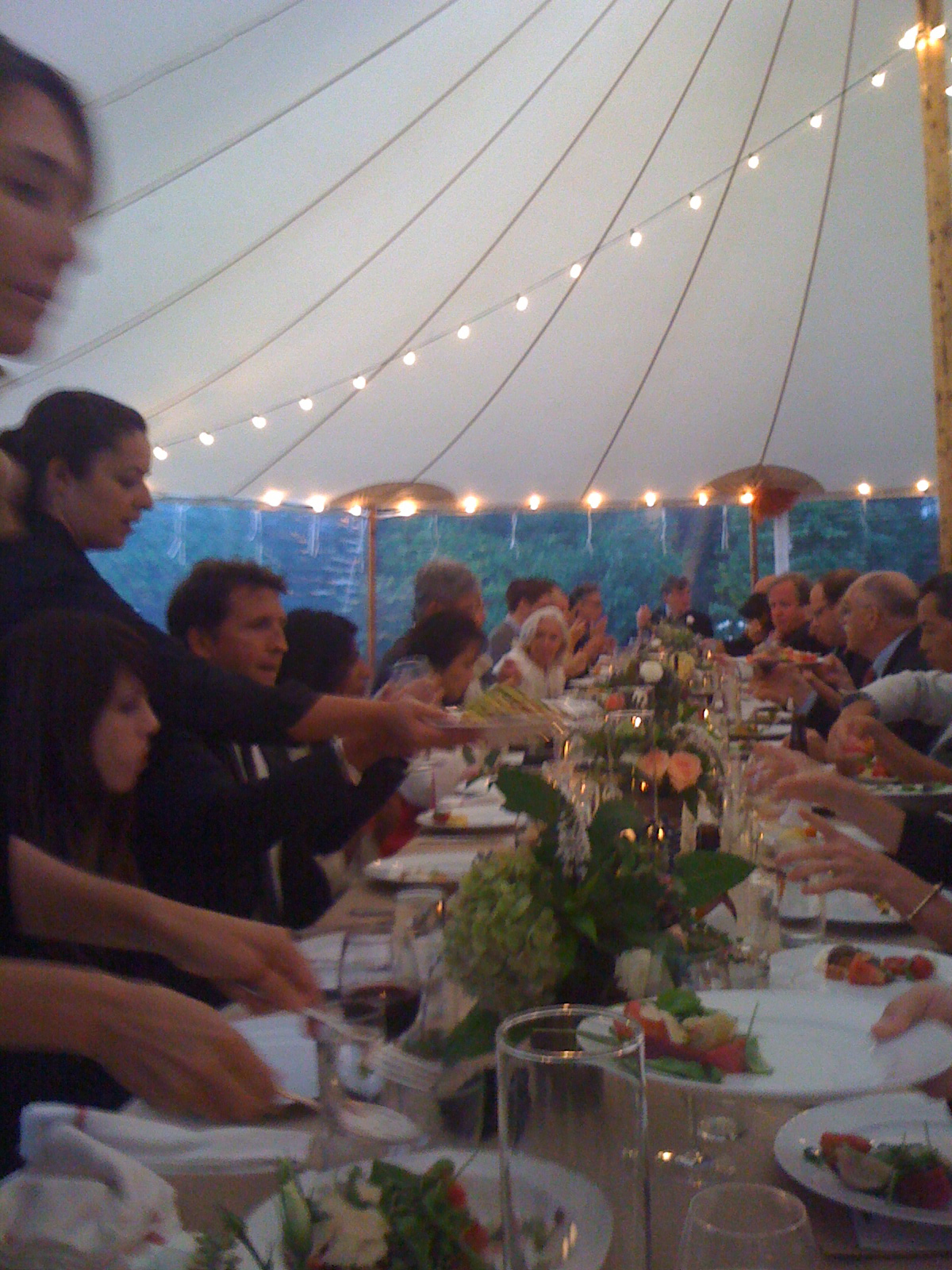
But I digress. The wedding was a beautiful, artful celebration of two dear friends, very much in love, surrounded by loving friends and family. We danced into the wee hours until I’d developed a shin splint; we ate suckling pig, local cod, end-of-summer tomatoes and corn; fingerling potatoes roasted in duck confit, and vanilla, chocolate, and carrot wedding cupcakes. (Chef Michael LaScola of the island’s beloved American Seasons restaurant catered the event.) The Tempranillo and Grüner veltliner flowed freely.

Our friend Amy manned a photo booth in the cabana, where the guests came in to have their photos taken with fake moustaches and other found props. The photos were coming out great – hopefully I can get my hands on a few and post them. Many of the other photos I took are on my other camera, so perhaps I can post some of those later too.

The photo of the ice cream cone at the top is from the famous Juice Bar on Broad Street, serving homemade ice cream, waffle cones, and fresh juices. The kid who scooped this couldn’t have been more than twelve, but he was fast. I’d never had mint-M&M ice cream before but now I understand what the long lines are about at this place.

Here’s the head of one of the two suckling pigs served at the dinner. Of course, this became one of the props in the photo booth. I’m going to apologize in advance to Peta, and my vegan and vegetarian friends.

Before leaving on Sunday we had a few hours to kill at Steps Beach, a close walk from the Chekhovian red barn where we stayed. It was a gorgeous, bright, blue, sunny day, the eleventh of September.


My friend Amy and I were finally able to shop at the co-op now that Irene was well in our past and the checkout line wasn’t snaking out the door. We had plans to make dinner together Friday evening but were unsure what to make. In the produce aisle Amy suggested an Indian curry. We had come for spices anyway so it seemed like a good idea.

Armed with Madhur Jaffrey’s Quick and Easy Indian Cooking, we decided on a variation of her Masoor Dal, or Red LentilTarka. Tarka refers to cooking spices briefly in hot oil, to bring out their flavors. The lentils cook down to a creamy, luscious consistency and the garam masala and dried red chiles bring the heat.

In addition to the red lentils, we had an armful of local eggplants and long thin okra. Feeling bold we decided to improvise an okra-eggplant curry. We sautéed a chopped onion in two tbsp of ghee then added about 4 c of chopped eggplant. After the eggplant was soft (maybe 10 minutes) we added chopped okra, a large pinch of garam masala and salt, and 3-4 c of chicken stock. We let that simmer down for a half hour or so, until thick, and served in addition to the red lentils.

Red Lentil Tarka
adapted from Madhur Jaffrey’s Masoor Dal

1 c red lentils (a.k.a. masoor dal)
4 c water or stock (vegetable or chicken)
1 slice fresh ginger, about the size of a quarter, chopped
3/4 tsp turmeric
1 tsp salt
2 tbsp vegetable oil or ghee (plus more if using onions and garlic)
1 pinch garam masala (recipe here)
1 tsp cumin seeds
2 dried red chile peppers
optional: 1 onion, chopped; 3 cloves garlic, finely chopped; 3/4 c diced tomatoes

Clean the lentils well and discard any small pebbles. Place the lentils in a three-quart pot with 4 c of water or stock and bring to a boil. Add the ginger and turmeric, turn the heat to low and cover leaving the lid slightly ajar. Cook for 20-25 minutes.

Approx. 10 minutes before your lentils are done, if you are using onions and garlic, heat approx. 2 tbsp of ghee or vegetable oil in a medium skillet. Add the onions and cook for 5-10 minutes, then add the garlic and tomatoes (optional, but they’re so good this time of year why not?) and cook for a couple more minutes. Transfer the onion mixture from the skillet to the lentils, leaving the oil in your skillet.

Add an additional 2 tbsp of ghee or oil to the skillet and heat on medium. When hot, add the garam masala, cumin seeds, and red hot peppers and cook for approx. 10 seconds. Quickly add the spice mixture to the lentils and cover with a lid. Let all the ingredients simmer together for another few minutes before serving. If the dal seems too liquidy at this point you can simmer for longer, uncovered, to let some of the liquid evaporate. Add the salt and season to your liking.

Serve with basmati rice and thick yogurt, raita, or pickled vegetables or chutneys.