I really feel like I’m just going out on a limb with this here post. I mean, pumpkin cinnamon rolls? They just seem so…absurd. Immoderate. Decadent. We are still creeping out of a national recession. It is high election season. I have better things to do and think about. Like how I can get in one of those #bindersofwomen.

But, it’s the fall. It was a Saturday. I was cruising Smitten Kitchen, one of my favorite blogs, and came across a recipe for these. The recipe is actually from Baked Elements, one of the cookbooks from the the Red Hook bakery I’ve come to know and love on trips to Fairway, Ikea, Sunny’s, and The Good Fork. Photos of these called to me through the screen of my laptop and, against my better judgement, was compelled to get baking.

I happened to have my monthly co-op work shift last weekend so I was able to buy all the spices I needed (ginger, nutmeg, cinnamon), good butter, replenish my flour stash, and get organic canned pumpkin. That’s right, I said canned pumpkin. You can definitely make these by roasting your own pumpkin but I will tell you right now I most certainly did not. Although it would be lovely and tasty if you did. The original recipe only calls for 2/3 c of pumpkin purée anyway, so, yeah.

My fellow blogger over at Smitten Kitchen tweaked the Baked recipe, and now I’ve gone and tweaked her recipe. I reduced the sugar in both the filling and icing; I did everything by hand instead of a stand mixer; lengthened the rising times; and increased the pumpkin. These are certainly tasty and decadent (everything you want in a cinnamon roll), but were the tiniest bit dry. And they are pumpkin cinnamon rolls—I wanted to taste more of the pumpkin than I did. So I think the perfect solution would be to increase the pumpkin quotient.

And while I have your attention…did you see the Food and Drink issue last weekend in the NYTimes? Read the article about Christopher Kimball by Alex Halberstadt. He’s so unabashedly old school. He would probably hate my blog. I love him.
Pumpkin Cinnamon Rolls
Adapted from Baked Elements (and Smitten Kitchen)
Yields 16 buns

Dough
6 tbsp unsalted butter
1/2 c whole milk, warm, but not hot
1 packet active dry yeast (2 1/4 tsp)
3 1/2 c all-purpose flour
1/4 c granulated sugar
1 tsp salt
1/2 tsp ground cinnamon
1/4 tsp ground nutmeg
1/4 tsp ground ginger
3/4 c (or nearly 1 c) pumpkin purée
1 large egg
Oil for coating rising bowl

Filling
3/4 c light or dark brown sugar
1/8 tsp salt
2 tsp ground cinnamon

Glaze
4 ounces cream cheese, softened
2 tbsp milk or buttermilk
1 c powdered sugar, sifted
A few drops of vanilla extract

Make the dough:
Melt the butter in a small saucepan, and once melted, continue cooking over medium heat for a few additional minutes so that it browns. It will hiss and sizzle, and golden brown spots will form on the bottom of the pan. Remove from heat and set aside to cool slightly.

Combine the warmed milk and yeast in a small bowl and set aside. After five minutes or so, it should be a bit foamy. If it’s not, you might have some bad (old) yeast and should start again with a newer packet.

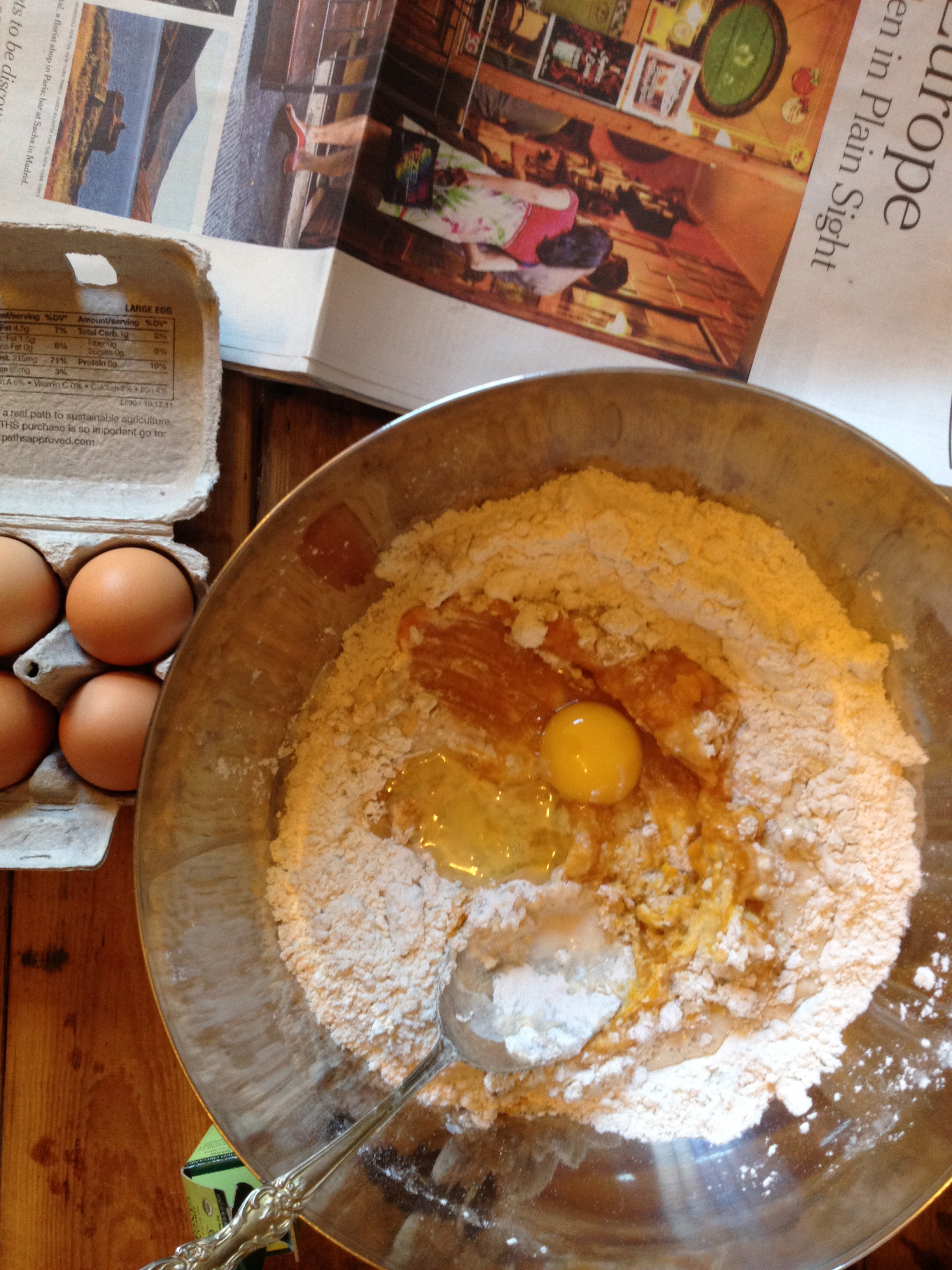
If you have a stand mixer, combine the flour, sugar, salt, and spices in the mixer bowl. You can do this by hand just fine too, and can use a large mixing bowl. Add 1/4 c (or 2/3 of the remaining) brown butter and stir to combine. Add the yeast-milk mixture, pumpkin, and egg and combine. If using a stand mixer, switch to the dough hook and run on low for five minutes. If by hand, get ready for a workout. Mix by hand for five minutes until the dough starts to come together.

Transfer the dough into a large oiled bowl and cover with plastic wrap. Set aside for at least one hour, or as much as two hours, in a draft-free place. It should nearly double in side. While it’s rising, line the bottom of two 9- or 8-inch round cake pans with parchment paper and butter the sides.

Assemble the buns:
Scoop the dough onto a well-floured surface, and flour the top of the dough well. Using a rolling pin, roll the dough to an approximately 16 x 11 inch rectangle. Brush the reserved melted butter over the dough. Stir together remaining filing ingredients and sprinkle mixture evenly over the dough. Starting with one of the longer edges, roll the dough into a tight spiral. It’s ok if some of the filling spills out of the ends a little.

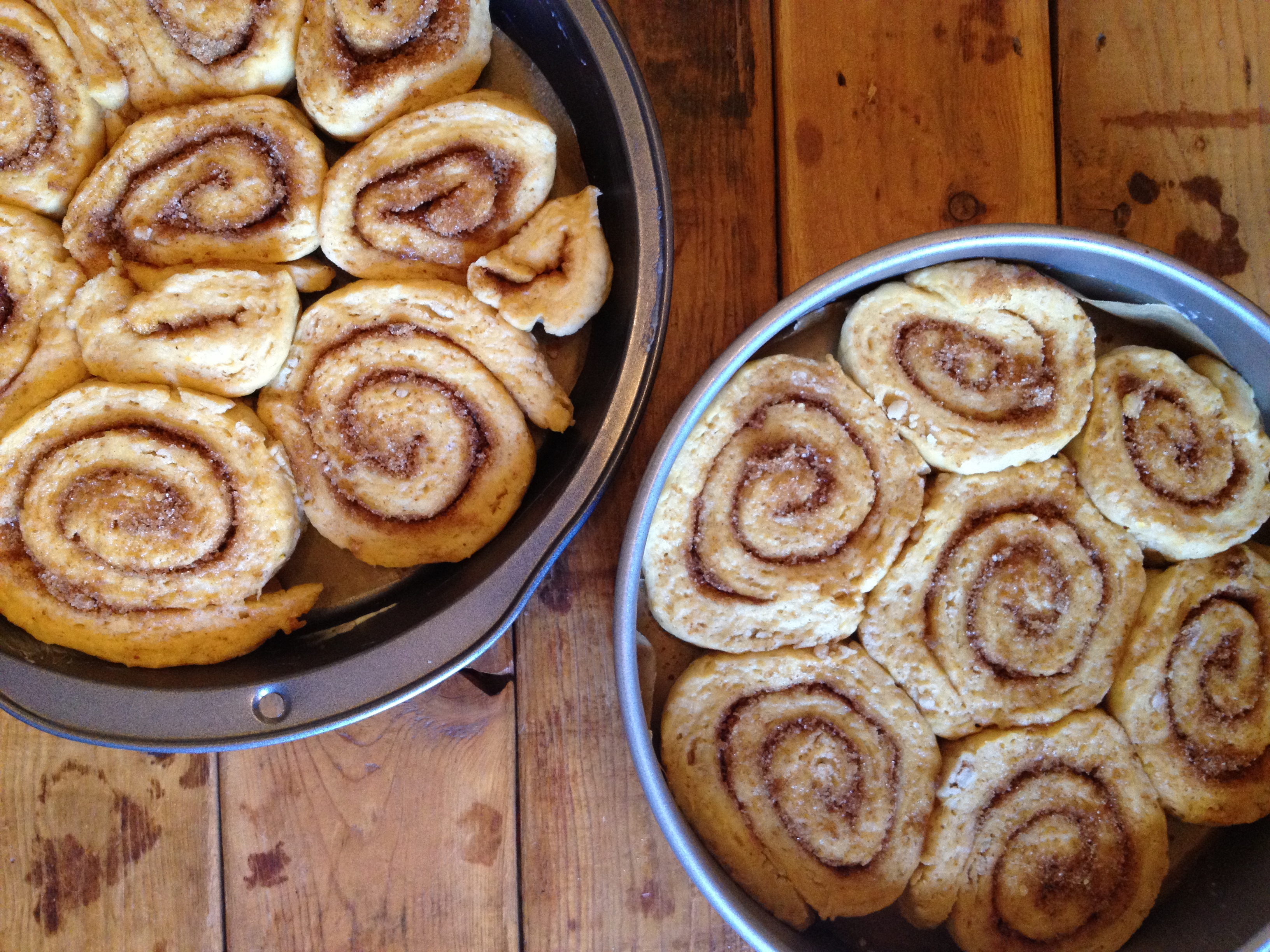
Cut the cinnamon rolls with a serrated knife using practically no pressure whatsoever. Place the blade of the knife on the dough and gently saw your log with a back-and-forth motion into approx. 1-inch sections. Divide buns between the two prepared pans, sprinkling with any sugar that fell out. Cover each pan with plastic wrap and let rise for at least 45 minutes and up until 2 hours. You could, after this point, put them covered in the refrigerator and when you’re ready to bake them just take them out an hour before hand to warm up.

Fifteen minutes before you’re ready to bake them, heat the oven to 350 degrees F and make the glaze. Beat the cream cheese until light and fluffy. Add the powdered sugar and vanilla and drizzle in milk until you get the desired consistency: thick like icing (which is what I did) or thin enough to drizzle.

Remove the plastic and bake (un-glazed) for 25 minutes until puffed and golden and the smell of cinnamon and sugar and butter makes you dizzy and brings your neighbors knocking. Let cool before glazing, then dig in. By all means, you’ve earned it.

I am the first to admit that I am somewhat of a whimp when it comes to cold weather. Not like LA whimpy where you pull out a puffy down coat around the 60-degree mark (I did live in Vermont and Ithaca after all), but this time of year I do start to wonder when the heat will come on in my apartment, how long I can stay in the shower each morning, and what’s an acceptable number of hot beverages to consume before noon. My eating habits change quite a bit too. I trade in the green smoothies and raw salads for warmer, more comforting fare. And this soup is no exception.

This is one of the simplest soups to make. Not quite as easy as the avocado soup I made this summer, but not as time-consuming as this black bean soup I made back in January. It makes good use of the beautiful late-harvest squash at farmer’s markets this time of year and provides just the right amount of warmth and spice to help you ease into fall.

The secret weapon of this soup is the roasting. Not just roasting the squash—which adds more flavor and richness than sautéing—but you’re roasting an onion and whole small head of garlic that also gets puréed into the mix. Shazam! This soup gets its bright color not only from the butternut squash but the turmeric that’s in the curry powder or garam masala. The coconut milk adds a luscious richness and depth, and the red chile pepper flakes kick the heat factor up a notch. Oh, and don’t discard those squash seeds! Toast them on the baking sheet with the squash for about fifteen minutes and then serve with the soup, if there are any left after you snack on them warm from the oven. Key word: warm.

Coconut Curry Butternut Squash Soup
Serves 4

1 large butternut squash, or 2 small
1 small head of garlic
1 onion, any variety
Olive oil, for drizzling
1/2 c unsweetened light coconut milk
1 1/2 c vegetable stock
3/4 tbsp curry powder
Red chile pepper flakes
Salt
Pepper

1. Preheat the oven to 400 F. Cut the squash into quarters, discarding the stringy bits in the center and setting the seeds aside. Place the squash, flesh side up, on a baking sheet. No need to peel. Place the garlic, skin and all, on a small piece of tin foil and drizzle with olive oil, and then wrap the garlic entirely in the foil. Place on the baking sheet. Slice the onion in half and add to the baking sheet as well. Drizzle the squash and onion with oil, salt, and pepper, and place in the oven for 50 minutes to an hour. You may need to remove the onion earlier than the squash.

2. While the vegetables are roasting, rinse the seeds and pat dry. About fifteen minutes before pulling the vegetables out of the oven, place the seeds on the baking sheet. They will roast and turn brown. Remove before they get too dark, about 15 minutes.

3. Remove the vegetables and seeds from the oven and let cool. When cool enough to handle, transfer the flesh of the squash to a blender or food processor, along with the onion and the roasted cloves of garlic. You should be able to just pinch the roasted garlic from its skin. Blend until smooth, adding a little bit of broth if needed.

4. Transfer the purée mixture to a large pot on the stove, stirring in the coconut milk and rest of the broth. Let simmer on medium-high heat for 10-15 minutes, adding the spices and seasoning to taste. Serve with the toasted seeds, and, if you’d like, a dollop of crème fraîche. I also served with a salad of green Boston lettuce, pears, walnuts, sliced grapes, and an olive oil-tahini dressing. If I had blue cheese, that would’ve been in the salad too.

This is what my fruit bowl looked like yesterday – a mélange of fall fruits, ripe and ready for the taking. If you live in or near New York City you know that yesterday was the first cold, fall day. It was also raining. The perfect Sunday to get in the kitchen and crank up my oven.

While making something savory is, in my opinion, more practical than making something sweet, I couldn’t help staring down those fruits and imagining them baking in a pastry crust. I turned to my trusty source for all things dessert, David Lebovitz, for some general guidance. Wouldn’t you know one of his last posts was on a harvest tart, much like the one I had in mind.

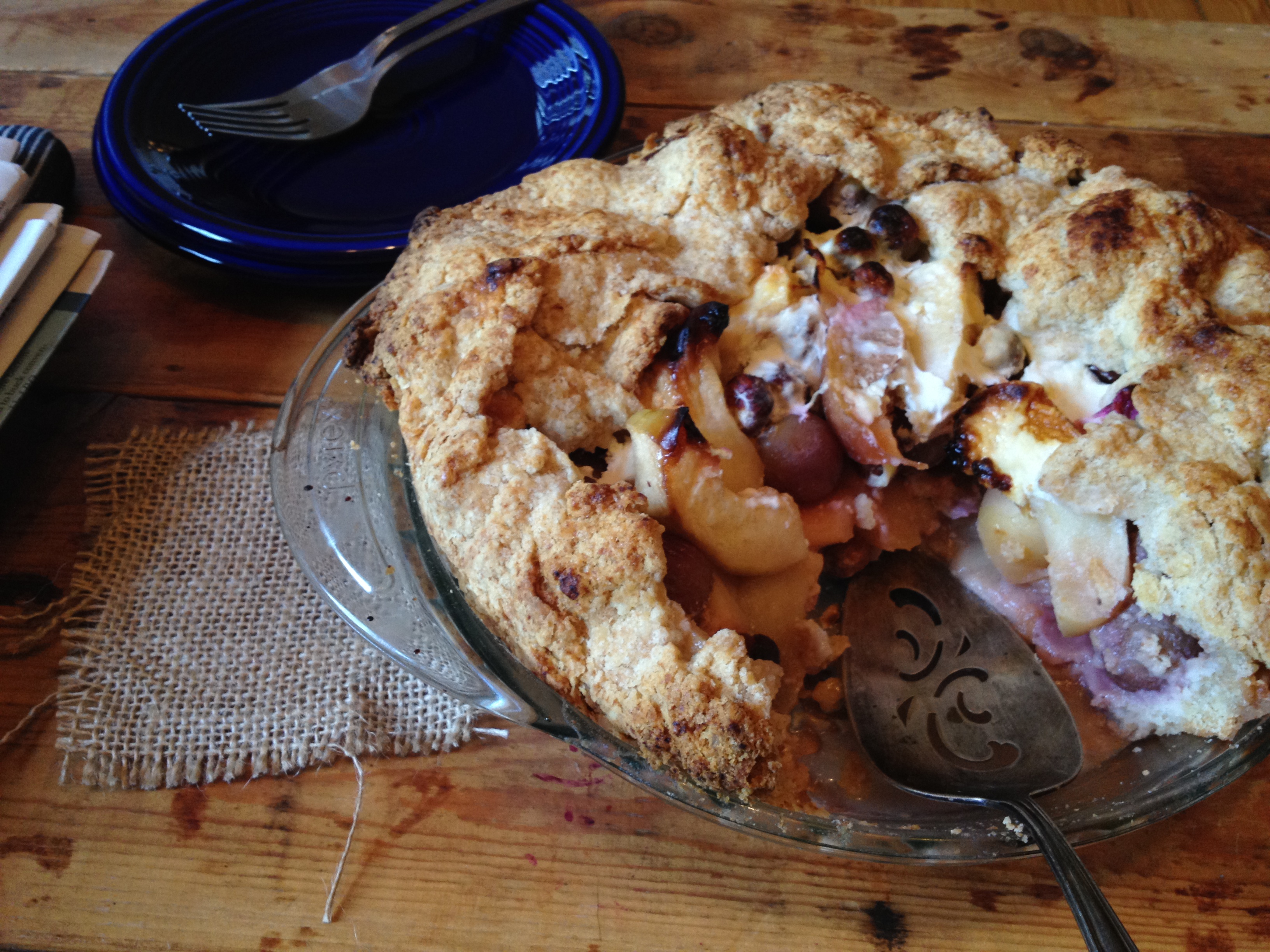
I call this a rustic tart because it’s not fussy and not meant to look perfect, like those fruit tarts you see in a bakery case. You quickly whip up the tart dough with nothing more than good cold butter, flour, water, and a pinch of salt. And fill it with whatever fruits you have on hand. I filled mine with Honeycrisp apples, grapes, and two different varieties of plums. (There was no room left for the pears!) I added a handful of hazelnuts, and drizzled a custard-like filling of egg and thick, whole-milk yogurt. (Lebovitz’s recipe called for crème fraîche, which I didn’t have on hand and couldn’t find within a few block radius in my neighborhood.) You roll out the dough larger than the circumference of your pie dish so that the edges can then be folded over the fruit filling just enough to leave some of the center exposed.

Maybe I can get used to this cold weather again.

Rustic Fall Tart
adapted from Kate Hill of Kitchen at Camont (via David Lebovitz)

For the dough
2 c all purpose flour
3/4 whole wheat pastry flour
pinch of salt
9 ounces unsalted butter, cold
2 large eggs
3-4 tbsp water

For the filling
2 lb apples, peeled and cored (approx. 4 large apples)
4 plums, any variety
1 small bunch grapes, stemmed
1/4 c sugar, plus additional for sprinkling
Handful of hazelnuts
1 tbsp brandy or 1 tsp vanilla extract
1 c crème fraîche or thick, plain yogurt
1 large egg

1. Make the dough: in a large mixing bowl stir together the flour, sugar, and salt. Cut the butter into small cubes and mixing with your hands or a pastry blender, combine with the four mixture until it’s in small pieces.

2. Add an egg and the water and mix until the dough holds together. Roll the dough out on a lightly floured surface until it’s about 18 inches in diameter. Transfer to a deep pie dish; the edges should hang over the sides quite a bit.

3. Beat the remaining egg in a small bowl then brush the insides of the dough with the egg.

4. Prepare the filling: slice the apples into eighths and the plums into quarters. Mix them together with the grapes, sugar, brandy or vanilla, and transfer the filling to the tart dough. Scatter the hazelnuts on top of the fruit.

5. In a small bowl, mix the crème fraîche or yogurt with the egg and pour it over the fruit and nuts. Line the edges of the dough and cover the fruit. Brush the top of the dough with a mixture of egg wash and butter then sprinkle with a little sugar.

6. Put the tart on a baking sheet and bake at 425 F for one hour, until the top of the dough is browned and the fruit is thoroughly cooked. You can test by placing a knife in the fruit and making sure it goes right through. If, before the hour is up, the crust starts to turn dark brown you can tent with foil about halfway through.

7. Remove the tart from the oven and let cool before serving. Serve on its own, with crème fraîche, vanilla ice cream, or homemade whipped cream.