Do I like Thanksgiving? I think so. It’s sacrilege not to. But sometimes the traveling, the stuffing ourselves, the Christmas music (yes, each year it arrives on radios and in stores earlier and earlier), it makes me want to scour kayak.com for flights to the Maldives and get the heck out of dodge. Which yes I am doing in fact. Hoping for a Maldivian Christmas-New Year’s. Wanna come?

But between the damage brought on from Hurricane Sandy a couple of weeks ago—the effects of which are still very much a hard reality in neighborhoods throughout the New York City area—and the fighting in Israel and Gaza this past week, there is a sobering and somber undercurrent this Thanksgiving. I continue to be amazed by the efforts of Occupy Sandy.

Some of the things I do like about Thanksgiving, of course, are the good eats: the turkey, cornbread stuffing, cranberry-orange relish, seeing my siblings together under one roof (rare these days), and trying new recipes. It’s a time to reflect on all the riches in our lives. For me, relationships and health in particular.

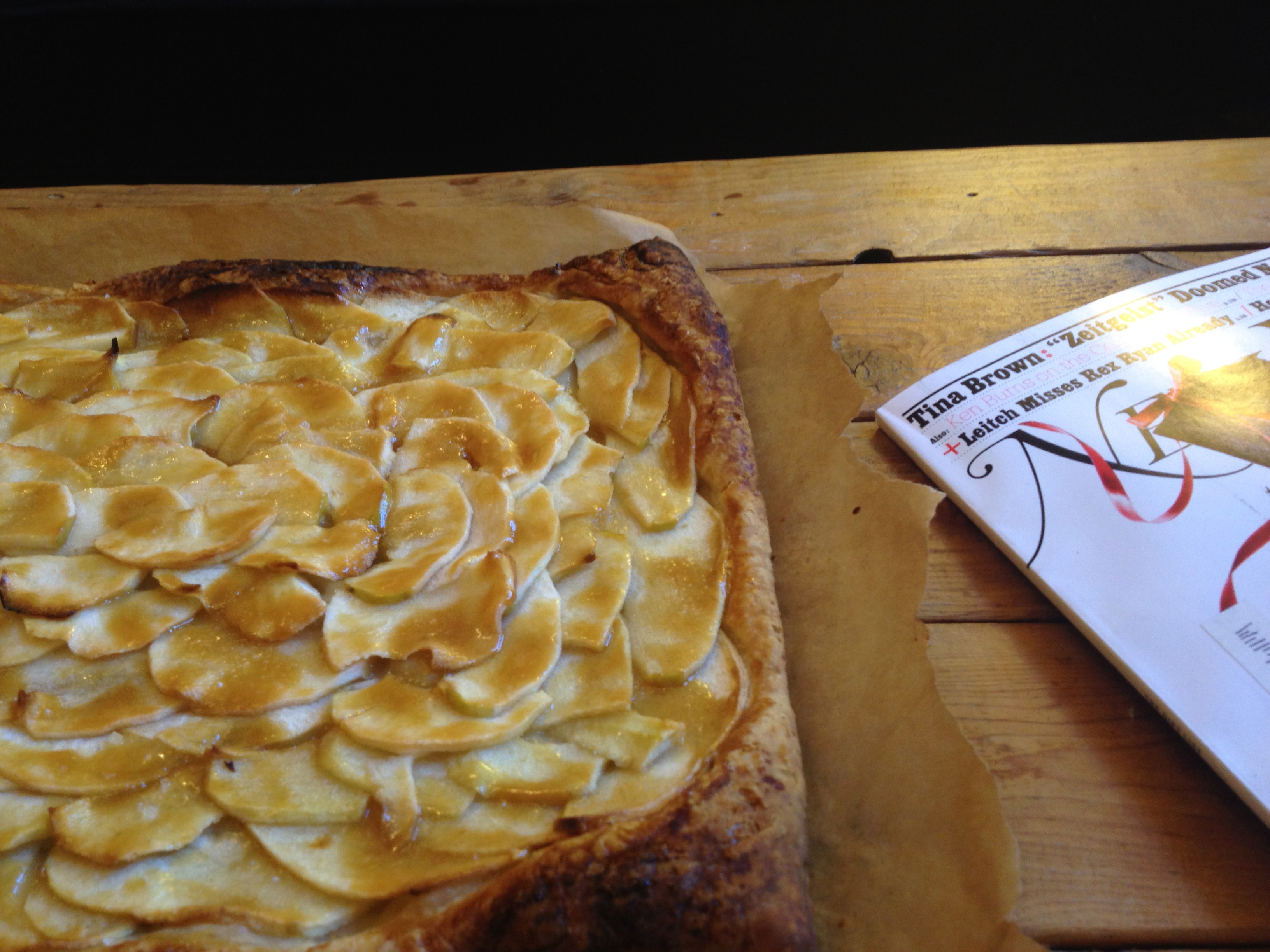
Last year I wrote about a devil food’s cake I tried out that was not entirely a success but not bad either. This year I needed a dessert to balance out the pumpkin cheesecake my sister-in-law—also our host in Northampton, Mass.—was making. You kind of need something with apples on the Thanksgiving dessert table but I didn’t want to make the same ole apple pie so I stumbled upon this salted caramel apple tart via Smitten Kitchen.

You make it using store-bought puff pastry and I recommend Dufour pastry which is made with all butter and not much else (ok, a little flour). You may experience sticker shock as I did at the Whole Foods checkout yesterday ($11.99) but it’s entirely worth it in my opinion.
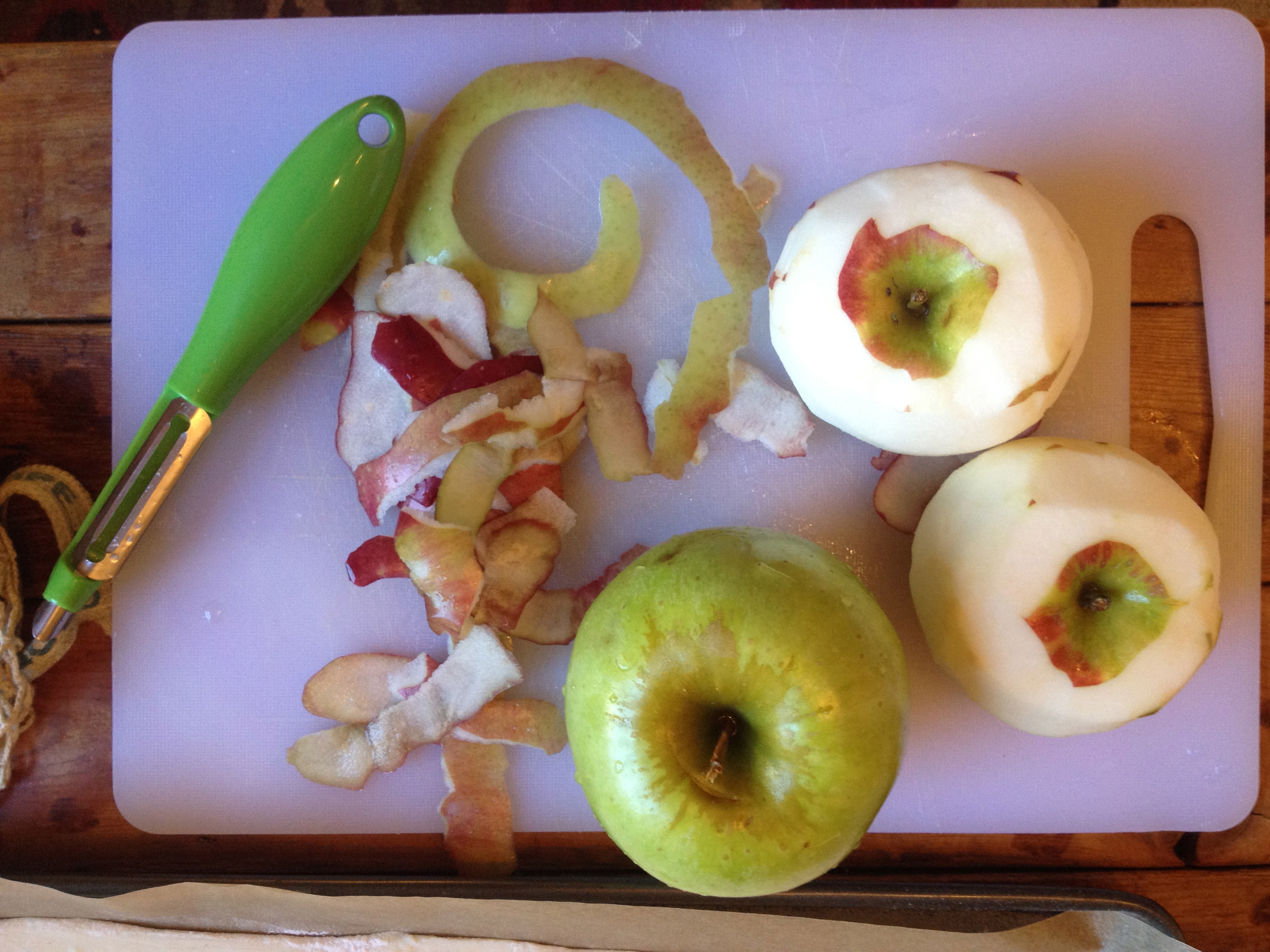
You can find the entire apple tart recipe here. I am getting lazy about retyping perfectly good, already published recipes. A big shout out to Deb Perelman, from whose blog I’m unabashedly cribbing these days.

Look how pretty those little cubes of butter look on the uncooked apples!

Making the salted caramel is pretty darn easy.
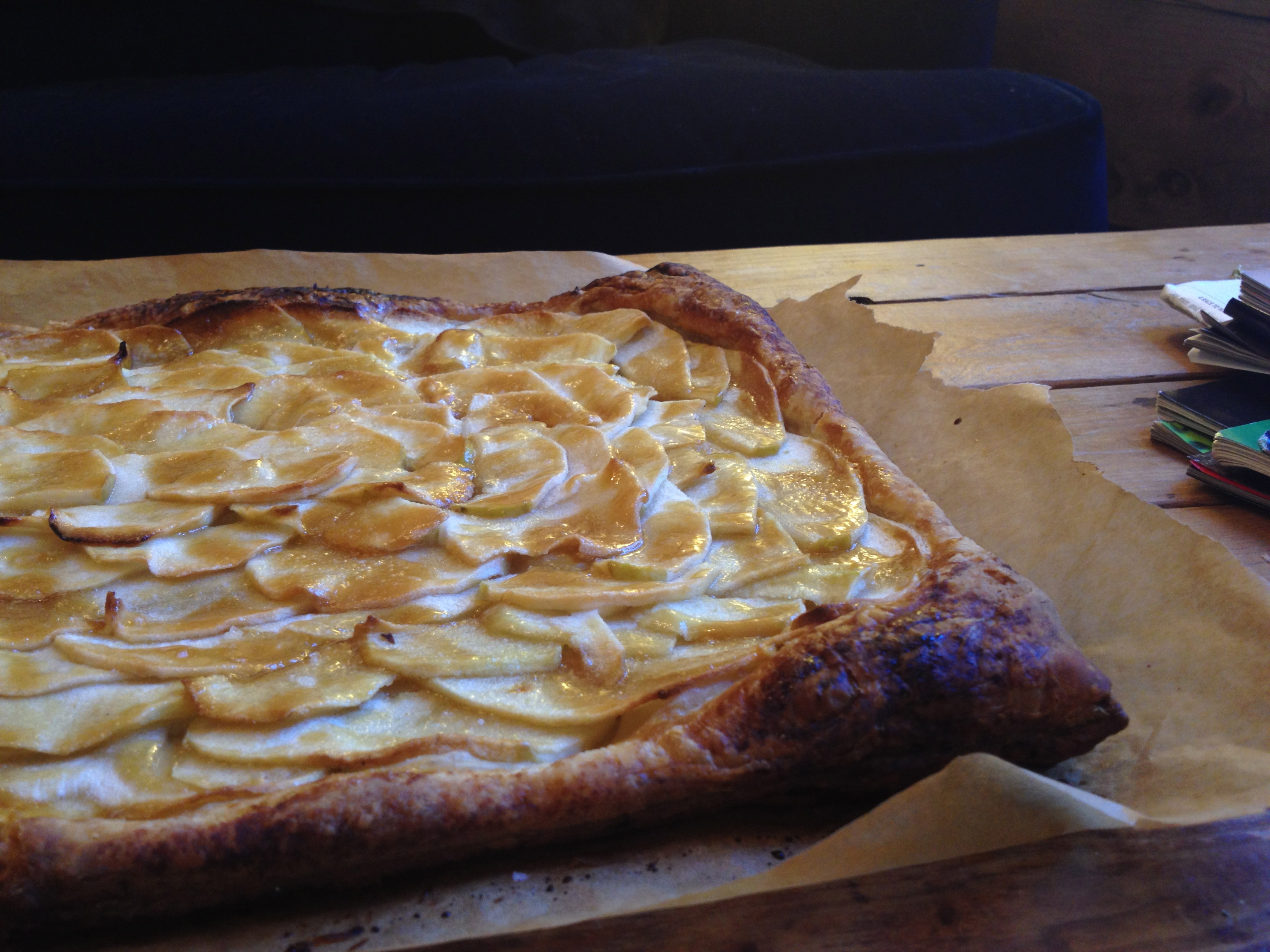
Looking forward to biting into this tomorrow. I’ll try and update the post to let you know how it is. I also want to post about the cranberry-orange relish I made this year but need to go catch the subway! So if you celebrate Thanksgiving I hope it’s a meaningful one for you. Peace out-

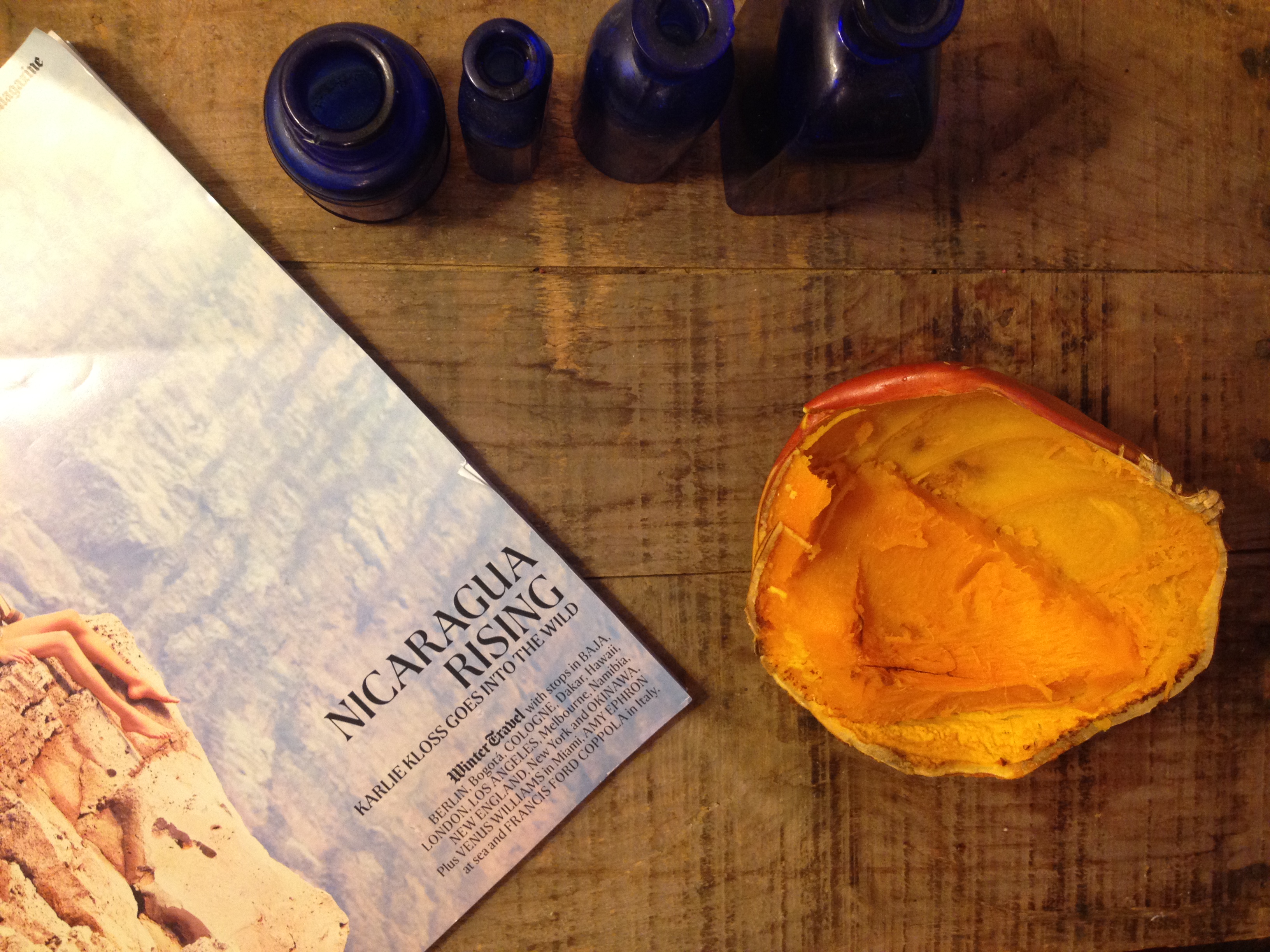
Ok so the funny thing happened once I was home from the market. I couldn’t crack open the three-pound Amber Cup squash I bought moments earlier. I’d never tried this variety of squash but it was a little smaller than the kabochas (i.e., lighter to carry home) and, as the sign read, it’s “another orange kabocha”—sweet, orange-fleshed, perfect for roasting. The problem was, Jill was due to arrive at any minute for an impromptu lunch and the darn thing would not yield to the gentle, nor increasingly firm, pressure of my knife. Could we have eaten at one of the twenty-six restaurants serving brunch within a stone’s throw of my apartment? Yes. Would it have been easier? Faster? Cheaper? Yes, yes, and yes. But once I get a cooking idea there’s little stopping me.

And I had a very particular craving. Last December I had a memorable lunch at ABC Kitchen with my father and stepmother. I was going to buy my first real rug and it seemed fitting, and fun, to do this a) with my step-mom who is somewhat of a rug connoisseur and b) after filling our bellies with Dan Kluger‘s delicious seasonal fare across the street from the rug emporium. In addition to the pizza with egg, the veal meatballs, and the beets with homemade yogurt, we shared a piece of toasted sourdough bread with kabocha squash, ricotta, and apple cider vinegar. It was my favorite part of the meal that afternoon but I had nearly forgotten it until this week: Bittman wrote about this very dish as an impressive appetizer to serve on Thanksgiving.

But as the clock struck two p.m. in Brooklyn my guest arrived and I was standing in the kitchen with a cold, heavy squash, realizing I had to be on the Upper East Side in two hours no less. I put the squash aside (I’ll deal with YOU later) and came up with an instant plan B. I had the sourdough bread from Hot Bread Kitchen, the fresh ricotta, the sage, the onions—just not the roasted squash. So I decided to substitute it with honeycrisp apples I purchased that morning at the market, reducing them in apple cider vinegar with caramelized onions. Lunch in ten minutes: voilà.

But today was a new day. I took another stab so to speak at the Amber Cup. Mano y mano. Turns out, I just needed to roast it whole. After thirty or forty minutes in a 400-degree oven the flesh was cooked through and had separated from the skin on its own making it very easy to work with. While the squash roasted I caramelized onions in a medium saucepan with a generous amount of olive oil—when they got good and browned I added apple cider vinegar and maple syrup and reduced to a glaze. You combine this onion mixture with the flesh of the cooked squash and add salt, black pepper, and red pepper flakes and mash with a fork.

I toasted a slice of sourdough, slathered on a generous spoonful of the ricotta from Narragansett Creamery, and  topped it off with the onion-squash mixture and a tiny bit of fresh sage. There was some debate in my household whether to use sage or mint and I even found conflicting recipes, one calling for sage, the other mint. Sage just seemed to fit the season to me more, but the mint would also be delicious.

And when you’re going to make something with squash, consider this piece of advice from Bittman: almost any winter squash will yield to a sharp knife and some patience, though as I wrote a couple of weeks ago, thin-skinned varieties like delicata are easier to peel or can be left unpeeled entirely.

Squash Toast
Adapted from Jean-Georges Vongerichten

1 2 1/2 to 3 lb kabocha or other yellow-orange squash (peeled, seeded, and cut into 1/8 to 1/4 inch pieces if possible)
3/4 c extra-virgin olive oil
1/2 tsp dried chile flakes
coarse salt
1 yellow onion, peeled and thinly sliced
1/4 c apple cider vinegar
1/4 c maple syrup
Thick sourdough bread
1/2 c ricotta (mascarpone, goat cheese, or feta would also work)
Chopped mint or sage

Heat the oven to 425. If you’re working with a hard to cut squash, you may need to roast your squash whole. Otherwise, toss the pieces with 1/4 c olive oil, chile flakes, and about 2 tsp salt in a bowl. Transfer to a baking sheet and cook until tender, about 15 to 20 minutes. If whole, you will need at least thirty minutes and up to an hour to cook through. Remove from the oven and let cool a little.

Meanwhile, heat 1/4 c olive oil in a medium saucepan then add the onion slices and tsp of salt, stirring occasionally, and cook until starting to caramelize, about fifteen minutes. Add the vinegar and syrup, stir, and cook for another fifteen minutes over low heat until reduced and syrupy. Combine the squash and onions in a bowl and mash with a fork until combined. Season with salt and black pepper.

Toast thick slices of bread. Spread cheese on top, followed by the squash-onion mixture and sprinkle with coarse salt, black pepper, and garnish with mint or fresh sage.

Last time there was a threatening storm in this region I threw a paella party with my friend Amy. This time, I was in Boston as part of a small team of cooks catering my dear friend Melony’s dinner party in Jamaica Plain (the Brooklyn of Boston). Paella for Irene. Middle Eastern Vegan for Sandy. I made it back to NYC yesterday just before the subways shut down.

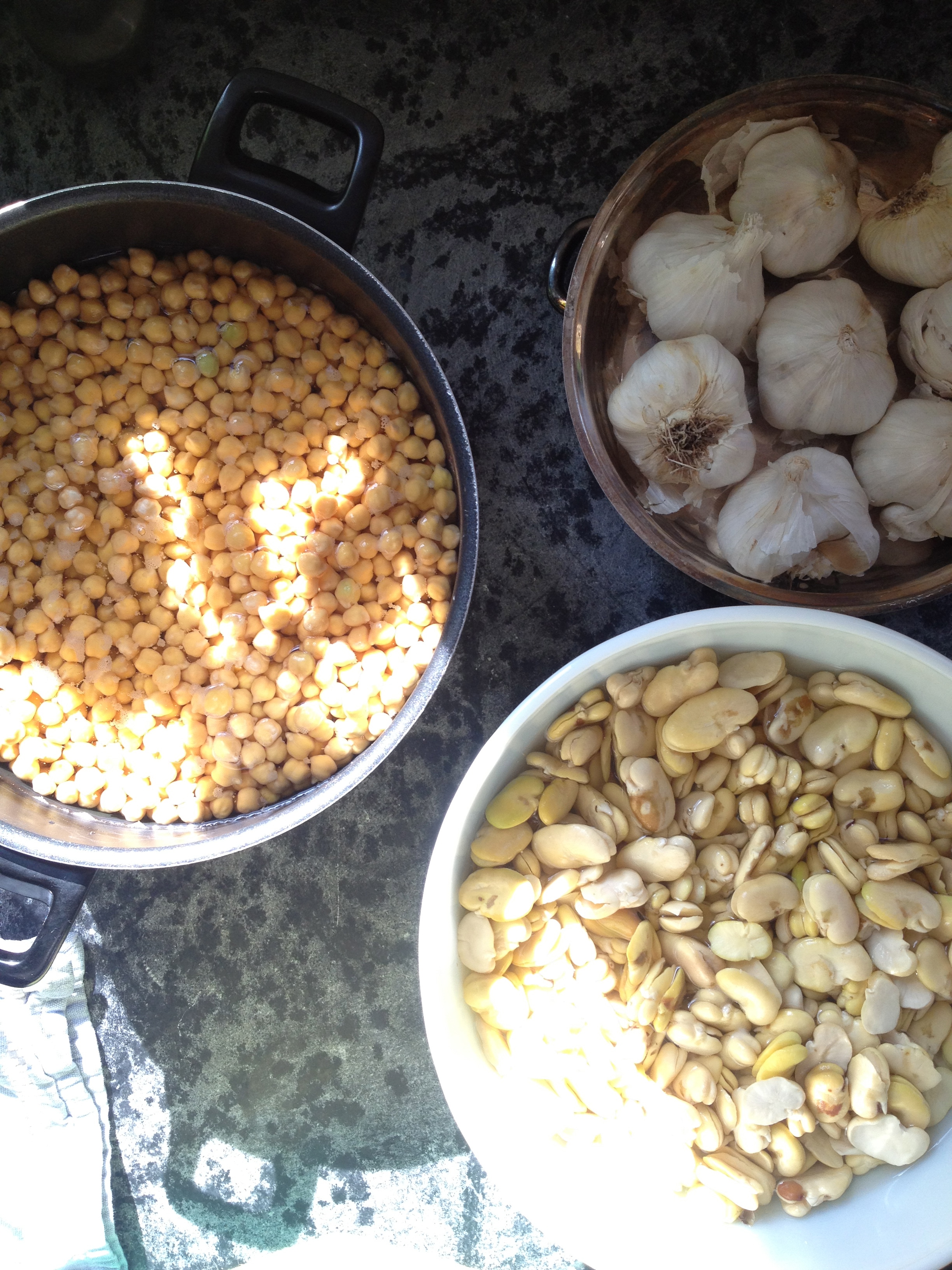
I decided a while back that, for the party, I’d make hummus and ful served with dukkha and the tomatoes I canned in September. Ful is broad beans, or dried fava beans, mashed into a kind of paste with garlic, lemon juice, and olive oil. I turned to Yotam Ottolenghi for both the hummus and ful recipes and sort of winged it for the dukkha. Dukkha, by the way, is a staple of Egyptian street food—a finely (or coarsely, depending on preference) ground mixture of spices, nuts, and sesame seeds, traditionally served with pita that’s been dipped in olive oil before coated in the spice mixture. I’ve never heard of it served with hummus or ful but I couldn’t imagine this being a bad thing. I love Ottolenghi’s hummus and ful recipes — you cook both beans, separately, until they’re a disintegrated mush that makes for the creamiest spreads you’ve had. It requires lots of hand-squeezed lemon juice.

Here is the very non-New York kitchen I got to cook in this weekend, in JP…

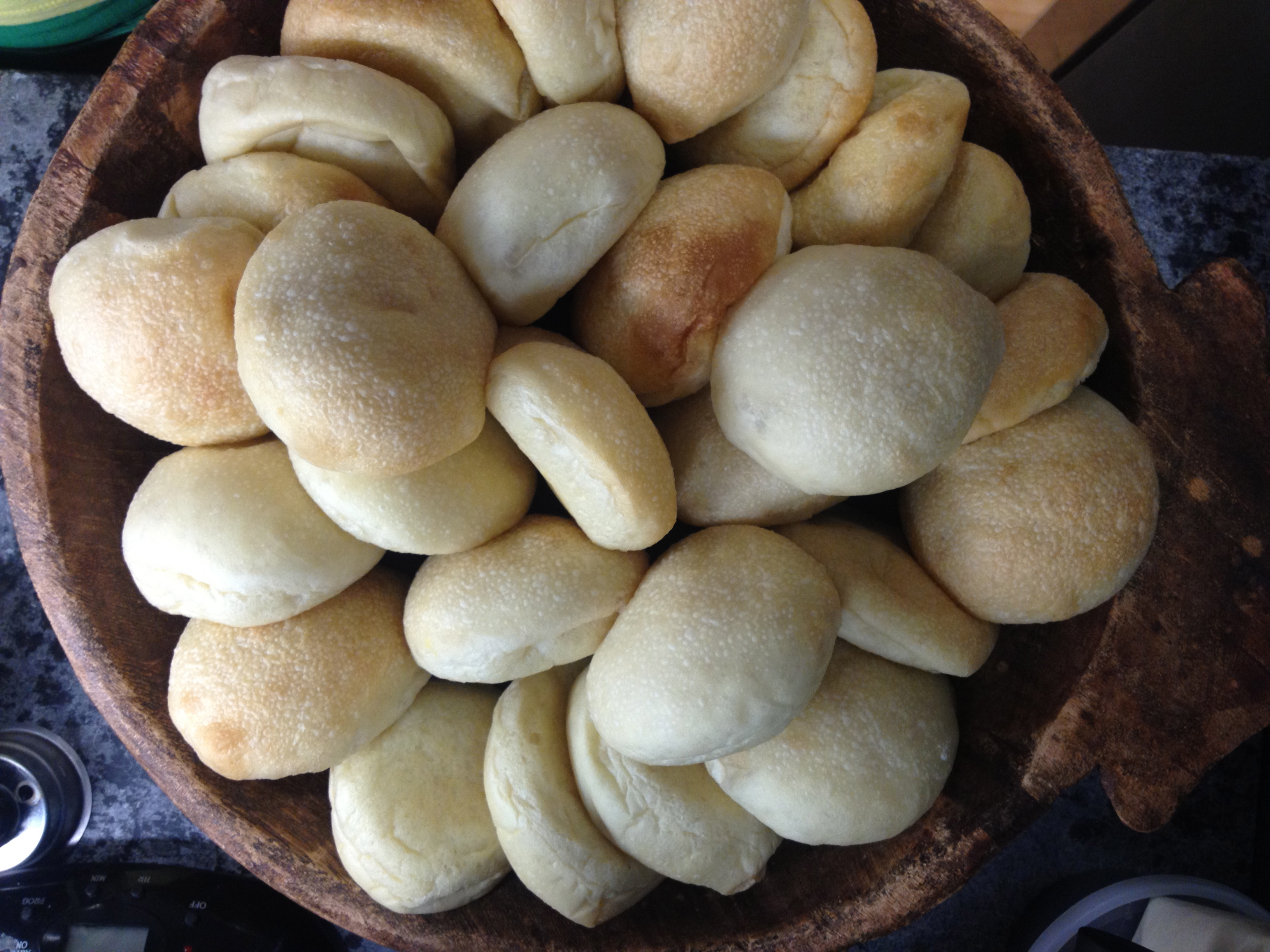
I needed pita. I had enough to tend to in the thirty-six hours I was in Boston that making pita from scratch didn’t make the list. I asked Melony where we might get the freshest, tastiest pita and a friend steered us toward Sofra, a Middle Eastern bakery and cafe in the Mt. Auburn section of western Cambridge. I lived in Cambridge for a hot minute some years ago but had never heard of the place. Although I was somewhat familiar with its sister restaurant, Oleana, and Siena Farms, where they grow produce for both locations. It was a twenty-five minute car ride from JP to Sofra Saturday afternoon and all I can say is: dukkha donuts. That, and: go. Run. Get thee to Sofra! One thing—you can’t take the T there. Which, if you’re a local, is probably a bonus—helps keep the masses (and tourists) at bay.

I was enthralled with this place. I considered buying their own dukkah mixture but had brought all the spices and nuts with me from Brooklyn to make my own. So I walked around flustered for ten minutes unable to decide what to order. I settled on the aforementioned dukkha donut (last bite below), and split a rolled flatbread with spinach falafel and beet tzatziki with Melony. But a highlight might have been the espresso-sized shot of tahini hot chocolate: Sofra’s signature drink. And the pita, made to order, did not disappoint (also below).

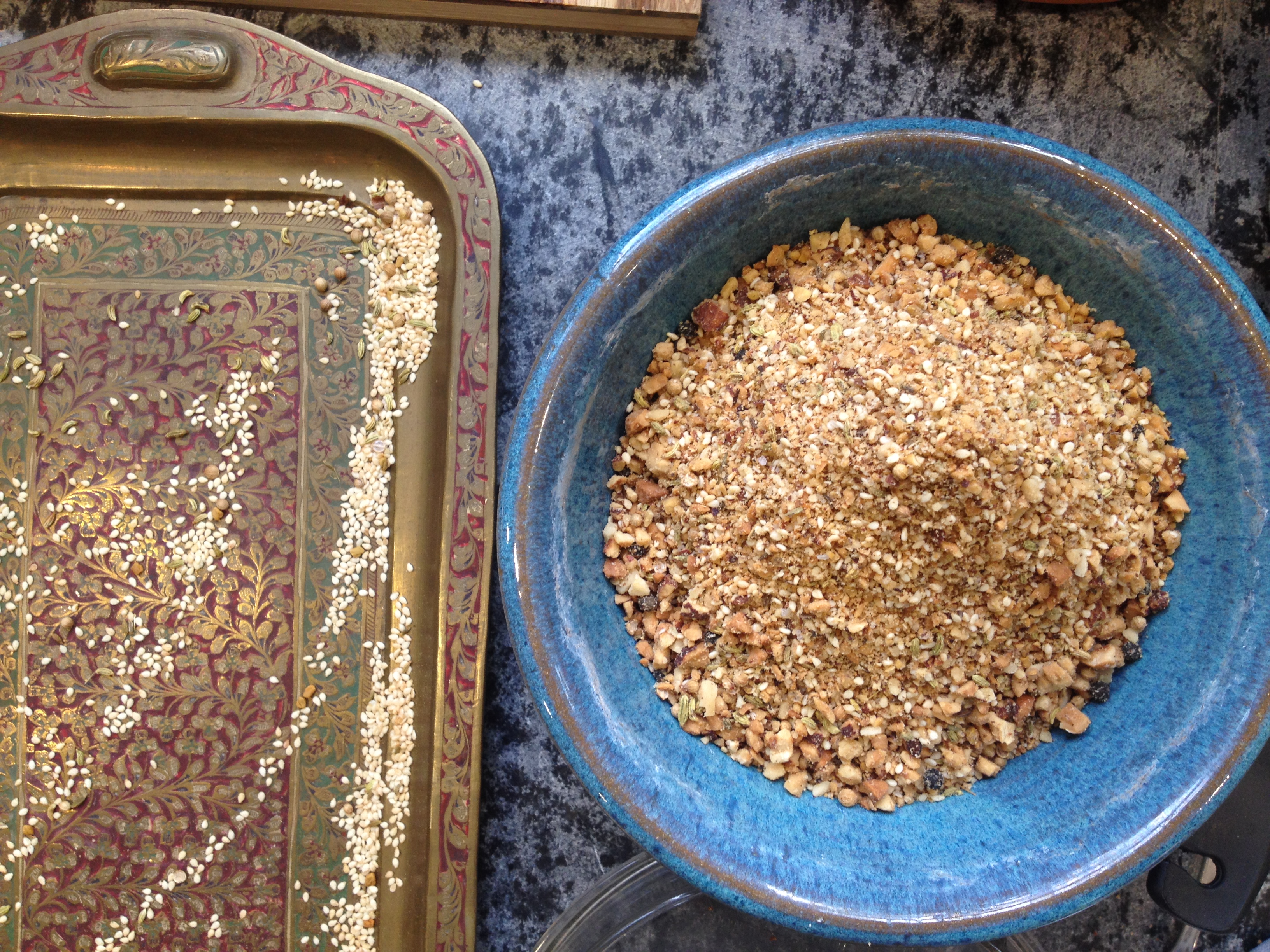
The party was a grand success. It felt like a wedding—there were speeches, toasts, a lot of love in the room, and an impressive spread of both savory eats and sweet treats. I won’t bother to retype Ottolenghi’s recipe for hummus and ful, which you can find here. I barely tweaked it—other than multiplying proportions by four, in order to serve thirty people—you can’t go wrong following this recipe to a t. But I do want to share my recipe for dukkha, below. And a shout out to my step-mother for giving me the initial inspiration after tasting a batch she had made a couple months ago.

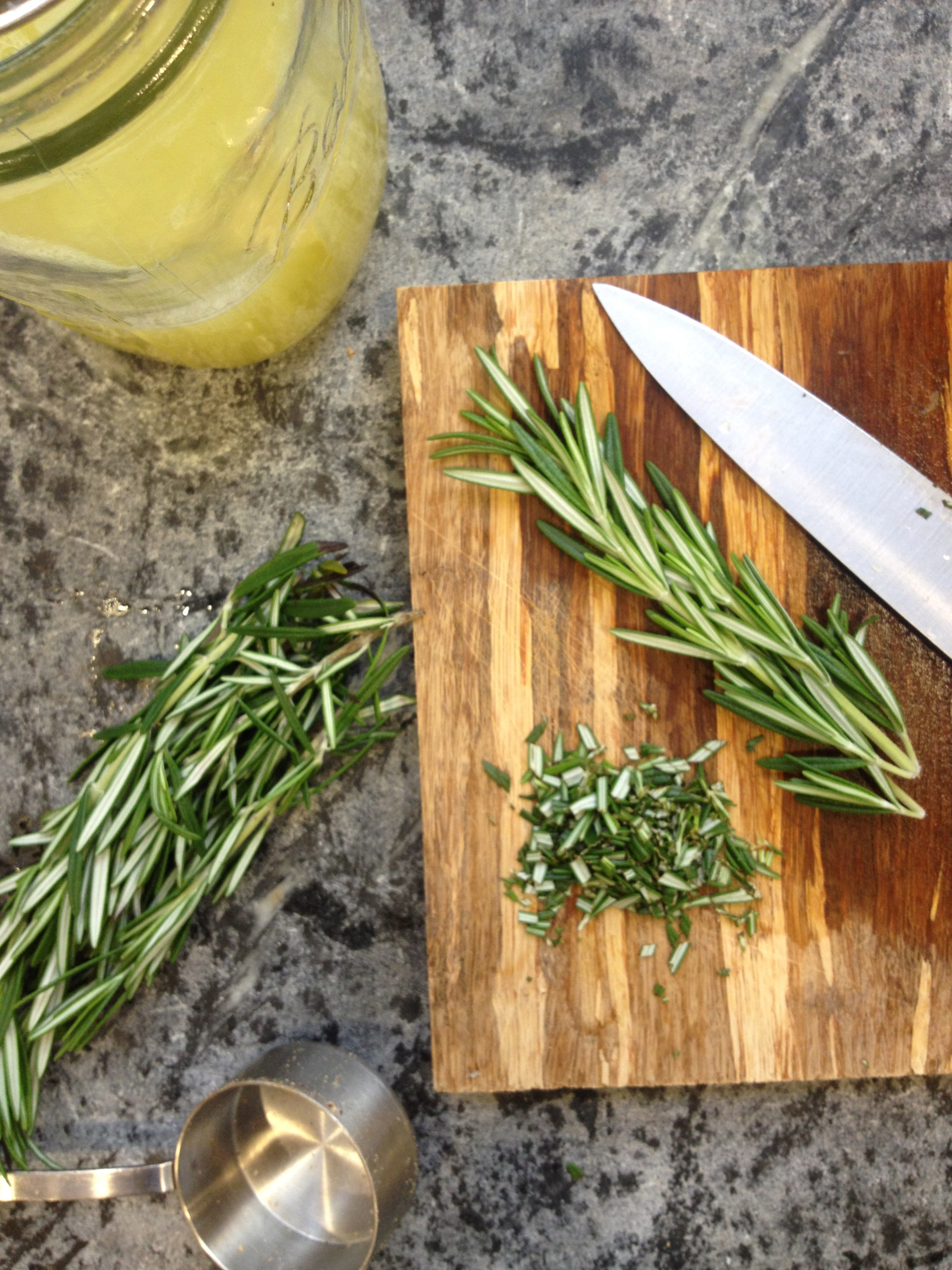
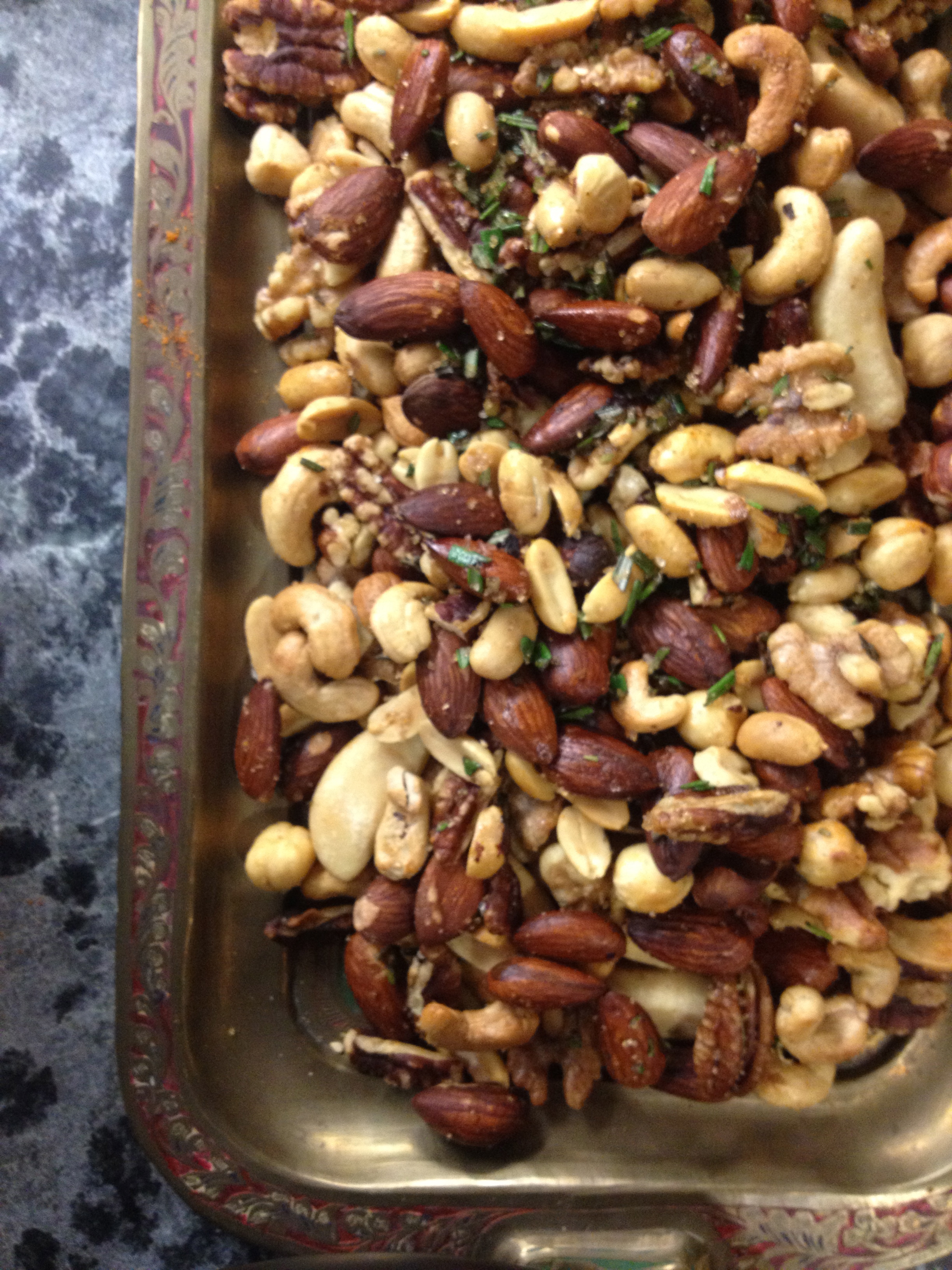
And last, but not least, I made what has become my party staple: Union Square Cafe bar nuts. Warm, salty toasted nuts tossed with rosemary, cayenne, salt, and a hint of brown sugar. These are best served warm to guests right as they’re arriving, a little hungry, with a fresh drink in hand.

Dukkha

1 c assorted, unsalted, raw mixed nuts (almonds, hazelnuts, cashews, walnuts, peanuts)
1/2 c sesame seeds
1/4 c cumin seeds
1/4 c coriander seeds
2 tbsp fennel seeds
1 tbsp black peppercorns
1 tbsp fenugreek
1 tsp sea salt
1 tsp paprika

Preheat the oven to 350 degrees F. Toast the nuts on a baking sheet for 10 to 15 minutes until fragrant and lightly browned. Remove from baking sheet and let cool. Place the sesame, cumin, coriander, cumin, and fennel seeds on the baking sheet and toast in the oven for about 5 minutes. Let cool. Then combine all the ingredients—nuts, seeds, spices, salt—in a food processor and blend to desired consistency.

Union Square Cafe Bar Nuts

1 1/4 lb mixed, unsalted nuts
2 tbsp coarsely chopped fresh rosemary
1/2 tsp cayenne
2 tsp dark brown sugar
2 tsp salt
1 tbsp butter, melted

Preheat the oven to 350 degrees F. Spread the nuts onto a baking sheet and toast in the oven until light golden brown, about 10 minutes. In a large bowl combine the rosemary, cayenne, brown sugar, salt, and melted butter. Toss the toasted nuts with the spiced butter and serve warm.