Archives for category: Spring

There’s only one woman who can get away with a dish like crack pie: Momofuku wunderkind Christina Tosi. Owner and head pastry chef at Momofuku Milk Bar, Tosi likes to take people by surprise, serving up desserts like liquid cheesecake and deep-fried apple pie soft serve. Her dishes tend to elicit childhood memories of Corn Pops and cookie dough, pb & j’s and saltines, but in unfamiliar ways. She’s the real-life Willy Wonka, and I believe one day soon, she will turn someone into a giant blueberry and send them floating down Bedford Avenue.

Tosi was trained at the French Culinary Institute and worked at Bouley and WD-50 before stepping foot in David Chang’s Momofuku to work as an office lackey. After Mr. Chang tried her home-baked goods he convinced her to start making desserts for his restaurants, and the rest is history. Now, Tosi is in charge of a staff of Oompa-Loompas working out of a large warehouse in Williamsburg; besides creating the desserts for Momofuku Ko, Ssam Bar, and Noodle Bar, Tosi runs two Milk Bars, one in the East Village and one in the ‘Burg.

In addition to the infamously addictive crack pie, Tosi is perhaps most celebrated for her “cereal milk,” a flavor that appears in soft-serve ice-cream form, as well as straight milk form, made by soaking Special K, Kix, and other old favorites in milk. Subtle genius. I paid a visit to the East Village storefront last week for the strangely wonderful birthday cake truffles, corn cookies, and yes, crack pie, below.
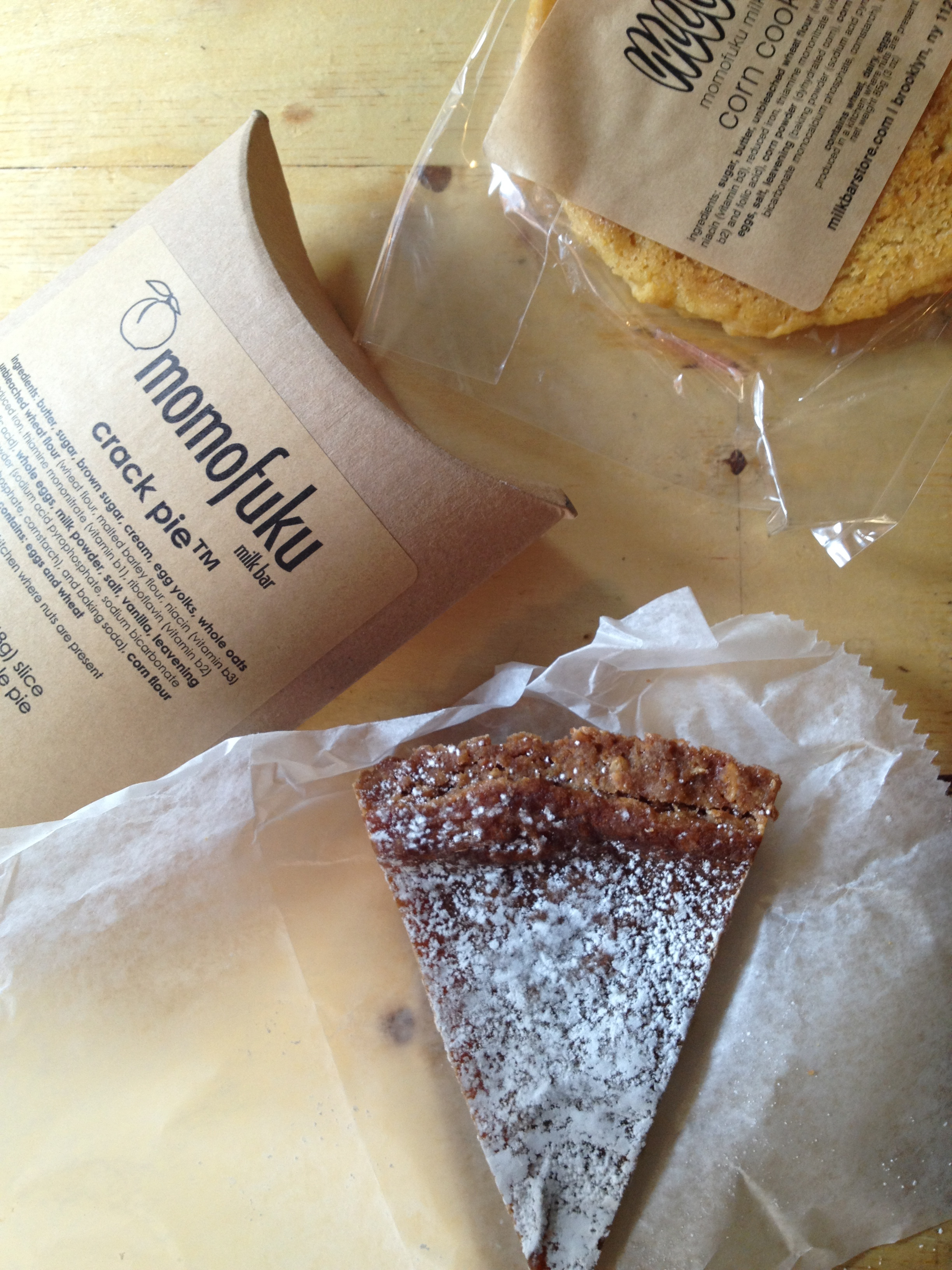
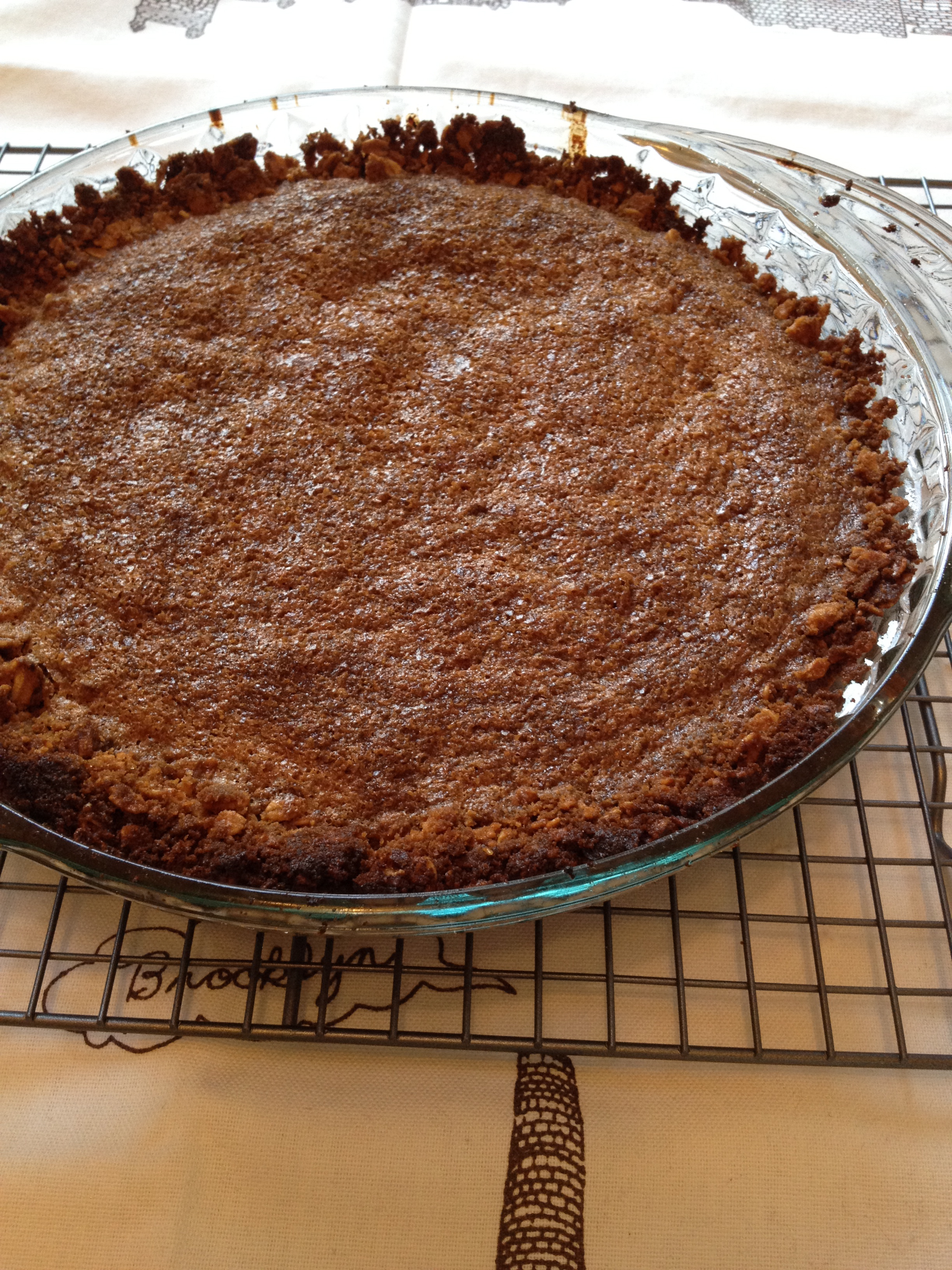
Last fall, Clarkson Potter published the Momofuku Milk Bar cookbook, revealing the secrets behind the candy factory. It’s like finding a golden ticket in a Wonka bar: all her best recipes are there for all to read, and replicate if you’re so adventurous. And that’s just what I did today for my dear friend Elizabeth’s birthday. EZ mentioned recently she’d never had Tosi’s crack pie, and when it was described as being reminiscent of that southern classic, chess pie, she seemed eager to try it.

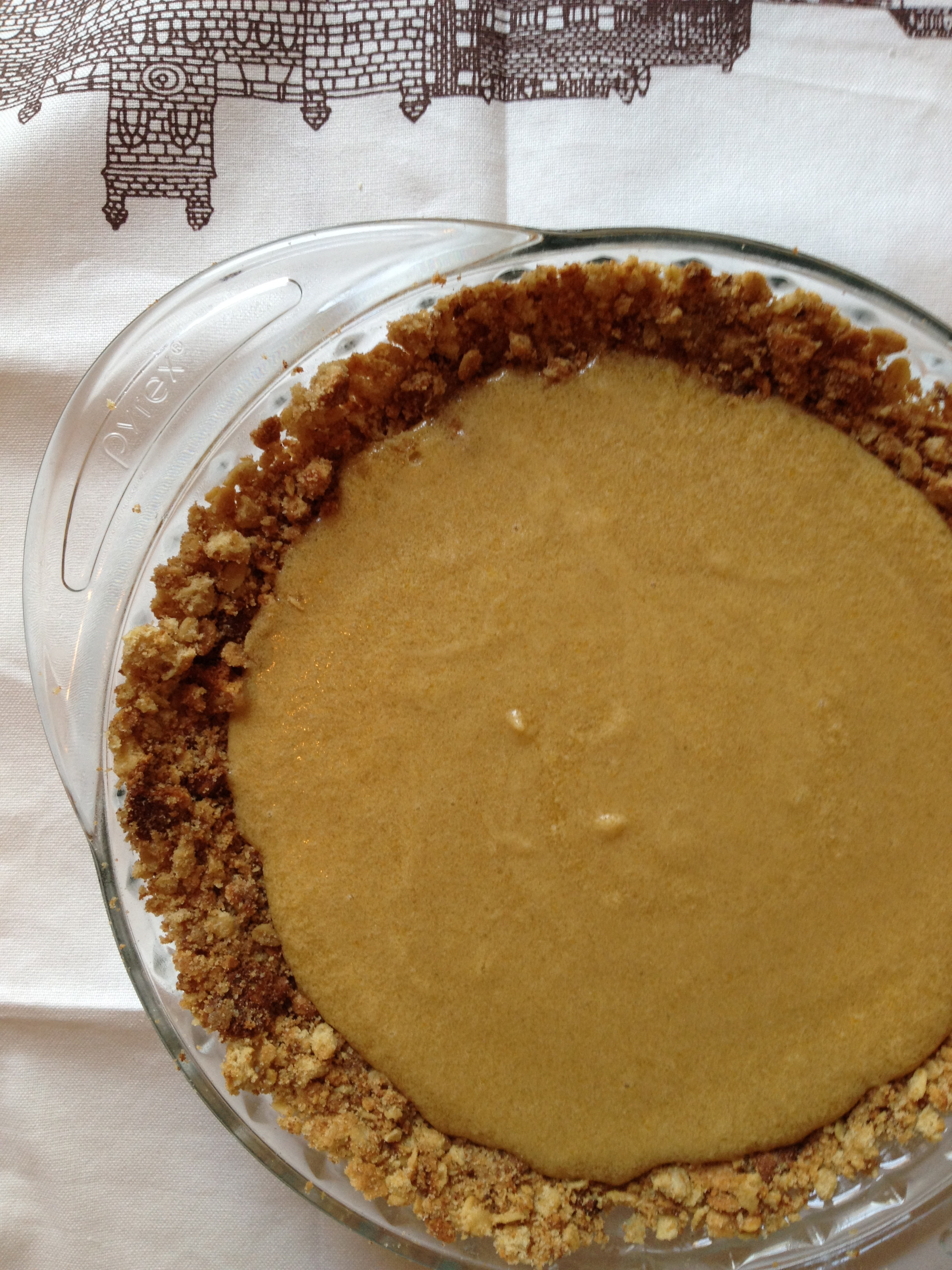
Making this dish was less arduous than I anticipated. There was no cereal-soaking involved, no potato chips or grape jelly stuffed into batter. Just lots of butter and sugar and egg yolks whisked together, the cornerstone ingredients of Tosi’s empire. (If you get a moment check out the article in the current issue of Edible Manhattan, which talks about Tosi and her relationship with former dairy supplier, Milk Thistle Farm, which sadly went out of business last month.) The pie itself is a smooth, custard-like concoction of brown sugar, cream, butter, eggs, and vanilla, baked in an oat-cookie crust. Not a bad way to bite into one’s birthday.

Happy birthday Elizabeth! One of the things I miss most about Phaidon is getting to work next to you every day.

Crack Pie
Adapted from Christina Tosi

Oat Cookie Crust
Parchment Paper
Nonstick vegetable oil spray
9 tbsp (1 stick plus 1 tbsp) unsalted butter, room temp, divided
5 1/2 tbsp (packed) golden brown sugar
2 tbsp sugar
1 large egg
3/4 cup plus 2 tbsp oats (not instant)
1/2 cup all-purpose flour
1/8 tsp baking powder
1/8 tsp baking soda
1/4 tsp (generous) salt

Filling
3/4 cup sugar
1/2 cup (packed) golden brown sugar
1 tbsp nonfat dry milk powder (*or 3 tbsp nonfat evap milk)
1/4 tsp salt
1/2 cup (1 stick) unsalted butter, melted, cooled slightly
6 1/2 tbsp heavy whipping cream
4 large egg yolks
1 tsp vanilla extract
Powdered sugar (for dusting)

Prepare the oat cookie crust
Preheat the oven to 350 F. Line a 13 x 9 x 2 inch metal baking pan with parchment paper; coat with nonstick spray. Combine 6 tbsp butter, 4 tbsp brown sugar, and 3 tbsp sugar in medium bowl. Using an electric mixer, beat the mixture until light and fluffy, about 2 minutes. Add egg, beat until pale and fluffy. Add oats, flour, baking powder, baking soda, and salt, and beat until well blended, about 1 minute. Turn oat mixture out onto prepared baking pan, and press out evenly to the edges of the pan if possible. Bake until light golden on top, 17 or 18 minutes. Transfer the pan to a rack and cool completely.

Using hands, crumble the oat cookie into a large bowl; add 3 tbsp butter and 1 1/2 tbsp brown sugar. Rub in with fingertips until mixture is moist enough to stick together. Transfer cookie crust mixture to a 9-inch diameter glass pie dish. Using fingers, press mixture evenly into the bottom and sides of the dish. Place pie dish on a flat baking sheet in case of spillage.

Prepare the filling
Position rack in center of oven and preheat to 350 F. Whisk both sugars, milk powder, and salt in medium bowl to blend. (If it’s too darn hard/expensive to buy the powder, you can substitute for 3 tbsp evap milk in the next step.) Add melted butter and whisk until blended. Add cream, egg yolks, and vanilla, and whisk until well blended. (If you’re going to use evap milk instant of powder, use 3 tbsp here, and only 3 1/2 tbsp of the heavy cream.) Pour filling into crust. Bake for 30 minutes (filling may bubble). Reduce oven temp to 325 F. Continue to bake pie until filling starts to brown in spots and sets on the edges but center is still a little wobbly when gently shaken, about 20 minutes longer. Cool pie 2 hours in pie dish on rack. Chill uncovered overnight. Sift powdered sugar lightly over top and serve cold!
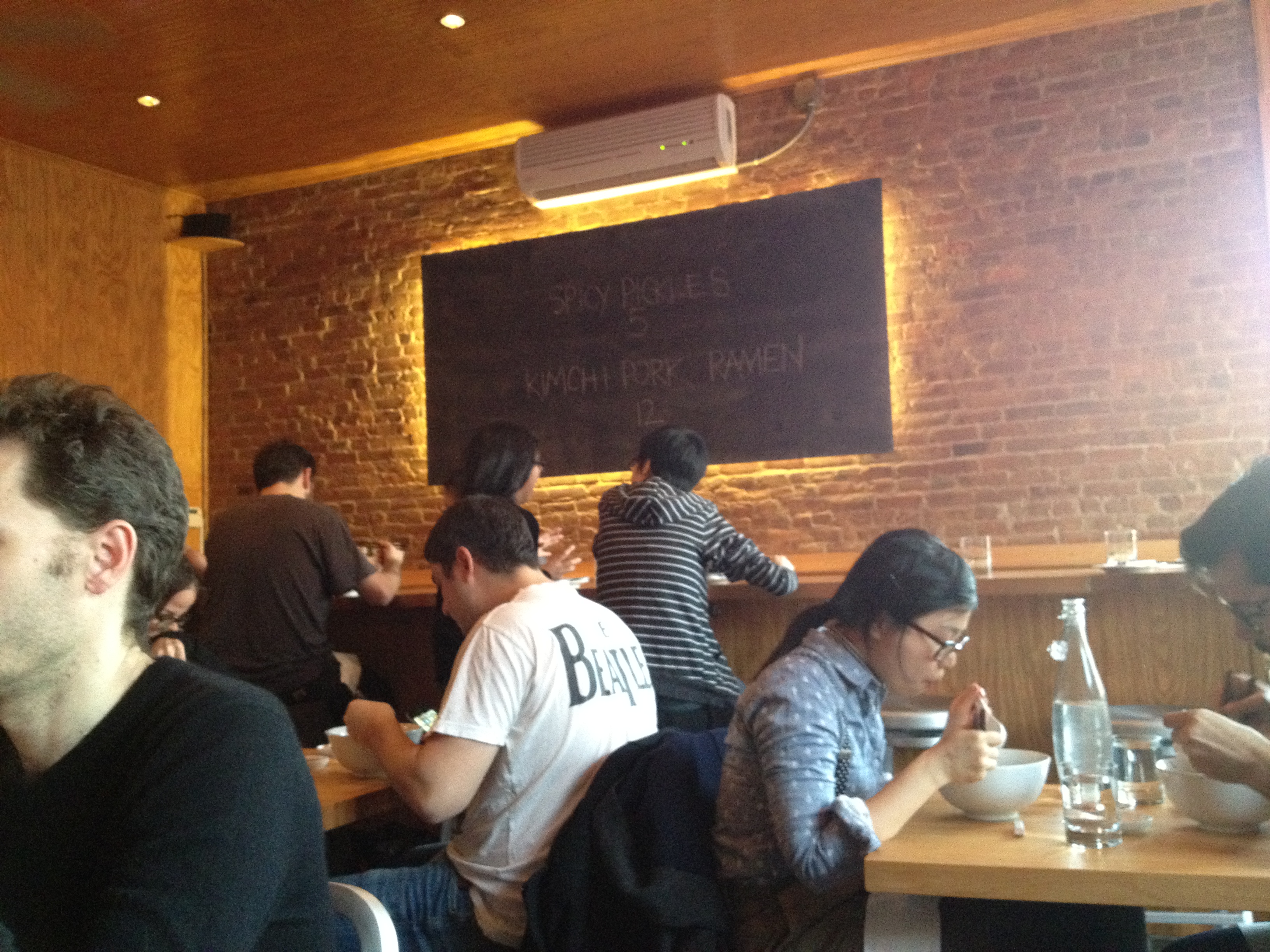
This is what the outside of Chuko looked like at 6:45 PM yesterday. Not dark, not cold, not windy. It was light, bright, blue skies at a quarter to 7. I’ve been wanting to visit Chuko since it opened back in August, a couple months after I moved to the neighborhood, and not a moment too soon. Just as I was missing my old haunts in Williamsburg and complaining there was no good food in these parts (I know, I know, I was naive), I read about Chuko. Brought to us courtesy of two Morimoto alums, Jamison Blankenship and David Koon, Chuko serves up bowls of housemade ramen in miso and soy broths, with or without meat. Housed in the former Nick’s Diner space, Chuko, meaning “second hand” in Japanese, was refurbished with a long wooden bar, and shows off an original hundred-year-old brick wall.

I’m a little behind schedule because it’s taken me seven months to visit this place on Vanderbilt Ave., a ten-minute walk from my apartment. So with the sun refusing to set on the early spring evening, I made my way across Atlantic Avenue, the new Nets Stadium casting shadows to the west, church and state mingling to the east (below).

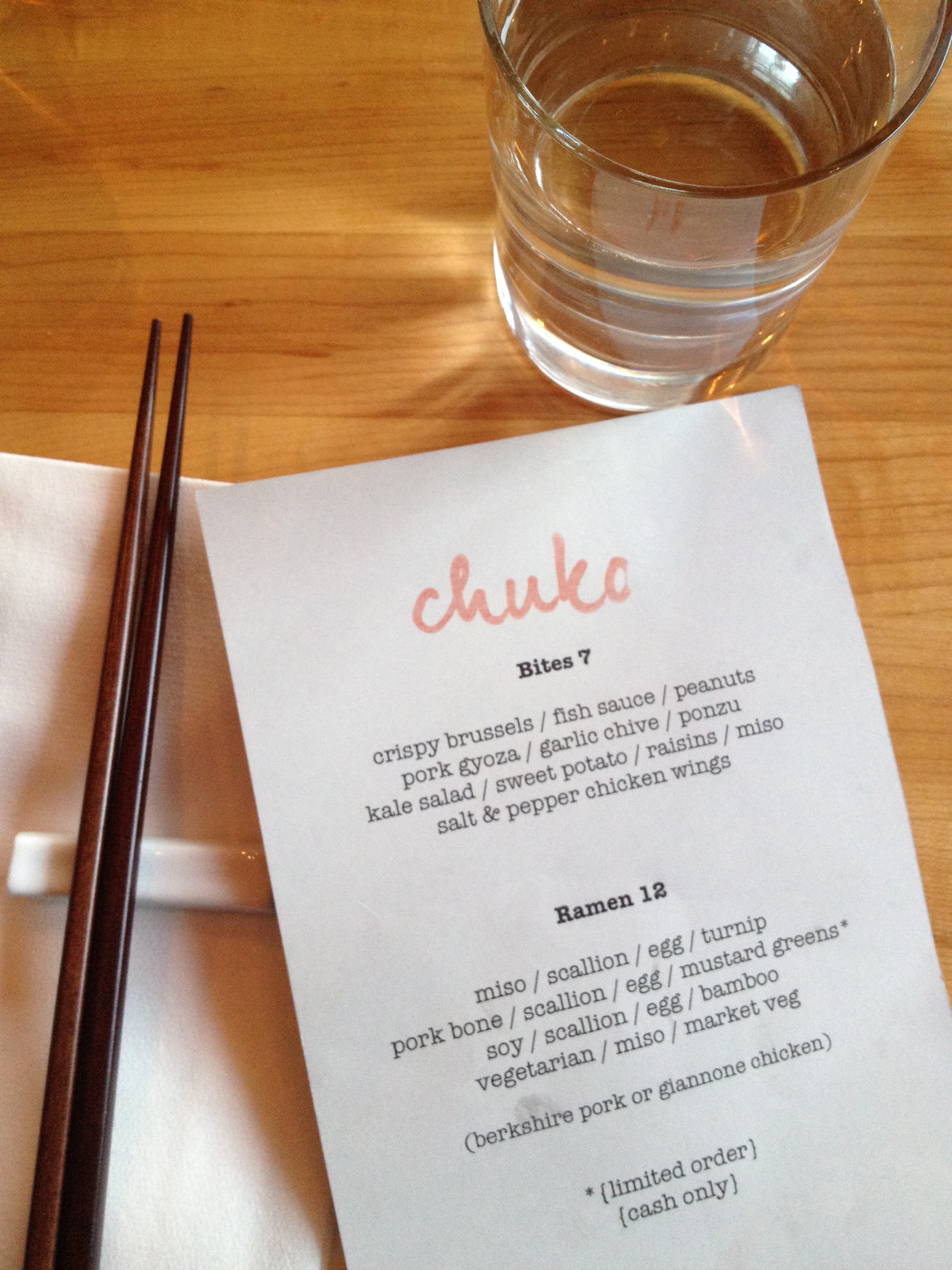
I was meeting my regular Sunday-night partner, Karen, for steaming bowls of soup and whatever sides might entice. It was early enough that the place was pleasantly crowded with families slurping noodles—toddlers, strollers and all—until about 8 pm when they cleared out to make way for the stroller-less. The menu is straightforward: four kinds of ramen, all for $12 (miso-scallion, pork-scallion, soy-scallion, vegetarian-miso), and small plates, all for $7, including crispy Brussels sprouts, pork gyoza, chicken wings, and a kale salad. The specials last night were kimchi pork ramen in a red miso broth, and spicy pickles.

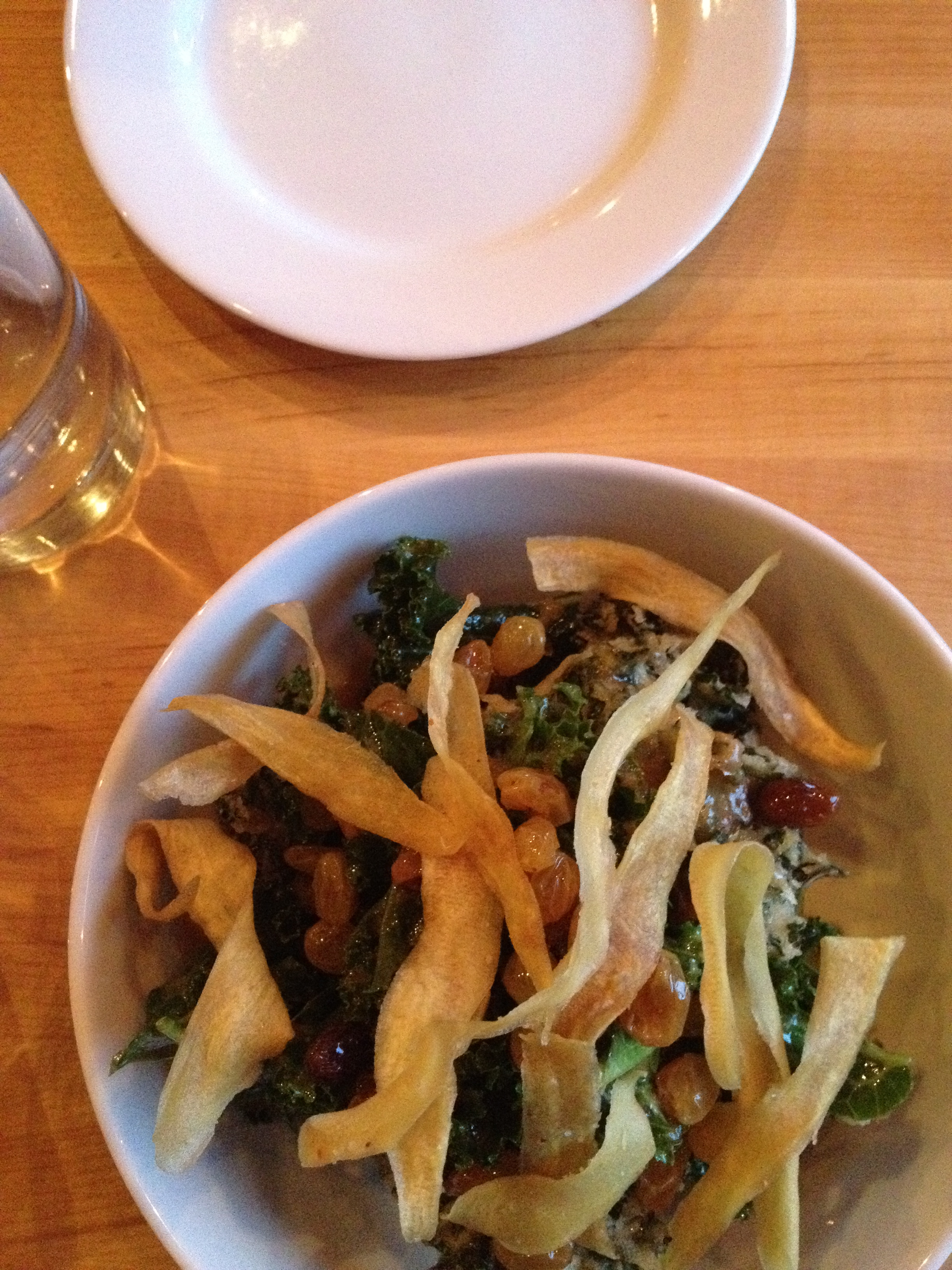
Let’s face it, I can’t resist kimchi or pork or red miso, so you know what I ordered.* Karen had the vegetarian miso ramen with market vegetables. We split the kale salad with sweet potato chips, raisins, and a miso dressing. Half the kale was a crunchy, addictive tempura, and the rest of the kale tasted like kale chips, so we basically loved this dish.

*I’m reading Jonathan Safran Foer’s Eating Animals, a birthday present from Karen actually (do you think she’s trying to tell me something?), maybe by the time I’m done I’ll take my ramen sans pork too.

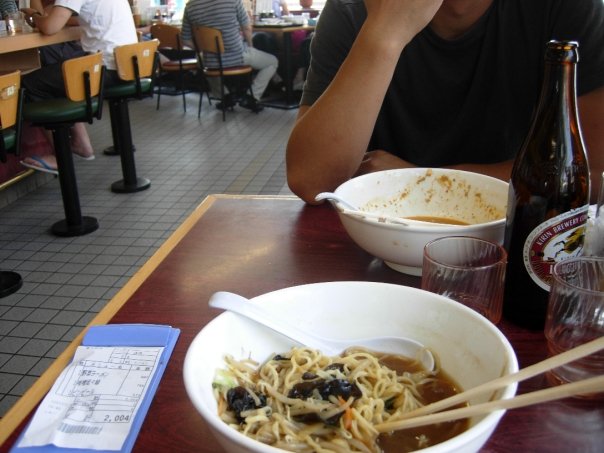
I don’t know if we have Morimoto to thank, or the research trips Blankenship and Koon took to Japan, but this ramen was the real deal. It reminded me of ramen I slurped in 2009 on the outskirts of Tokyo on a hot, steaming August afternoon after Yuji and I were kicked out of a public swimming pool (long story). I’m excited that I actually found the photo I took at that meal, below. I tried, really tried, to eat ramen the Japanese way, making loud sounds as you suck the noodles through your lips.

At Chuko, the red-miso broth, topped with a soft egg and scallion shavings, was salty, soulfoul, earthy, and got increasingly spicy the longer it mingled with the kimchi.

So we slurped until we could slurp no more, then walked out into the cool night air. Yes, it was finally dark outside. I could get used to Sundays at Chuko.

Chuko 552 Vanderbilt Avenue (corner of Dean St.), Prospect Heights, Brooklyn. Cash Only.

I have a big culinary crush on Yotam Ottolenghi.

I’ve never met the Israeli-born, London-based chef, restauranteur, cookbook author, and Guardian columnist, but I’m seriously considering a weekend trip to London this summer with a friend just to try his outposts in London. Notting Hill, Islington, Kensington, Belgravia, here I come!

How do I love thee? Allow me to count the ways:

He writes a weekly column called The New Vegetarian but is not a vegetarian.
His love and respect for vegetables are palpable.
He makes things like roasted aubergine with turmeric yogurt, crispy onion, basil, rocket, and pomegranate seeds.
He adores, cherishes, reveres eggplants (aubergines).
His inspiration is Israeli, Palestinian, Turkish, Mediterranean, and above all seasonal.
His “ideal solace for a gloomy winter night” is mushroom ragout with a poached duck egg.
The food he cooks is both familiar and not; simple in preparation yet complex in flavor; traditional and innovative.
And those glasses!

I mean, what is not to like?

To be fair, Ottolenghi has a secret weapon helping him out: partner and head chef, Sami Tamimi, who worked his way up through Israeli kitchens until moving to London in 1997. (You can’t, or shouldn’t, wax poetic about Ottolenghi without at least a shout out to Tamimi.)

In 2010, Ottolenghi published his second cookbook in the UK, Plenty, a book devoted solely to vegetable dishes. Granted, many of the dishes include rich cheeses, runny eggs, good quality oils, but make no mistake, it is an ode to food that comes from the soil.

Yesterday I wanted to both cook something out of Plenty and prepare something I could bring to my lovely, yet increasingly picky grandmother (although she would never admit to being fussy). I thumbed through the beautiful pages and settled on stuffed cabbage. Too many unknown ingredients in a dish can turn my grandmother off before she’s even tried it, so better to stick to more of a known quantity. (Avocados, chic peas, crème fraîche, stinky cheese, chili peppers, black pepper, almost every kind of meat, chocolate even, render a dish dubious at best.)

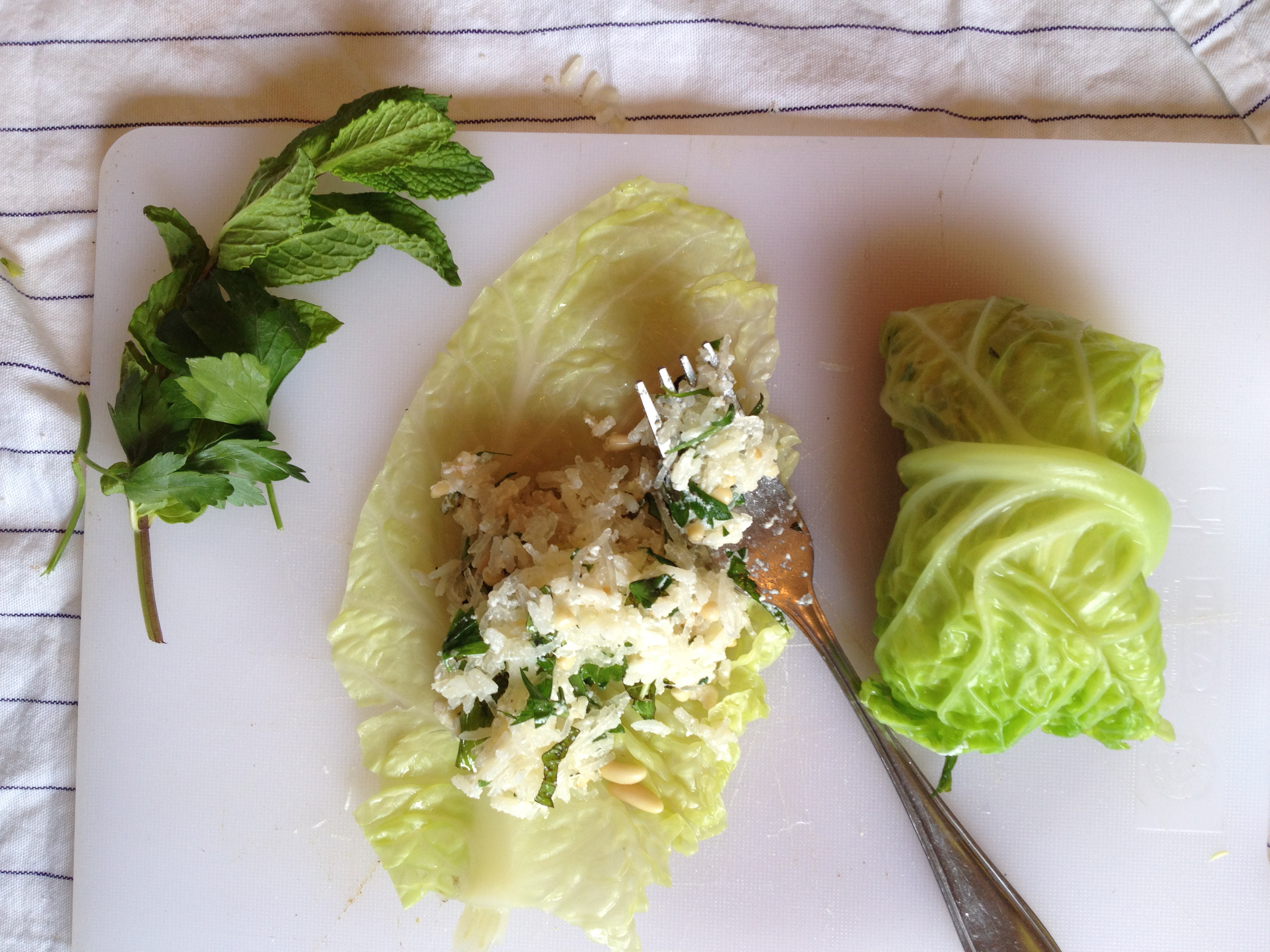
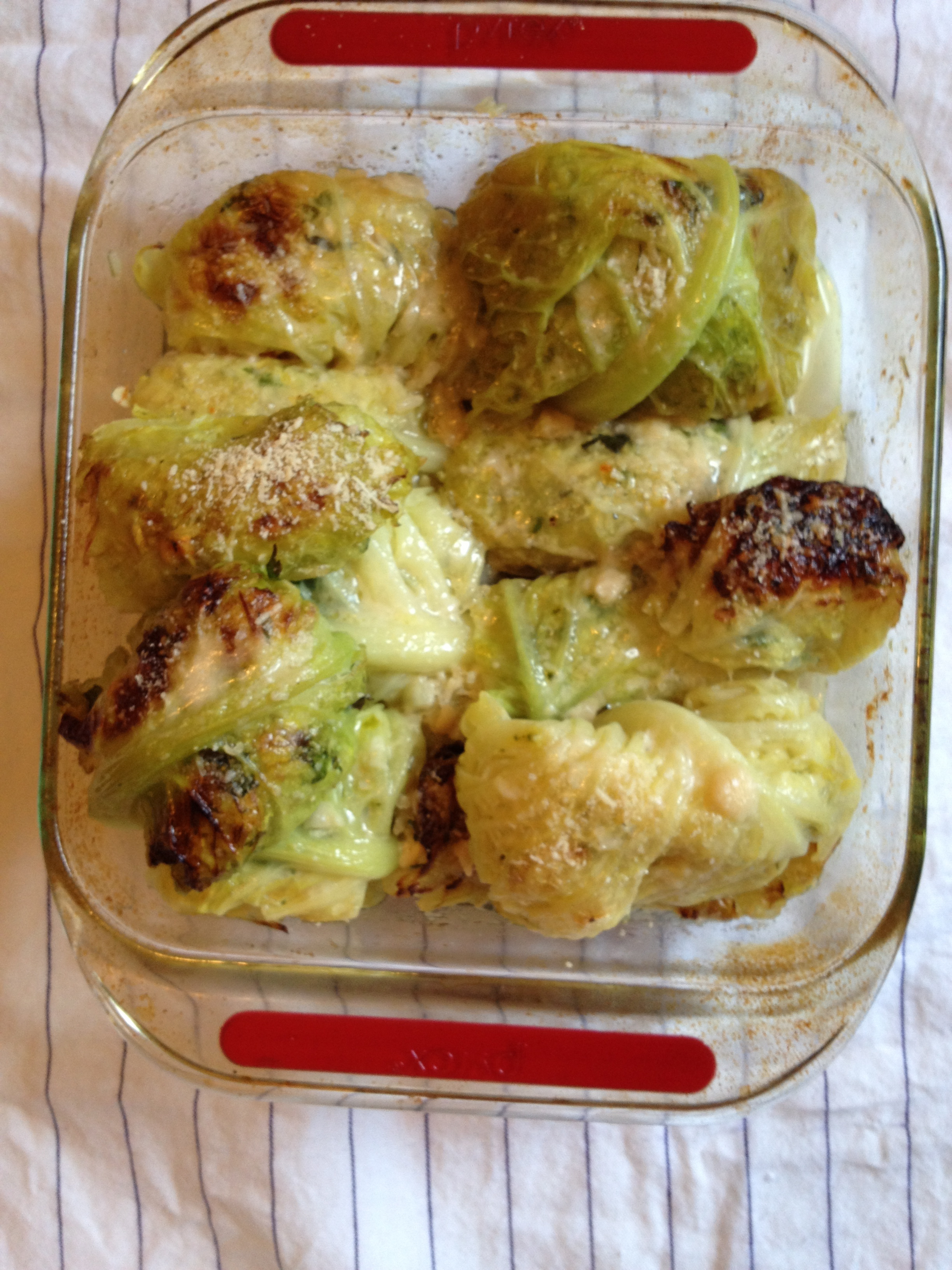
In this recipe, the cooked cabbage leaves are stuffed with a mixture of rice, vermicelli noodles, ricotta, toasted pine nuts, garlic, mint, and parsley, ingredients that say spring is right around the corner. (I’ve missed fresh herbs!) Before baking you pour a combination of dry white wine, olive oil, and vegetable stock over the parcels, which makes the dish smell wonderfully enticing from the oven. You’ll want to tear right into the mismatched bundles, which is exactly what my grandmother did when I arrived, the dish still hot from the oven an hour later.

Stuffed Cabbage with Rice, Ricotta, and Mint
From Plenty by Yotam Ottolenghi

Serves 4

2 tbsp (30 g) unsalted butter
1.5 oz (45 g) vermicelli noodles (not the rice kind)
scant 1 cup (150 g) basmati rice
10 oz (300 ml) water
1 medium white cabbage or Savoy cabbage
2 oz (60 g) pine nuts, toasted and coarseley chopped
5 oz (150 g) ricotta (my post on homemade here)
1 oz (20 g) Parmesan, grated
3 tbsp chopped mint
4 tbsp chopped parsley, plus extra for serving
3 garlic cloves, chopped
6.5 oz (200 ml) dry white wine
3.5 oz (100 ml) vegetable stock
1 1/2 tbsp sugar
4 tbsp olive oil
salt and black pepper

Melt the butter in a small saucepan over medium heat. Break the vermicelli by hand into small pieces and add them to the butter, stirring for 1 or 2 minutes, careful not to let them burn. When the noodles start turning golden add the rice and give it a good stir. Then add the water and a pinch of salt and bring to a boil. Turn the heat down to a minimum, cover and cook for 20 minutes. Remove from heat and let sit for 10 minutes before removing the lid and letting cool.

While the rice is cooking, cut the cabbage vertically in half. Peel off the leaves and blanch in boiling water for 6-8 minutes, or until semi-soft. (You can do this in batches, depending on the size of your pot.) Refresh the leaves under cold running water, drain, and pat dry.

Preheat the oven to 350 F. Add the pine nuts, ricotta, half the Parmesan, the herbs, garlic, salt and pepper, to the cooked rice. Mix well with a fork. Use the cooked cabbage leaves to make parcels of whatever size you’d like, filling each one with a generous amount of the rice filling.

Arrange the stuffed cabbage leaves in an ovenproof dish (use cabbage trimming to fill in any gaps). Whisk together the wine, stock, sugar, olive oil and plenty of salt and pepper. Pour this over the cabbage and put the dish in the oven, baking for about 40 minutes or until almost all the liquid is evaporated. Sprinkle with the remaining Parmesan, return to oven and bake for another 10 minutes, so the cheese melts and turns golden. Remove from the oven and let rest for 5 minutes before serving.

Note: Next time I might be adventurous and try adding sauteed shiitake mushrooms to the filling mixture, or about 1 tbsp fresh lemon zest, or when it’s springtime, fresh peas—even though my grandmother said, “Don’t mess with it!”