Archives for category: Savory

Thank god it’s Saturday. And a sunny one at that. I woke up this morning to warm sun for the first time in a week. Took a stroll up to the greenmarket at McCarren Park around 10 am to find it already abuzz with strollers, Williamsburg hosts shopping for tonight’s dinner party, Polish babcias rifling through bins of potatoes, and lots of folks like myself with dirty old WNYC tote bags overflowing with baguettes and spring garlic. What better way to kick off a weekend in spring?

First was a stop at Bakeri on Wythe Ave. and N. 8th Street for a little pastry to get us going – mini lemon bar ($1) for me and mini chocolate croissants  ($1.50) for Yuji. No coffee for me because they won’t serve decaf espresso. (I respect that – decaf is kind of b.s. Even though it’s all I drink I find the idea of it annoying.) I also picked up one of their long baguettes for later ($2.50) which are just sour enough, crusty on the inside, and really chewy on the inside.

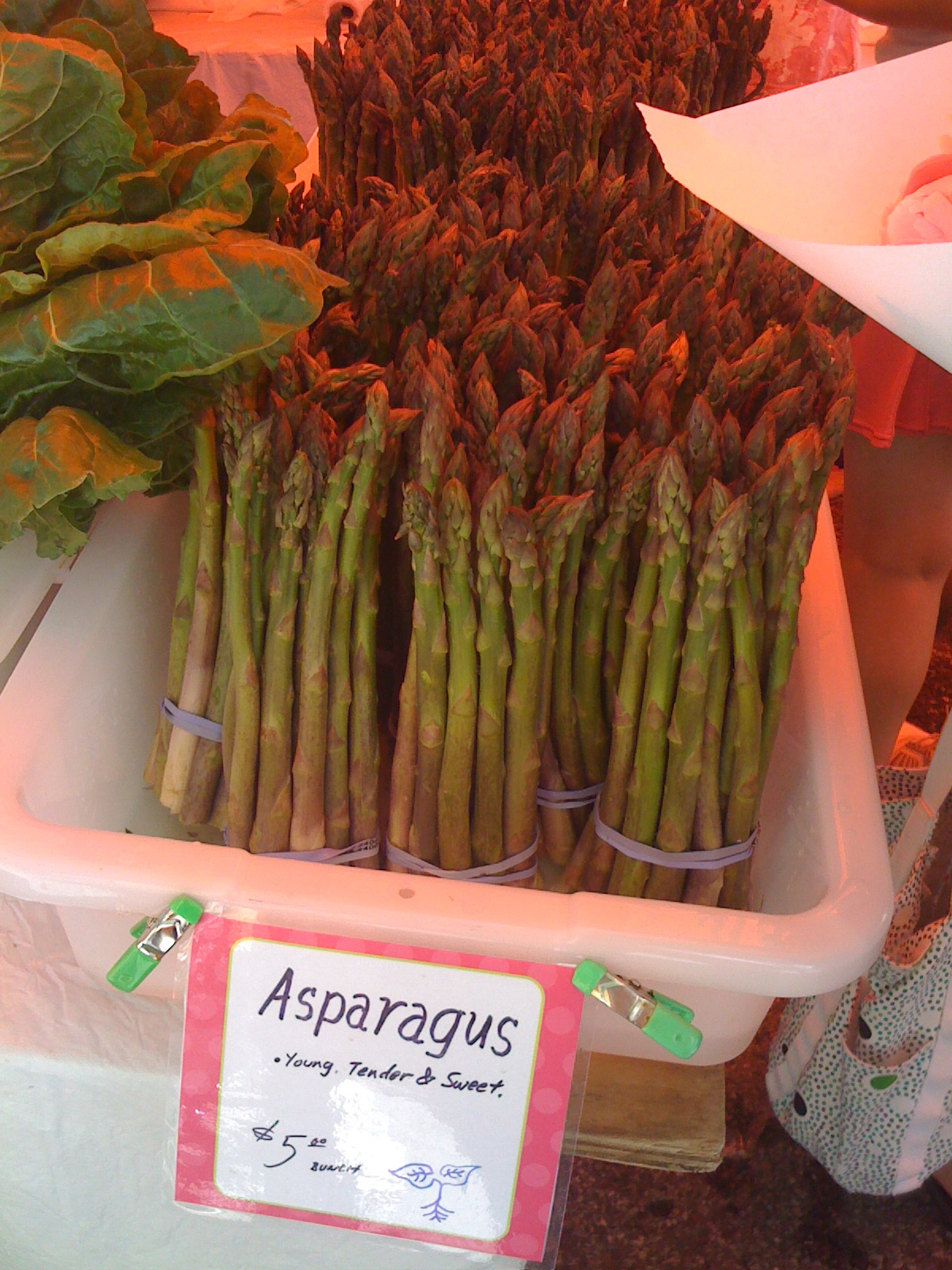
Once at the market, the first stop is usually Red Jacket Orchards for a quart of Strawberry Apple Juice (currently my favorite) ($3), and two apples of a variety whose name I forget ($1.15). Then on to Boddhitree Farm for my first asparagus of the season ($5 for a lot), red leaf lettuce ($2), and a small bunch of oregano ($2). Over at Cayuga Pure Organics (I’m so glad they have a stall at this market location), where they’ve started selling their legumes in bulk bins, so you can get whatever amount you like, I bought a 1/2 pound of the Cannellini ($3). Before leaving I took part in their dry-erase poll, checking “Yes” in response to the question, “Do you like our new self-serve bulk bins?”

At this point tonight’s menu was coming together in my mind: Cannellini sautéed in olive oil with oregano and spring garlic; asparagus (preparation tbd); and now I’d just need some fish. Over to the Pura Vida stand. Yuji wanted the small smelt for frying but the person in front of us bought the whole lot and left us with none. We opted for the skate at $9/lb. At the large produce stand (I can’t remember which farm this is, sorry!) I picked up a big bunch of spring garlic for $2.

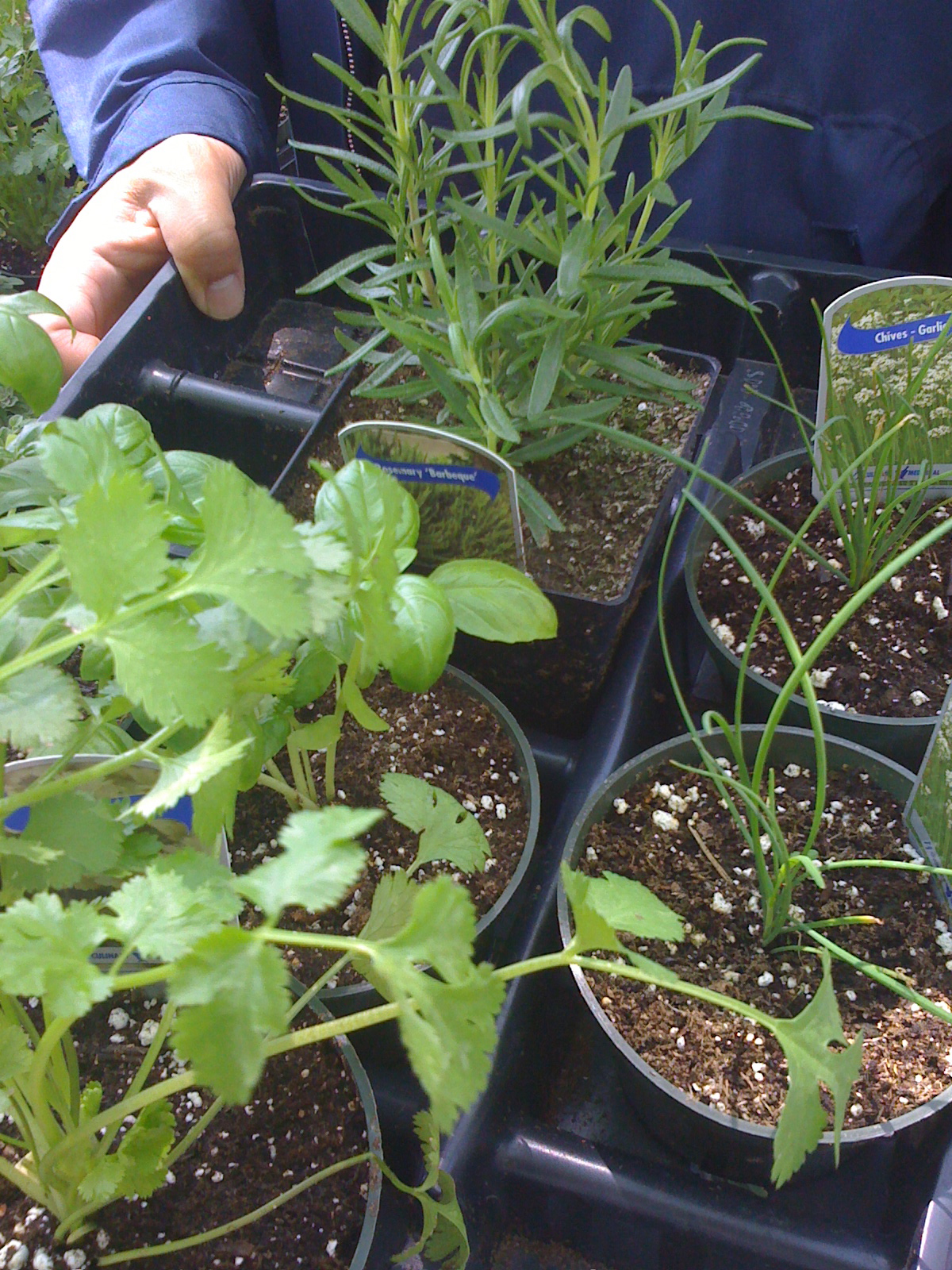
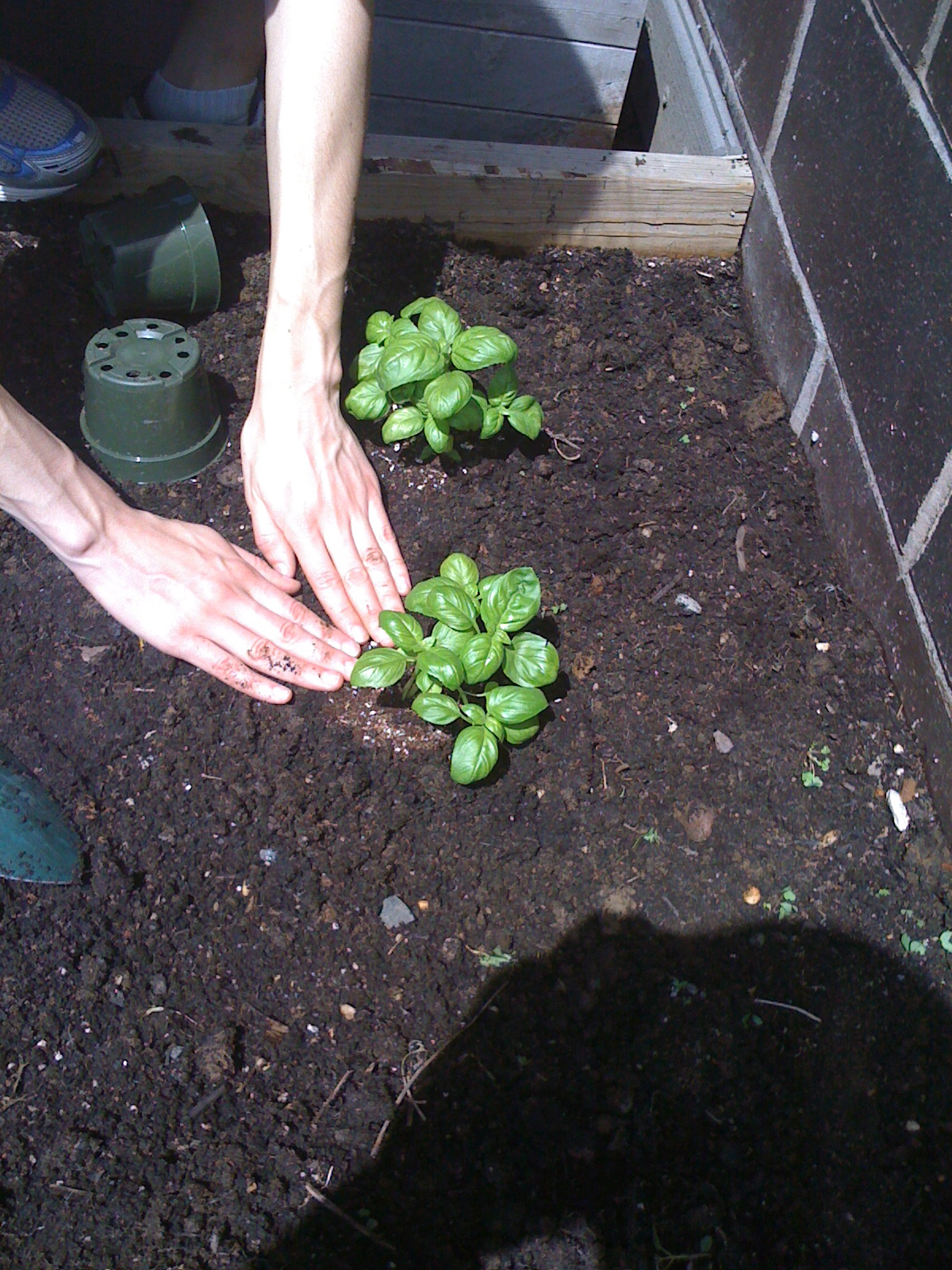
Before leaving we swung around to Garden of Eve and (I think) Dutchmill Farm, where we purchased small potted herbs for planting: cilantro, basil, rosemary, chives, and a fennel plant. We have a 2′ x 4′ plot in our yard for gardening and it was now or never. We got home, dug up our little garden spade from last year and got dirty.

Stay tuned for how tonight’s meal shapes up.
Laura eating a "pickle dog"

Home to millions of bacteria

This post here is by my dear friend Laura in Madison, infirm just hours before boarding a plane for a long journey to the southern hemisphere. Here she shares a favorite kimchi recipe, a ballast during the winter months in this cold Wisconsin college town. Laura – rest up, drink lots of water before flying, and keep eating fermented cabbage.

Kimchi helped me survive my first winter in Wisconsin, and today we’re at the end of the batch. Shortly after we moved into our new place, a five-liter Harsch ceramic crock arrived in the mail, a wedding gift from California. I could hardly lift the box. And it actually went to the neighbor’s house because I had misremembered our new address in Madison.

Fermentation is a magical process. Pressing colorful vegetables into a dark ceramic hole and days later hearing bubbling and popping noises coming from the kitchen is both exciting and disconcerting. The formation of some rotten mutant poison vegetable might be happening in my kitchen. But this bacteria is the good kind.

I followed an online video by Maangchi for easy Kimchi. The definitive moment is when Maangchi says that two cups of crushed red pepper is “spicy”. And was it ever. This kimchi was so red hot that everyone who devoured it had tears, either of joy, tolerance, or anguish. Next time, I might try Sandor Katz’s book Wild Fermentation, and use half as much red pepper.

I didn’t follow the recipe very well. I left out the squid and the fish sauce and didn’t really measure most of the ingredients. Instead of eating it fresh, I let it ferment in the crock for an entire week. Fermentation might be magical, but it’s also forgiving. You don’t even need the ceramic crock; a glass jar will do the trick if you are brave enough to occasionally remove bacterial surface scum.

This red, warming, spicy concoction helped on days that were icy and gray. We gave much of it away to friends and family, but the batch has lasted for months. I usually get nervous about aging groceries, tupperware at the back of the fridge and unwelcome chemical reactions transpiring in my kitchen, but there is something so mysteriously comforting when good bacteria does its magic.

The last few bites


At lunch yesterday, Manuel and Satomi told me about a dish that Manuel’s grandmother used to make for him back in Puebla, Mexico: tapado de pollo, which literally means “covered chicken.” The chicken is cooked slowly over low heat in a covered skillet, or you could even make this in a dutch oven or Le Creuset pan.

Spiced with cinnamon and crushed cloves, the chicken stews in roma tomatoes with plump raisins and sliced almonds. Savory and a little bit sweet, this is a quick and easy dinner to whip up with ingredients you might already have on hand. Manuel – don’t tell your grandmother but I did make a few adjustments.

As soon as I brought the chicken thighs home I washed and patted them dry with paper towels, then generously salted them on both sides and put them in the fridge for a few hours until I was ready to cook. This is an old trick I learned from one of Alice Waters’s cookbooks – she’s a firm believer in salting chicken for as long as possible before cooking, whether that’s just an hour or two, or day or two. It improves the flavor immensely and, some say, keeps the meat moist.

As for my variations on the recipe, I used shallots instead of onions; increased the garlic; added cumin, nutmeg, and ichimi (crushed Japanese red pepper) for more depth and kick; added a little bit of red wine to the cooking liquid; and somewhat re-ordered the steps.

Tapado de pollo

2 chopped shallots
5 chopped cloves of garlic
6-7 chicken thighs, organic if possible, bone on, skin off
6 chopped roma tomatoes
1/4 c red wine
1/3 c raisins
1/3 tsp cinnamon
1/3 tsp crushed cloves
1/3 tsp nutmeg
1 tsp cumin
1/2 tsp ichimi or crushed red pepper
1/3 c sliced almonds, toasted in a skillet for about 5 minutes to bring out the flavor
salt and pepper, to taste
olive oil

Heat approx. 2 tbsp olive oil in a large skillet over medium heat. Add the shallots and garlic, sauté until softened but not brown, about 2 minutes. Add the chicken and sauté on each side for 2-3 minutes. Add the tomatoes – juice, seeds, and all – along with about 1/4 c red wine. Cover with a lid and cook for about 10 minutes, turning the chicken once.

At this point the chicken will be about halfway cooked; there should be a lot of liquid in the pan, and the tomatoes will start breaking down. Add the raisins, cinnamon, cloves, nutmeg, cumin, and ichimi. Stir, then cover and cook for another, say, 10 minutes, before adding the almonds (you don’t want the almonds to get too soft). Add salt and pepper, to taste, and continue cooking over low heat until the chicken is cooked through and the aromas start traveling down the hallway to your neighbor’s apartment.

I served this with Japanese short-grain rice and sautéed chard.

This was so easy and oishii I think I’ll include this dish in my regular rotation. Thank you Manuel and Satomi!