Archives for category: Savory

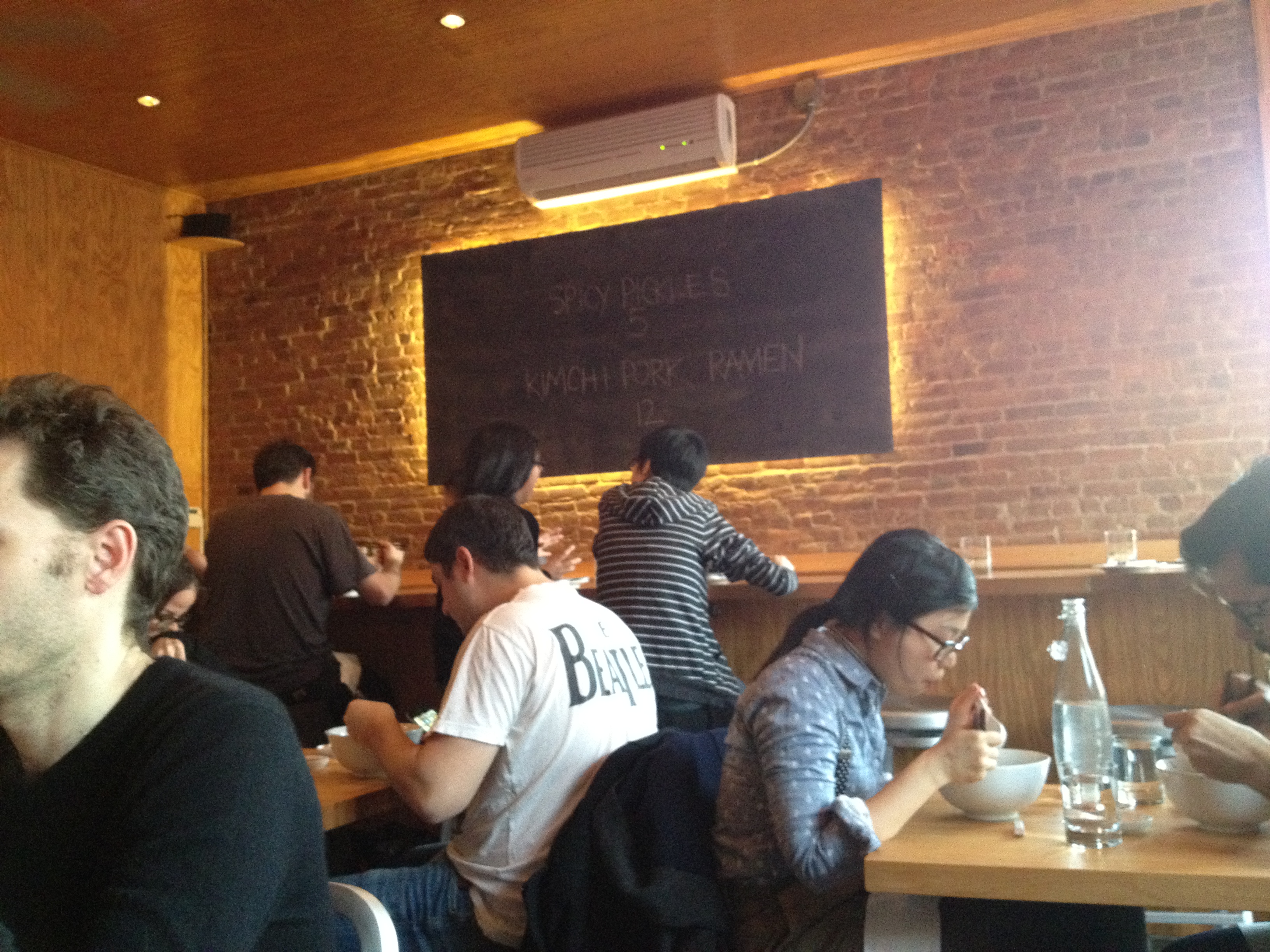
This is what the outside of Chuko looked like at 6:45 PM yesterday. Not dark, not cold, not windy. It was light, bright, blue skies at a quarter to 7. I’ve been wanting to visit Chuko since it opened back in August, a couple months after I moved to the neighborhood, and not a moment too soon. Just as I was missing my old haunts in Williamsburg and complaining there was no good food in these parts (I know, I know, I was naive), I read about Chuko. Brought to us courtesy of two Morimoto alums, Jamison Blankenship and David Koon, Chuko serves up bowls of housemade ramen in miso and soy broths, with or without meat. Housed in the former Nick’s Diner space, Chuko, meaning “second hand” in Japanese, was refurbished with a long wooden bar, and shows off an original hundred-year-old brick wall.

I’m a little behind schedule because it’s taken me seven months to visit this place on Vanderbilt Ave., a ten-minute walk from my apartment. So with the sun refusing to set on the early spring evening, I made my way across Atlantic Avenue, the new Nets Stadium casting shadows to the west, church and state mingling to the east (below).

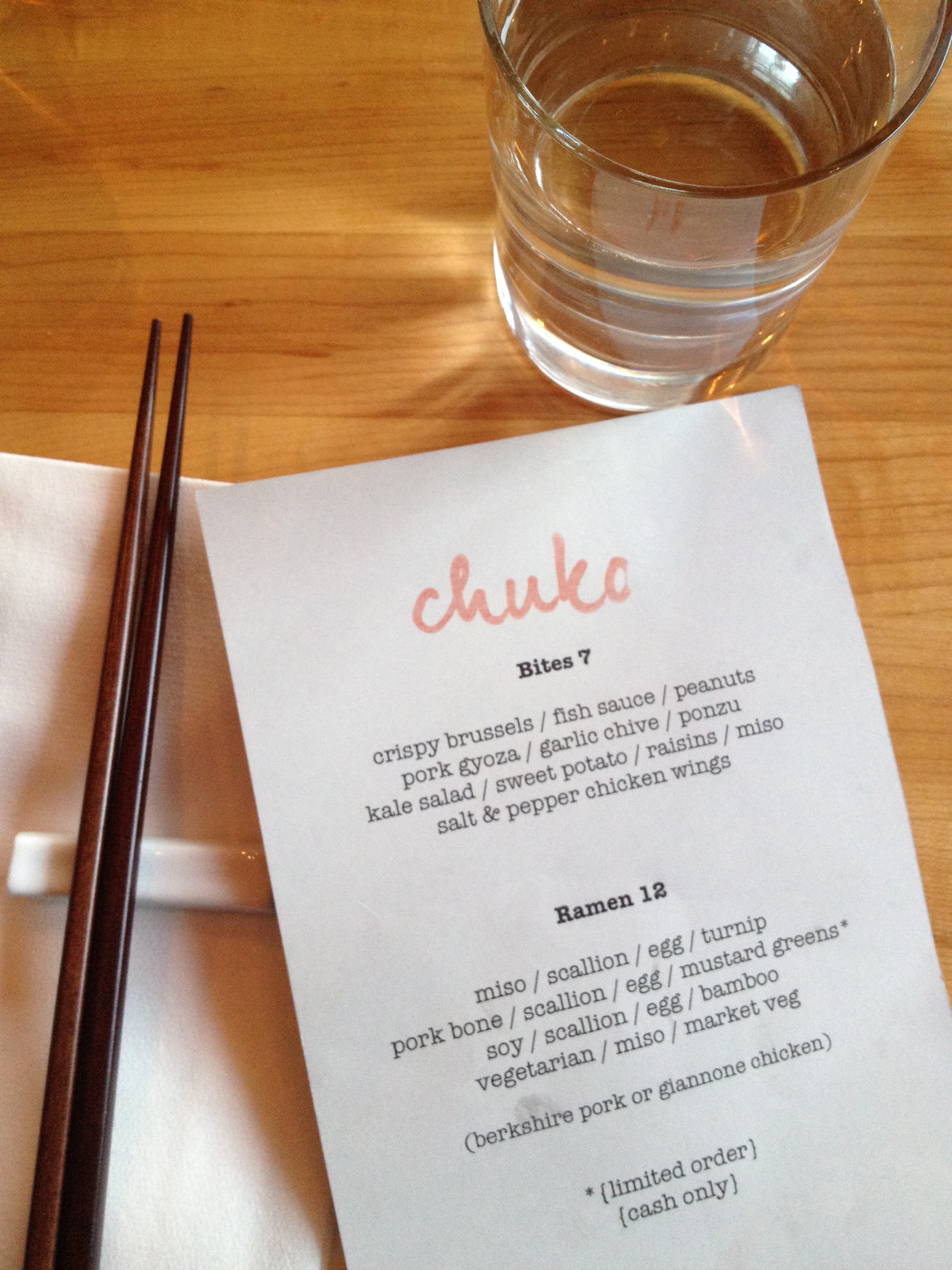
I was meeting my regular Sunday-night partner, Karen, for steaming bowls of soup and whatever sides might entice. It was early enough that the place was pleasantly crowded with families slurping noodles—toddlers, strollers and all—until about 8 pm when they cleared out to make way for the stroller-less. The menu is straightforward: four kinds of ramen, all for $12 (miso-scallion, pork-scallion, soy-scallion, vegetarian-miso), and small plates, all for $7, including crispy Brussels sprouts, pork gyoza, chicken wings, and a kale salad. The specials last night were kimchi pork ramen in a red miso broth, and spicy pickles.

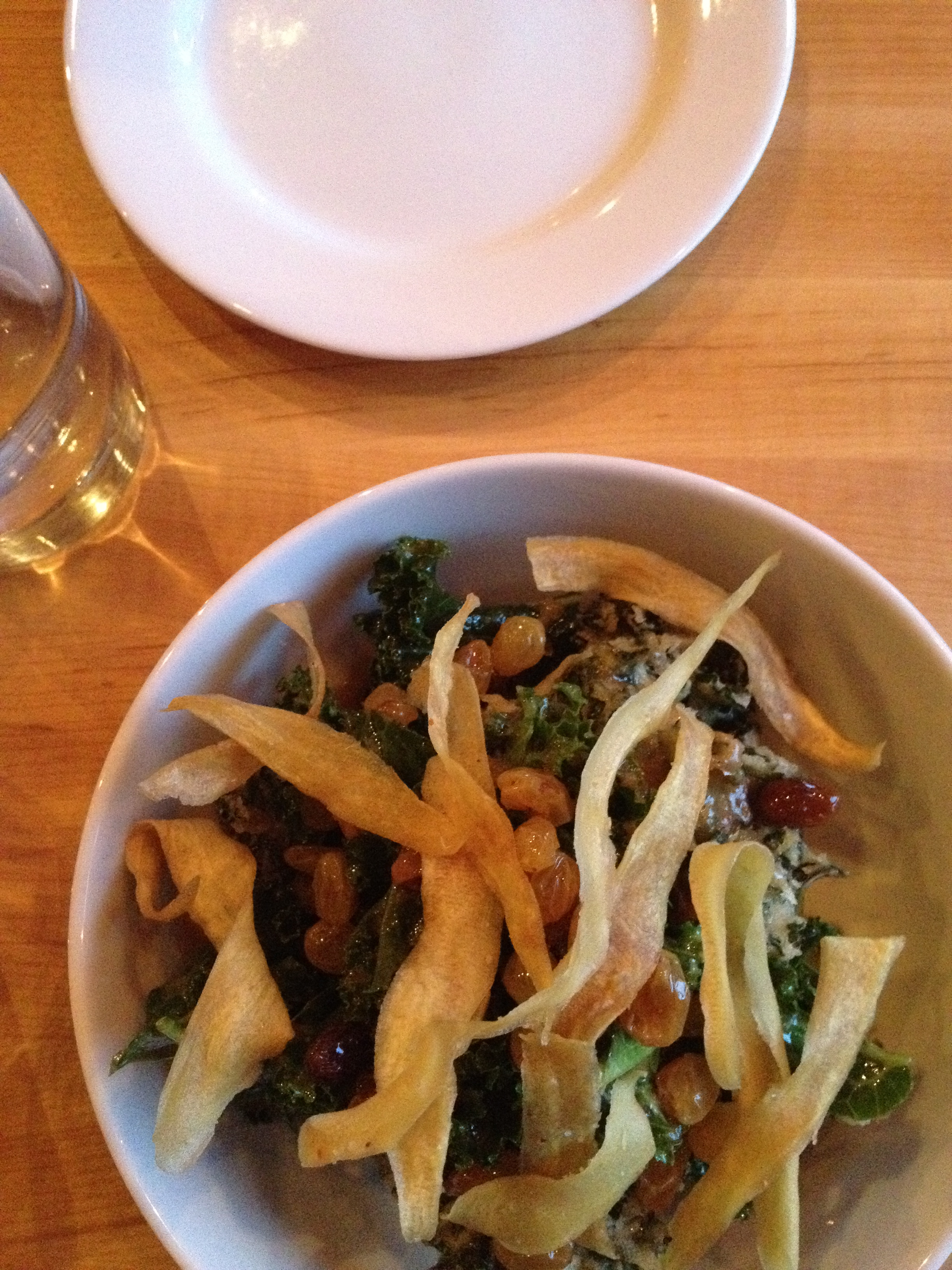
Let’s face it, I can’t resist kimchi or pork or red miso, so you know what I ordered.* Karen had the vegetarian miso ramen with market vegetables. We split the kale salad with sweet potato chips, raisins, and a miso dressing. Half the kale was a crunchy, addictive tempura, and the rest of the kale tasted like kale chips, so we basically loved this dish.

*I’m reading Jonathan Safran Foer’s Eating Animals, a birthday present from Karen actually (do you think she’s trying to tell me something?), maybe by the time I’m done I’ll take my ramen sans pork too.

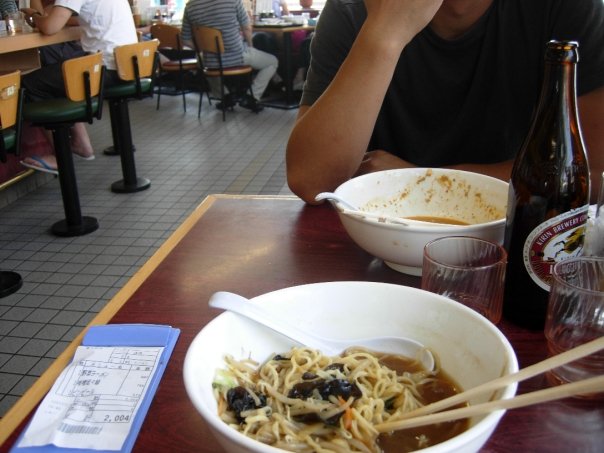
I don’t know if we have Morimoto to thank, or the research trips Blankenship and Koon took to Japan, but this ramen was the real deal. It reminded me of ramen I slurped in 2009 on the outskirts of Tokyo on a hot, steaming August afternoon after Yuji and I were kicked out of a public swimming pool (long story). I’m excited that I actually found the photo I took at that meal, below. I tried, really tried, to eat ramen the Japanese way, making loud sounds as you suck the noodles through your lips.

At Chuko, the red-miso broth, topped with a soft egg and scallion shavings, was salty, soulfoul, earthy, and got increasingly spicy the longer it mingled with the kimchi.

So we slurped until we could slurp no more, then walked out into the cool night air. Yes, it was finally dark outside. I could get used to Sundays at Chuko.

Chuko 552 Vanderbilt Avenue (corner of Dean St.), Prospect Heights, Brooklyn. Cash Only.

I have a big culinary crush on Yotam Ottolenghi.

I’ve never met the Israeli-born, London-based chef, restauranteur, cookbook author, and Guardian columnist, but I’m seriously considering a weekend trip to London this summer with a friend just to try his outposts in London. Notting Hill, Islington, Kensington, Belgravia, here I come!

How do I love thee? Allow me to count the ways:

He writes a weekly column called The New Vegetarian but is not a vegetarian.
His love and respect for vegetables are palpable.
He makes things like roasted aubergine with turmeric yogurt, crispy onion, basil, rocket, and pomegranate seeds.
He adores, cherishes, reveres eggplants (aubergines).
His inspiration is Israeli, Palestinian, Turkish, Mediterranean, and above all seasonal.
His “ideal solace for a gloomy winter night” is mushroom ragout with a poached duck egg.
The food he cooks is both familiar and not; simple in preparation yet complex in flavor; traditional and innovative.
And those glasses!

I mean, what is not to like?

To be fair, Ottolenghi has a secret weapon helping him out: partner and head chef, Sami Tamimi, who worked his way up through Israeli kitchens until moving to London in 1997. (You can’t, or shouldn’t, wax poetic about Ottolenghi without at least a shout out to Tamimi.)

In 2010, Ottolenghi published his second cookbook in the UK, Plenty, a book devoted solely to vegetable dishes. Granted, many of the dishes include rich cheeses, runny eggs, good quality oils, but make no mistake, it is an ode to food that comes from the soil.

Yesterday I wanted to both cook something out of Plenty and prepare something I could bring to my lovely, yet increasingly picky grandmother (although she would never admit to being fussy). I thumbed through the beautiful pages and settled on stuffed cabbage. Too many unknown ingredients in a dish can turn my grandmother off before she’s even tried it, so better to stick to more of a known quantity. (Avocados, chic peas, crème fraîche, stinky cheese, chili peppers, black pepper, almost every kind of meat, chocolate even, render a dish dubious at best.)

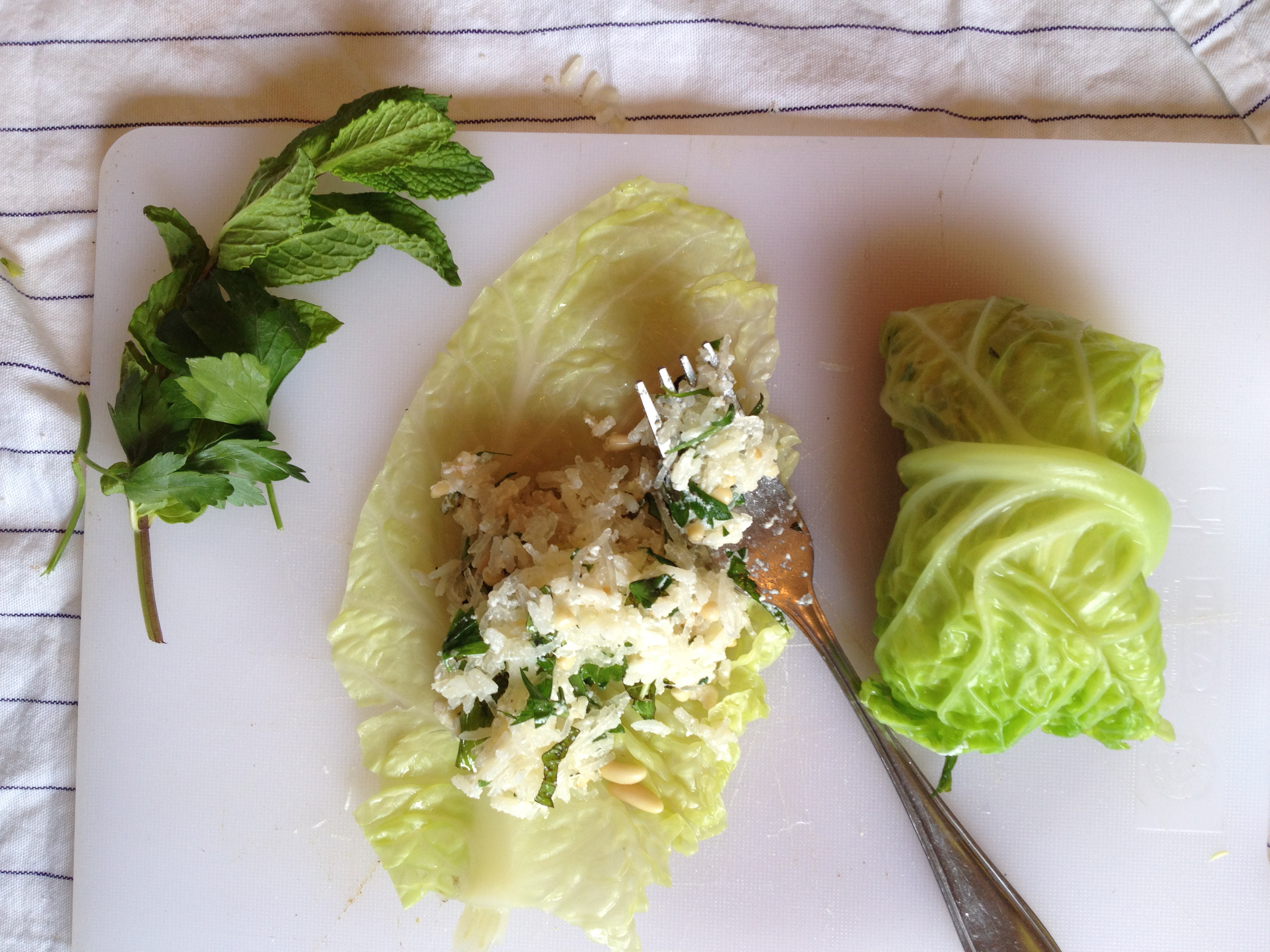
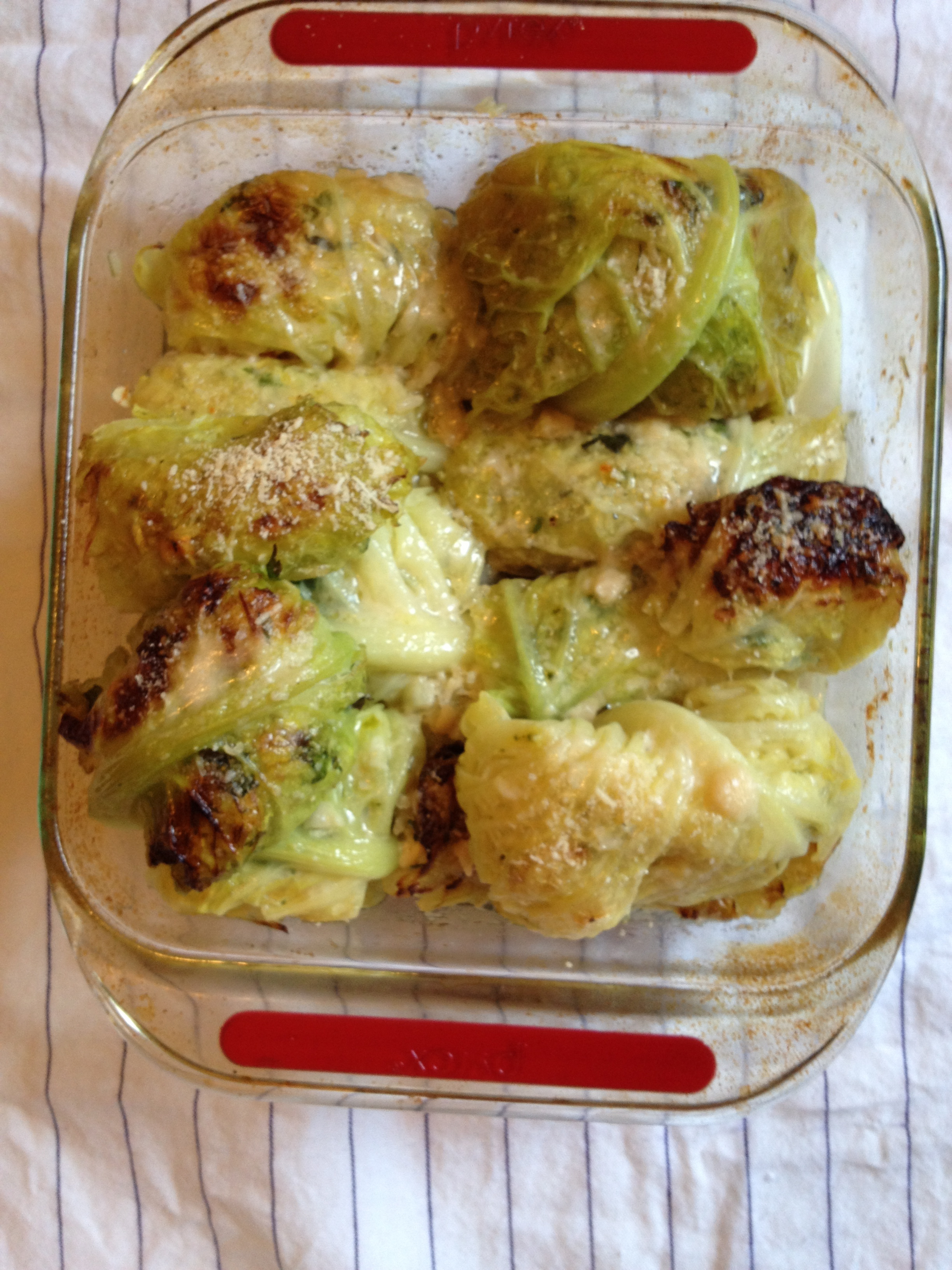
In this recipe, the cooked cabbage leaves are stuffed with a mixture of rice, vermicelli noodles, ricotta, toasted pine nuts, garlic, mint, and parsley, ingredients that say spring is right around the corner. (I’ve missed fresh herbs!) Before baking you pour a combination of dry white wine, olive oil, and vegetable stock over the parcels, which makes the dish smell wonderfully enticing from the oven. You’ll want to tear right into the mismatched bundles, which is exactly what my grandmother did when I arrived, the dish still hot from the oven an hour later.

Stuffed Cabbage with Rice, Ricotta, and Mint
From Plenty by Yotam Ottolenghi

Serves 4

2 tbsp (30 g) unsalted butter
1.5 oz (45 g) vermicelli noodles (not the rice kind)
scant 1 cup (150 g) basmati rice
10 oz (300 ml) water
1 medium white cabbage or Savoy cabbage
2 oz (60 g) pine nuts, toasted and coarseley chopped
5 oz (150 g) ricotta (my post on homemade here)
1 oz (20 g) Parmesan, grated
3 tbsp chopped mint
4 tbsp chopped parsley, plus extra for serving
3 garlic cloves, chopped
6.5 oz (200 ml) dry white wine
3.5 oz (100 ml) vegetable stock
1 1/2 tbsp sugar
4 tbsp olive oil
salt and black pepper

Melt the butter in a small saucepan over medium heat. Break the vermicelli by hand into small pieces and add them to the butter, stirring for 1 or 2 minutes, careful not to let them burn. When the noodles start turning golden add the rice and give it a good stir. Then add the water and a pinch of salt and bring to a boil. Turn the heat down to a minimum, cover and cook for 20 minutes. Remove from heat and let sit for 10 minutes before removing the lid and letting cool.

While the rice is cooking, cut the cabbage vertically in half. Peel off the leaves and blanch in boiling water for 6-8 minutes, or until semi-soft. (You can do this in batches, depending on the size of your pot.) Refresh the leaves under cold running water, drain, and pat dry.

Preheat the oven to 350 F. Add the pine nuts, ricotta, half the Parmesan, the herbs, garlic, salt and pepper, to the cooked rice. Mix well with a fork. Use the cooked cabbage leaves to make parcels of whatever size you’d like, filling each one with a generous amount of the rice filling.

Arrange the stuffed cabbage leaves in an ovenproof dish (use cabbage trimming to fill in any gaps). Whisk together the wine, stock, sugar, olive oil and plenty of salt and pepper. Pour this over the cabbage and put the dish in the oven, baking for about 40 minutes or until almost all the liquid is evaporated. Sprinkle with the remaining Parmesan, return to oven and bake for another 10 minutes, so the cheese melts and turns golden. Remove from the oven and let rest for 5 minutes before serving.

Note: Next time I might be adventurous and try adding sauteed shiitake mushrooms to the filling mixture, or about 1 tbsp fresh lemon zest, or when it’s springtime, fresh peas—even though my grandmother said, “Don’t mess with it!”

Back in 2009, while I was still at Phaidon, I worked on a cookbook called Coco, which I’ve probably mentioned here before. It was part of the 10×10 series Phaidon publishes, whereby ten heavy hitters in their field (be it architecture, graphic design, fashion, etc.) each select ten emerging talents in that field. Coco was the first food book in that series, and the curators selecting the underlings included Ferran Adrià, Mario Batali, Alice Walters, and René Redzepi.

For his selection of up-and-comers, Batali stuck to his coterie of former chefs and sous chefs, and among the emerging talent he chose was Mario Carbone. Truth be told, I hadn’t heard of Carbone before then, even though he had cooked at Del Posto, Babbo, WD-50, Café Boulud, and a personal favorite, Lupa, in the West Village. Quite the pedigree for someone not even thirty years old. (That’s his spread in Coco, below.)
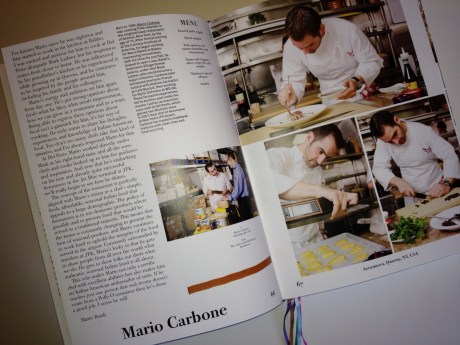
The funny thing is, Carbone was somewhat between restaurants at the time. And to be featured in Coco, each chef needed to be currently head chef at a restaurant. Carbone was technically heading up Aeronuova, a new Italian restaurant in Terminal 5 at JFK. It was a little unusual, but my guess is he was brought on to put together their menu and do initial recipe consulting. When I was compiling the directory of restaurants I didn’t even know what address to publish: Terminal 5, JFK Airport, Queens, New York? But I knew something was up his sleeve, and Batali’s sleeve, because they seemed to suggest a new restaurant was in Carbone’s future, but it just wasn’t open yet.

And sure enough, as Coco hit the bookstores, a little red-sauce joint known as Torrisi Italian Specialities opened on Mulberry Street, near Prince Street, in December 2009, serving Italian-American staples like meatball subs and eggplant parm at the counter. Carbone and his co-chef and co-owner, and former Boulud colleague, Rich Torrisi, have created a kind of post-postmodern mecca of ziti and antipasti in Little Italy. Amidst all the fading tourist-trap pasta joints and clam bars on Mott and Mulberry Street. It’s a throwback to your Italian grandma’s Sunday suppers in Queens (or New Jersey, or Long Island), gravy and all. But the ingredients are good. Really good. Not imported from Italy, but all domestic and/or made in-house, like mozzarella made to order and house-cured olives. Olive oil from California that’s so good they should serve it in a demitasse cup for dessert, sprinkled with sea salt from Coney Island.

All this time I’ve been wanting to see what the buzz is about. In the meantime, Torrisi and Carbone opened Parm next door to Torrisi, a more casual restaurant serving some of the old favorites (like the subs), without the long waits and hard-to-get reservations of Torrisi, which now only serves a tasting menu or prix fixe but no more a al carte at dinner.

Good thing my friend Daniela came to town. Super foodie, blogger for Eater LA, trained pastry chef, food writer, this woman eats professionally. It was the perfect opportunity to try both Torrisi and Parm. So within a span of a few nights we dined at each place, allowing for a side-by-side comparison of the more upscale Torrisi, and low-brow Parm. (In the photo up top, Torrisi is on the left, Parm on the right.)

At Torrisi we were greeted with four antipasti for the table, including the famed mozzarella, hand-pulled to order, drizzled in that delicious, fruity olive oil and crunchy sea salt. When left to rest at the table, the mozzarella became more enjoyable, softer, and more buttery, then when it was first set down. It was served with four small perfect pieces of garlic bread: saltier, crunchier, cheesier, more garlicky than you’re expecting. When our busser cleared the empty plate we both nearly lept to keep the dish so we could lick the crumbs. We stopped ourselves. As part of our antipasti, a warmed parsnip cider was served in an espresso cup with a cool apple foam on top. Raw fluke Americain provided a clean, fresh bite between all the cheese and dough. Lastly, for the antipasti, was a rustic rabbit terrine served with pickled vegetables.

The pasta course, spicy sea shells di mare, was solid—the fish and shellfish were all cooked well, the pasta al dente, the sauce salty and spicy. It didn’t knock my socks off but it was darn tasty. For our main courses we were served skate giardinia and local duck with mulberry mustard. But by the time these mains came we were, well, stuffed like shells. I thought the main successes of the night were served at the bookends, our antipasti and the pastry: butternut squash custard, pizzelle cannoli, almond rainbow cookies, celery cake with green jelly and peanuts (a take on ants on a log), and a chocolate-mint truffle.
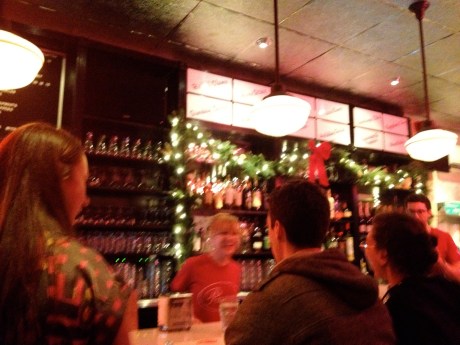
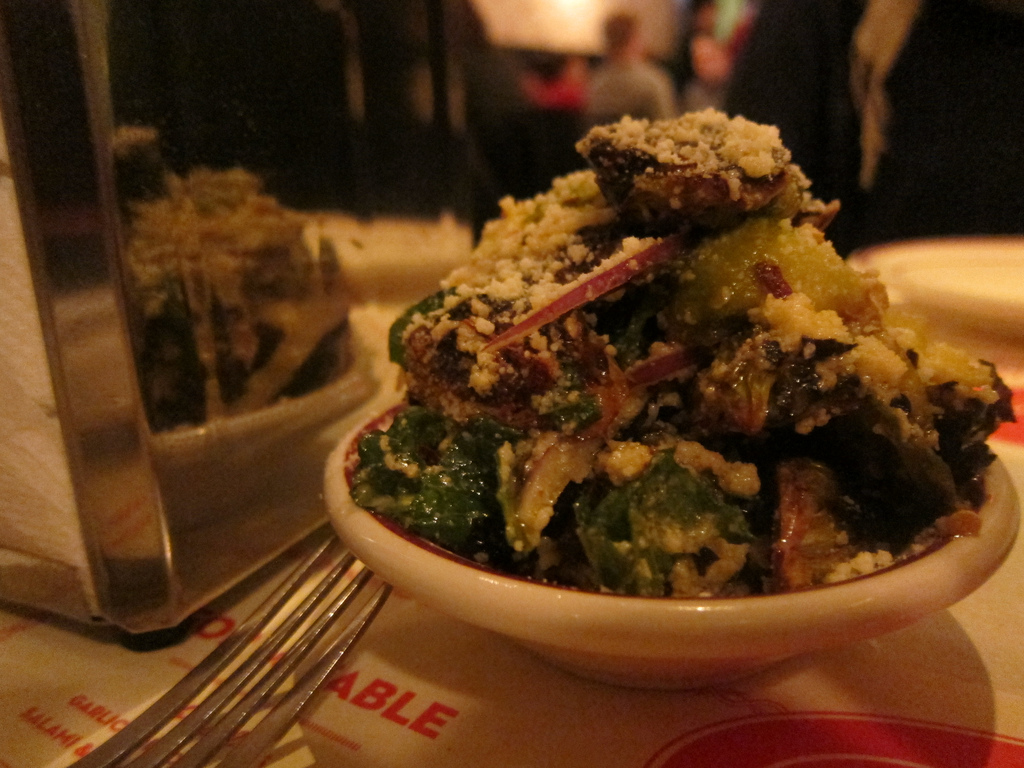
We arrived at Parm a few nights later (shot of the bar above), rain-soaked, hungry, and in need of some comfort food. We had come to the right place. We only waited twenty minutes at the bar for a table, then ordered up what seemed to be the must-haves: eggplant parmesan with a “Sunday salad”—iceberg lettuce, hot pickled peppers, cucumber, and red onions, served with a vinegary dressing—a veal-and-pork meatball platter served with ziti and meat gravy; Brussels sprouts; cauliflower; and the plate-licking garlic bread we’d had on Tuesday. (Brussels sprouts in the shot below.)

The favorites were the eggplant parmesan, which really did taste like my Italian (step) grandmother used to make when I was little, the Brussels sprouts, and the cauliflower. The sprouts were caramelized and served with thin crunchy slivers of red onion, parmesan, sea salt, and garlic. The cauliflower was nicely browned and seasoned and honestly tasted like candy in that way that only really good cauliflower can. Again, like my Italian grandma used to make. These guys are good.

The only sore spot in the evening at Parm came with the meatballs. First off, they were served flattened, and stacked, like a double hamburger. Maybe this is typical in some nonna’s kitchens but I know them to be rounded, and sized somewhere between a golf ball and baseball. The main issue, however, was that they were not properly cooked. The meat was verging on rare, cold in the center even. Our server argued with us, saying he was sure they were cooked through and that’s how they do it here. Minus two points.

Using the four-star system of the Times, I’d give Torrisi two stars and Parm one star. Two to Torrisi for the service, atmosphere, antipasti, and pastries. One to Parm for the tasty eggplant, cauliflower, Brussels sprouts, garlic bread, and friendly hostess. Tell your nonna, Little Italy is back.

I had to cheat and use this photo below from the Torrisi website, so I could show you two of my favorite dishes, the mozzarella and the garlic bread, since my shots came out too dark. Buon appetito!