Archives for category: Fall

IMG_4129

The last time I blogged was a month ago. It was about tomatoes. As was the blog before that (sort of). Well I’m at it again: tomatoes. This time stuffing them into jars to be eaten once the last leaves have fallen from the trees in Fort Greene Park and my wool coat has reclaimed its place by the front door.

I recently returned from a 15-day trip around Turkey with a few new recipes under my belt, ones that have been passed down through generations in my boyfriend’s family. His sisters do the cooking, and do everything by hand, and do not own a single measuring cup or spoon. One thing they do each year is turn late-summer tomatoes into a sauce to be eaten year round. It’s quite simple: tomatoes, peppers, salt, and a bit of oil. They primarily use the sauce to make Turkish menemen (and egg-and-tomato dish like shakshouka).

When we left for Turkey the weather was hot, sticky, classic late August; when we returned last week early fall had descended on New York, with its warmish days but brisk mornings and chilly nights. Luckily we got back into town just to catch the tail end of tomato season. We bought these organic ones from Hepworth Farms at the Park Slope Food Coop for $1.26 a pound! If you can get bruised ones for cheap at your local farmers market that’s good too.

This recipe is not quite the rustic preserved tomatoes I made last year or the ones written about earlier this week in the New York Times. But it’s not far off either. In addition to menemen I’d love to eat this with pasta or polenta or in a vegetarian lasagna. And honestly, I can’t imagine I’ll wait til winter to try!
IMG_4132

IMG_4145

Preserved tomatoes, Turkish style

8 pounds tomatoes, preferably Roma
2 pounds long sweet peppers
1/2 cup oil
1 heaping tbsp salt

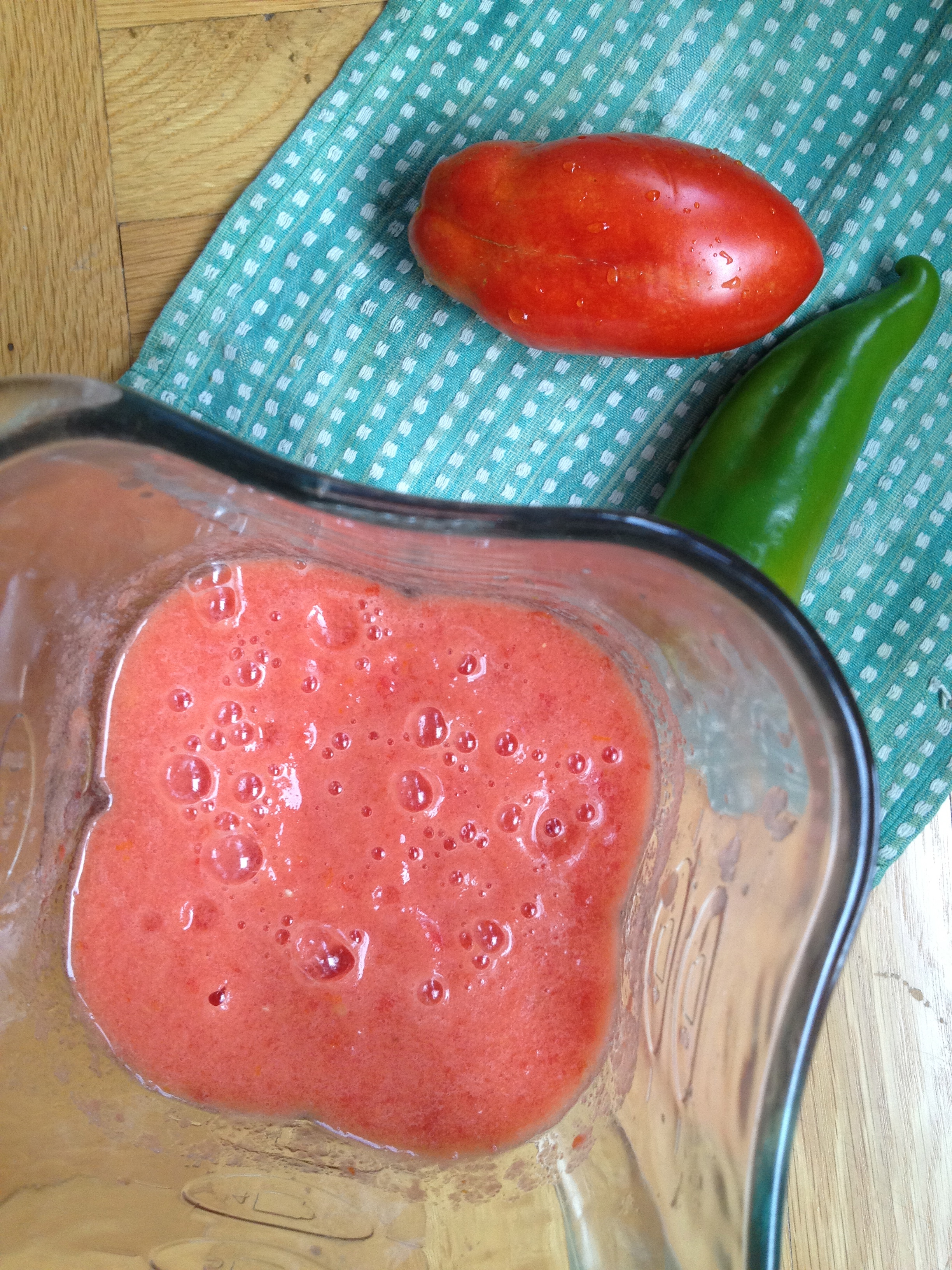
1. Quarter the tomatoes lengthwise and puree in batches in a blender until smooth. Transfer the pureed tomatoes to a large stockpot on the stove. Bring the tomatoes to a boil.

2. Halve the peppers lengthwise and chop in a food processor until fine, but not pureed. (A food processor works much better for this than a blender which tends to just pulverize.) Without a food processor you can do this by hand it just takes a while—chop as finely as possible.

3. When the tomatoes are boiling add the peppers, oil, and salt and reduce to a simmer but keep the liquid bubbling. You want to reduce some of the liquid and create a sauce. So simmer for about 45 minutes to one hour until you reach the desired consistency of sauce.

4. Have your Ball jars or recycled glass peanut butter jars (what we used!) clean and sterilized (we boiled the clean jars in water for ten minutes and removed with tongs and air dried). Don’t let the sauce cool too much. Using a funnel, spoon the tomato sauce into the jars, filling almost to the top, leaving just the tiniest bit of room.

5. While still hot, put the lids on and flip the jars upside down. Leave for two days to ensure a proper seal. (This is the method my boyfriend’s family uses; you can also look on the internet for other methods to seal, namely submerging the jars in boiling water.)

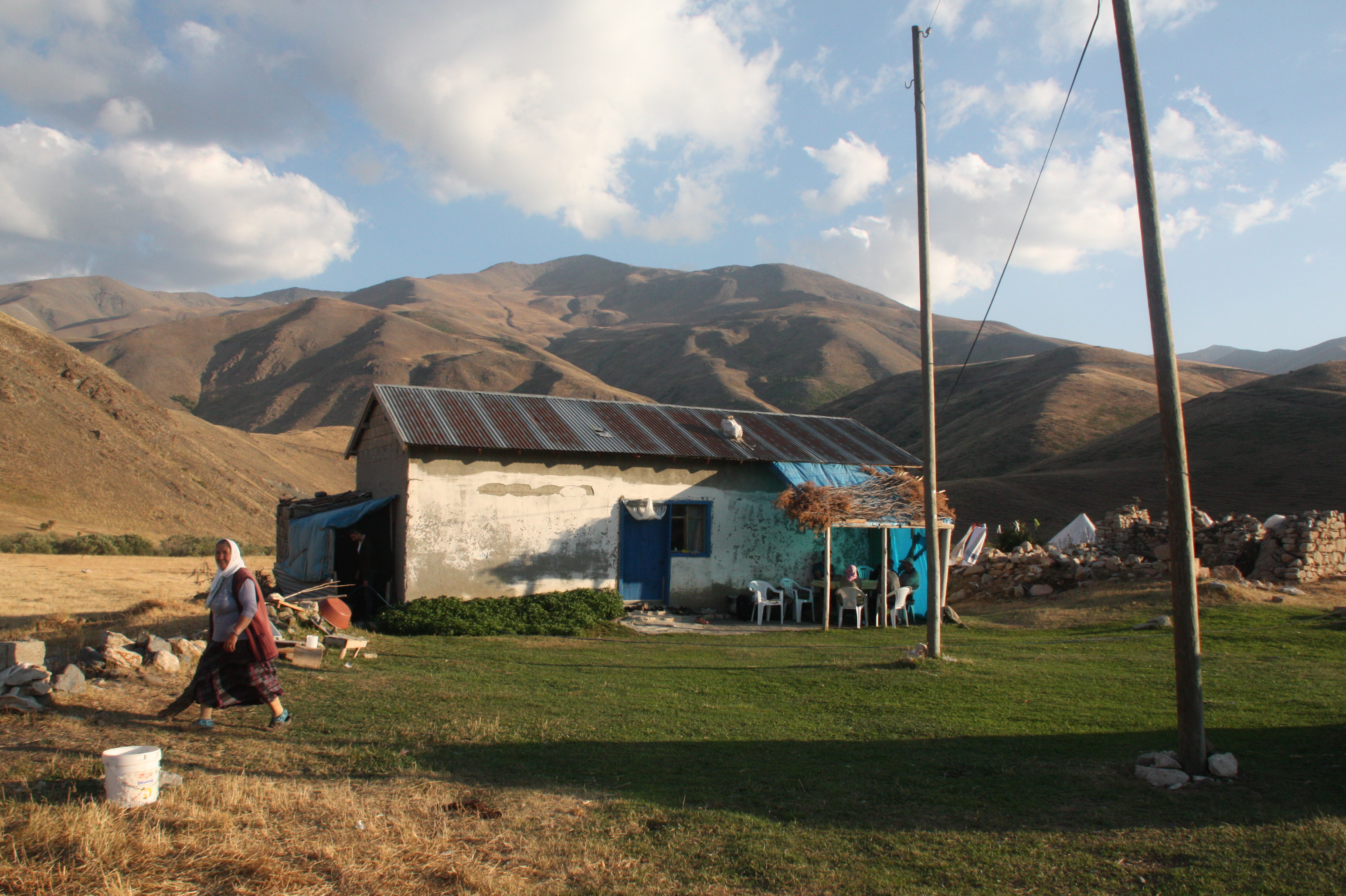
Below is a photo of the beautiful village where we stayed for five days in the mountains of eastern Turkey, where my boyfriend grew up and his family still spends the summers. Bottom is me picking apricots in a neighboring village. I also saw pomegranate, lime, and fig trees during those two weeks. I’d definitely never seen a pomegranate tree before!
IMG_6872

IMG_6987

Do I like Thanksgiving? I think so. It’s sacrilege not to. But sometimes the traveling, the stuffing ourselves, the Christmas music (yes, each year it arrives on radios and in stores earlier and earlier), it makes me want to scour kayak.com for flights to the Maldives and get the heck out of dodge. Which yes I am doing in fact. Hoping for a Maldivian Christmas-New Year’s. Wanna come?

But between the damage brought on from Hurricane Sandy a couple of weeks ago—the effects of which are still very much a hard reality in neighborhoods throughout the New York City area—and the fighting in Israel and Gaza this past week, there is a sobering and somber undercurrent this Thanksgiving. I continue to be amazed by the efforts of Occupy Sandy.

Some of the things I do like about Thanksgiving, of course, are the good eats: the turkey, cornbread stuffing, cranberry-orange relish, seeing my siblings together under one roof (rare these days), and trying new recipes. It’s a time to reflect on all the riches in our lives. For me, relationships and health in particular.

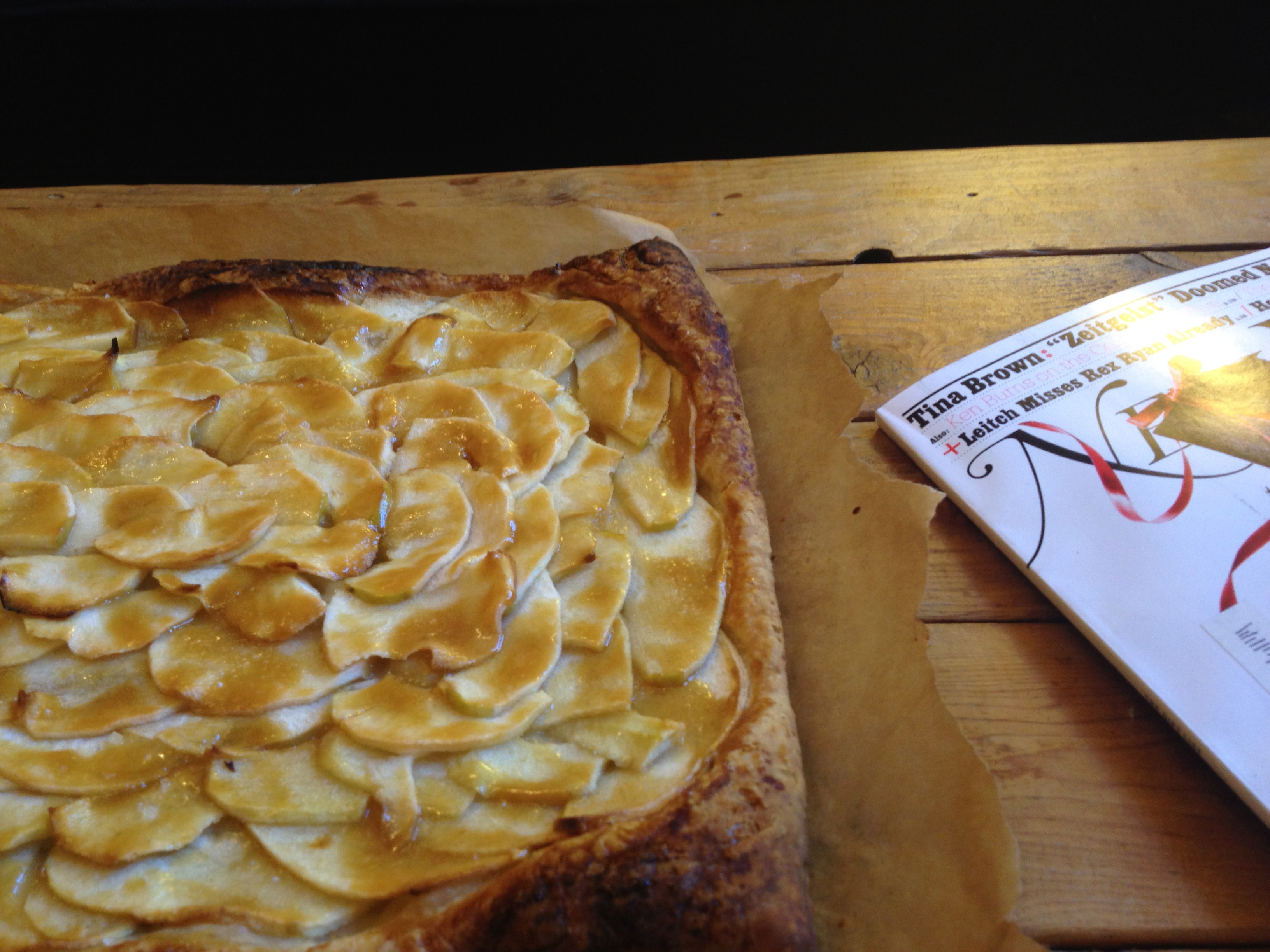
Last year I wrote about a devil food’s cake I tried out that was not entirely a success but not bad either. This year I needed a dessert to balance out the pumpkin cheesecake my sister-in-law—also our host in Northampton, Mass.—was making. You kind of need something with apples on the Thanksgiving dessert table but I didn’t want to make the same ole apple pie so I stumbled upon this salted caramel apple tart via Smitten Kitchen.

You make it using store-bought puff pastry and I recommend Dufour pastry which is made with all butter and not much else (ok, a little flour). You may experience sticker shock as I did at the Whole Foods checkout yesterday ($11.99) but it’s entirely worth it in my opinion.

You can find the entire apple tart recipe here. I am getting lazy about retyping perfectly good, already published recipes. A big shout out to Deb Perelman, from whose blog I’m unabashedly cribbing these days.

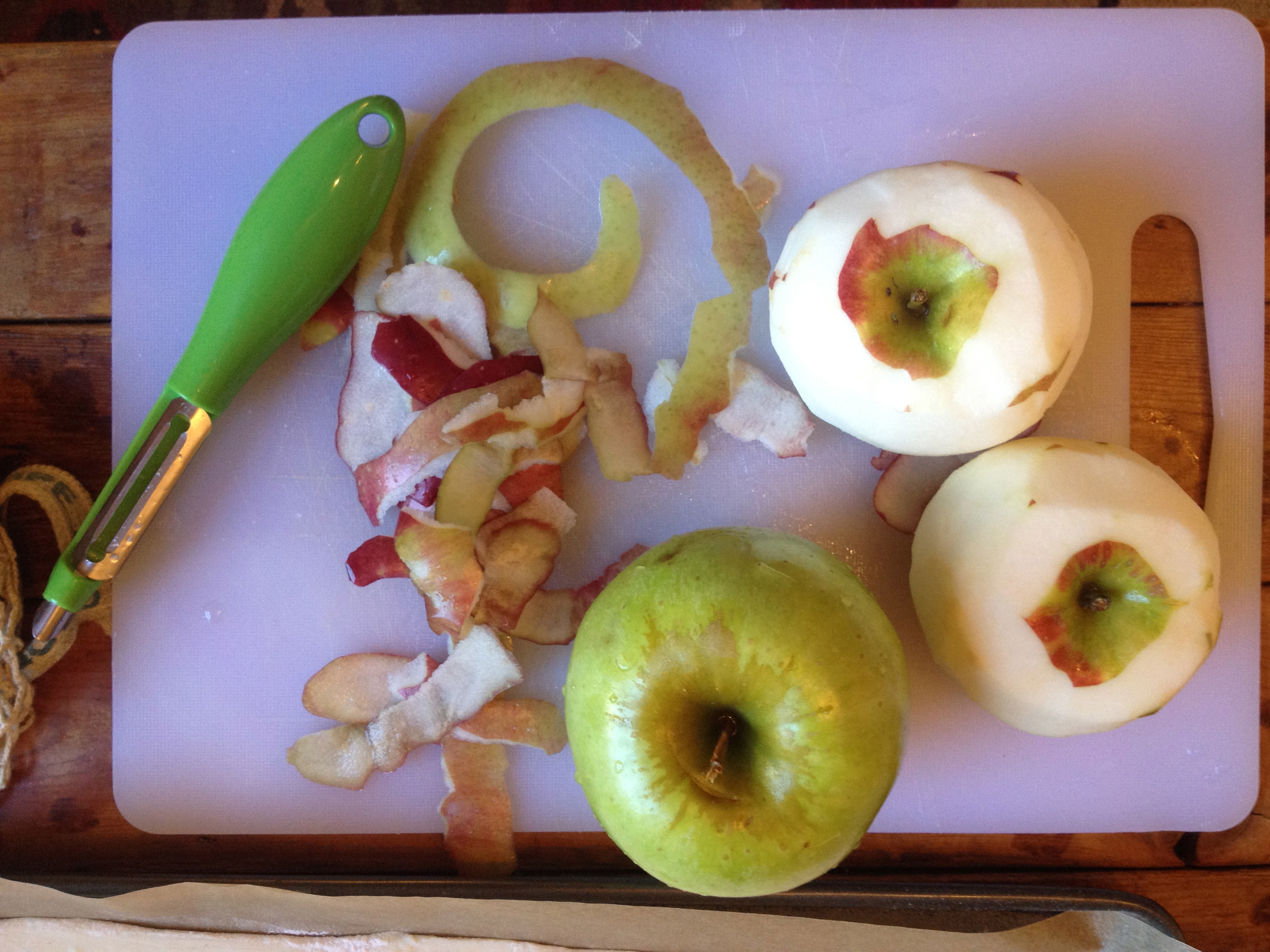
Look how pretty those little cubes of butter look on the uncooked apples!

Making the salted caramel is pretty darn easy.

Looking forward to biting into this tomorrow. I’ll try and update the post to let you know how it is. I also want to post about the cranberry-orange relish I made this year but need to go catch the subway! So if you celebrate Thanksgiving I hope it’s a meaningful one for you. Peace out-

Ok so the funny thing happened once I was home from the market. I couldn’t crack open the three-pound Amber Cup squash I bought moments earlier. I’d never tried this variety of squash but it was a little smaller than the kabochas (i.e., lighter to carry home) and, as the sign read, it’s “another orange kabocha”—sweet, orange-fleshed, perfect for roasting. The problem was, Jill was due to arrive at any minute for an impromptu lunch and the darn thing would not yield to the gentle, nor increasingly firm, pressure of my knife. Could we have eaten at one of the twenty-six restaurants serving brunch within a stone’s throw of my apartment? Yes. Would it have been easier? Faster? Cheaper? Yes, yes, and yes. But once I get a cooking idea there’s little stopping me.

And I had a very particular craving. Last December I had a memorable lunch at ABC Kitchen with my father and stepmother. I was going to buy my first real rug and it seemed fitting, and fun, to do this a) with my step-mom who is somewhat of a rug connoisseur and b) after filling our bellies with Dan Kluger‘s delicious seasonal fare across the street from the rug emporium. In addition to the pizza with egg, the veal meatballs, and the beets with homemade yogurt, we shared a piece of toasted sourdough bread with kabocha squash, ricotta, and apple cider vinegar. It was my favorite part of the meal that afternoon but I had nearly forgotten it until this week: Bittman wrote about this very dish as an impressive appetizer to serve on Thanksgiving.

But as the clock struck two p.m. in Brooklyn my guest arrived and I was standing in the kitchen with a cold, heavy squash, realizing I had to be on the Upper East Side in two hours no less. I put the squash aside (I’ll deal with YOU later) and came up with an instant plan B. I had the sourdough bread from Hot Bread Kitchen, the fresh ricotta, the sage, the onions—just not the roasted squash. So I decided to substitute it with honeycrisp apples I purchased that morning at the market, reducing them in apple cider vinegar with caramelized onions. Lunch in ten minutes: voilà.

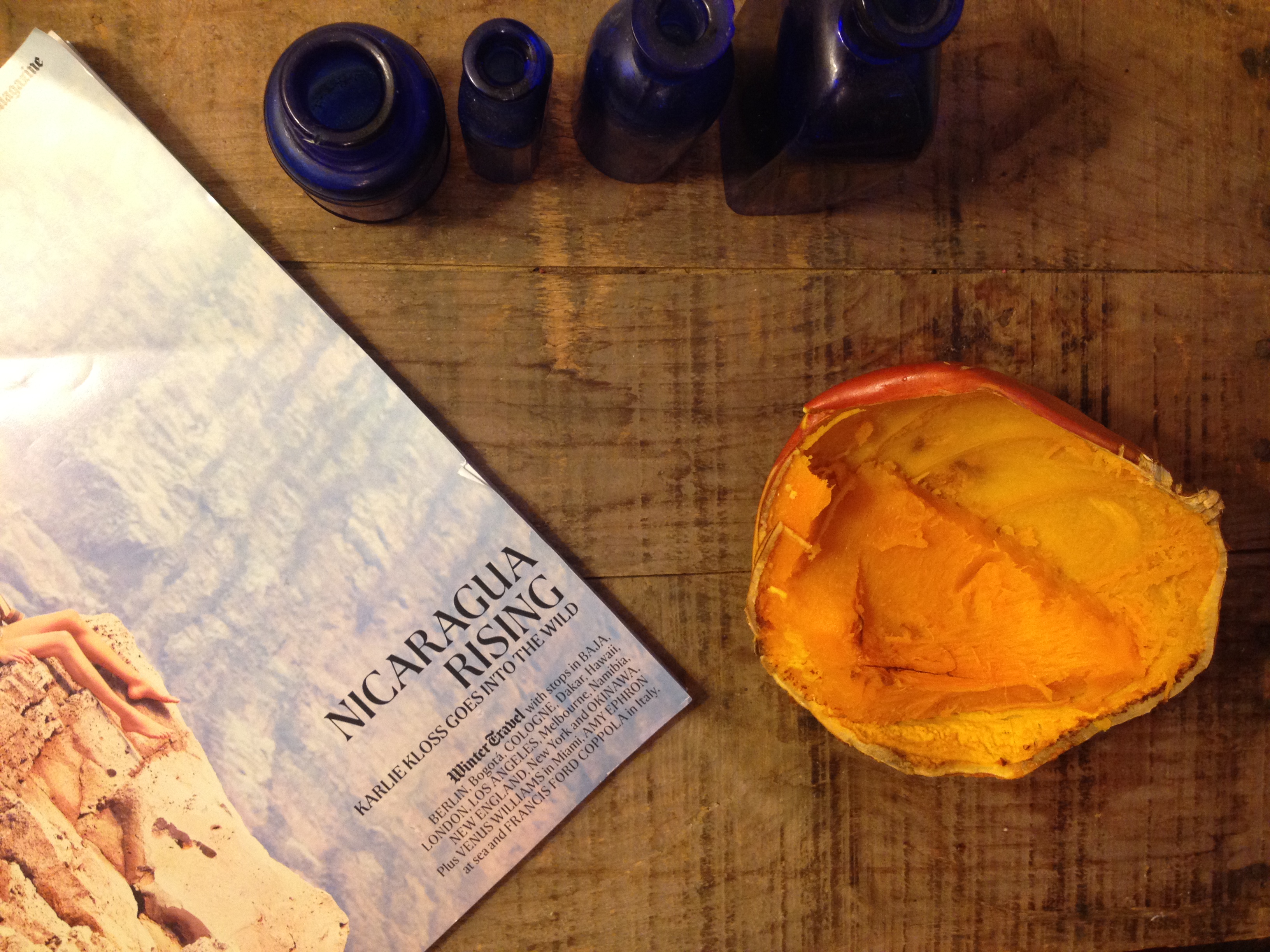
But today was a new day. I took another stab so to speak at the Amber Cup. Mano y mano. Turns out, I just needed to roast it whole. After thirty or forty minutes in a 400-degree oven the flesh was cooked through and had separated from the skin on its own making it very easy to work with. While the squash roasted I caramelized onions in a medium saucepan with a generous amount of olive oil—when they got good and browned I added apple cider vinegar and maple syrup and reduced to a glaze. You combine this onion mixture with the flesh of the cooked squash and add salt, black pepper, and red pepper flakes and mash with a fork.

I toasted a slice of sourdough, slathered on a generous spoonful of the ricotta from Narragansett Creamery, and  topped it off with the onion-squash mixture and a tiny bit of fresh sage. There was some debate in my household whether to use sage or mint and I even found conflicting recipes, one calling for sage, the other mint. Sage just seemed to fit the season to me more, but the mint would also be delicious.

And when you’re going to make something with squash, consider this piece of advice from Bittman: almost any winter squash will yield to a sharp knife and some patience, though as I wrote a couple of weeks ago, thin-skinned varieties like delicata are easier to peel or can be left unpeeled entirely.

Squash Toast
Adapted from Jean-Georges Vongerichten

1 2 1/2 to 3 lb kabocha or other yellow-orange squash (peeled, seeded, and cut into 1/8 to 1/4 inch pieces if possible)
3/4 c extra-virgin olive oil
1/2 tsp dried chile flakes
coarse salt
1 yellow onion, peeled and thinly sliced
1/4 c apple cider vinegar
1/4 c maple syrup
Thick sourdough bread
1/2 c ricotta (mascarpone, goat cheese, or feta would also work)
Chopped mint or sage

Heat the oven to 425. If you’re working with a hard to cut squash, you may need to roast your squash whole. Otherwise, toss the pieces with 1/4 c olive oil, chile flakes, and about 2 tsp salt in a bowl. Transfer to a baking sheet and cook until tender, about 15 to 20 minutes. If whole, you will need at least thirty minutes and up to an hour to cook through. Remove from the oven and let cool a little.

Meanwhile, heat 1/4 c olive oil in a medium saucepan then add the onion slices and tsp of salt, stirring occasionally, and cook until starting to caramelize, about fifteen minutes. Add the vinegar and syrup, stir, and cook for another fifteen minutes over low heat until reduced and syrupy. Combine the squash and onions in a bowl and mash with a fork until combined. Season with salt and black pepper.

Toast thick slices of bread. Spread cheese on top, followed by the squash-onion mixture and sprinkle with coarse salt, black pepper, and garnish with mint or fresh sage.