Archives for category: Entertaining

My friend Amy and I were finally able to shop at the co-op now that Irene was well in our past and the checkout line wasn’t snaking out the door. We had plans to make dinner together Friday evening but were unsure what to make. In the produce aisle Amy suggested an Indian curry. We had come for spices anyway so it seemed like a good idea.

Armed with Madhur Jaffrey’s Quick and Easy Indian Cooking, we decided on a variation of her Masoor Dal, or Red LentilTarka. Tarka refers to cooking spices briefly in hot oil, to bring out their flavors. The lentils cook down to a creamy, luscious consistency and the garam masala and dried red chiles bring the heat.

In addition to the red lentils, we had an armful of local eggplants and long thin okra. Feeling bold we decided to improvise an okra-eggplant curry. We sautéed a chopped onion in two tbsp of ghee then added about 4 c of chopped eggplant. After the eggplant was soft (maybe 10 minutes) we added chopped okra, a large pinch of garam masala and salt, and 3-4 c of chicken stock. We let that simmer down for a half hour or so, until thick, and served in addition to the red lentils.

Red Lentil Tarka
adapted from Madhur Jaffrey’s Masoor Dal

1 c red lentils (a.k.a. masoor dal)
4 c water or stock (vegetable or chicken)
1 slice fresh ginger, about the size of a quarter, chopped
3/4 tsp turmeric
1 tsp salt
2 tbsp vegetable oil or ghee (plus more if using onions and garlic)
1 pinch garam masala (recipe here)
1 tsp cumin seeds
2 dried red chile peppers
optional: 1 onion, chopped; 3 cloves garlic, finely chopped; 3/4 c diced tomatoes

Clean the lentils well and discard any small pebbles. Place the lentils in a three-quart pot with 4 c of water or stock and bring to a boil. Add the ginger and turmeric, turn the heat to low and cover leaving the lid slightly ajar. Cook for 20-25 minutes.

Approx. 10 minutes before your lentils are done, if you are using onions and garlic, heat approx. 2 tbsp of ghee or vegetable oil in a medium skillet. Add the onions and cook for 5-10 minutes, then add the garlic and tomatoes (optional, but they’re so good this time of year why not?) and cook for a couple more minutes. Transfer the onion mixture from the skillet to the lentils, leaving the oil in your skillet.

Add an additional 2 tbsp of ghee or oil to the skillet and heat on medium. When hot, add the garam masala, cumin seeds, and red hot peppers and cook for approx. 10 seconds. Quickly add the spice mixture to the lentils and cover with a lid. Let all the ingredients simmer together for another few minutes before serving. If the dal seems too liquidy at this point you can simmer for longer, uncovered, to let some of the liquid evaporate. Add the salt and season to your liking.

Serve with basmati rice and thick yogurt, raita, or pickled vegetables or chutneys.

I admit it was perhaps a little foolish to plan a dinner party the night before Hurricane Irene was due to arrive in these parts. Not because people wouldn’t show up, but because it meant I had to buy groceries somewhere. And once the mayor announced a state of emergency and encouraged stocking up on canned goods and water, New Yorkers went into a hoarding frenzy. Nowhere was this more apparent than in the Park Slope Food Co-op circa 3 pm yesterday.

My friend Amy and I made plans for a co-op run earlier in the week. She’d never been and I wanted to show her why I like it so much—cheap spices in bulk, cheeses for a bargain, Kombucha for under $3, breads from the best bakeries in the city. I suspected it might be crowded with folks stocking up for the weekend but was not prepared for the one-and-a-half-hour wait in the check-out line. A friendly member reminded me you can skip the line and go straight to the check-out if you have three items or less.

Amy and I consulted our long shopping list, which included the items needed for the paella we planned to make, and picked the three most important items (saffron, pimentón, peas), and got out of there fast.

A couple of hours later we were back in Williamsburg, having driven up to Costco in Long Island City, and ready to begin cooking. We had eleven adults and two toddlers coming over for dinner around 7:30 so we got to work. It was a collaborative effort: Sumathi had a bag of short-grain paella rice we picked up earlier in the day from her doorman; Yuji lent us his 18-inch paella pan that his friend bequeathed him when she moved back to Spain; and Amy and I cobbled together the remaining ingredients.

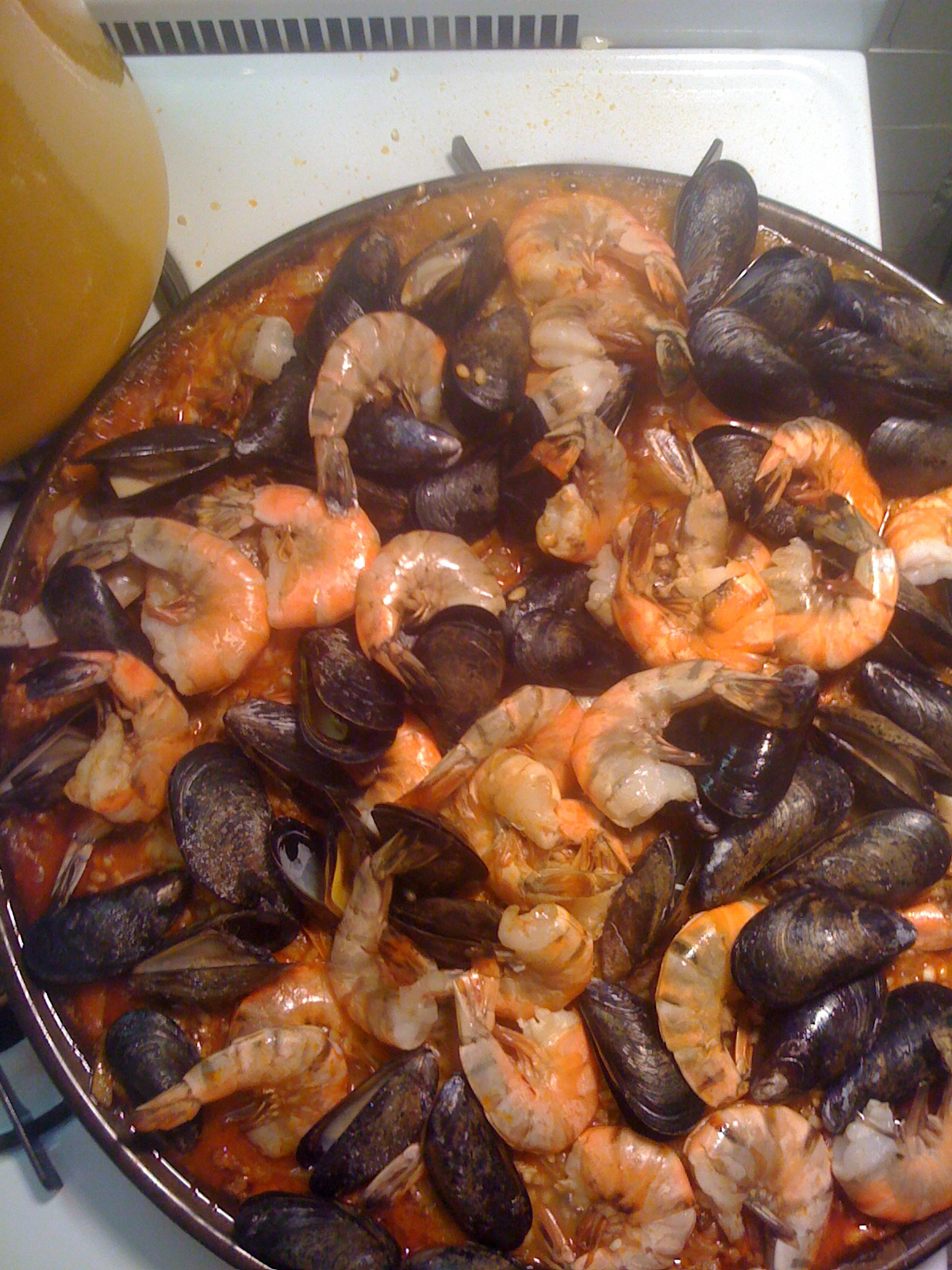
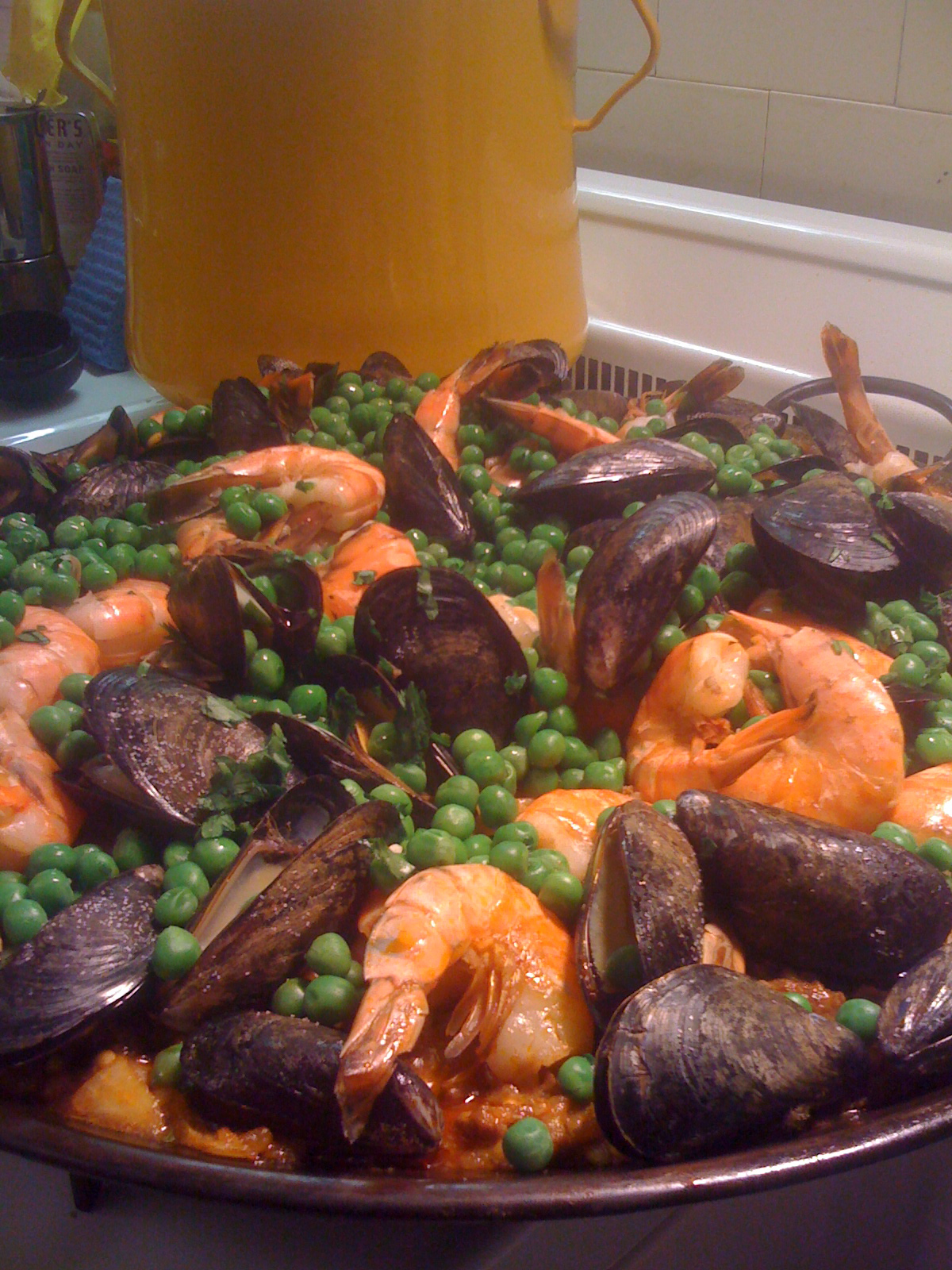
It was my first time making this Spanish rice-and-seafood dish and I think it came out well. I expected it to be a bit crustier on the bottom but the rice was thoroughly cooked through and the chorizo, pimentón, and saffron added a good kick of spice. We loosely followed a recipe for Grilled Lobster Paella from last month’s issue of Bon Appétit but took some liberties, including the substitution of mussels and shrimp for lobster and cooking the dish across two stovetop burners rather than in coals. This dish will easily serve 12 adults.

Paella Irene

3/4 c olive oil
1 yellow onion
4 cloves garlic
1 1/4 lb chorizo, sliced into 1/2″ thick rounds (chorizo can have casing but doesn’t need to)
1 1/2 tbsp pimentón (smoked paprika)
3 3/4 c short-grain rice (like Valencia or bomba)
1/2 tsp saffron threads
7-10 c hot seafood or chicken stock
Kosher salt
3-4 pounds of seafood (can be any combination of shrimp-squid-mussels-scallops-lobster)
1 bag (about 3 c) frozen peas
3/4 c chopped parsley, for garnish
lemon wedges, for garnish

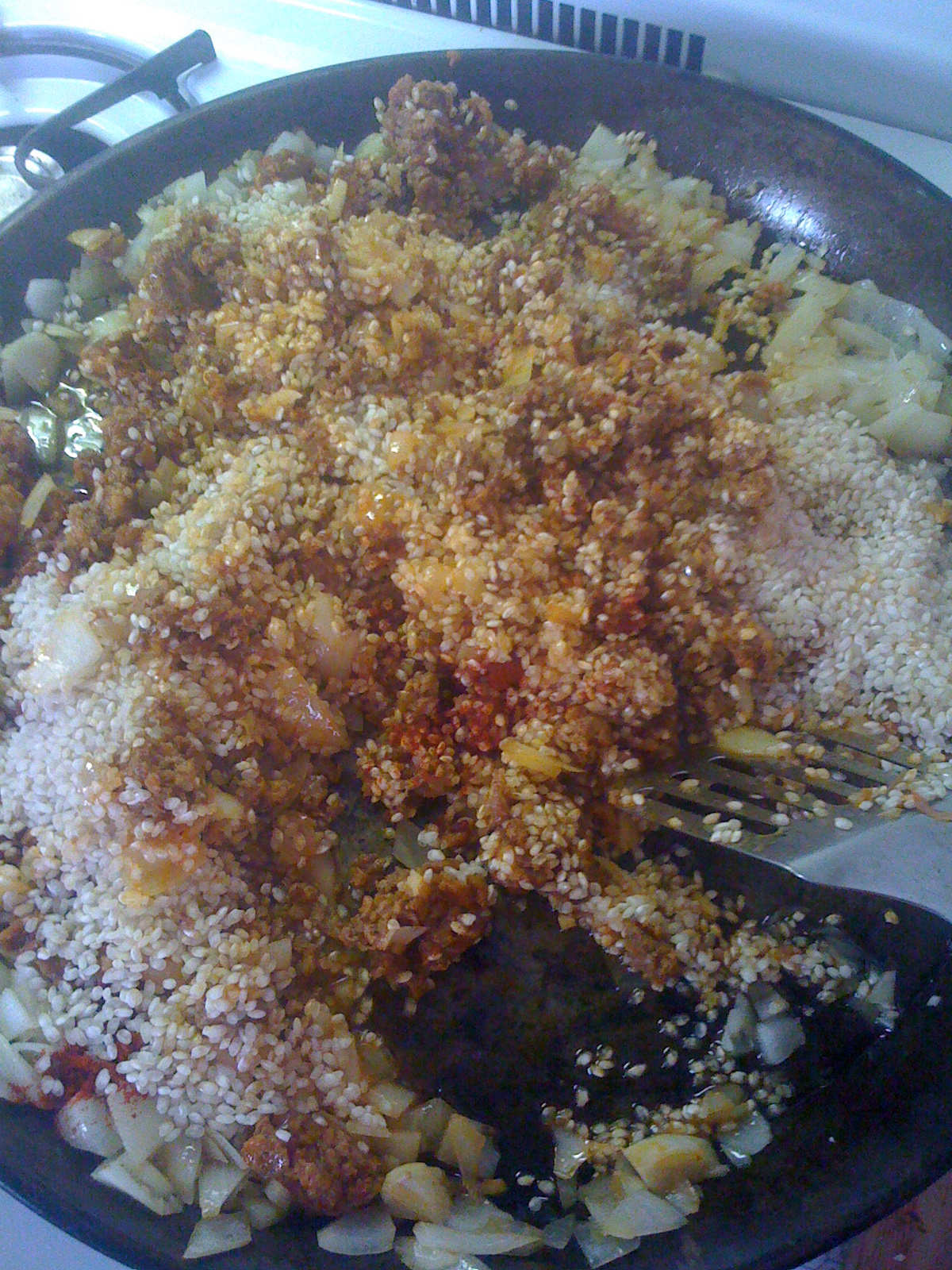
1. Set your paella pan on your stove across two burners. Turn the heat on both burners to medium and heat the olive oil. Add the onion and cook for about 10 minutes until the onions are translucent, then add the garlic. After a minute add the chorizo and cook 3-4 minutes. If the chorizo is in its casing it will be neater and stay relatively intact; if not it will tend to fall apart and incorporate more into the dish, which is also good.

2. Add the pimentón and rice to the paella pan; cook, stirring, until the rice is coated, about 2 minutes. Add saffron threads to the hot stock, add the stock to the pan and season with salt; stir to distribute the ingredients. Let cook, without disturbing, until the stock simmers and rice begins to absorb liquid, about 20 minutes. Rotate the pan on the burners every 2-3 minutes to cook evenly.

3. Arrange the seafood over the rice and continue cooking and rotating the pan. The rice will swell as it absorbs the liquid. Add more stock if the liquid evaporates before the rice is tender. Continue to cook until the seafood is cooked through and the rice is tender.

4. Scatter the peas on top. Continue to cook without stirring, allowing the rice to absorb all the liquid and a crust (the socarrat) forms along the edges. Total cooking time is about one hour. Turn off the heat and cover with a tin-foil tent or a clean dish towel and let rest for 5 minutes. Serve with lemon wedges and garnish with parsley.

We served the paella with a large green salad, fried anchovies, and bitter melon cooked with chile pepper.


I had a culinary first recently: making the light, fluffy cheese puffs known as gougères. I don’t know too many people who make these delightful little snacks but after my first successful attempt I see no good reason not to.

Despite the French name, which I think automatically intimidates some of us who assume unfamiliar ingredients and techniques will be involved, gougères are easy to make and require ingredients that you very likely might already have on hand: milk, butter, cheese (cheddar will do), eggs, and flour. That’s it. Oh, and water and salt.

If you have people over for dinner or brunch and serve these pillowy cheese puffs warm from the oven, you will garner much praise in the form of oohs and ahs and possibly ooh la la.

Their dough is the same as sweet cream puffs or profiteroles, but with added cheese. One could use a variety of cheeses, but Comté, Emmenthal, Gruyère, or sharp cheddar are most often recommended. I like the recipe from Dorie Greenspan’s Around My French Table, which I’m including below, but David Lebovitz has a good recipe on his blog as well. I like that he adds black pepper and chives.

This weekend I will be making these for the second time for a garden party in Vermont. I plan to nose about in my parents’ herb garden to see what I could add to jazz these up, not that you need to. I also might double the recipe below, which makes about 35 puffs, so that each guest can have at least 2. Any less than that would be inhospitable, if not plain cruel.

Gourgères

1/2 c whole milk
1/2 c water
8 tbsp unsalted butter, cut into 4 pieces
1/2 tsp salt
1 c all-purpose flour
5 large eggs, at room temp
1 1/2 c coarsely grated cheese, such as Gruyère or cheddar, about 6 ounces

Position the racks to divide the oven in thirds and preheat oven to 425. Line two baking sheets with parchment paper.

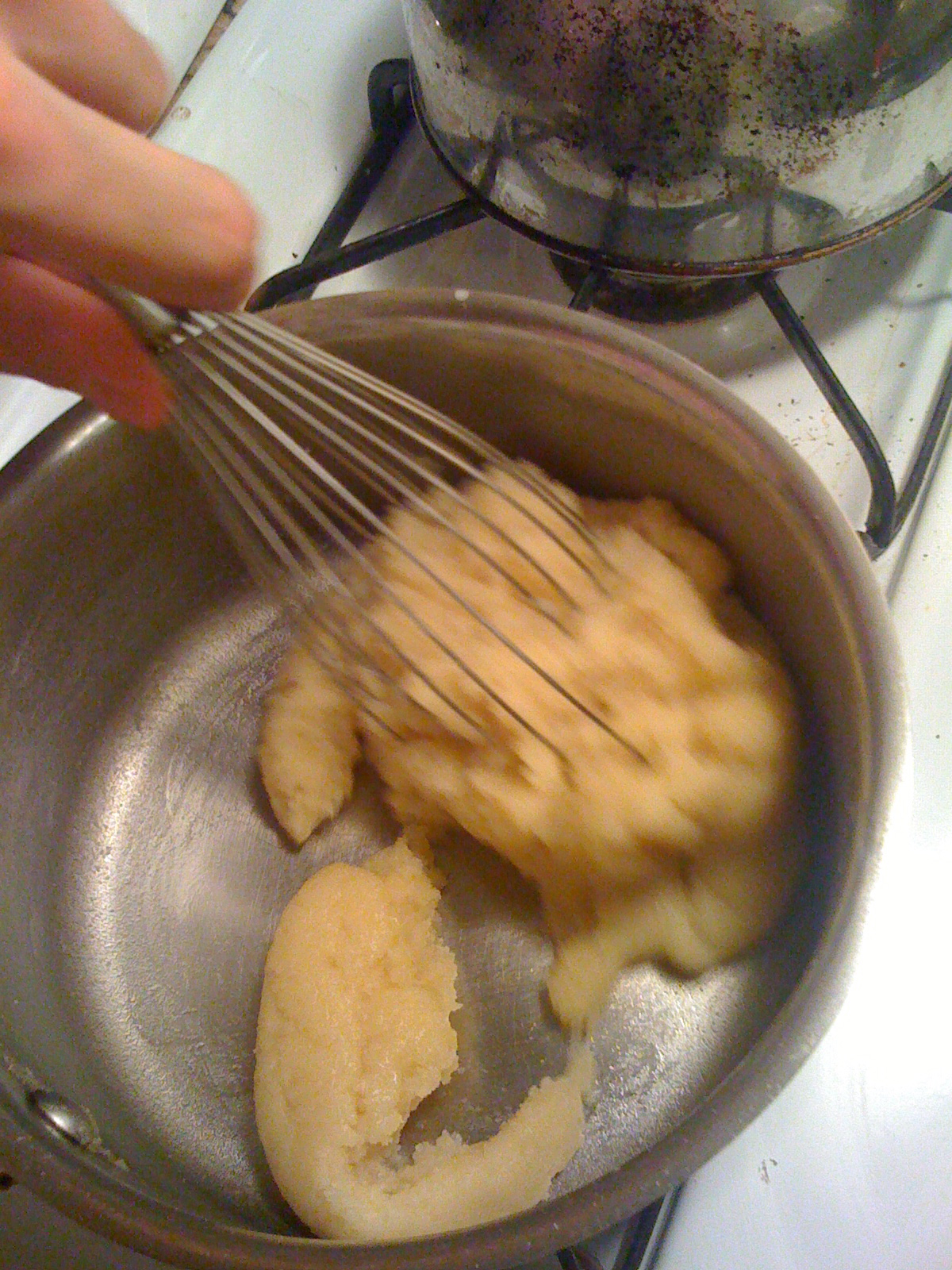
Bring milk, water, butter, and salt to a rapid boil in a heavy-bottomed medium saucepan over high heat. Add flour all at once, lower the heat to medium-low, and immediately start stirring energetically with a wooden spoon or heavy whisk. The dough will come together and a light sticky crust will form on the bottom of the pan. Keep stirring “with vigor,” as Greenspan writes, for another minute or two to dry the dough.

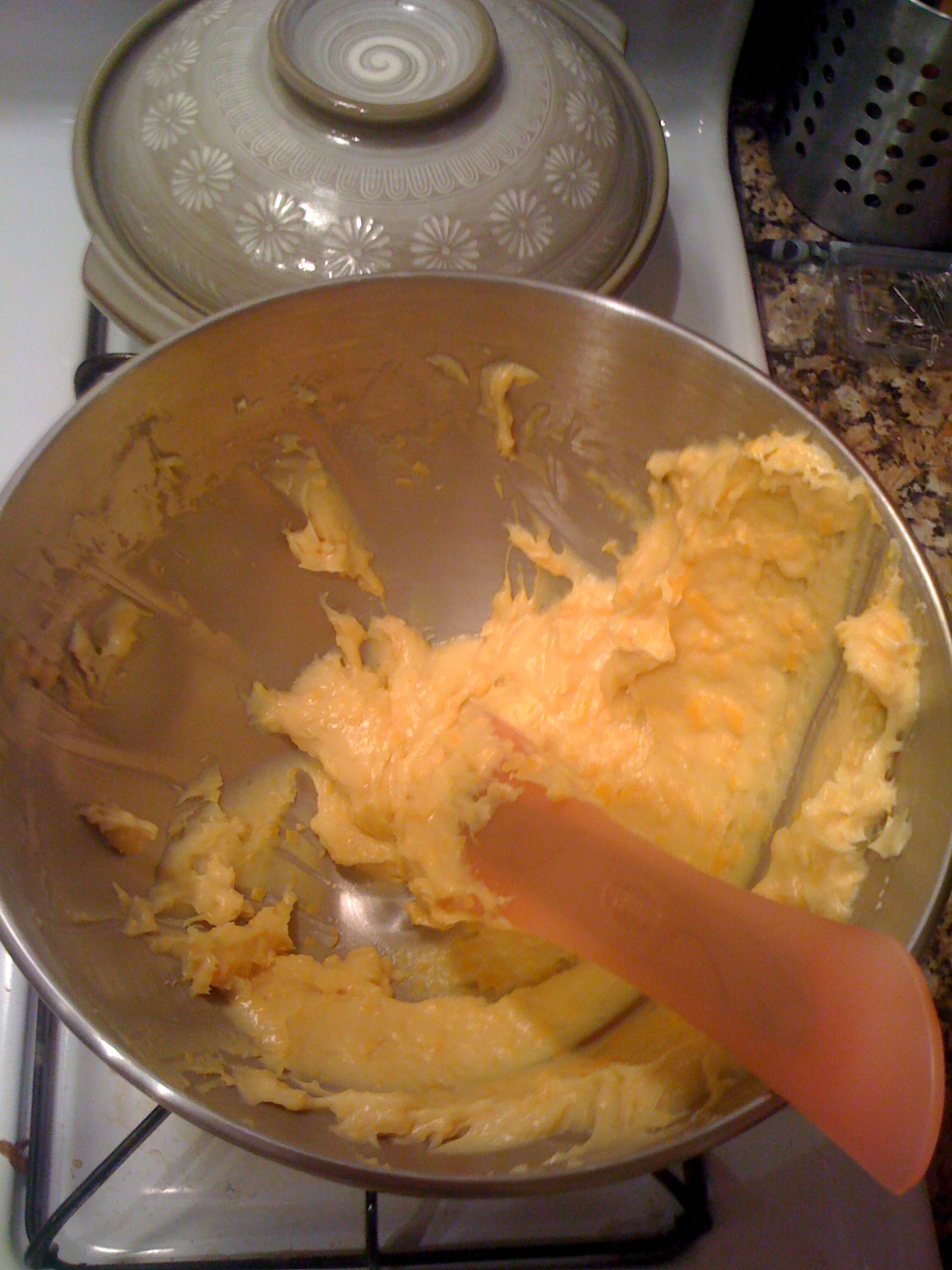
Turn the dough into the bowl of a mixer with a paddle attachment. (You could also do this by hand.) Let the dough sit for a minute to cool, then add the eggs one by one and “beat beat beat,” making sure each egg is fully incorporated before adding the next. Beat in the grated cheese. Once the dough is made it should be spooned out immediately.

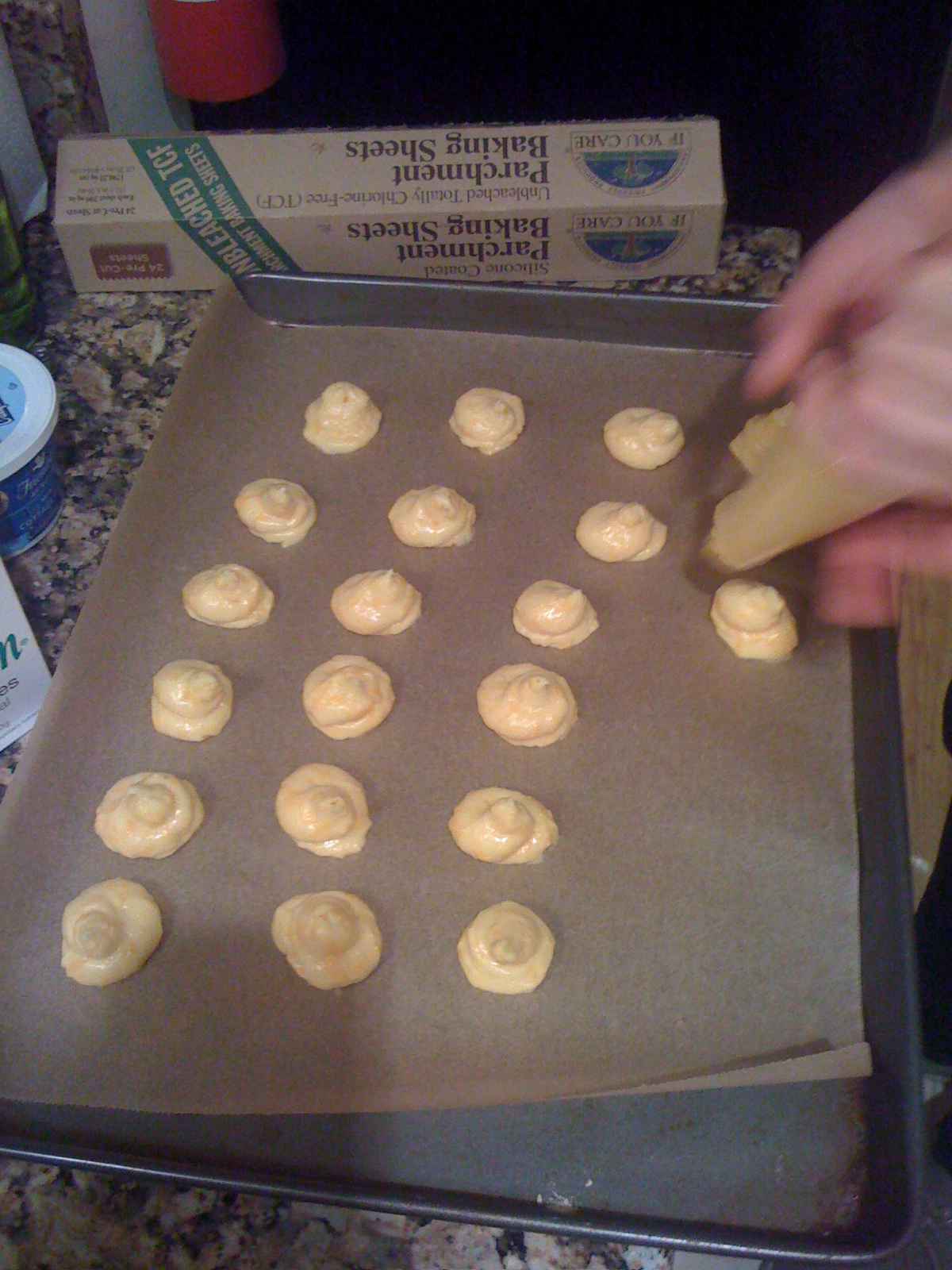
Use about 1 tbsp of dough for each gougère, dropping the dough from the spoon onto lined baking sheets, leaving 2 inches of space in between. You could also use a pastry bag for this step, as shown in the photo.

Place the baking sheets in the oven and turn the oven down to 375. Bake for 12 minutes, rotate the sheets, and bake another 12-15 minutes, keeping a close eye on them so as not to overbake. Serve warm or cool on racks.