Archives for category: Co-op

I had intended to make something from the American Woman’s Cook Book today as promised, a project just waiting for a mellow weekend like this. Alas, I didn’t get around to the chicken pot pie or beef brisket or chess pie just yet. In part I was too busy studying Japanese, getting ready for my new class on Tuesday. Watashi wa Nihon-go benkyoshimashita.

I was in the mood for a roast loin of pork and braised red cabbage, it seemed just the thing to eat on a lazy(ish) Sunday with a chill in the air. If I check I’d probably find such a recipe in my grandma’s old cookbook but I was dashing off to the co-op and in the mood for a little improvising. I remembered last year, around this time, eating such a dish at Dressler, in Williamsburg, and feeling so satisfied. The combination of tender pork with a crispy crust, grainy brown mustard, and acidic-sweet cabbage all in one bite, eaten at Dressler’s lovely, long bar  (one of the best spots to eat at in the city, with or without a dining companion), seemed too good to replicate.

I was lucky to snatch up the last Aberdeen Hill Farm pork tenderloin at the co-op (not a minute later I heard someone page, “Is there anymore pork tenderloin? Pork tenderloin, any more please?”). My plan B, if they didn’t have any, was to try Marlow & Daughters but that would’ve run me a pretty penny. Although, for good quality pork loin, it’s money well spent. I also picked up some Tom Cat Bakery cheddar brioche rolls and served them on small individual plates, just like they do at Dressler, with perfectly softened butter. The loin came out juicy with a crispy exterior, just the way I like it.

Roasted Pork Loin with Braised Red Cabbage

For the Pork:
1 2-lb boneless pork loin
5 garlic cloves, peeled and sliced
1 tbsp fennel seeds
salt and pepper
5-6 branches of sage

For the cabbage:
2-3 tbsp butter
optional: 1 sausage (plain, fennel, or even chorizo is fine), chopped
1 red onion, sliced thin
2 lb red cabbage, sliced
2 tart apples, like Granny Smith, peeled and sliced thin
1 c chicken stock
1/4 c apple cider vinegar
1/2 c orange juice or apple cider
5 or 6 juniper berries
2 cloves
1 bay leaf
1 cinnamon stick
salt and pepper

The day before cooking, if possible, you want to season the meat. First trim off all excess fat from the loin. Slice little gashes into the meat and stick the slivers of garlic inside. Crush the fennel seeds with the side of your knife, or with a mortar and pestle, and rub all over the loin. Cover the meat with a very generous coating of salt, and freshly ground black pepper. Gently push the sage leaves into the meat and tie up with twine, spaced a couple inches apart. Refrigerate overnight. If it’s the day of, that’s fine too, proceed anyway with these steps.

Bring the pork loin to room temperature (about one hour) before cooking. Preheat your oven to 425F. Place the pork loin on a rack over a baking dish, place in the center of the oven, and cook, uncovered until a thermometer reads 130F at the thickest part of the loin. This will take about 40 minutes. Remove from the oven and let the meat rest for 15 minutes, loosely covered with foil.

While the loin is roasting, prepare your braised cabbage. Melt the butter in a dutch oven or stock pot, then add the onions, cooking until softened, about 5 minutes, then add the sausage, cooking on medium heat for a few minutes. Add the cabbage and apples to the pot, stir, and let cook down for 8-10 minutes. Then add the chicken stock, apple cider vinegar, and juice/cider. Turn the heat to high.

Place the juniper berries, cloves, bay leaf, and cinnamon stick in some cheesecloth, and tie up. Toss into the cabbage pot, along with salt and pepper, to taste. Once the liquid is boiling turning the heat down to low, cover, and let cook for 20-25 more minutes.

Slice the loin against the grain and serve with dollops of the brown mustard and of course, the braised cabbage.

I admit it was perhaps a little foolish to plan a dinner party the night before Hurricane Irene was due to arrive in these parts. Not because people wouldn’t show up, but because it meant I had to buy groceries somewhere. And once the mayor announced a state of emergency and encouraged stocking up on canned goods and water, New Yorkers went into a hoarding frenzy. Nowhere was this more apparent than in the Park Slope Food Co-op circa 3 pm yesterday.

My friend Amy and I made plans for a co-op run earlier in the week. She’d never been and I wanted to show her why I like it so much—cheap spices in bulk, cheeses for a bargain, Kombucha for under $3, breads from the best bakeries in the city. I suspected it might be crowded with folks stocking up for the weekend but was not prepared for the one-and-a-half-hour wait in the check-out line. A friendly member reminded me you can skip the line and go straight to the check-out if you have three items or less.

Amy and I consulted our long shopping list, which included the items needed for the paella we planned to make, and picked the three most important items (saffron, pimentón, peas), and got out of there fast.

A couple of hours later we were back in Williamsburg, having driven up to Costco in Long Island City, and ready to begin cooking. We had eleven adults and two toddlers coming over for dinner around 7:30 so we got to work. It was a collaborative effort: Sumathi had a bag of short-grain paella rice we picked up earlier in the day from her doorman; Yuji lent us his 18-inch paella pan that his friend bequeathed him when she moved back to Spain; and Amy and I cobbled together the remaining ingredients.

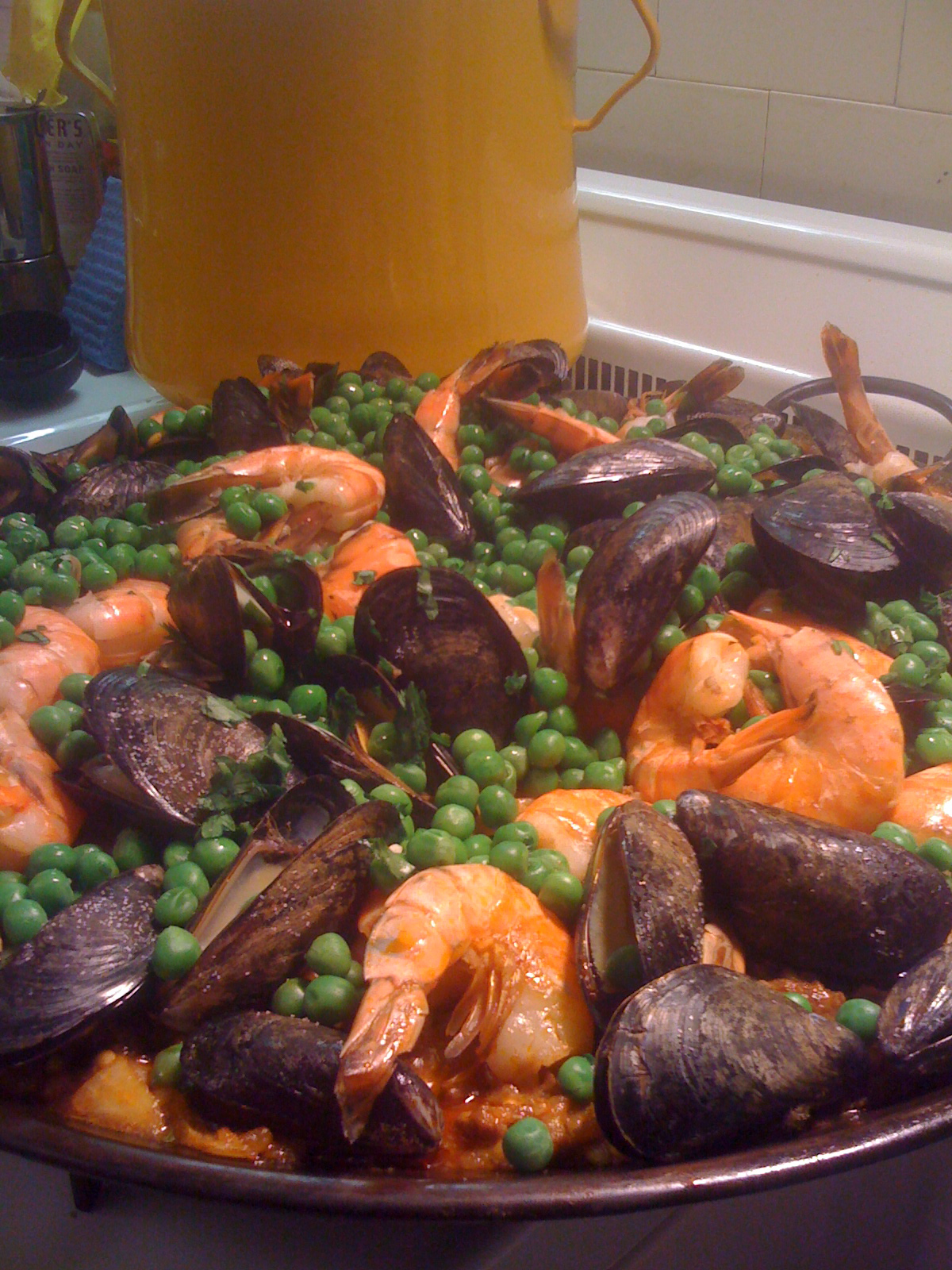
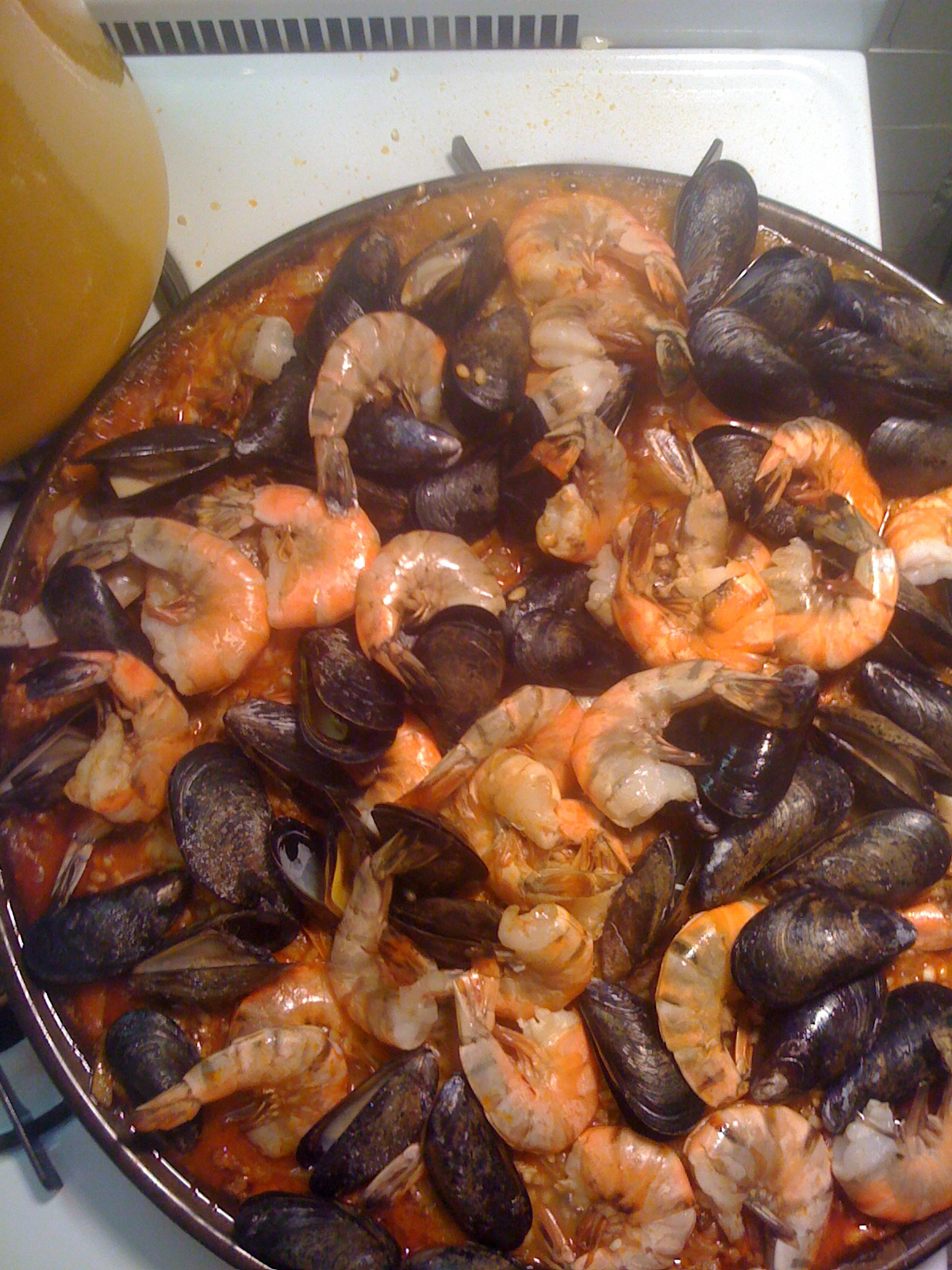
It was my first time making this Spanish rice-and-seafood dish and I think it came out well. I expected it to be a bit crustier on the bottom but the rice was thoroughly cooked through and the chorizo, pimentón, and saffron added a good kick of spice. We loosely followed a recipe for Grilled Lobster Paella from last month’s issue of Bon Appétit but took some liberties, including the substitution of mussels and shrimp for lobster and cooking the dish across two stovetop burners rather than in coals. This dish will easily serve 12 adults.

Paella Irene

3/4 c olive oil
1 yellow onion
4 cloves garlic
1 1/4 lb chorizo, sliced into 1/2″ thick rounds (chorizo can have casing but doesn’t need to)
1 1/2 tbsp pimentón (smoked paprika)
3 3/4 c short-grain rice (like Valencia or bomba)
1/2 tsp saffron threads
7-10 c hot seafood or chicken stock
Kosher salt
3-4 pounds of seafood (can be any combination of shrimp-squid-mussels-scallops-lobster)
1 bag (about 3 c) frozen peas
3/4 c chopped parsley, for garnish
lemon wedges, for garnish

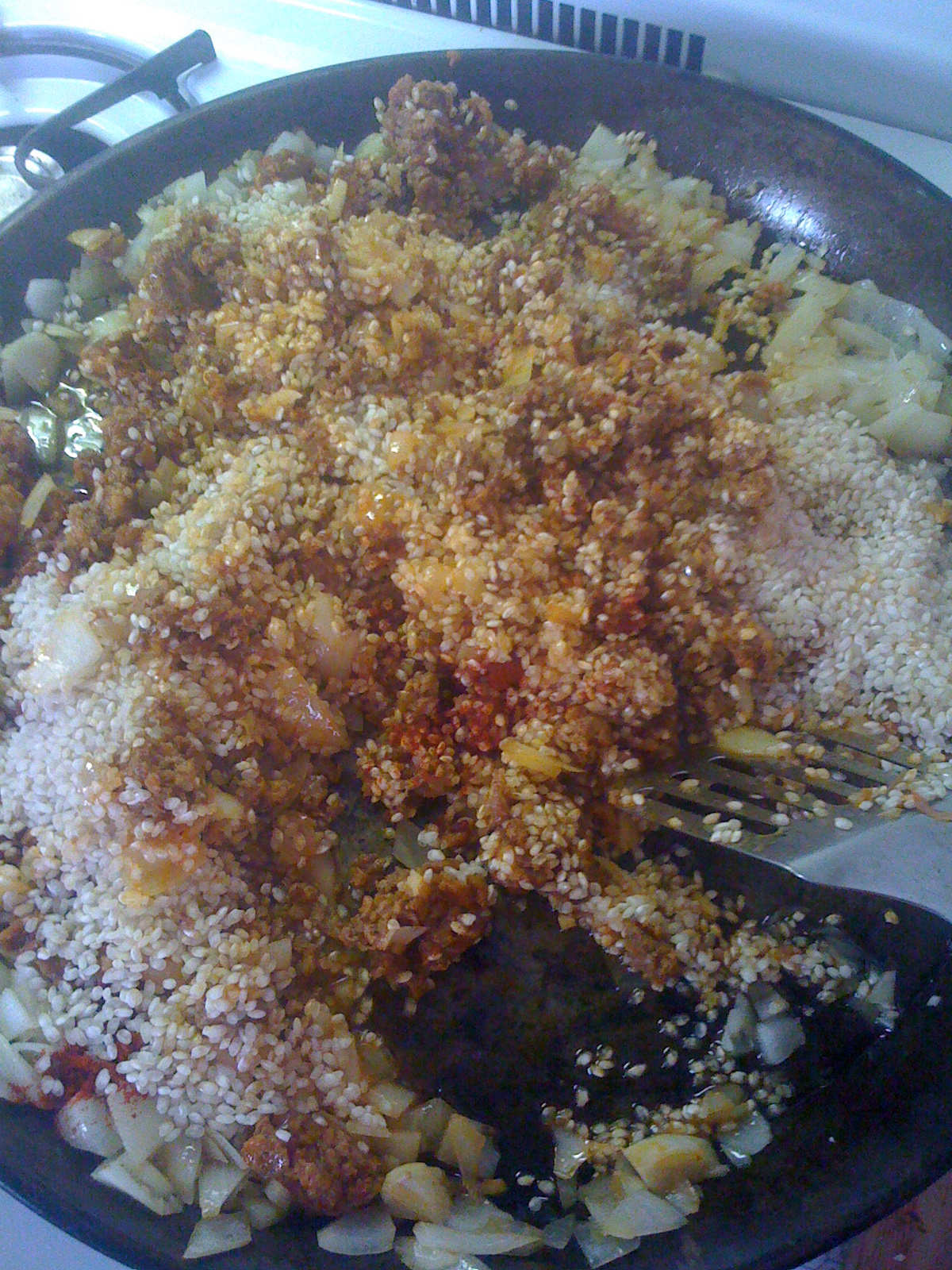
1. Set your paella pan on your stove across two burners. Turn the heat on both burners to medium and heat the olive oil. Add the onion and cook for about 10 minutes until the onions are translucent, then add the garlic. After a minute add the chorizo and cook 3-4 minutes. If the chorizo is in its casing it will be neater and stay relatively intact; if not it will tend to fall apart and incorporate more into the dish, which is also good.

2. Add the pimentón and rice to the paella pan; cook, stirring, until the rice is coated, about 2 minutes. Add saffron threads to the hot stock, add the stock to the pan and season with salt; stir to distribute the ingredients. Let cook, without disturbing, until the stock simmers and rice begins to absorb liquid, about 20 minutes. Rotate the pan on the burners every 2-3 minutes to cook evenly.

3. Arrange the seafood over the rice and continue cooking and rotating the pan. The rice will swell as it absorbs the liquid. Add more stock if the liquid evaporates before the rice is tender. Continue to cook until the seafood is cooked through and the rice is tender.

4. Scatter the peas on top. Continue to cook without stirring, allowing the rice to absorb all the liquid and a crust (the socarrat) forms along the edges. Total cooking time is about one hour. Turn off the heat and cover with a tin-foil tent or a clean dish towel and let rest for 5 minutes. Serve with lemon wedges and garnish with parsley.

We served the paella with a large green salad, fried anchovies, and bitter melon cooked with chile pepper.


Can a girl be so lucky?

The day had finally come: the first co-op shift in three years for member #43525.

I was excited for my new work slot: “food processing” from 1 to 3:45 pm every fourth Friday. Sounds boring? Bothersome? Banal?

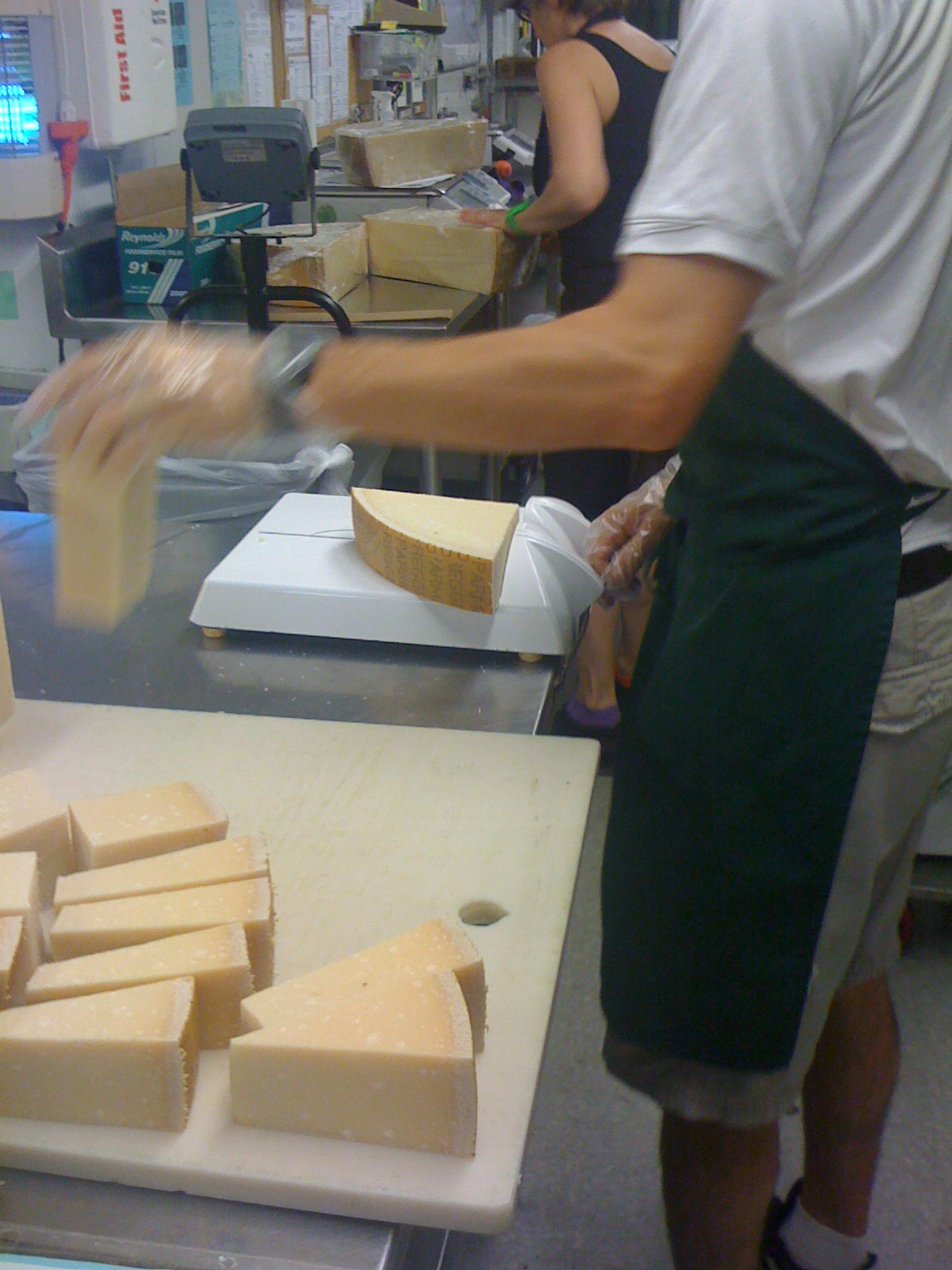
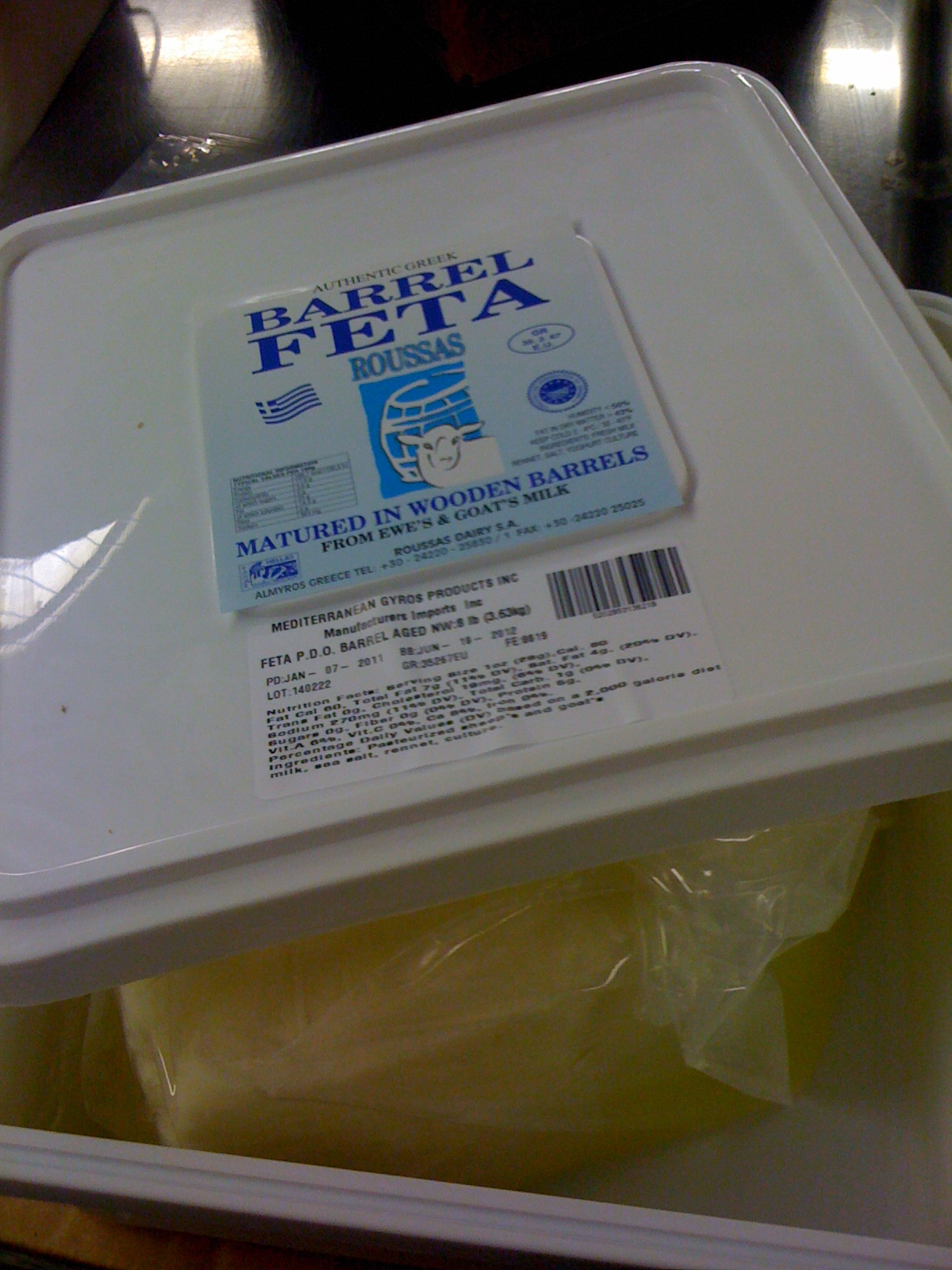
Shame on you! Today I learned how to score and slice a 20-pound wheel of Parmigiano Reggiano; how to properly slice and package barrel-aged sheep & goat feta and what makes it different (and better) from the domestic sheep feta; and the difference between handling a Havarti vs. a Monterey Jack.

Cheese bliss for this food nerd.

Yuri Weber is the co-op’s cheese buyer. He’s one of the few co-op employees (as opposed to member-volunteers) and you can watch him talk about cheese inside the co-op here. I was introduced to him today when he tapped me on the shoulder and said, “Do you want to go on a feta adventure?” Once I said yes he said I couldn’t take it back. That’s when he took out the “special feta” and I was shown how to properly slice, wrap, and weigh it.

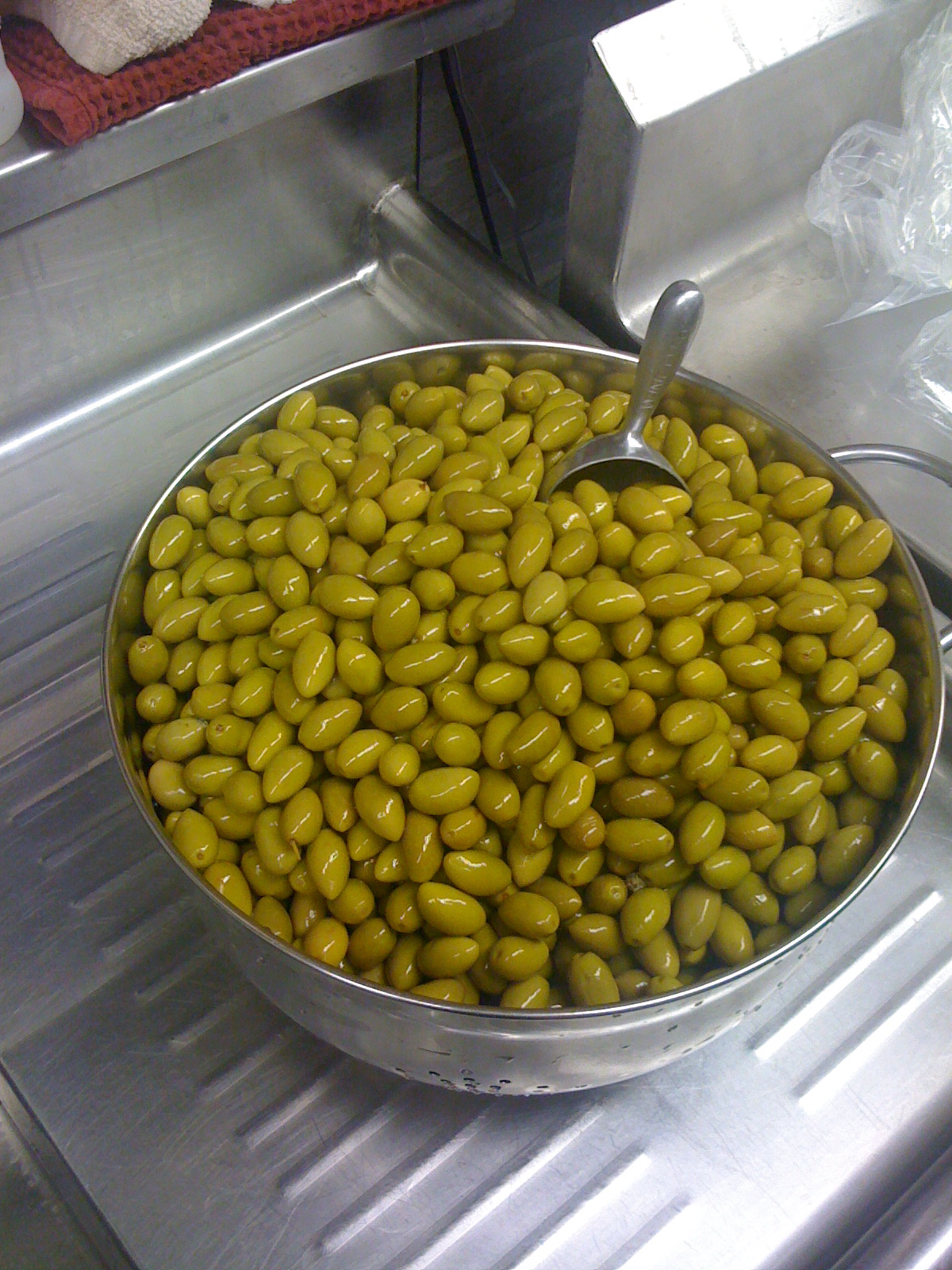
My buddy for the afternoon was Jim. He told me he’s only been working this shift for four months but the others always let him handle the cheese so they can weigh and price things like dried mango, almonds, olives, and spices instead. Well I’m with Jim – I think the cheese is where it’s at. He showed me how to take inventory on the floor of the cheese section, where to find all the various cheeses in the basement, how to set up my cutting board, replace the wire on the cheese slicer (after I broke it), and show me how to use the pricing scale (it’s very easy).

My whole crew of coworkers was great this afternoon. We chatted about cease-and-desist letters, how to name one’s new design studio, rose petal potpourri, the merits of Ben’s cream cheese (tangy, smooth, creamy), and Johnny Cash. Plus it was 80+ degrees outside so I was happy to be in the climate-controlled basement wheeling wheels of curds out of the walk-in cooler.