Archives for category: Co-op

IMG_3414

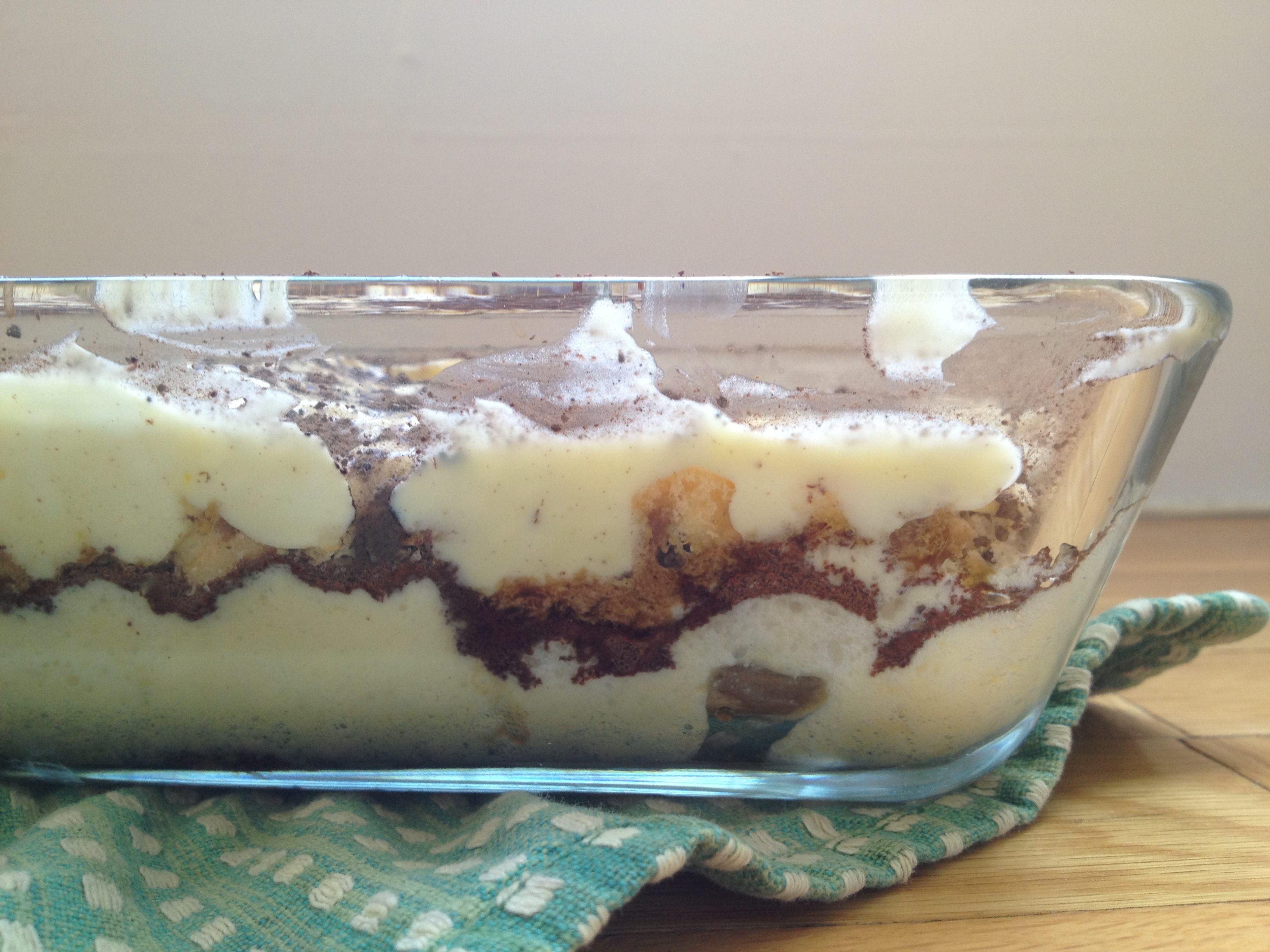
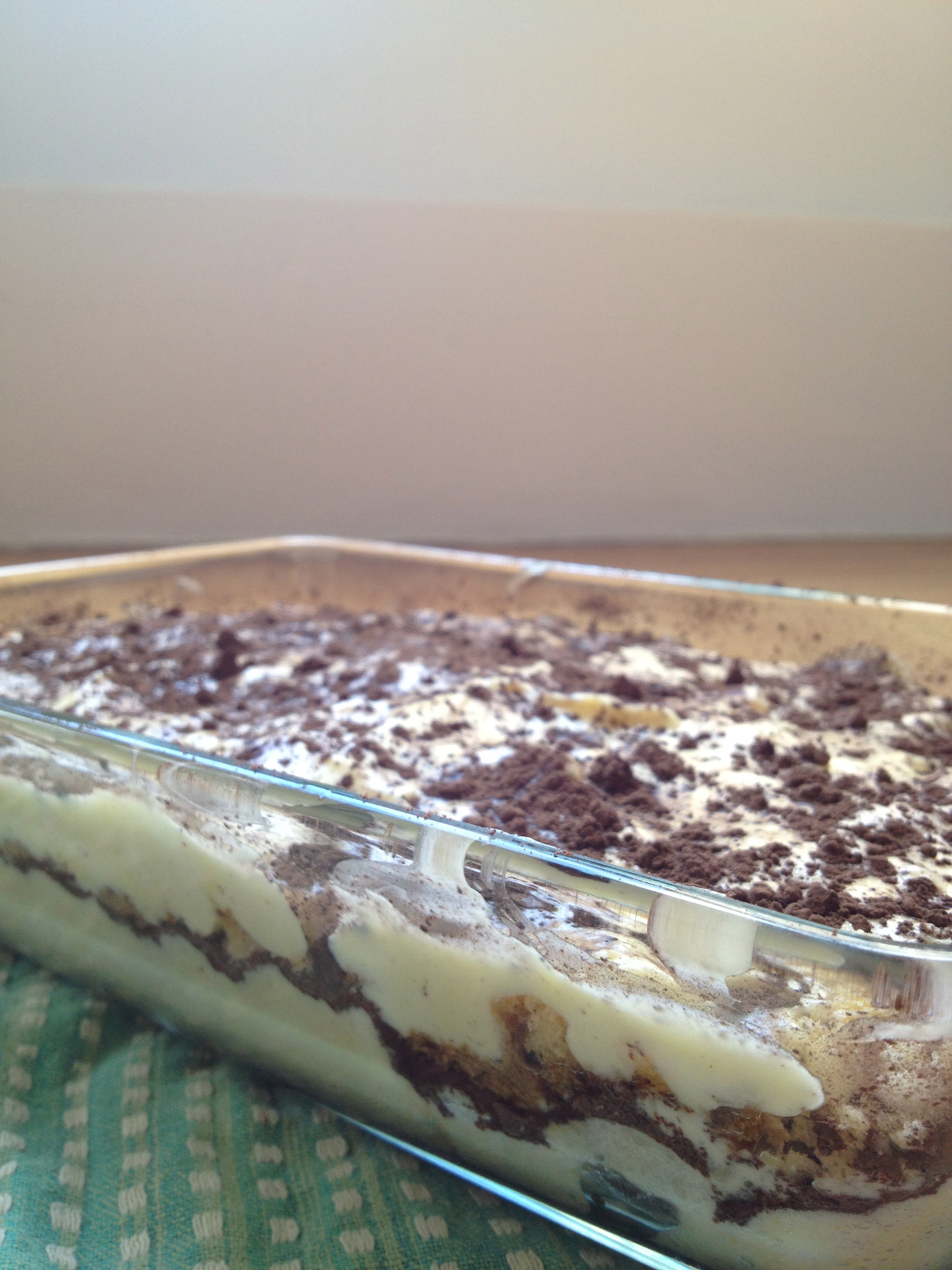
I love tiramisu. Made of mostly mascarpone and eggs it’s light and satisfying and surprisingly easy to make. The strong coffee gives it its name, which means “pick-me-up” in Italian. I got a craving yesterday so I biked to the Park Slope Food Coop where Vermont Creamery mascarpone is only $3 for an 8-ounce container (you need two of those for this recipe).

I made tiramisu back in March for my birthday with the very simple, straightforward recipe from The Silver Spoon. (Ingredients: eggs, sugar, mascarpone, lady fingers, coffee, chocolate. That’s it.) I liked it but found the lady fingers weren’t spongy enough, it was a little too sweet, and it lacked the taste of a liqueur like rum or cognac. I rarely have liqueur in my kitchen so I used vanilla extract which isn’t quite the same but was an improvement. I’ve tweaked the recipe here and am pleased with the results.

IMG_3224

Tiramisu
Serves 8

2 egg whites
4 egg yolks
2/3 c powdered sugar
16 oz mascarpone cheese
7 oz lady fingers
1 c freshly brewed strong coffee, cooled
2 tbsp rum or cognac, optional*
2 oz unsweetened or semi-sweetened chocolate, grated
cocoa powder, for dusting
*If you don’t have any you can also add up to 1 tbsp good quality vanilla extract.

Brew the coffee and make sure it is room temperature or colder. Stir in the rum or cognac if you’re using. Set aside.

Whisk the egg whites in a grease-free bowl until they form stiff peaks. In a separate, large bowl, beat the egg yolks with the sugar until pale and fluffy.

Place the mascarpone in a separate bowl and whisk with a fork until it’s a little lighter and fluffier. Then fold the mascarpone into the egg-yolk-and-sugar mixture. Then gently fold in the egg whites.

In a small rectangular or square serving dish (8 x 8 inches is good, or thereabouts) place a layer of lady fingers and soak with half the coffee mixture. You can spoon or brush the coffee on. Spoon on a layer of the mascarpone mixture then sprinkle with the grated chocolate. Place another layer of lady fingers on top then soak with the remaining coffee. Add another layer of the mascarpone and finish by dusting with cocoa powder. Chill in the refrigerator for at least a few hours before serving.

IMG_3407IMG_3410

I really feel like I’m just going out on a limb with this here post. I mean, pumpkin cinnamon rolls? They just seem so…absurd. Immoderate. Decadent. We are still creeping out of a national recession. It is high election season. I have better things to do and think about. Like how I can get in one of those #bindersofwomen.

But, it’s the fall. It was a Saturday. I was cruising Smitten Kitchen, one of my favorite blogs, and came across a recipe for these. The recipe is actually from Baked Elements, one of the cookbooks from the the Red Hook bakery I’ve come to know and love on trips to Fairway, Ikea, Sunny’s, and The Good Fork. Photos of these called to me through the screen of my laptop and, against my better judgement, was compelled to get baking.

I happened to have my monthly co-op work shift last weekend so I was able to buy all the spices I needed (ginger, nutmeg, cinnamon), good butter, replenish my flour stash, and get organic canned pumpkin. That’s right, I said canned pumpkin. You can definitely make these by roasting your own pumpkin but I will tell you right now I most certainly did not. Although it would be lovely and tasty if you did. The original recipe only calls for 2/3 c of pumpkin purée anyway, so, yeah.

My fellow blogger over at Smitten Kitchen tweaked the Baked recipe, and now I’ve gone and tweaked her recipe. I reduced the sugar in both the filling and icing; I did everything by hand instead of a stand mixer; lengthened the rising times; and increased the pumpkin. These are certainly tasty and decadent (everything you want in a cinnamon roll), but were the tiniest bit dry. And they are pumpkin cinnamon rolls—I wanted to taste more of the pumpkin than I did. So I think the perfect solution would be to increase the pumpkin quotient.

And while I have your attention…did you see the Food and Drink issue last weekend in the NYTimes? Read the article about Christopher Kimball by Alex Halberstadt. He’s so unabashedly old school. He would probably hate my blog. I love him.
Pumpkin Cinnamon Rolls
Adapted from Baked Elements (and Smitten Kitchen)
Yields 16 buns

Dough
6 tbsp unsalted butter
1/2 c whole milk, warm, but not hot
1 packet active dry yeast (2 1/4 tsp)
3 1/2 c all-purpose flour
1/4 c granulated sugar
1 tsp salt
1/2 tsp ground cinnamon
1/4 tsp ground nutmeg
1/4 tsp ground ginger
3/4 c (or nearly 1 c) pumpkin purée
1 large egg
Oil for coating rising bowl

Filling
3/4 c light or dark brown sugar
1/8 tsp salt
2 tsp ground cinnamon

Glaze
4 ounces cream cheese, softened
2 tbsp milk or buttermilk
1 c powdered sugar, sifted
A few drops of vanilla extract

Make the dough:
Melt the butter in a small saucepan, and once melted, continue cooking over medium heat for a few additional minutes so that it browns. It will hiss and sizzle, and golden brown spots will form on the bottom of the pan. Remove from heat and set aside to cool slightly.

Combine the warmed milk and yeast in a small bowl and set aside. After five minutes or so, it should be a bit foamy. If it’s not, you might have some bad (old) yeast and should start again with a newer packet.

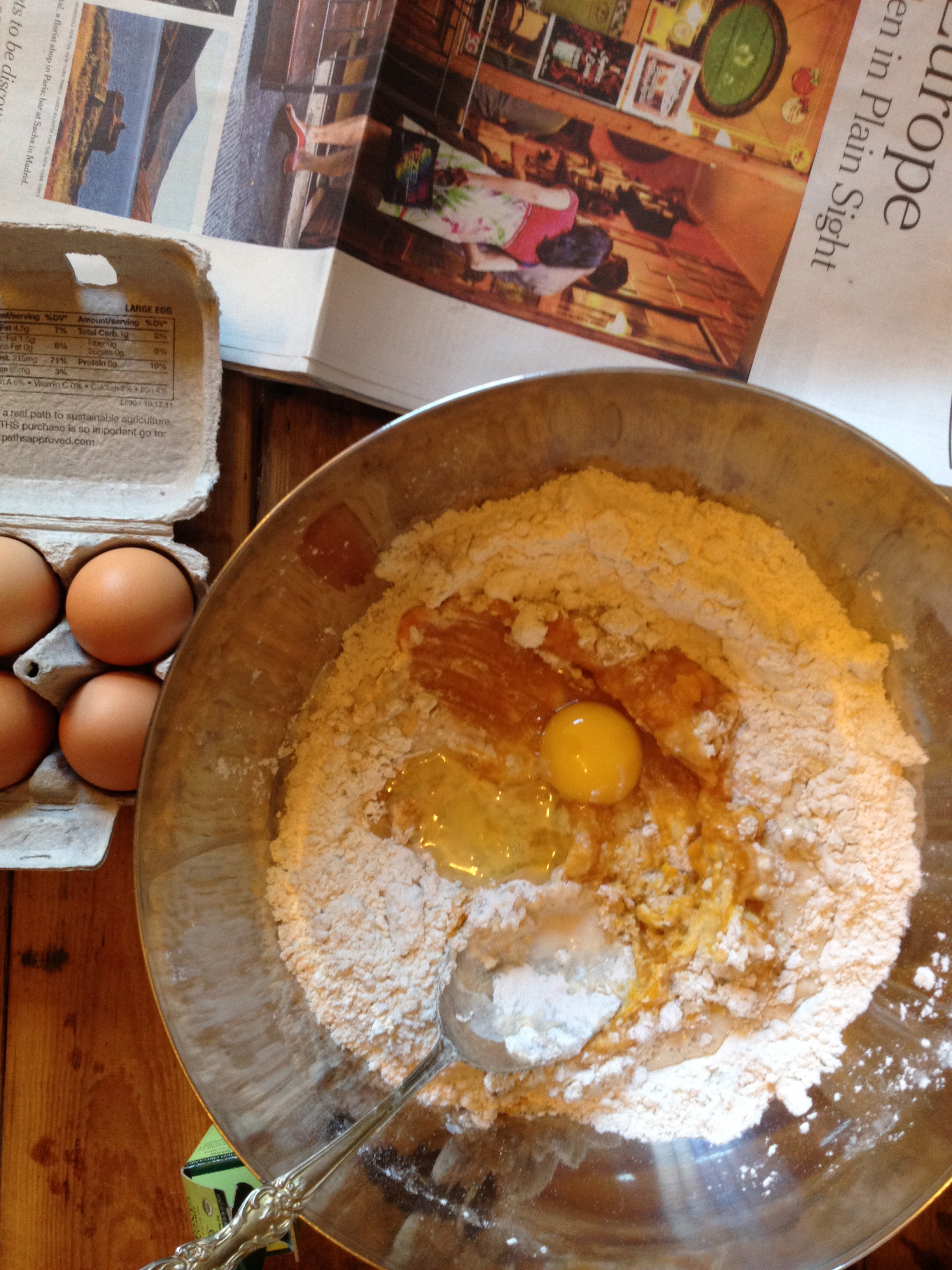
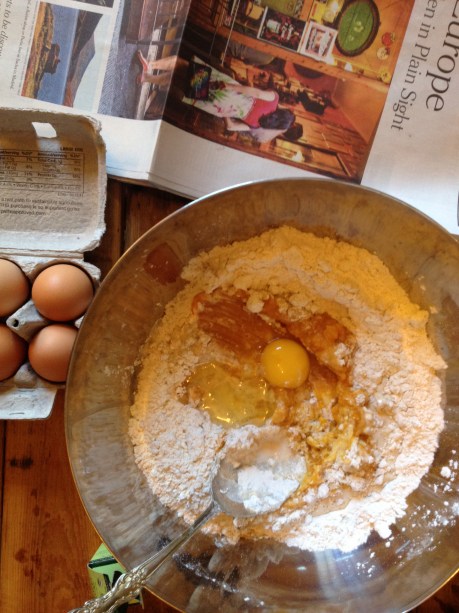
If you have a stand mixer, combine the flour, sugar, salt, and spices in the mixer bowl. You can do this by hand just fine too, and can use a large mixing bowl. Add 1/4 c (or 2/3 of the remaining) brown butter and stir to combine. Add the yeast-milk mixture, pumpkin, and egg and combine. If using a stand mixer, switch to the dough hook and run on low for five minutes. If by hand, get ready for a workout. Mix by hand for five minutes until the dough starts to come together.

Transfer the dough into a large oiled bowl and cover with plastic wrap. Set aside for at least one hour, or as much as two hours, in a draft-free place. It should nearly double in side. While it’s rising, line the bottom of two 9- or 8-inch round cake pans with parchment paper and butter the sides.

Assemble the buns:
Scoop the dough onto a well-floured surface, and flour the top of the dough well. Using a rolling pin, roll the dough to an approximately 16 x 11 inch rectangle. Brush the reserved melted butter over the dough. Stir together remaining filing ingredients and sprinkle mixture evenly over the dough. Starting with one of the longer edges, roll the dough into a tight spiral. It’s ok if some of the filling spills out of the ends a little.

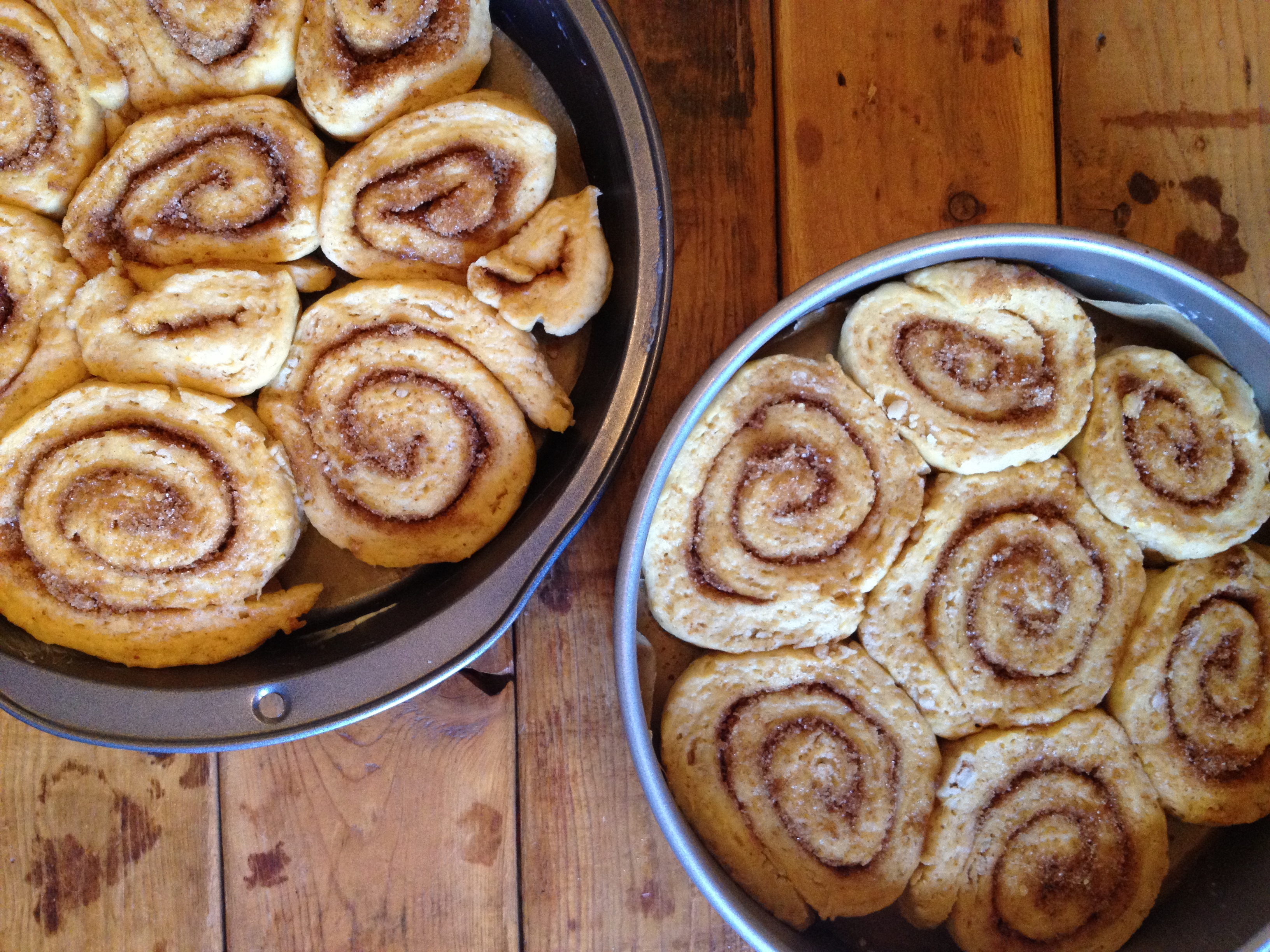
Cut the cinnamon rolls with a serrated knife using practically no pressure whatsoever. Place the blade of the knife on the dough and gently saw your log with a back-and-forth motion into approx. 1-inch sections. Divide buns between the two prepared pans, sprinkling with any sugar that fell out. Cover each pan with plastic wrap and let rise for at least 45 minutes and up until 2 hours. You could, after this point, put them covered in the refrigerator and when you’re ready to bake them just take them out an hour before hand to warm up.

Fifteen minutes before you’re ready to bake them, heat the oven to 350 degrees F and make the glaze. Beat the cream cheese until light and fluffy. Add the powdered sugar and vanilla and drizzle in milk until you get the desired consistency: thick like icing (which is what I did) or thin enough to drizzle.

Remove the plastic and bake (un-glazed) for 25 minutes until puffed and golden and the smell of cinnamon and sugar and butter makes you dizzy and brings your neighbors knocking. Let cool before glazing, then dig in. By all means, you’ve earned it.

Last Wednesday I was waiting for the F train at Jay St-MetroTech, trying to make a 9 am meeting near the Flat Iron. I forgot to bring reading material for the train, so wandered over to the news and candy kiosk in the middle of the platform. For a couple years I’d buy the Times every Wednesday just for the dining section. The crossword was a bonus (Wednesdays: not too hard, not too easy), the arts section a boon. It was definitely worth the four quarters I’d plunk down on the tall counter of the Marcy Ave. newsstand before dashing up the stairs to catch the J train.

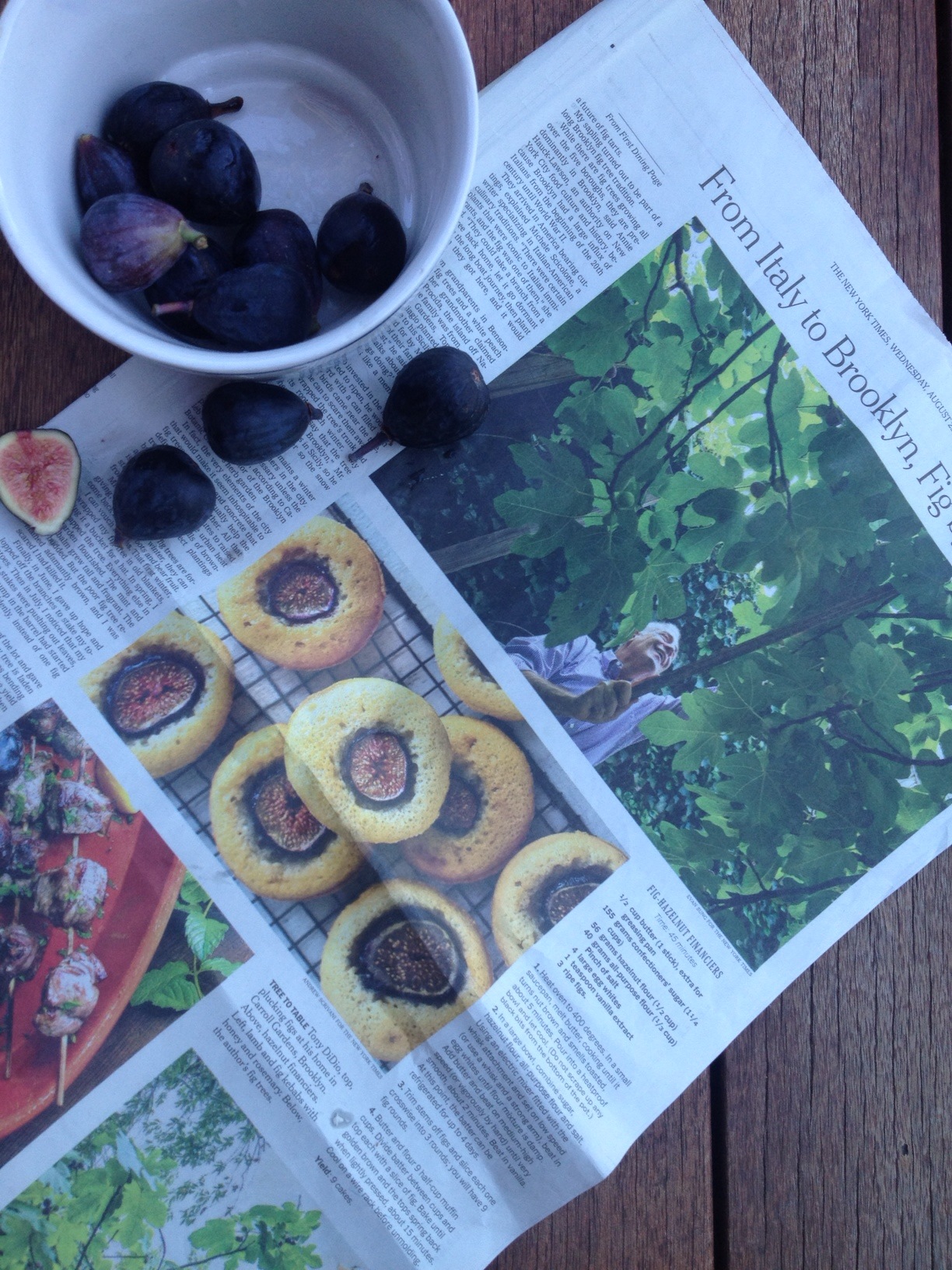
Then the price of the paper creeped to $1.50, before becoming $2 and $2.25. And this past year, the price went up to $2.50. Now it’s a rare Wednesday when I get ink on my hands in pursuit of the latest restaurant review. But I was glad I splurged this week, if only for Melissa Clark’s treatise on figs, “Italy to Brooklyn, Fig by Fig.” Did you know there are fig trees growing all over Brooklyn, in large part a holdover because of the borough’s influx of Italians in the first half of the twentieth century?

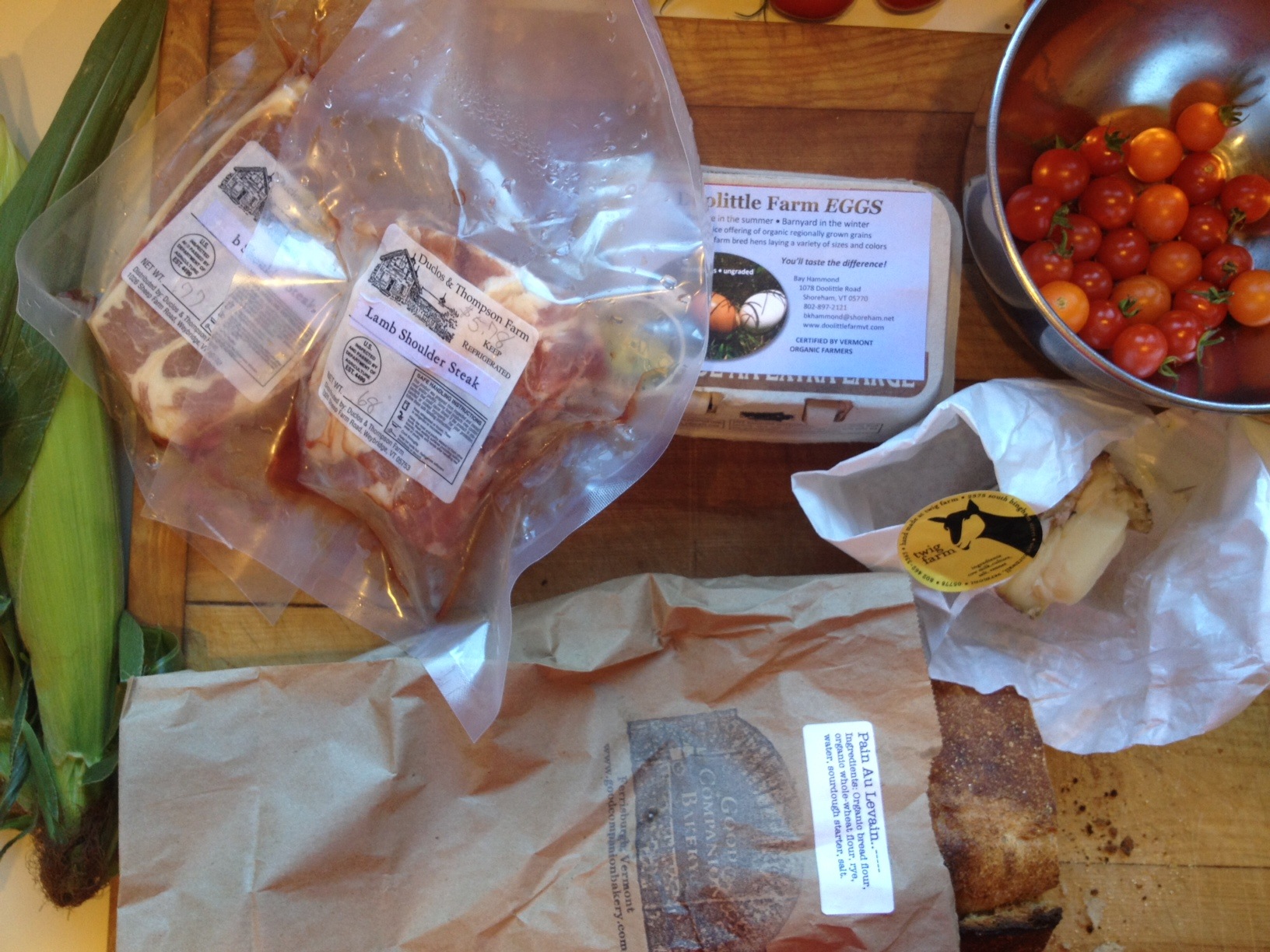
On Friday, when hastily throwing a bag together for a last-minute trip to Vermont, I tossed the paper into my duffle, wanting to try Clark’s recipes for financiers and lamb-and-fig skewers. If figs can grow in NYC, I reasoned, surely someone in Vermont is growing them. So yesterday morning I woke up early, stopped off at Vergennes Laundry for a chocolate croissant and coffee (my Saturday morning ritual when I’m here), then drove down to Middlebury for the farmer’s market. Got the requisite pan au levain from Good Companion Bakery, tomme from Twig farm, bacon from Kate (North Branch Farm), eggs from Doolittle, all the while keeping my eyes open for figs. I saw none. Apples and plums of all varieties. Watermelon even. I considered using local plums in place of figs in the recipes, but decided to try the co-op. They had them! Black mission figs. Unfortunately they were from California, not Vermont, but I picked them up anyway. I had my heart set on those recipes.

My last errand in town yesterday was to pick up lamb for the skewers from a sheep farm, outside of town, down a dirt road. Kate tipped me off to the farm, and its honor system — you walk into a little room filled with glass-fronted freezers, write down what you’re taking, leave cash in a little plastic cup, and you’re done. I found the farm, which is completely unmarked, no signage, and pulled into the driveway. There was an old farm house on the property, and a few sheds. I wondered if I was in the right place. I heard voices and laughter coming from one of the sheds, and made my way over. The door opened as two people were on their way out, and I asked if I was in the right place to buy lamb. Tom, the farmer, said I was and invited me in. He explained how the system worked. He didn’t have boneless leg of lamb so he walked me through his other cuts. In the meantime we got to chatting, and I mentioned I was up from Brooklyn, but that my parents lived nearby.

“Brooklyn?!” he exclaimed, in what I took to be mock horror. “That’s terrible,” and he sort of chuckled nervously. I chuckled, thinking I’ve heard this before. Everybody wants to live in Brooklyn these days — it’s so cool, so young, charming architecture, farmer’s markets on every corner, beautiful people riding bicycles in skirts, or with bow-tied collars, on their way to work. Then I got the sense that maybe Tom wasn’t kidding. So I asked if he was. “No! I’m not! That’s a terrible place to live! So crowded, so many people.” Then he shook his head like he was sorry for me. Sorry for my choice of residence, sorry I didn’t get to see the sun set over the Champlain Valley every day. Sorry I didn’t get to smell dirt and farmland and manure. I remember my friend Kate visiting me from Vermont some years ago when I lived in Park Slope, and she said that while she loved visiting New York, she couldn’t live there because she has to see the mountains and sunset everyday.

It’s true, we have bow ties, bicycles, and brownstones. BAM, beaches, bagels, and some of the best new food being made in the country. But it’s not Vermont. It’s so far from Vermont, despite how hard Brooklynites like me try to bridge that gap, by pickling and fermenting and gardening. But hey, at least my local farmer’s market back home has figs. For now, that’ll have to do.

Fig-Almond Financiers
adapted from Melissa Clark, The New York Times
Yields 18

Financiers are tiny French cakes made with browned butter and often almond flour. They’re traditionally made in shallow, rectangular molds, resembling small bars of gold, but can also be made by filling muffin tins part way. I didn’t have that many figs to spare so I decided to try some local plums in addition to the figs, for adorning the tops. They worked liked aces! Both the fig and plum financiers were equally good. The original recipe also calls for 1/2 c of hazelnut flour. I scoured town for hazelnut or almond flour but found none. So I decided to cheat by adding some almond paste and using a combination of pastry flour and all-purpose flour.  I cut the sugar from the original 1 1/4 cup to 1 cup, and next time I make these I’d cut it even more, to 3/4 c or even 1/2 c.

1 stick butter, plus extra for greasing the pan
1 c sugar
1/2 c whole wheat pastry flour
1/3 c all purpose flour
pinch of salt
1 1/2 tbsp almond paste
4 large egg whites
1 tsp vanilla extract
3 ripe figs (and/or Italian plums)

1. Heat the oven to 400 degrees. In a small saucepan, melt butter, cooking until it smells toasty and just starts to brown. Pour into a heatproof container and let cool.

2. In a large bowl, combine sugar, flours, and salt. Beat in egg whites until the flour mixture is damp. Add the almond paste, combine. Add the butter and whisk vigorously until very smooth, about two minutes. Beat in vanilla.

3. Trim the stems off of figs, and slice each one crosswise, into thirds.

4. Butter and flour muffin tins. (Makes 18, so unless you have lots of muffin tins you may need to re-butter tins for a second rotation.) Fill each muffin cup scant halfway and top each with a slice of fig. Bake until golden brown, about 15 minutes. Cool on a wire rack.

Lamb and Fig Skewers
adapted from Melissa Clark, The New York Times
Yields 4 servings

The original recipe calls for boneless leg of lamb, but I think this may be hard to come by. And if you do find it, it will likely run you a pretty penny. So I think you could use lamb stew meat or a bone-in cut (like the steaks I used) and cut the meat into chunks.

4 garlic cloves, minced
2 large sprigs rosemary, minced
2 tbsp fresh lime juice
1 tbsp honey
1 1/4 tsp coarse salt
1 tsp black pepper
1 tsp tamari
2 tbsp extra virgin olive oil
12 ripe figs
1 1/2 pounds lamb meat (boneless leg of lamb, chops, steak, or stew meat), cut into 1-inch chunks

1. Begin by making the marinade. In a large bowl, toss together garlic, rosemary, lime juice, honey, salt, pepper, and tamari. Stir well to dissolve the salt, then stir in the oil. Set aside a few tbsp of the marinade. Add the lamb to the bowl with the remaining marinade and toss well. Marinate if you have time (makes a difference!), in the refrigerator, for a few hours, or at room temp for 30 minutes.

2. Thread the figs on skewers, making sure to leave a little space in between each one. Brush with the marinade you set aside.

3. Get your fire started. [If you’re not grilling, you can put the figs and lambs on a baking sheet instead of skewers and bake.] Thread the lamb on the skewers, leaving space in between each piece. Grill for three to five minutes, turning once.

4. Serve with fresh mint and lime wedges.